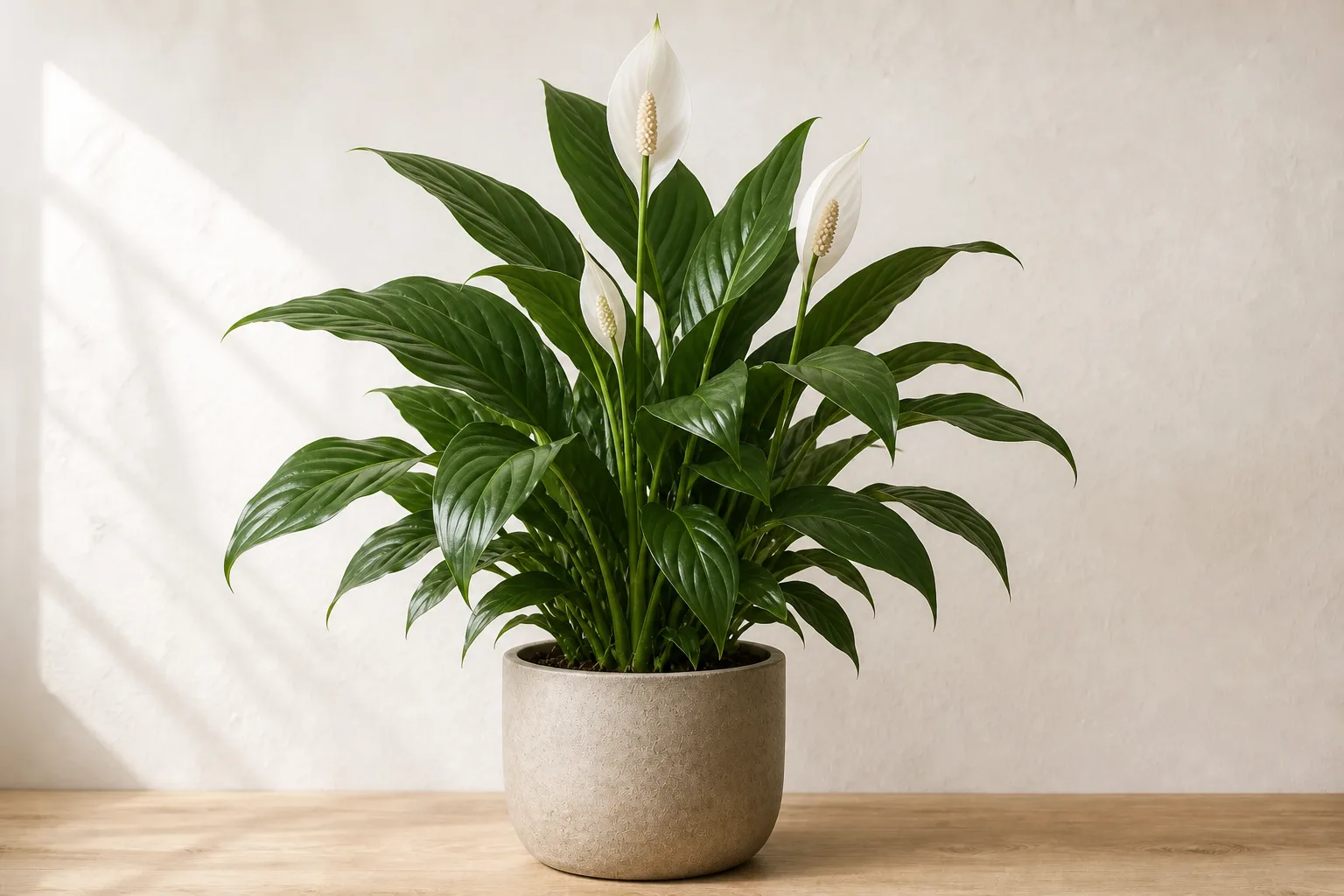
 intermediate
Peace Lily
Spathiphyllum wallisii
Deep green leaves and white spathes that signal thirst with a visible droop.
Flowers require energy. Most indoor bloomers need brighter light and steadier care than foliage-only plants, especially when forming buds.
This collection brings plant profiles and care guidance together around the conditions that define flowering houseplants.
Blooming is a light budget. A flowering houseplant must gather enough energy to build buds, which is why most entries in this collection want bright filtered light and why a plant that used to flower often just needs a brighter position. Expect buds to form weeks before you see color, and avoid moving or repotting a plant once buds are set—both commonly cause bud drop.
Plan for the off-season too. Many indoor bloomers rest after flowering, asking for less water and no fertilizer while they rebuild. Knowing whether your plant reblooms on old growth, new growth, or after a rest period—each profile in this collection notes its pattern—turns a one-time gift plant into a repeatable display.
intermediateSpathiphyllum wallisii
Deep green leaves and white spathes that signal thirst with a visible droop.
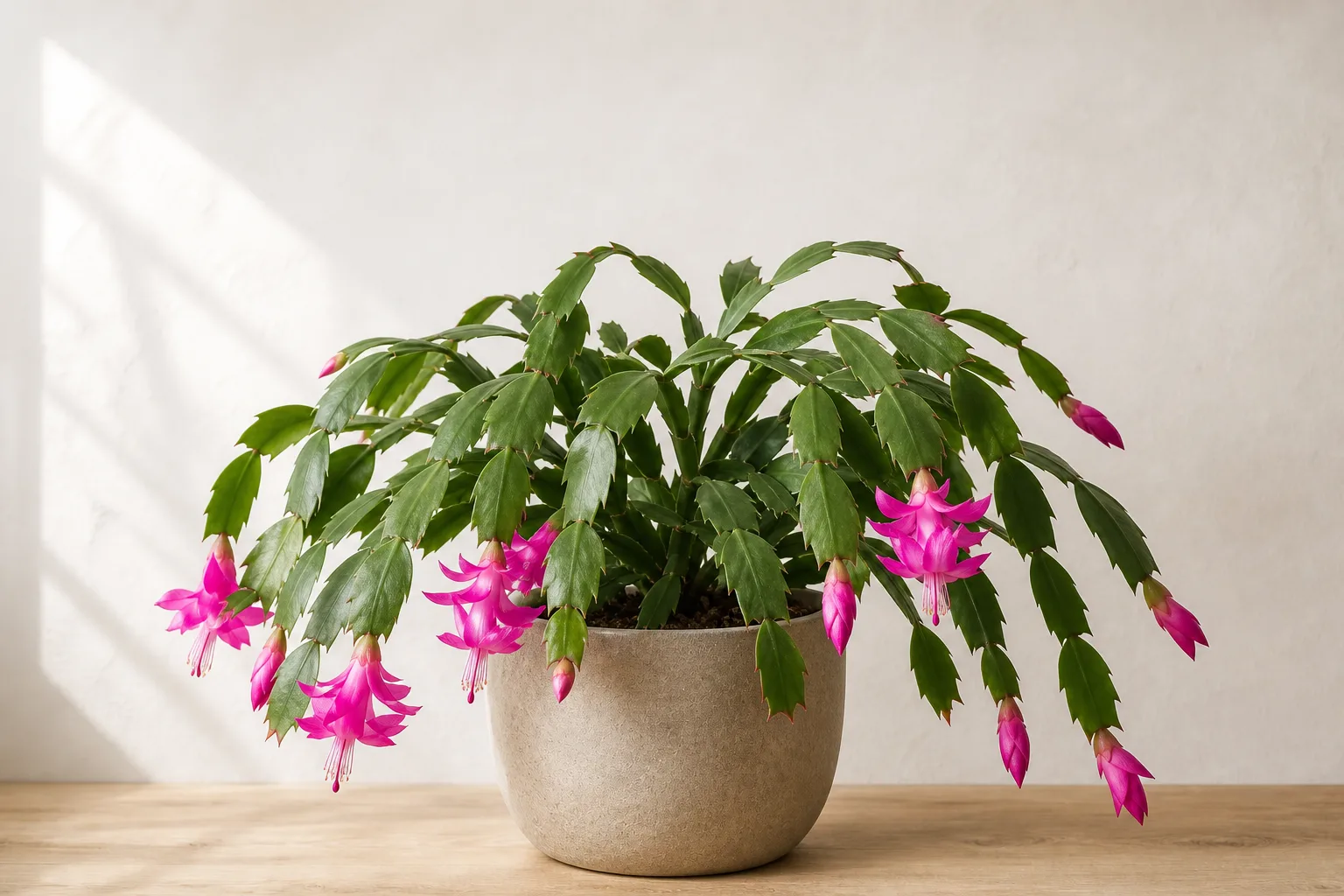 Pet-friendlier
Schlumbergera truncata
Schlumbergera truncata, the Christmas or Thanksgiving cactus, is an epiphytic cactus from the coastal mountains of southeastern Brazil with flattened, segmented stems and vivid winter flowers. Unlike desert cacti it wants filtered light and regular moisture, and it is listed as non-toxic to cats and dogs.
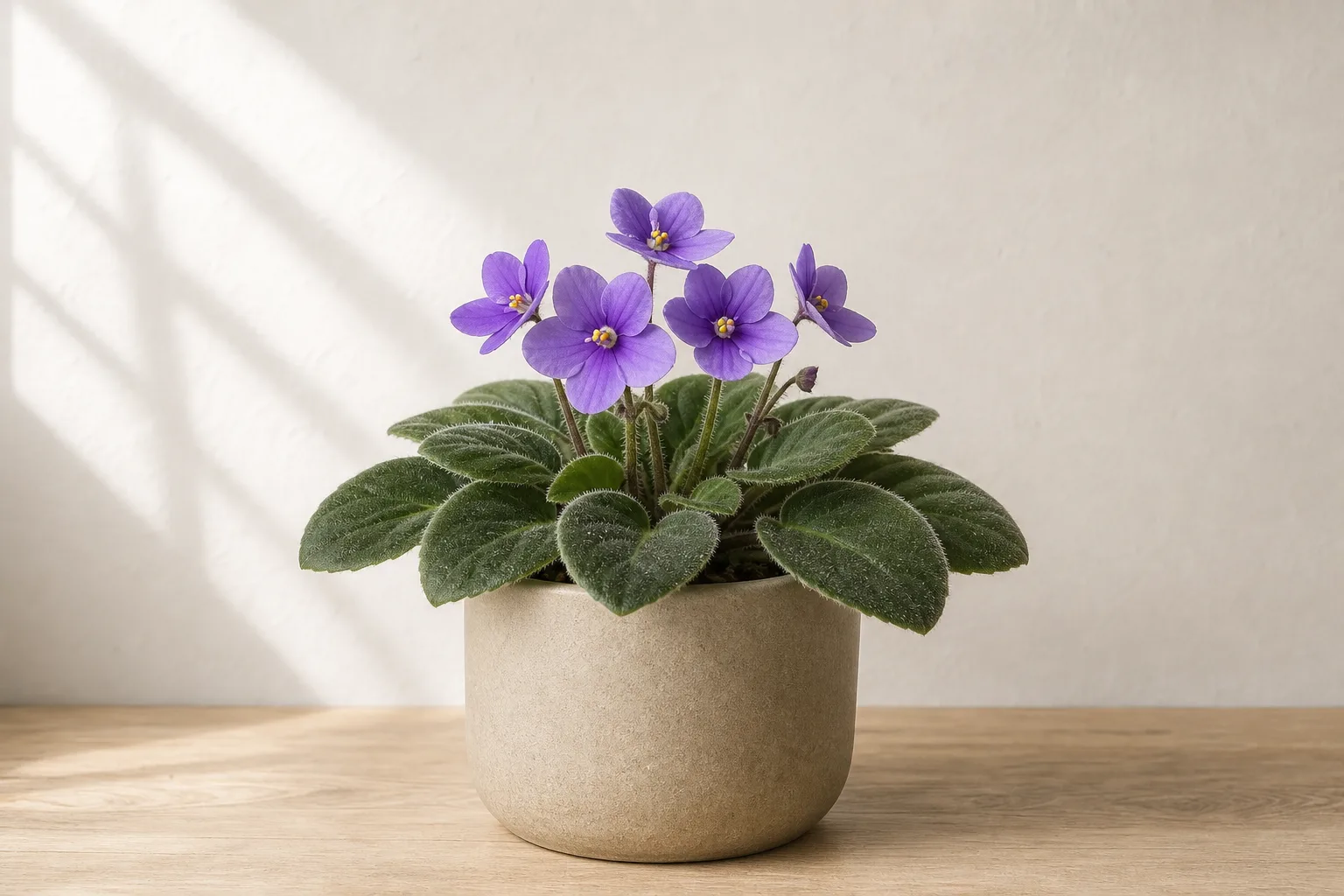 Pet-friendlier
Streptocarpus ionanthus
African violet (Streptocarpus ionanthus, long known as Saintpaulia ionanthus) is a compact, fuzzy-leaved flowering plant native to the cloud forests of Tanzania and neighboring East Africa. Grown for its velvety, round leaves and near-continuous clusters of violet, pink, white, or blue flowers, it blooms reliably indoors when given bright filtered light and careful watering. It is non-toxic to pets.
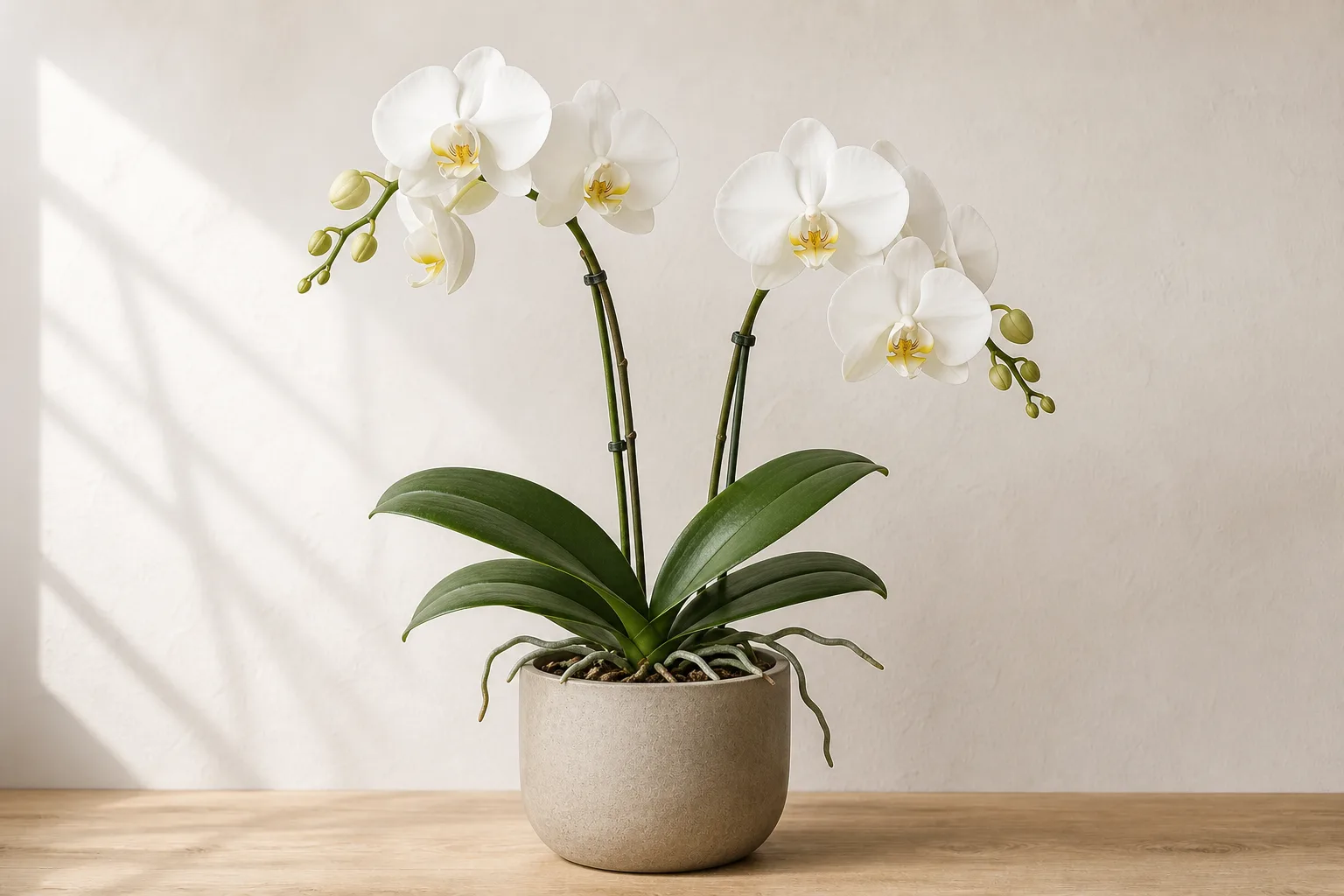 Pet-friendlier
Phalaenopsis amabilis
Moth orchid (Phalaenopsis amabilis) is the white-flowered species behind most supermarket 'moth orchids.' A tropical epiphyte native to Malesia and northeastern Australia, it grows on trees with arching sprays of long-lasting white flowers. Indoors it wants bright, filtered light, an airy bark mix, and watering based on root color rather than a calendar. It is non-toxic to pets.
 intermediate
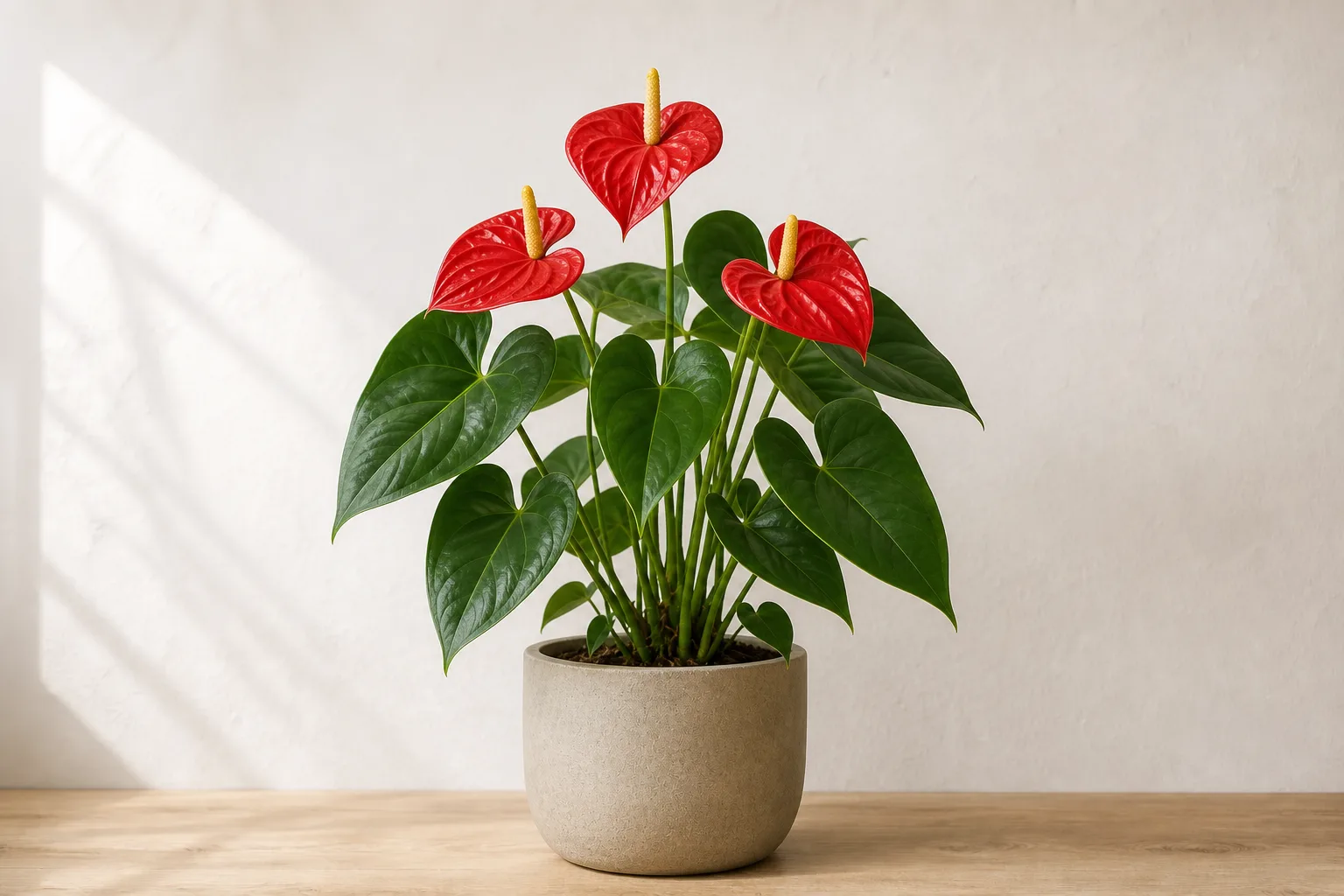
Anthurium andraeanum
Flamingo flower (Anthurium andraeanum) is a tropical aroid grown for its glossy, heart-shaped leaves and waxy, palette-shaped spathes in red, pink, or white around a creamy spadix. Native to Colombia and Ecuador, it blooms intermittently through the year indoors when kept warm, humid, and in bright filtered light.
 Pet-friendlier
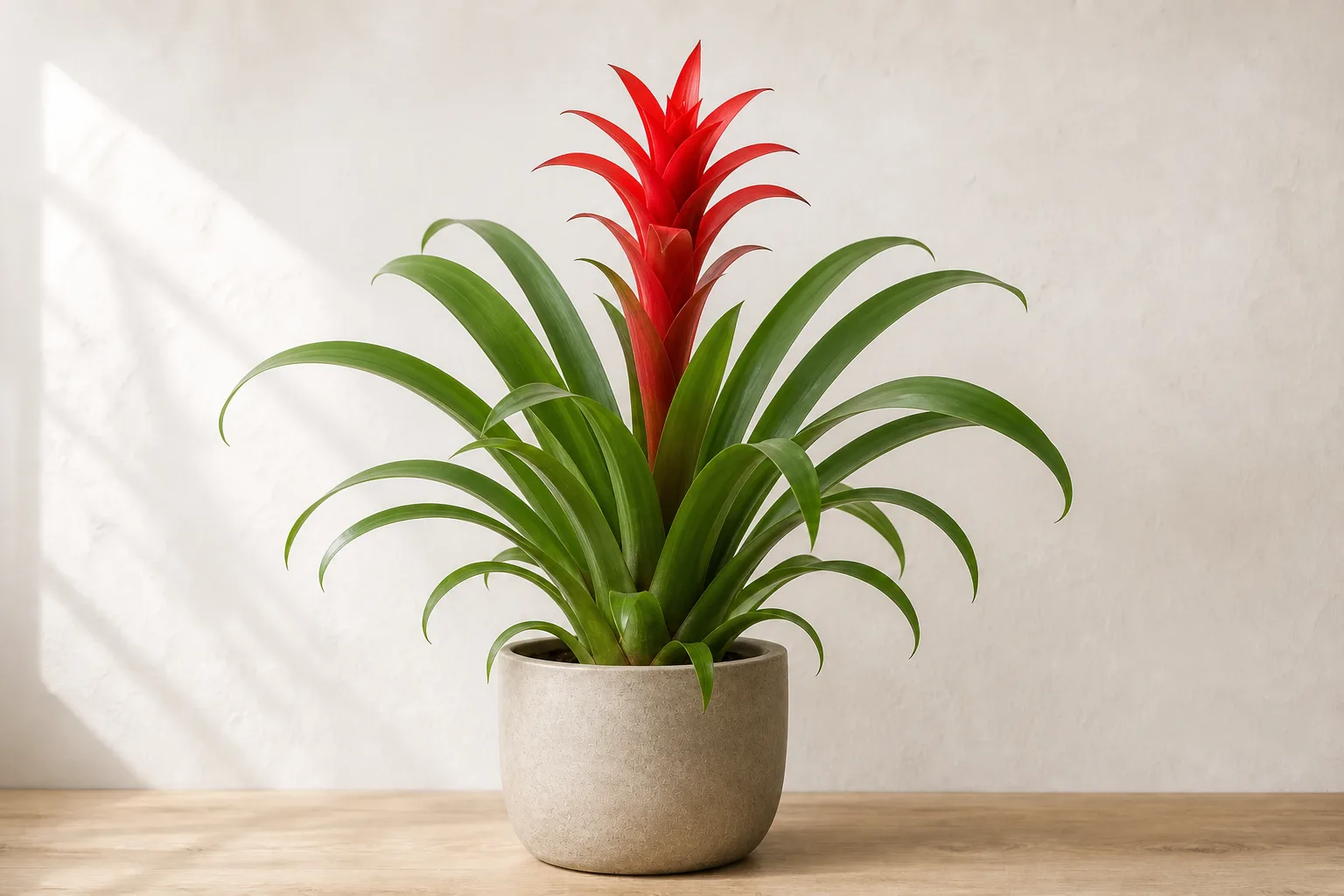
Guzmania lingulata
Scarlet star (Guzmania lingulata) is a tropical epiphytic bromeliad with a rosette of glossy green strap leaves and a globular head of red or orange bracts surrounding small white flowers. Native from southeastern Mexico through tropical America and the West Indies, it keeps its showy inflorescence for two to four months.
 beginner
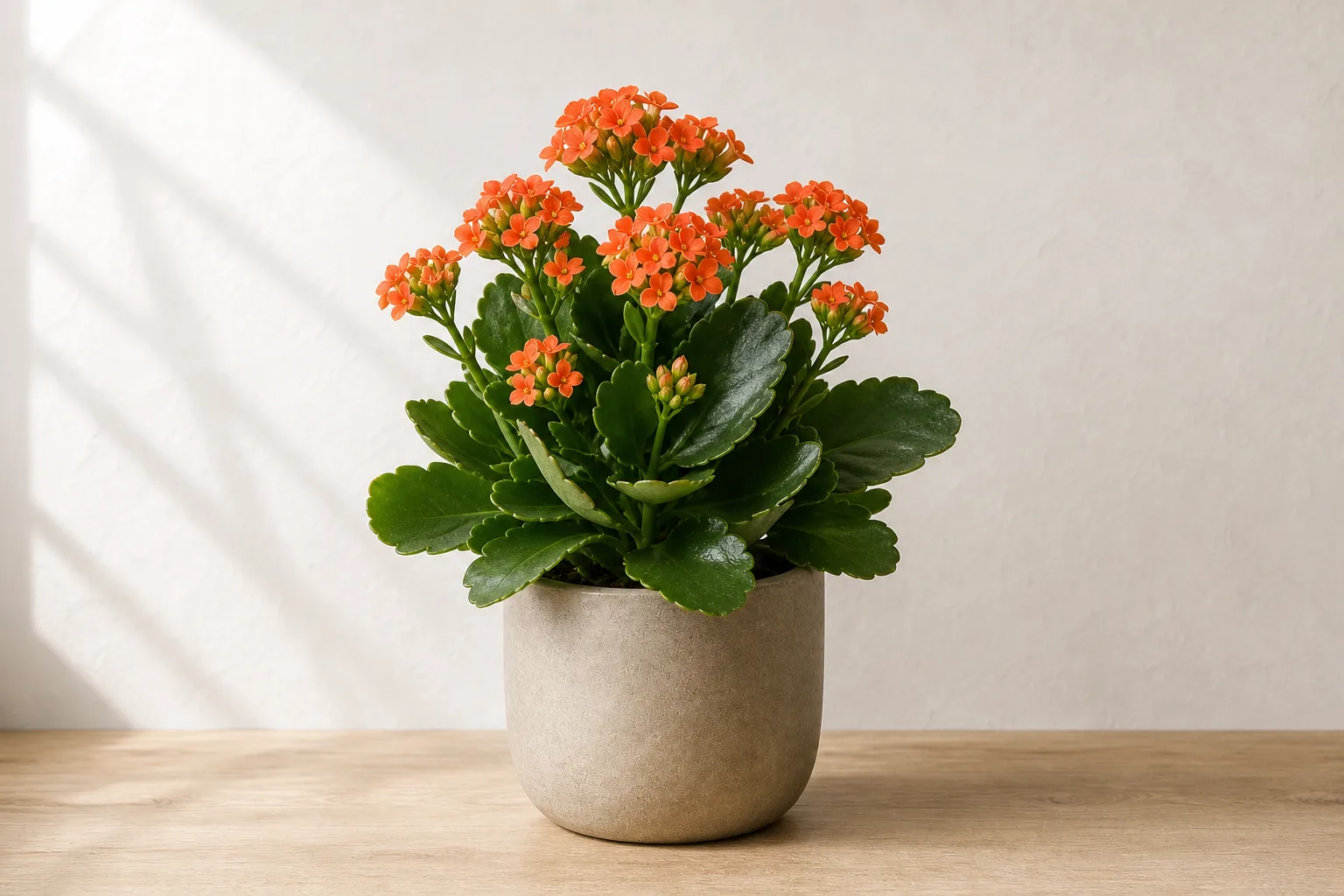
Kalanchoe blossfeldiana
Flaming Katy (Kalanchoe blossfeldiana) is a compact flowering succulent with fleshy, scallop-edged leaves and long-lasting umbels of red, pink, orange, or yellow flowers. Native to northeastern Madagascar, it is one of the easiest flowering houseplants when given bright light and dry intervals.
 intermediate
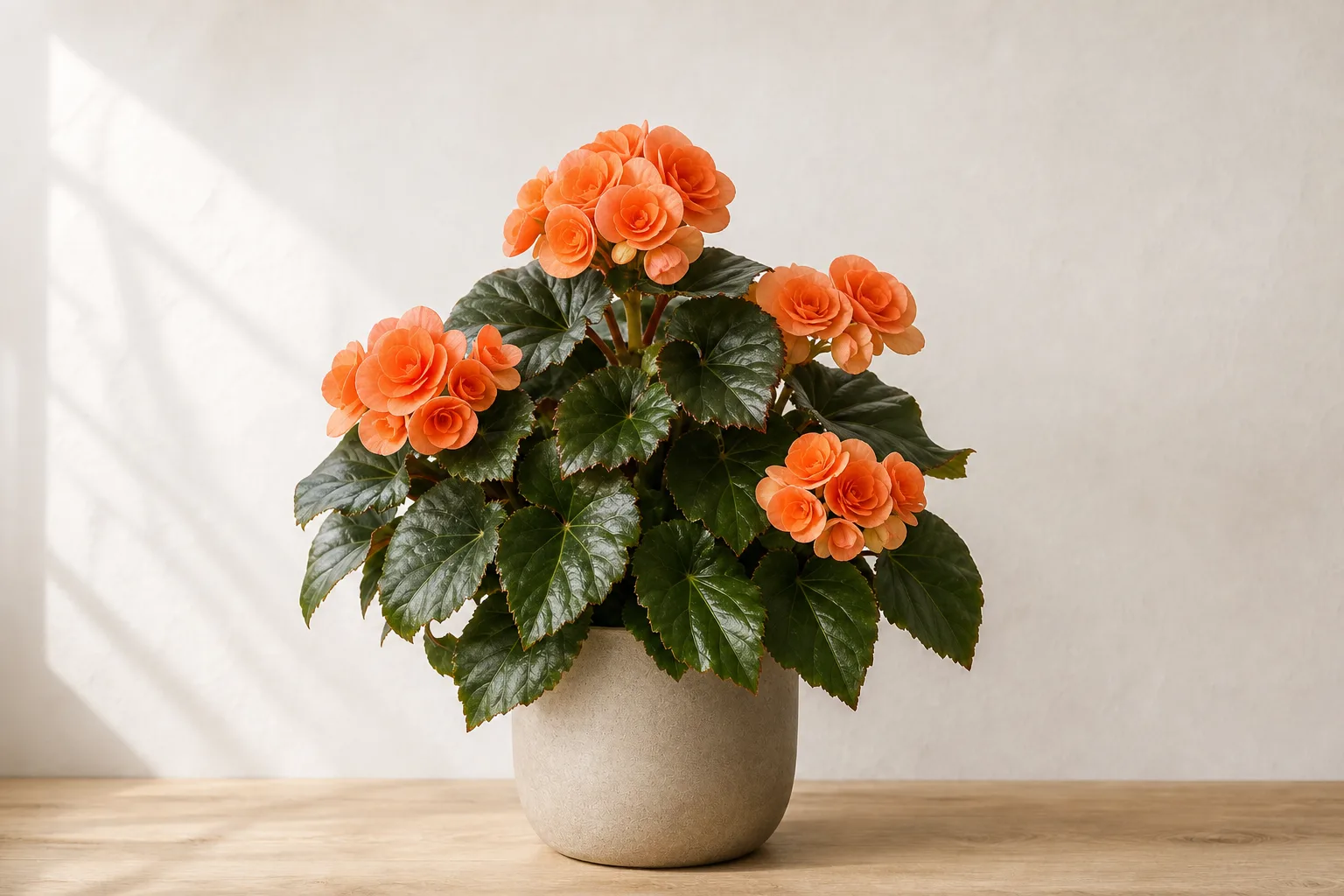
Begonia × hiemalis
Rieger begonia (Begonia × hiemalis) is a compact, winter-flowering hybrid begonia with glossy, asymmetrical green leaves and clusters of large single or double flowers in pink, red, orange, yellow, or white. Bred from Begonia socotrana and tuberous begonias, it is a popular bright-windowsill houseplant.
 intermediate
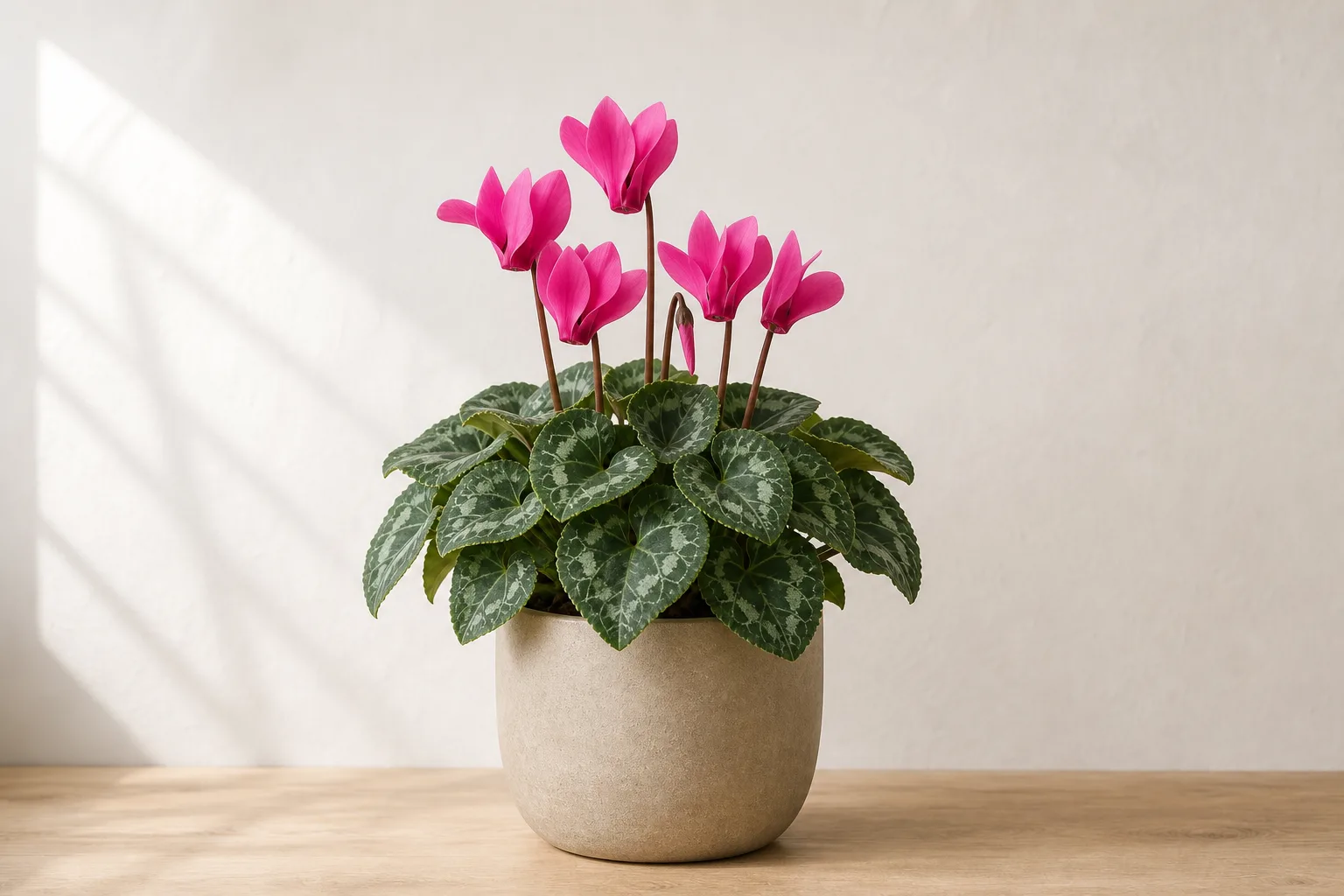
Cyclamen persicum
Florist cyclamen (Cyclamen persicum) is a tuberous flowering perennial grown for its marbled, heart-shaped leaves and upswept, butterfly-like flowers in pink, red, white, or lavender. Native from Algeria to the eastern Mediterranean, it blooms through fall and winter when kept cool and bright.
 Pet-friendlier
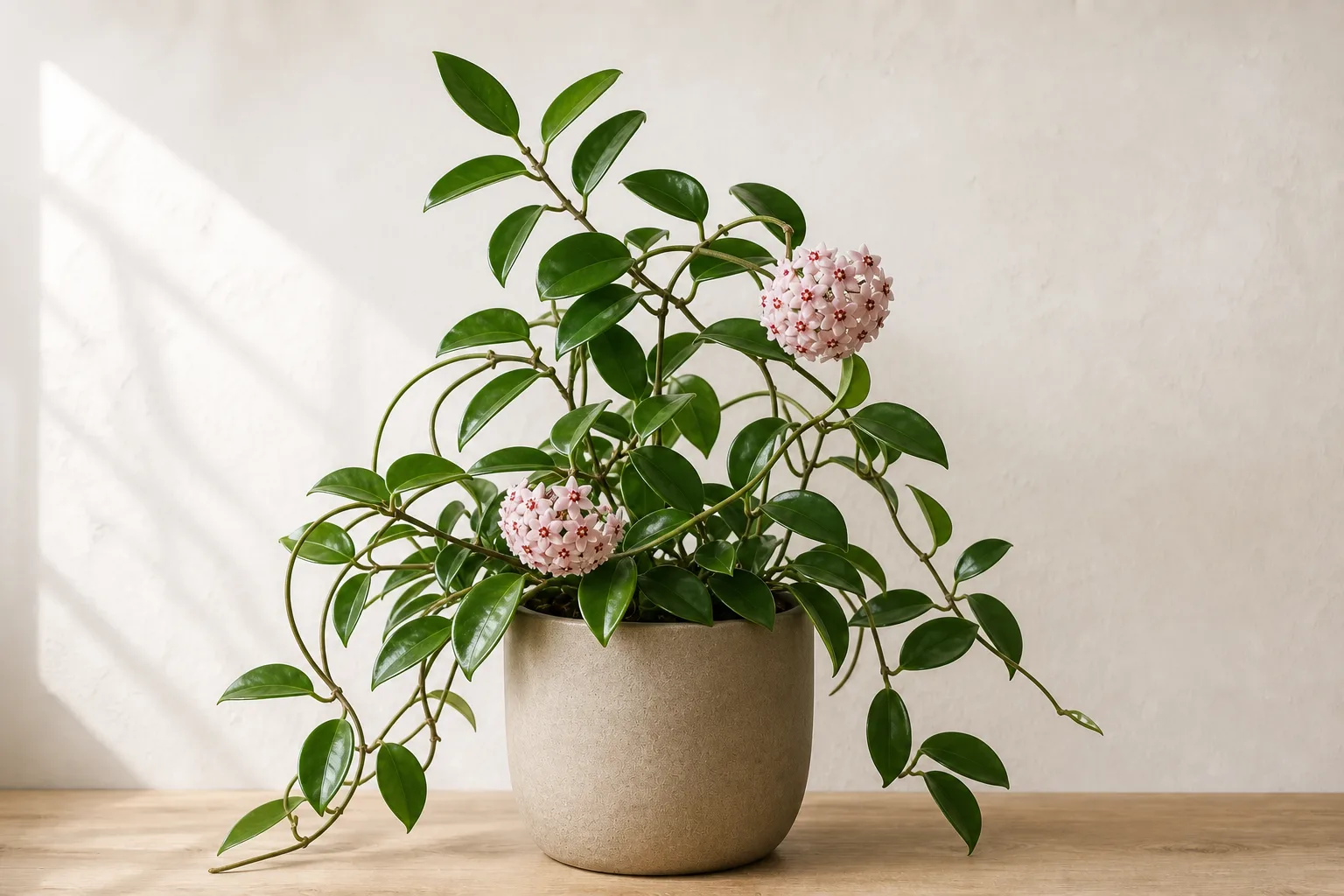
Hoya carnosa
Wax plant (Hoya carnosa) is a trailing or climbing tropical vine with thick, waxy, dark green leaves and tight clusters of fragrant, star-shaped white-to-pink flowers with red-centered coronas. Native from southern China and Japan to Taiwan and Laos, it is a long-lived, easy flowering houseplant.
 Pet-friendlier
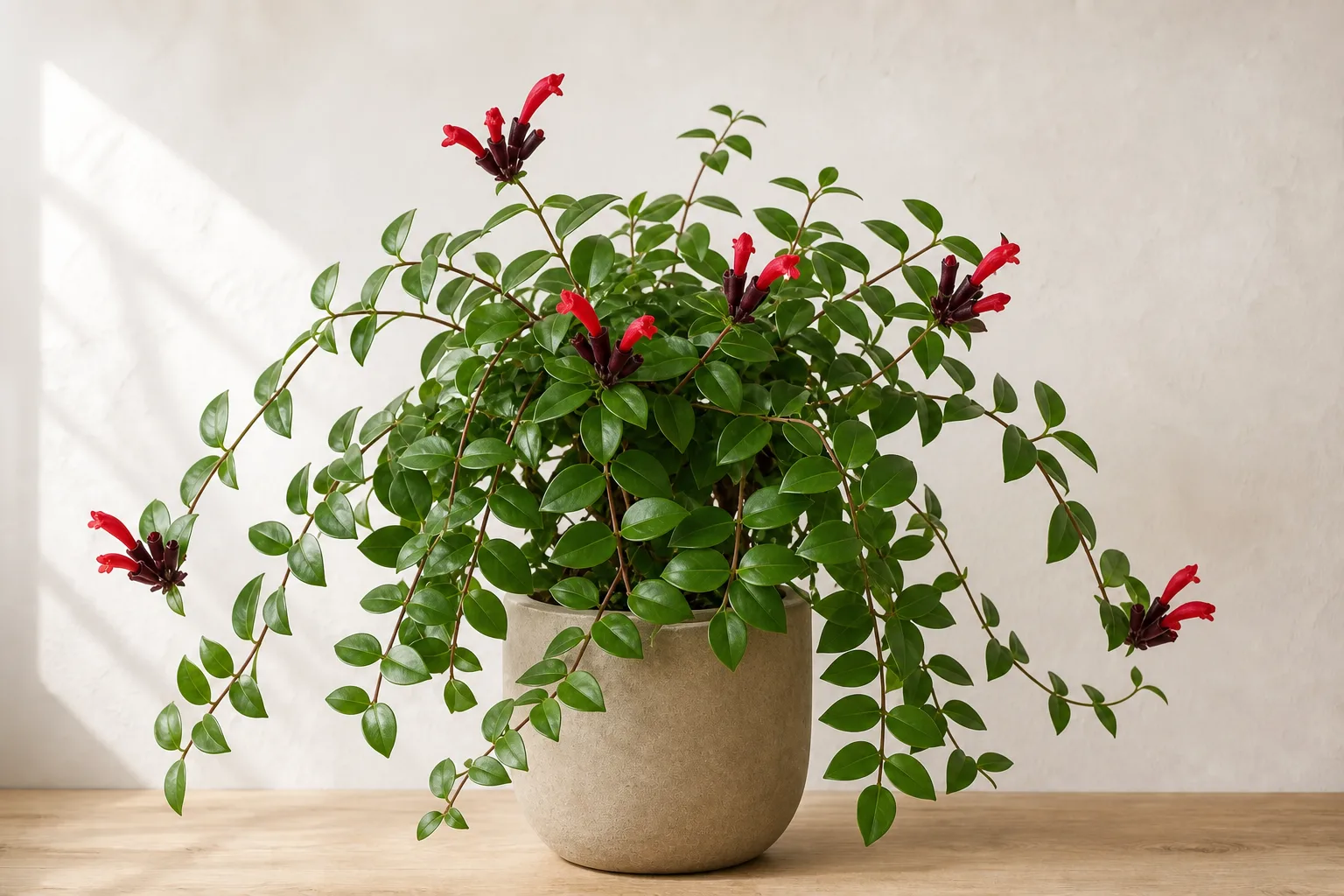
Aeschynanthus radicans
Lipstick plant (Aeschynanthus radicans) is a trailing, epiphytic tropical vine with waxy green leaves and clusters of tubular scarlet flowers that emerge from dark, lipstick-tube-like buds. Native to Thailand, the Malay Peninsula, Sumatra, and Borneo, it is a reliable flowering plant for hanging baskets.
 Pet-friendlier
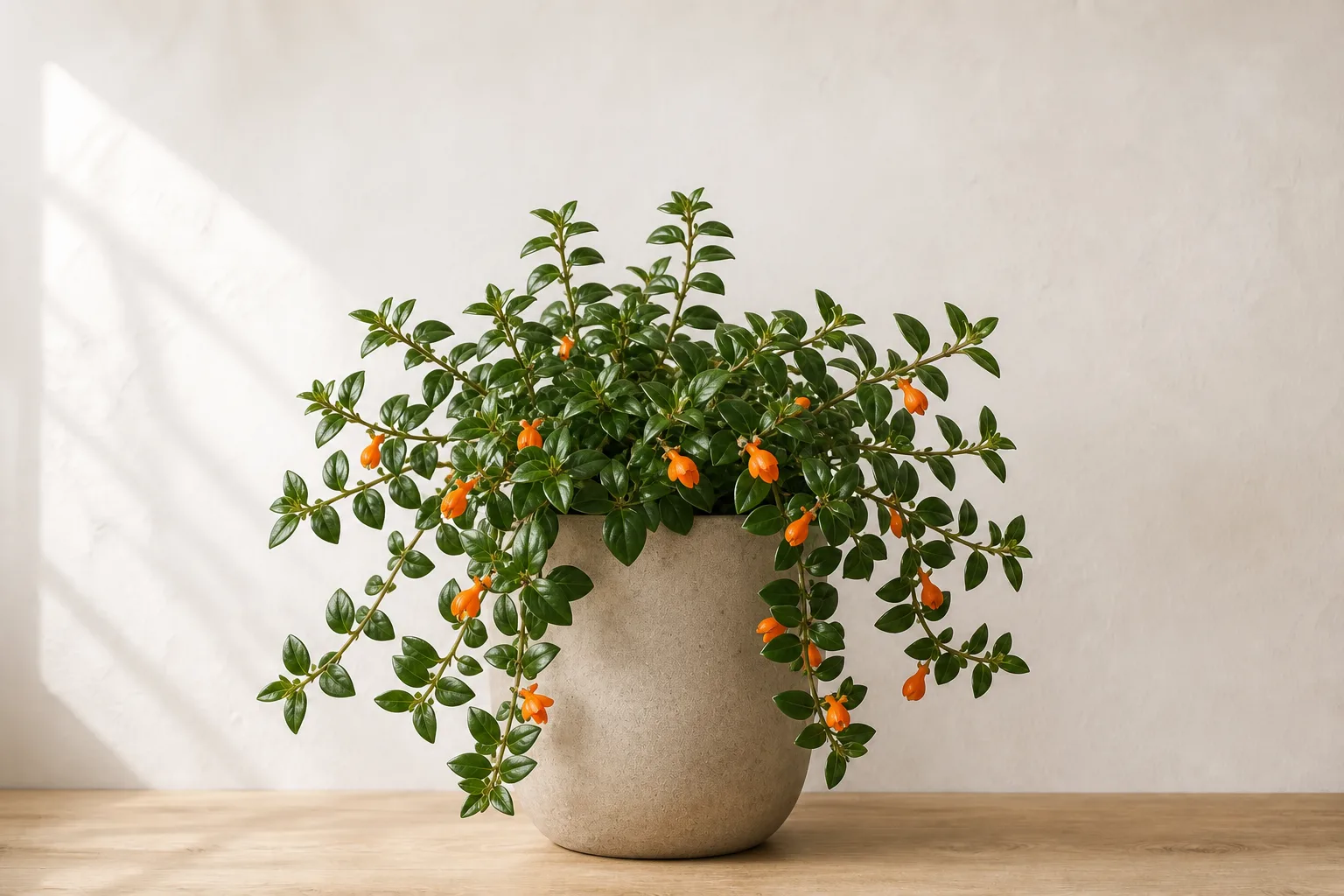
Nematanthus gregarius
Goldfish plant (Nematanthus gregarius) is a trailing, epiphytic tropical plant with small, glossy, fleshy leaves and bright orange, pouch-like tubular flowers that resemble tiny goldfish. Native to southeastern Brazil, it is a compact, reliable bloomer for hanging baskets.
 Pet-friendlier
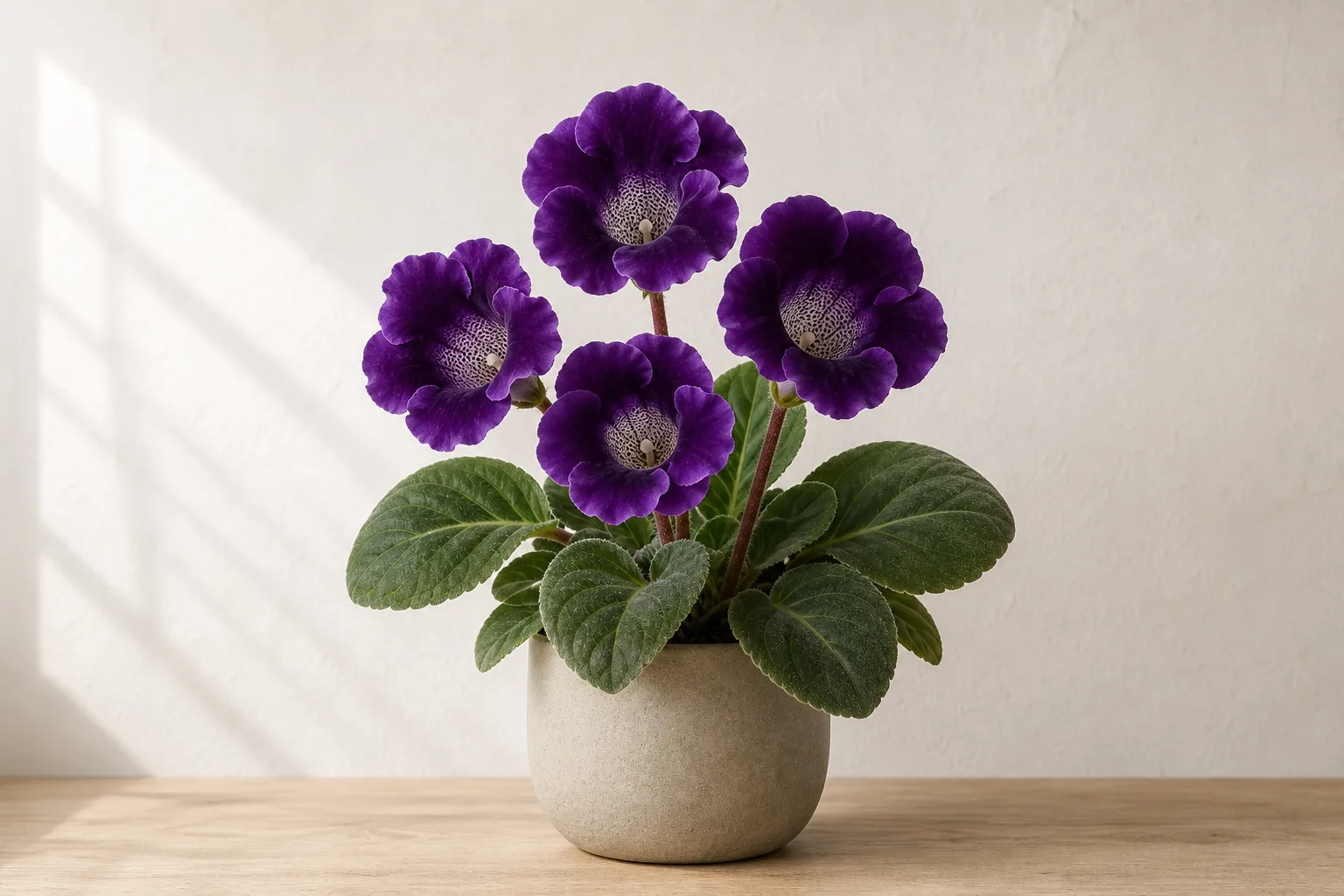
Sinningia speciosa
Florist gloxinia (Sinningia speciosa) is a tuberous flowering perennial with velvety, dark green leaves in a low rosette and large, trumpet-shaped flowers in purple, pink, red, or white. Native to southeastern Brazil, it is a showy, compact bloomer sold in pots by florists and nurseries.
 Pet-friendlier
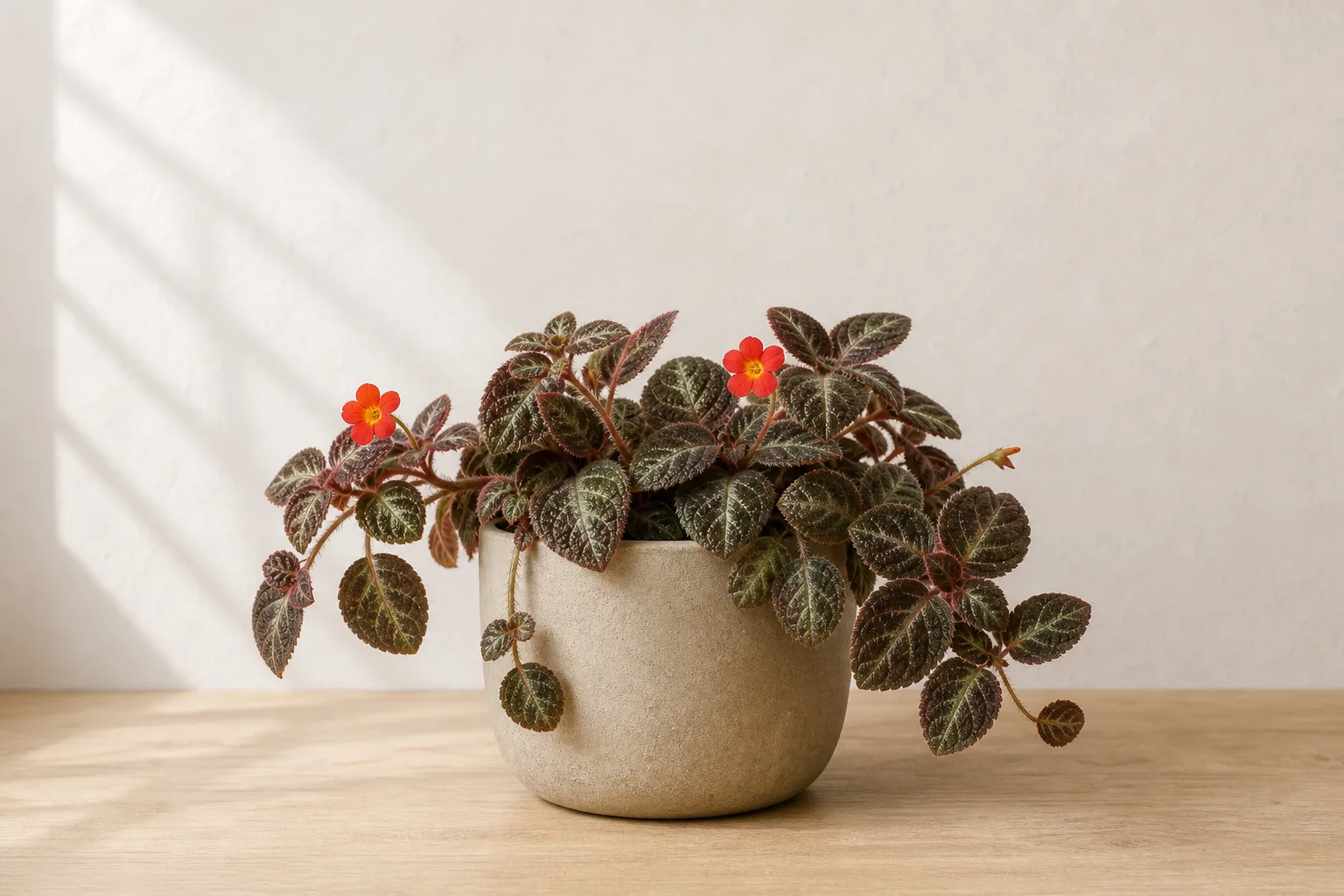
Episcia cupreata
Flame violet (Episcia cupreata) is a trailing tropical perennial with oval, velvety leaves marked by pale midribs and purple undersides, and scarlet-to-orange tubular flowers with yellow throats. Native from Nicaragua to northern Brazil, it is a colorful, creeping plant for hanging baskets and terrariums.
 Pet-friendlier
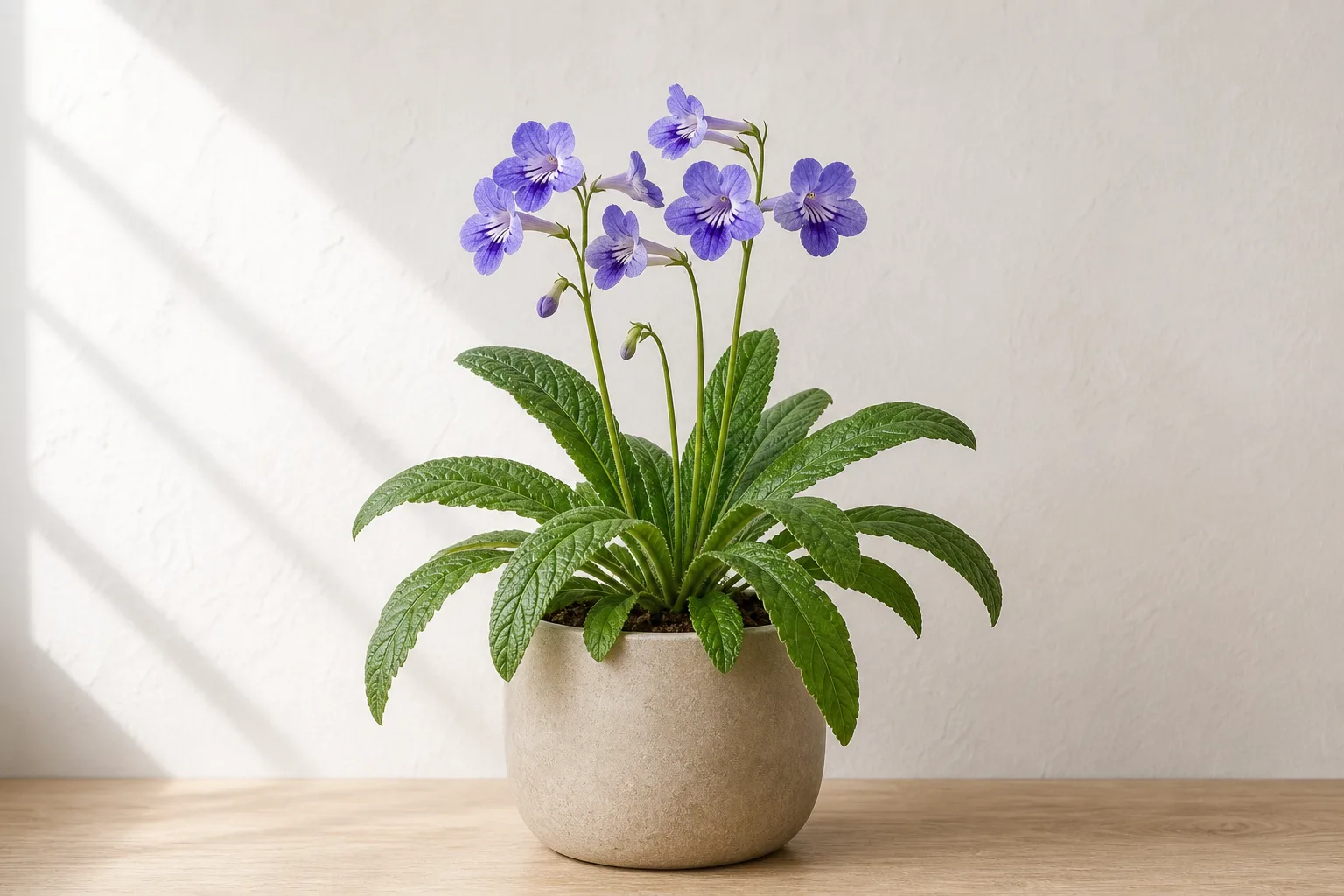
Streptocarpus rexii
Cape primrose (Streptocarpus rexii) is a stemless gesneriad grown for its low rosette of quilted, velvety leaves and trumpet-shaped flowers in white, blue, and violet shades with streaked throats. Native to the Cape Provinces and KwaZulu-Natal of South Africa, it blooms for months at a stretch and rewards bright filtered light with near-continuous flowers.
 Pet-friendlier
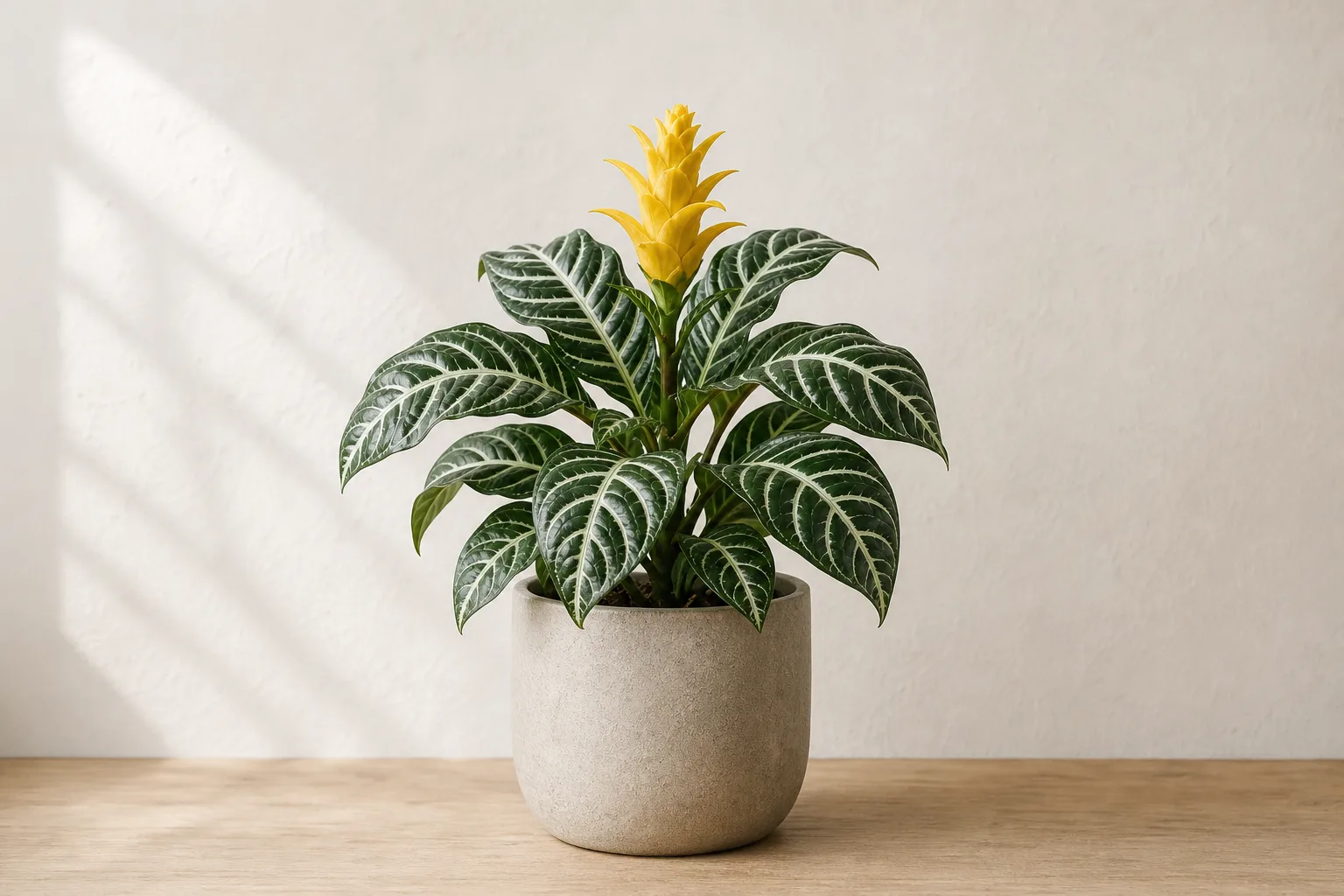
Aphelandra squarrosa
Zebra plant (Aphelandra squarrosa) is a tropical broadleaf evergreen grown for its glossy dark green leaves striped with bold white veins and its upright spikes of golden-yellow bracted flowers. Native to the Atlantic forests of Brazil, it makes a striking small houseplant that needs bright filtered light, warmth, and steady humidity.
 advanced
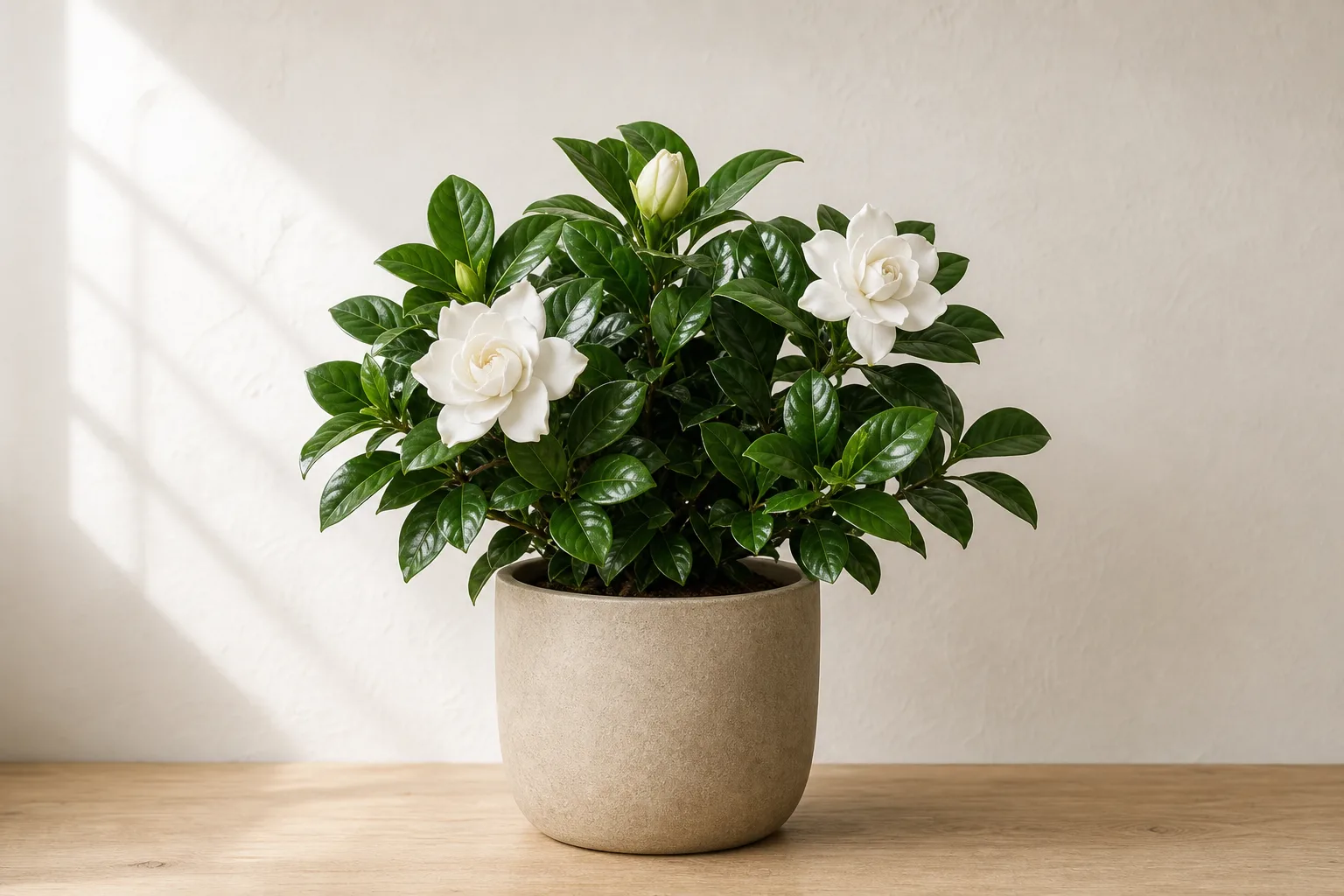
Gardenia jasminoides
Gardenia (Gardenia jasminoides) is an evergreen shrub from eastern Asia prized for its glossy dark leaves and intensely fragrant, waxy white flowers that fade to cream. Indoors it is a demanding but rewarding plant that needs bright light, acidic soil, steady moisture, and stable temperatures to flower well.
 intermediate
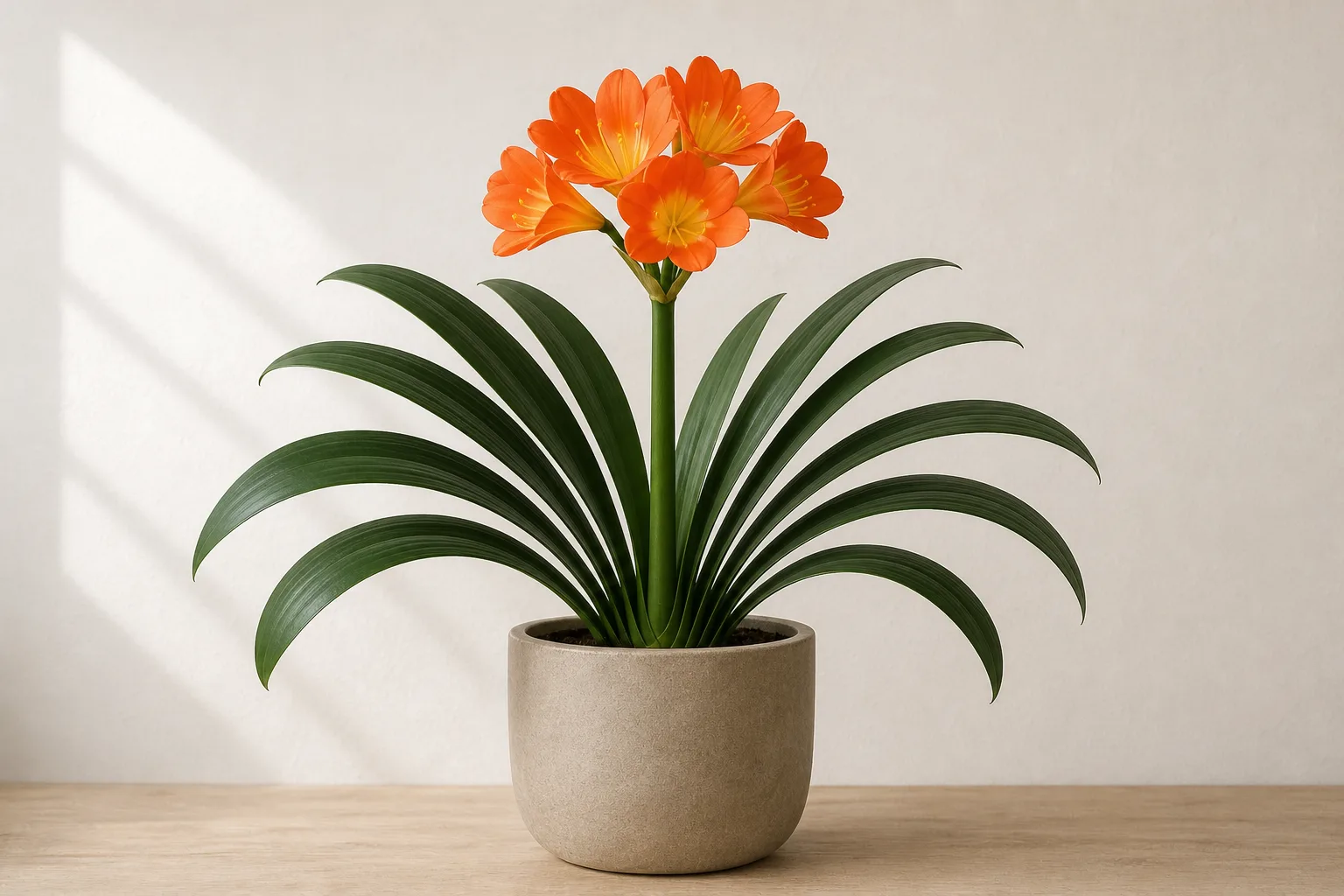
Clivia miniata
Bush lily (Clivia miniata) is a clump-forming, strap-leaved perennial from South Africa and Eswatini, grown for its evergreen dark green foliage and showy clusters of funnel-shaped orange flowers with yellow throats. A long-lived, low-maintenance houseplant, it flowers best when kept snug in its pot and given a cool rest in winter.
 beginner
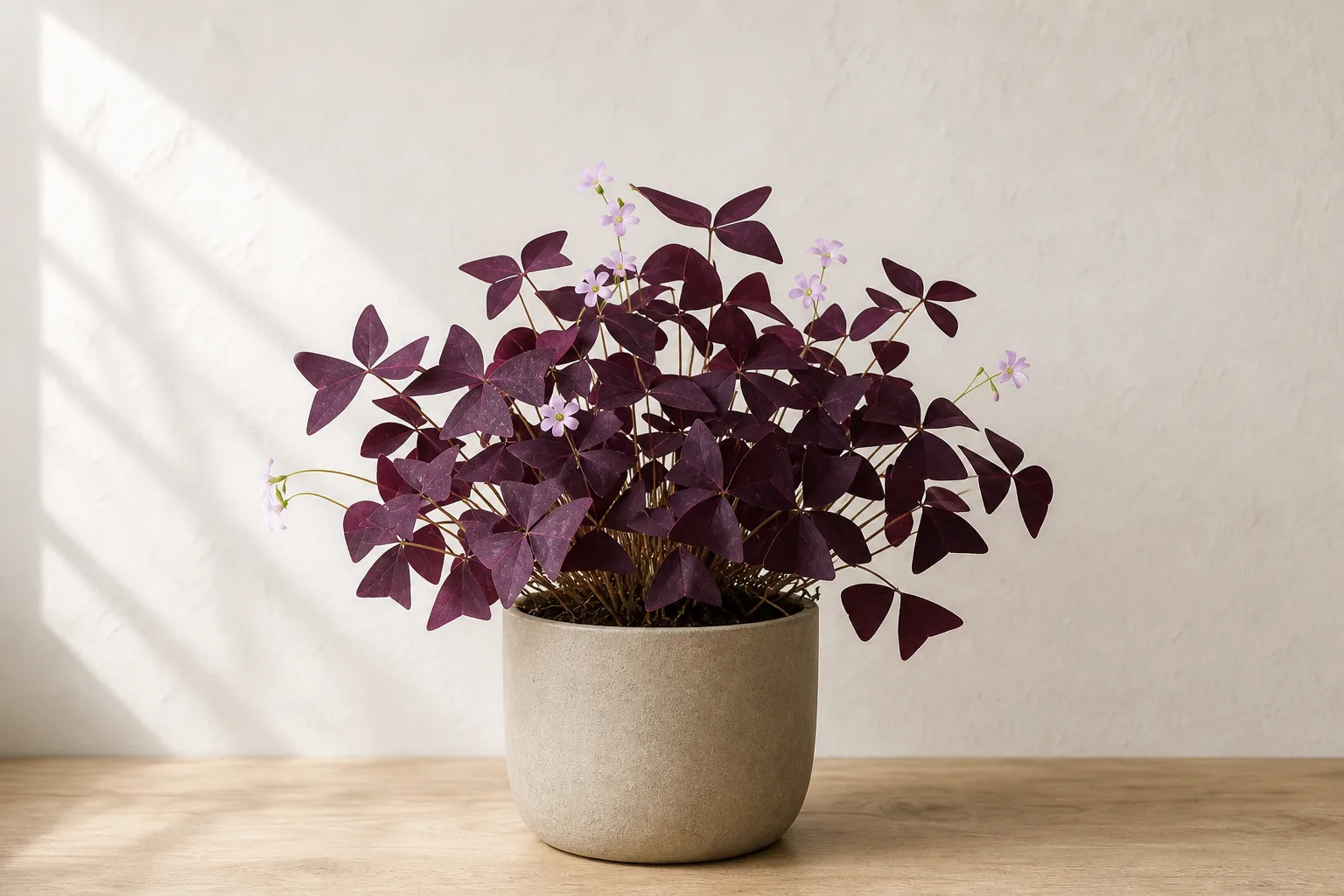
Oxalis triangularis
Purple shamrock (Oxalis triangularis) is a compact, tuberous South American perennial grown for its deep maroon, butterfly-like leaves that fold down at night and its small pink or white flowers. Easy and forgiving, it makes a colorful houseplant that responds well to bright filtered light and a dormancy-aware watering routine.
 intermediate
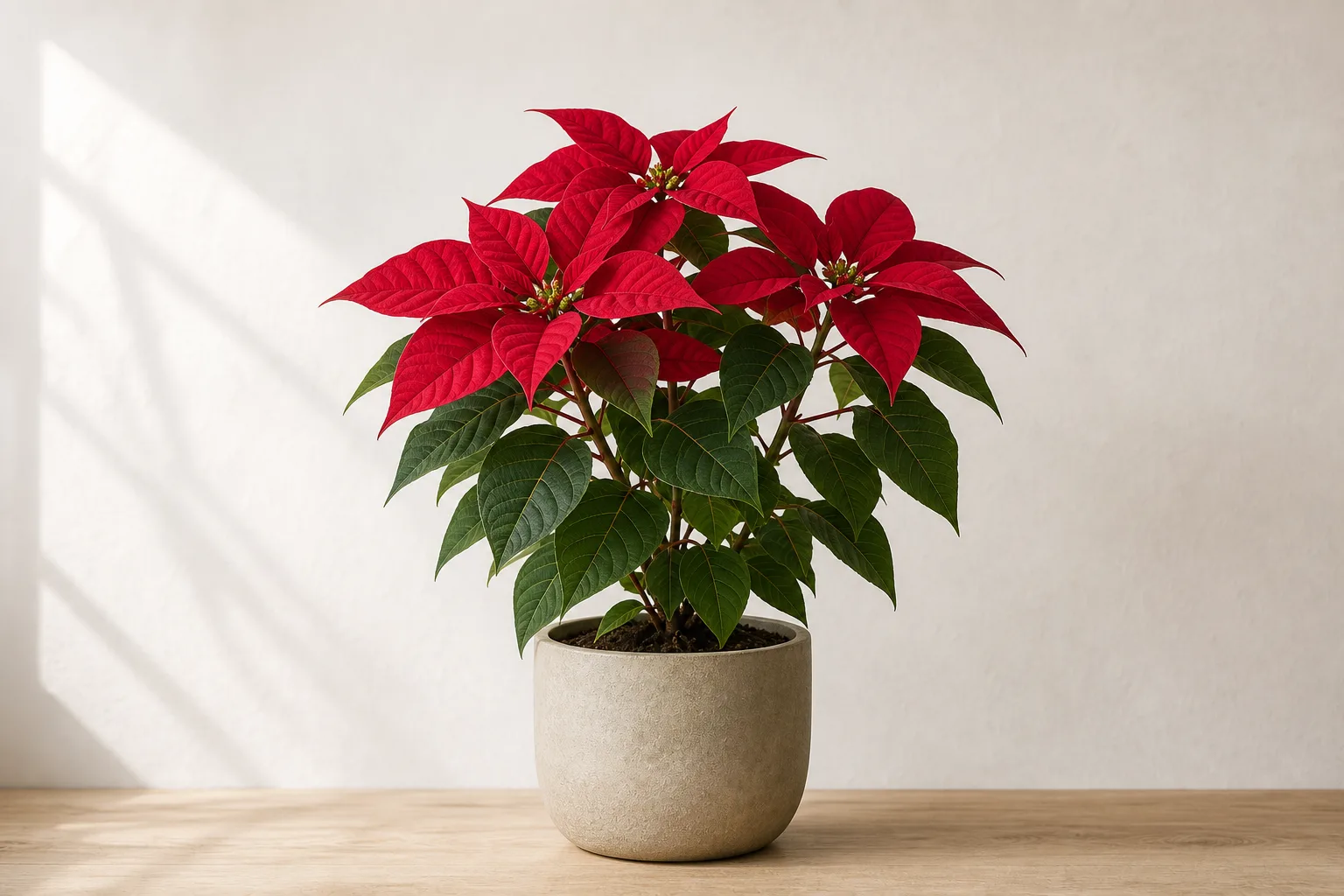
Euphorbia pulcherrima
Poinsettia (Euphorbia pulcherrima) is a seasonal flowering shrub from Mexico and Guatemala, grown for its brilliantly colored bracts that surround small yellow flowers. Brought into bloom for the winter holidays, it makes a bright seasonal houseplant that asks for bright light, gentle watering, and protection from cold drafts.
 Pet-friendlier
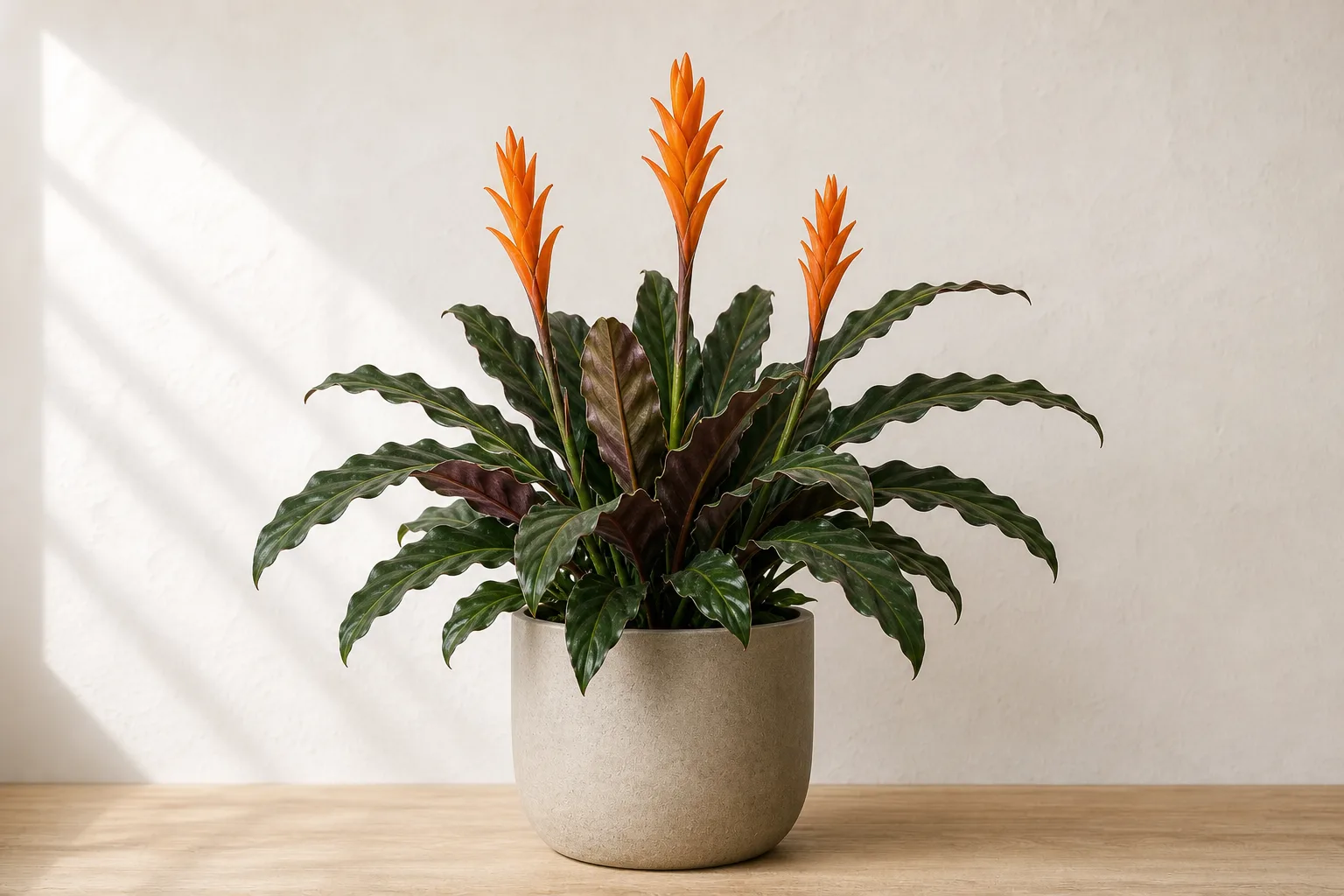
Goeppertia crocata
Eternal flame (Goeppertia crocata, formerly Calathea crocata) is a compact prayer-plant family perennial from the rainforests of eastern Brazil, grown for its glossy green leaves with maroon undersides and torch-like spikes of yellow-orange bracts. Its long-lasting flowers and pet-safe status make it a prized, if demanding, tropical houseplant.
 Pet-friendlier
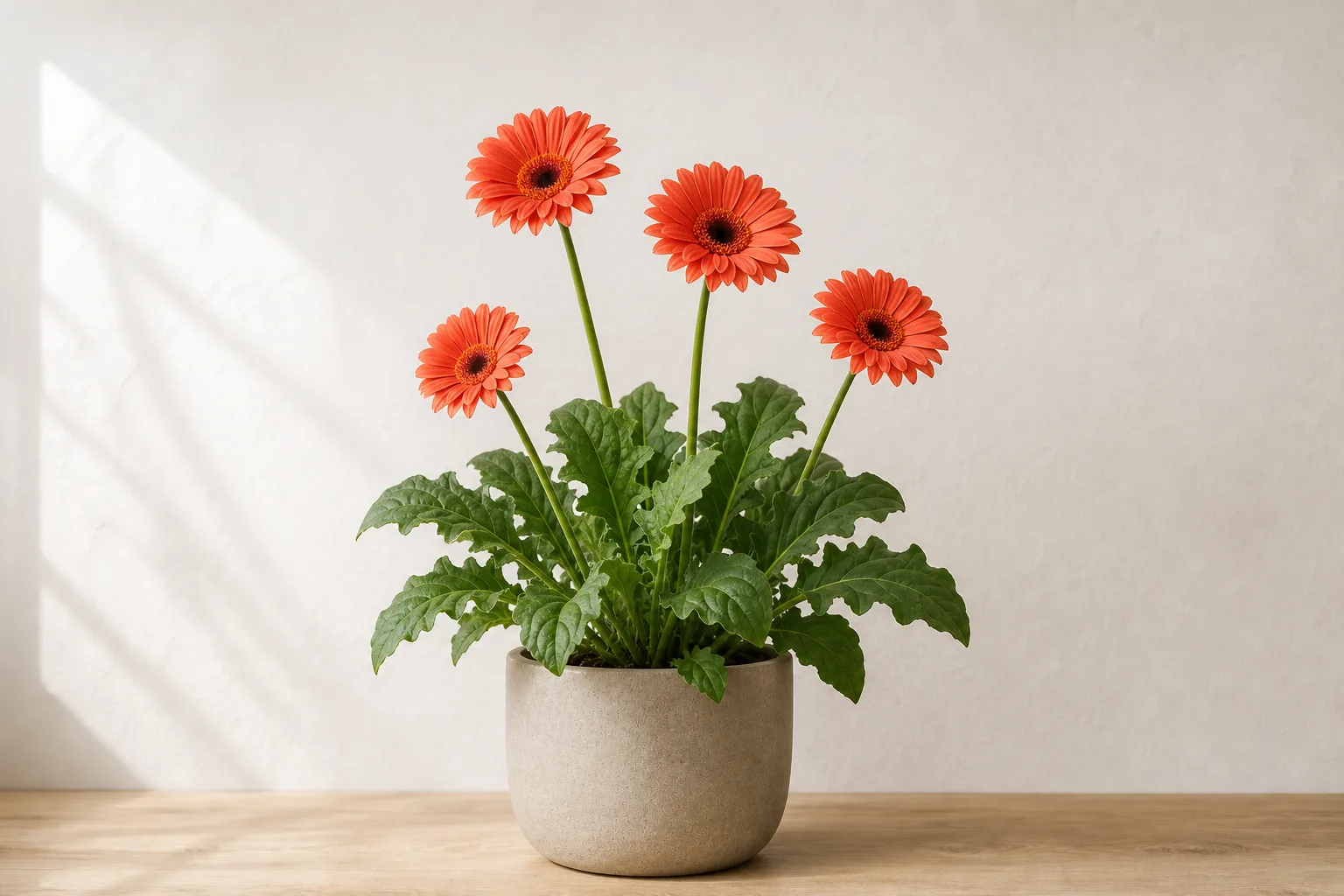
Gerbera jamesonii
Gerbera daisy (Gerbera jamesonii) is a clump-forming perennial from South Africa and Eswatini, grown for its large, showy daisy flowers in red, yellow, orange, pink, and white held above a rosette of lobed green leaves. A cheerful flowering houseplant, it needs bright light, good drainage, and careful watering to keep its crown healthy.
Move a plant toward brighter filtered light gradually; a sudden jump into direct sun can scorch foliage.