Key takeaways
- Give it bright indirect light to full sun; it grows tall and needs a heavy pot or stake to stay stable.
- Water only after the mix has dried, and sharply reduce watering in winter.
- Wear gloves when handling and keep it away from pets - the white sap is a skin and eye irritant and toxic if ingested.
How to care for African Milk Tree
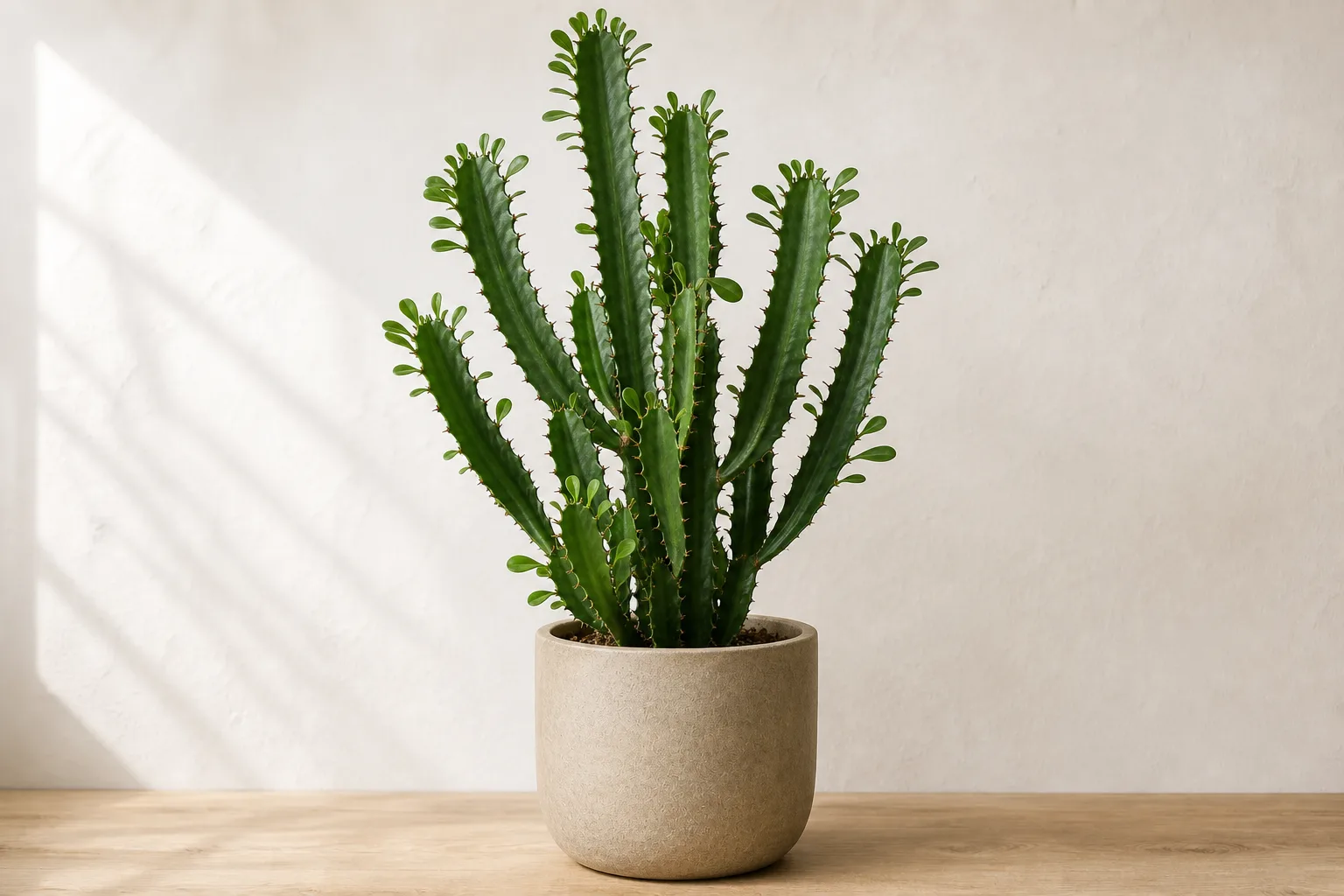
African milk tree (Euphorbia trigona) is an upright, shrubby, branching succulent in the spurge family (Euphorbiaceae), native to seasonally dry tropical forests from Gabon to Malawi in central Africa. Its fleshy, three- to five-angled green stems carry small spines and short-lived leaves, and mature plants can reach several feet indoors. The common name refers to the white, milky sap exuded from cut stems, which is typical of euphorbs.
Give it bright light, sharply drained soil, and a genuine dry period between waterings. Because it grows tall on a small root system, it can become top-heavy and may need a heavy pot or stake. Always wear gloves when handling, pruning, or propagating, and keep the sap away from skin and eyes.
Light
African milk tree needs bright light to stay healthy - full sun to part shade, or bright indirect light indoors near a sunny window. It grows in seasonally dry tropical forests and appreciates a strong, sunny position. In too little light the stems stretch and become pale. Acclimatize the plant gradually if you move it into stronger direct sun or outdoors for summer, and bring it in before temperatures fall below about 45°F (7°C).
Water
Water sparingly, only when the soil has dried to one to two inches down, then water thoroughly and drain. This is a succulent that is far more tolerant of dry conditions than of wet soil; overwatering causes root rot and fungal problems, the most common failures. Reduce watering in winter, when the plant rests and the mix dries more slowly. When in doubt, wait.
Soil and repotting
Use a sharply drained, sandy or loamy cactus and succulent mix in a container with a drainage hole. African milk tree must have sharply drained soil and is intolerant of standing water. Repot only when the plant has outgrown its pot, and treat the task as a two-person job: the plant is spiny, top-heavy, and leaks irritating sap from any wound. Wear gloves and protect your eyes when repotting.
Temperature, humidity, and fertilizer
African milk tree prefers warm conditions, roughly 65-85°F (18-29°C), with low humidity and good airflow to discourage fungal problems. It is not frost hardy and must come indoors when temperatures drop below about 45°F (7°C). Feed sparingly with a diluted succulent or cactus fertilizer during active growth, and not at all in winter.
Pruning and propagation
Prune to control height and shape, cutting stems with a clean, sharp blade while wearing gloves, since the white sap is an irritant. Wipe or wash tools and any sap spills promptly. Propagation is easy by stem cuttings: let a cut section dry and callus for several days before planting it in dry, well-drained mix. Keep the cutting dry until roots form, then resume a normal watering cycle.
Common problems
Start with the pattern, current soil moisture, and recent changes. One symptom can have several causes, so change the most likely factor first and observe before making another major adjustment.
| Symptom | Check first | First action |
|---|---|---|
| Soft, mushy stem base | Whether the mix has stayed wet and whether the pot drains | Stop watering until the mix dries; if the base is soft, unpot and inspect the roots before taking further action. |
| Wrinkled or shriveled stems | How long since the last watering and the current light level | Water thoroughly if the mix is dry, then let it drain and resume a dry-down cycle. |
| Stretching or leaning toward the light | Available light and the plant's balance in its pot | Move gradually to a brighter position and stake or rotate the pot to keep the growth even. |
| Yellowing or dropping leaves | Recent watering, temperature, and whether leaves are only on the oldest stems | Check the root zone first; water only if dry, and let the mix dry out if it is wet. |
| Mealybugs or spider mites on stems | Stem ridges, leaf undersides, and nearby plants | Isolate the plant and identify the pest before treating; wipe off visible pests with a targeted control. |
Pet and household safety
African milk tree (Euphorbia trigona) is toxic to cats and dogs if chewed, and the milky sap (a latex containing diterpenoid euphorbol esters) is a strong irritant to skin and eyes and toxic if ingested. Contact with the sap can cause skin irritation, rash, or blistering, and ingestion can cause serious gastrointestinal upset. Keep the plant out of reach of pets and children, wear gloves when handling or pruning, and contact a veterinarian or animal poison-control service after a concerning exposure.
Frequently asked questions
How often should I water an African milk tree?
Water sparingly, only when the soil has dried one to two inches down, then water thoroughly and drain. The interval changes with light, pot size, and season, and should lengthen in winter. Overwatering causes root rot.
What light does an African milk tree need?
Bright light - full sun to part shade, or bright indirect light indoors. It stretches and pales in low light, so give it the brightest position available.
Where does African milk tree grow naturally?
It is native to seasonally dry tropical forests in central Africa, from Gabon to Malawi, where it grows as an upright succulent shrub.
Why are the leaves falling off my African milk tree?
Leaves drop seasonally and with stress from overwatering, cold, or a sudden move. Check the root zone and recent conditions before changing several care variables.
How do I propagate an African milk tree?
Stem cuttings root readily. Let the cut end dry and callus for several days, then plant it in dry, well-drained mix and keep it dry until roots form. Wear gloves when cutting.
Is African milk tree safe for pets?
No. It is toxic to cats and dogs if chewed, and the milky sap irritates skin and eyes. Keep it out of reach and contact a veterinarian after a concerning exposure.
Sources and editorial review
This editorial draft is based on the sources below and awaits named horticulture-expert approval before publication.
- Euphorbia trigonaRoyal Botanic Gardens, Kew (Plants of the World Online) · Checked
- Euphorbia trigona (African Milk Tree)North Carolina State University Extension · Checked
- Euphorbia trigona (African milk tree)Missouri Botanical Garden Plant Finder · Checked
- Toxic and non-toxic plantsASPCA · Checked
What works well
- Imposing, sculptural form that makes a statement in a bright room.
- Fast-growing and drought tolerant once established.
- Easy to propagate from stem cuttings.
What to consider
- Milky sap irritates skin and eyes and is toxic if ingested.
- Spines and a heavy top make it awkward to move and repot.
- Root rot and fungal problems follow overwatering.