Key takeaways
- Allow the mix to dry fully.
- Low light slows growth but is tolerated.
- Keep away from plant-chewing pets.
How to care for Snake Plant
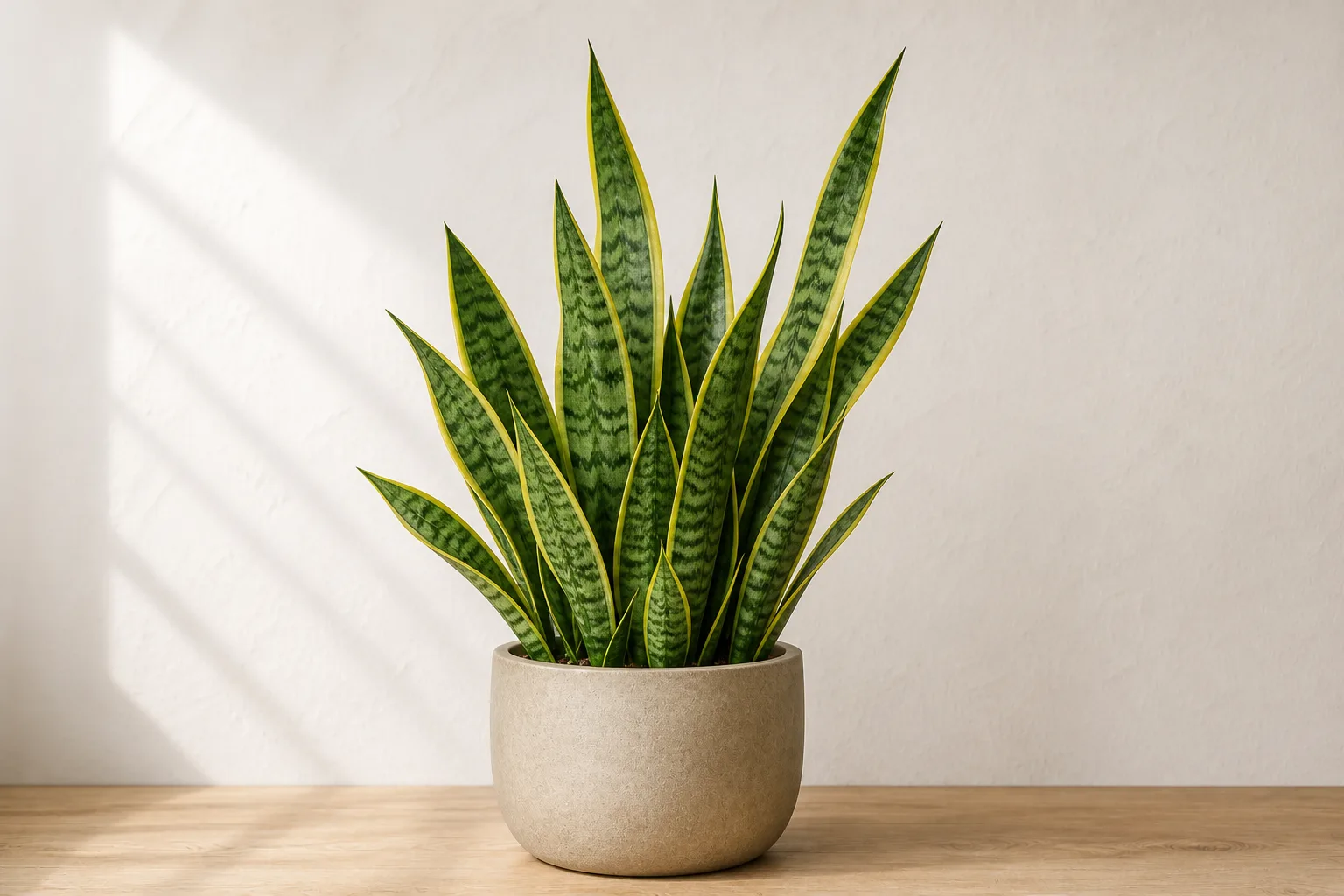
Snake plant is a succulent, rhizomatous perennial with stiff upright leaves. It tolerates a range of indoor light, but its slow growth means care changes show up gradually. The most important habit is allowing the root zone to dry rather than keeping it evenly moist.
Light
Bright indirect light supports steadier growth, though snake plant can tolerate lower light. Low light is not a license to water on the same schedule: growth and drying slow, so the pot needs longer between drinks. Protect leaves from abrupt, hot direct sun.
Water
Let the potting mix dry through before watering, then soak it and let all excess drain. In winter or a dim room the interval can become much longer. Soft leaves, a sour mix, or a loose base suggest that the roots need inspection before more water is added.
Soil and repotting
Use a fast-draining succulent mix and a pot with a drainage hole. Repot only when the rhizomes crowd the container, split a pot, or drying becomes unusually fast. A larger pot full of unused damp mix is usually riskier than a modestly snug one.
Temperature, humidity, and fertilizer
Average indoor humidity is sufficient. Keep the plant away from prolonged cold and wet conditions, and feed lightly only during active growth in good light. Fertilizer cannot repair root rot; settle the watering and drainage issue first.
Pruning and propagation
Remove damaged leaves at the base with clean tools. Divide a crowded clump so each division keeps roots and a growing point. Leaf cuttings can root, but variegated cultivars may not reproduce their original leaf pattern, so division is the reliable method for preserving a cultivar.
- Keep cut leaf ends clean and dry before rooting.
- Do not cut healthy leaves just to force faster growth.
- Use a stable pot; tall plants can become top-heavy.
Common problems
Start with the pattern, current soil moisture, and recent changes. One symptom can have several causes, so change the most likely factor first and observe before making another major adjustment.
| Symptom | Check first | First action |
|---|---|---|
| Soft or collapsing leaves | Mix moisture, base firmness, and drainage | Stop watering and inspect the roots |
| Wrinkled leaves | Whether the mix has stayed dry for a long period | Water thoroughly if roots and mix are healthy |
| Yellow leaves | Overwatering, cold exposure, and natural leaf age | Correct the most likely moisture issue first |
| Slow or no growth | Season, light level, and whether roots are healthy | Expect slow growth; improve light gradually rather than overfeeding |
| Pot splits or crowds | Rhizomes pressing against the container | Repot one size up or divide during active growth |
Pet and household safety
Snake plant is toxic to cats and dogs if chewed. ASPCA lists saponins and possible nausea, vomiting, or diarrhea. Keep it out of reach and contact a veterinarian or animal poison-control service after a concerning exposure.
Frequently asked questions
How often should I water Snake Plant?
Only after the mix has dried through; the interval is longer in low light and winter.
Can Snake Plant live in low light?
It can tolerate low light, but growth slows and the soil dries more slowly.
Why are my Snake Plant leaves soft?
Check for wet mix and root decline first; soft leaves are not a reason to add water.
Should I mist Snake Plant?
No. Typical indoor humidity is enough, and wet leaves do not solve a root-zone problem.
How do I propagate Snake Plant?
Divide a rooted clump to preserve its cultivar traits; leaf cuttings are slower and may lose variegation.
Is Snake Plant safe for pets?
No. Keep it away from cats and dogs that chew foliage.
Sources and editorial review
This editorial draft is based on the sources below and awaits named horticulture-expert approval before publication.
- Dracaena trifasciataNC State Extension · Checked
- Dracaena trifasciata (Prain) Mabb.Royal Botanic Gardens, Kew — Plants of the World Online · Checked
- Snake PlantASPCA · Checked
- Spring houseplant careUniversity of Minnesota Extension · Checked
What works well
- Drought tolerant
- Strong architectural form
- Handles varied light
What to consider
- Toxic to pets
- Easy to overwater
- Slow recovery from damage