 beginner
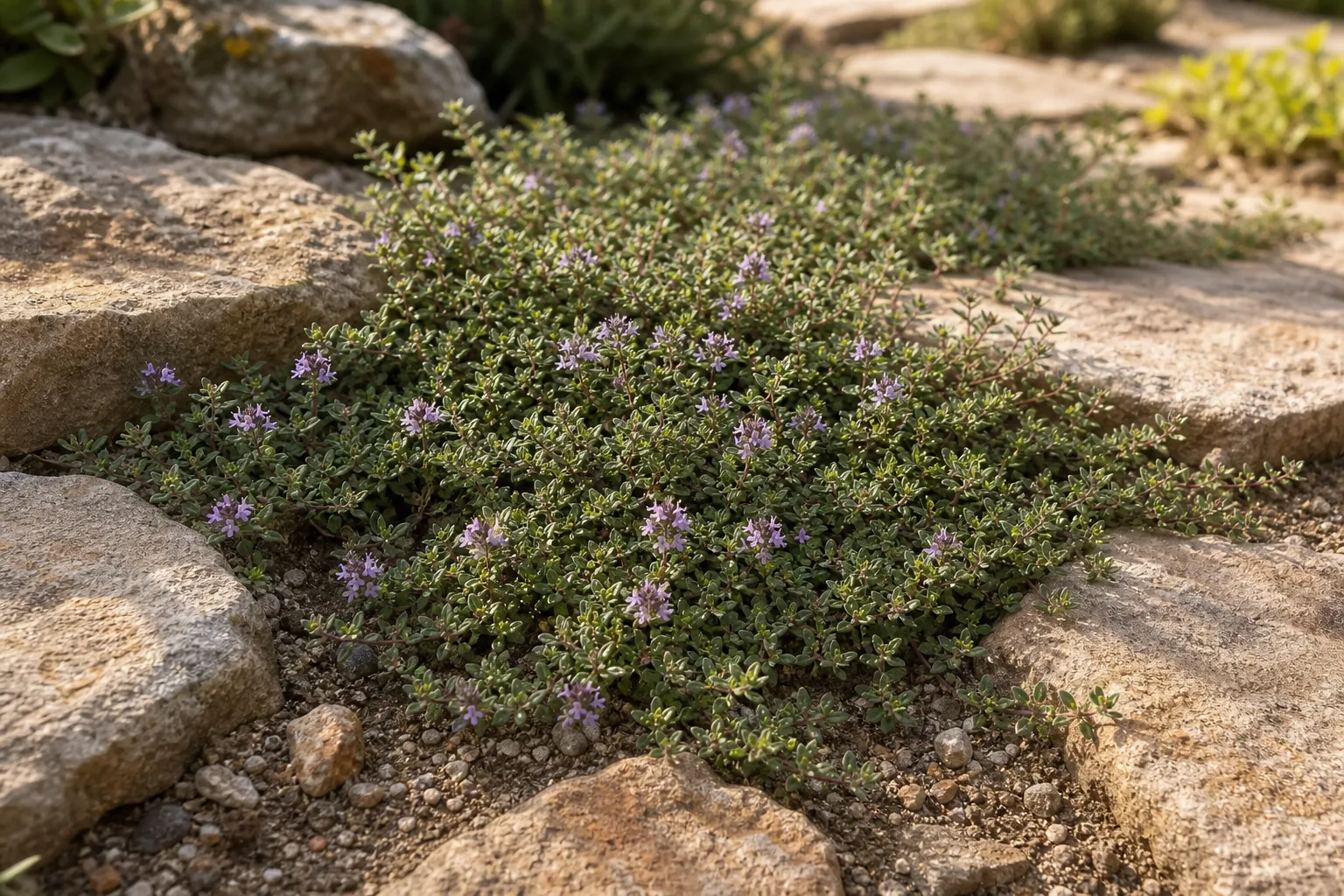
Creeping Thyme
Thymus serpyllum
A low aromatic thyme that spreads into a close flowering mat over dry, sunny soil.
Ground covers work best when their spread rate, foot-traffic tolerance, and moisture needs match the exact site.
This collection is the permanent home for practical ground covers profiles, planning guides, seasonal care, and problem-solving content.
Ground covers earn their place by outcompeting weeds, and that only happens with enough initial plants. Spacing them at the distances in these profiles—tempting as it is to stretch a few plants thin—closes the canopy in one or two seasons instead of five, and mulch between young plants suppresses weeds while they knit together.
Match the cover to the hardest part of the site. Dry shade under trees, hot banks, and soggy low spots each have plants adapted to exactly that stress; using a generalist in an extreme spot is the usual failure. Prepare the soil before planting, because a dense ground cover is difficult to amend later.
21 plants
beginnerThymus serpyllum
A low aromatic thyme that spreads into a close flowering mat over dry, sunny soil.
 intermediate
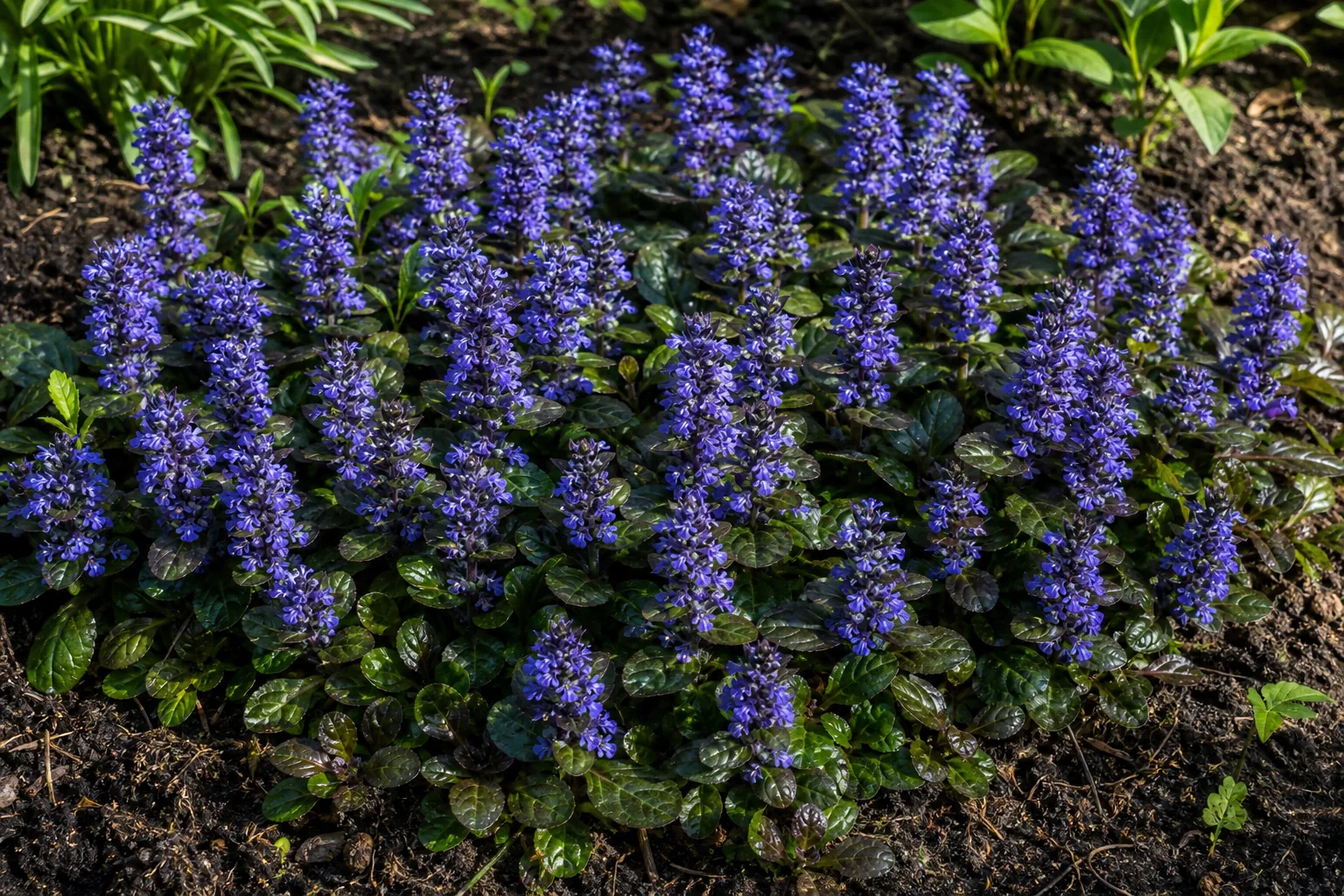
Ajuga reptans
Carpet bugle (Ajuga reptans) is a fast-spreading, evergreen to semi-evergreen perennial ground cover in the mint family, grown for its glossy rosettes of green, bronze, or variegated leaves and short spikes of blue-violet flowers in late spring. Native to Europe, northern Africa, and southwestern Asia, it forms a dense mat that suppresses weeds and stabilizes slopes in shade.
 intermediate
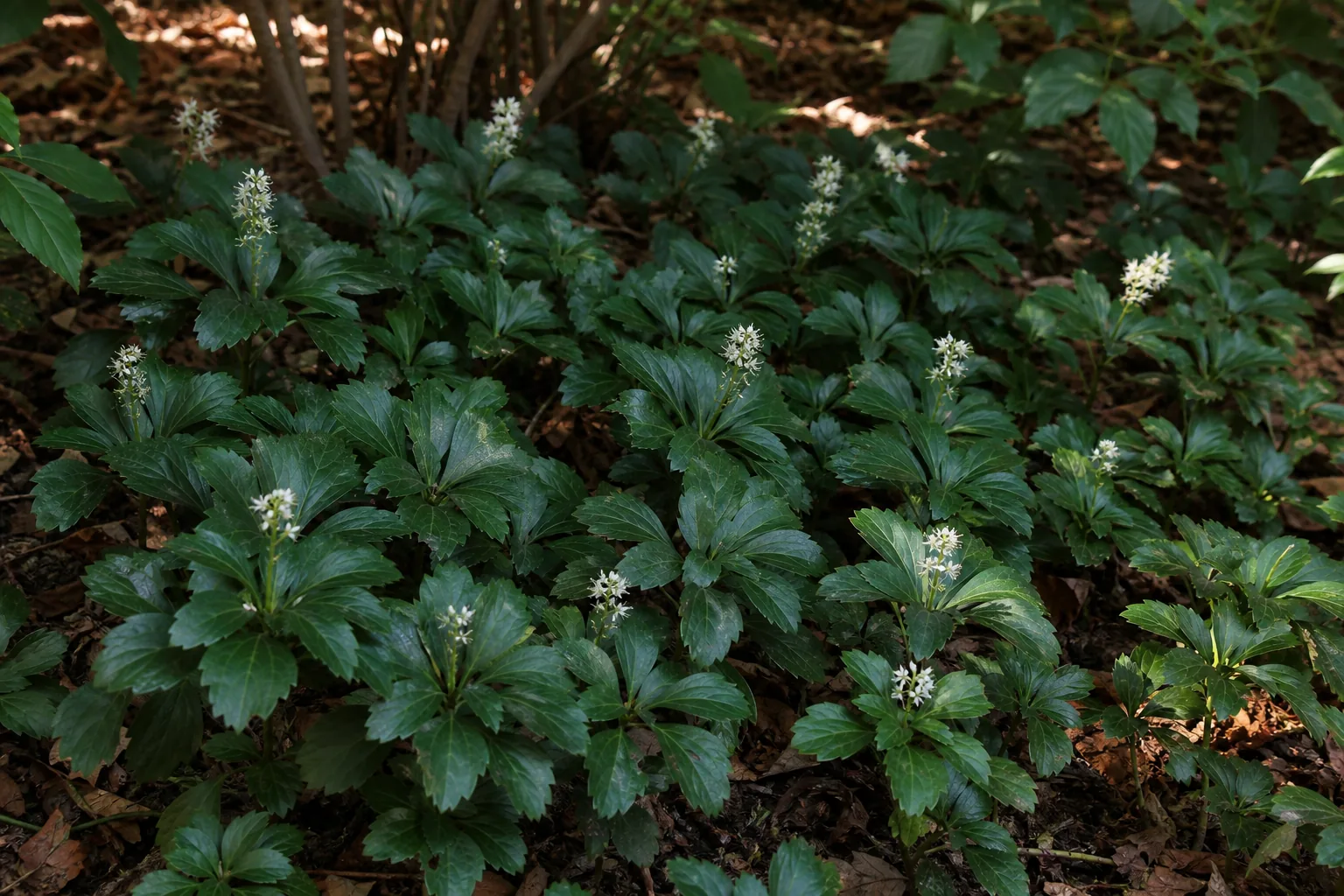
Pachysandra terminalis
Japanese pachysandra (Pachysandra terminalis) is a broadleaf evergreen, rhizomatous perennial ground cover in the boxwood family, valued for glossy whorled leaves and small fragrant white flower spikes in early spring. Native to Japan and north-central China, it forms dense colonies in the shade beneath trees and on slopes.
 intermediate
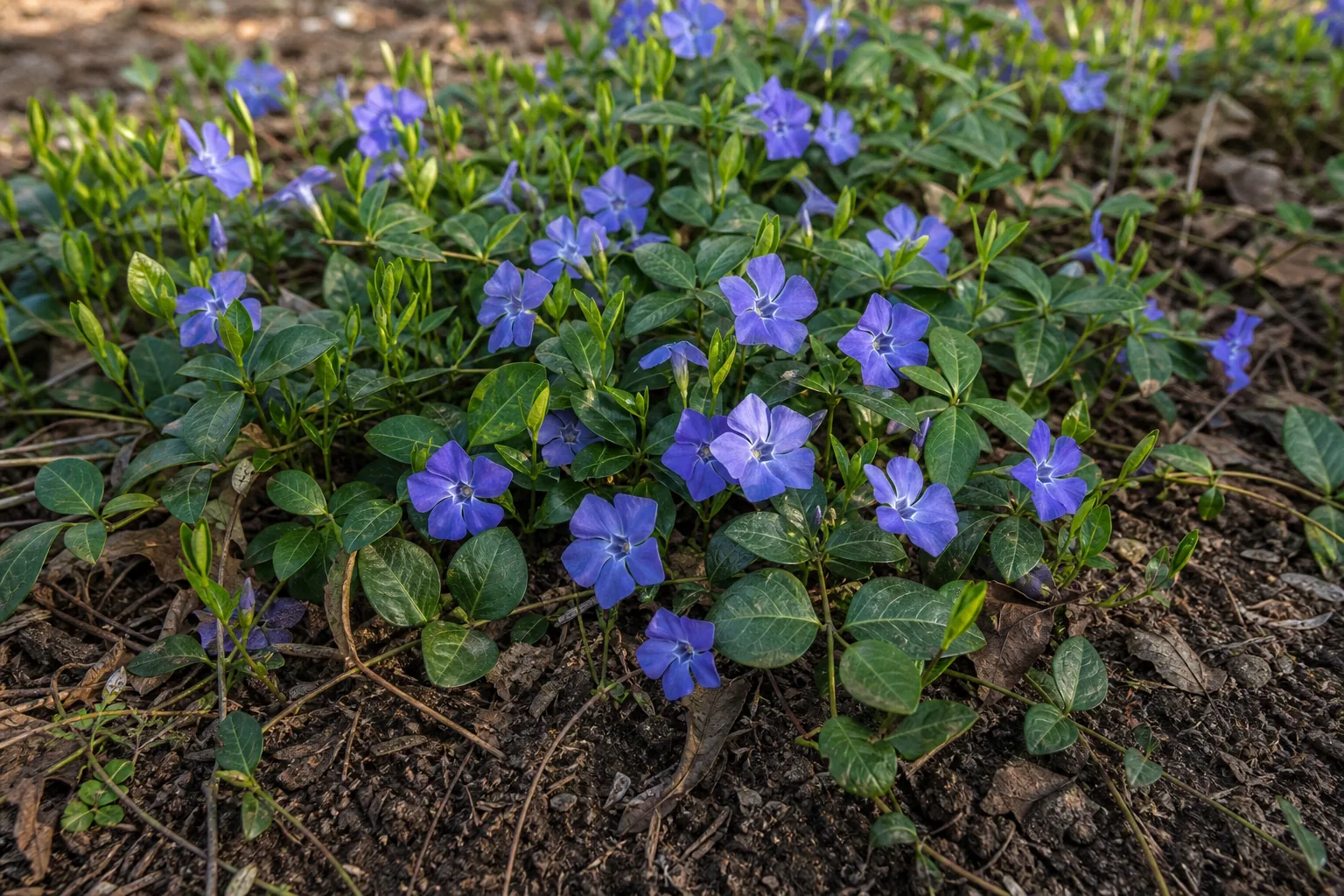
Vinca minor
Common periwinkle (Vinca minor) is a broadleaf evergreen ground cover in the dogbane family, grown for glossy dark green leaves, trailing stems that root at the nodes, and small blue-lavender flowers in spring. Native to Europe and the Caucasus, it forms dense mats and is widely planted for erosion control and underplanting, though it is invasive in parts of North America.
 intermediate
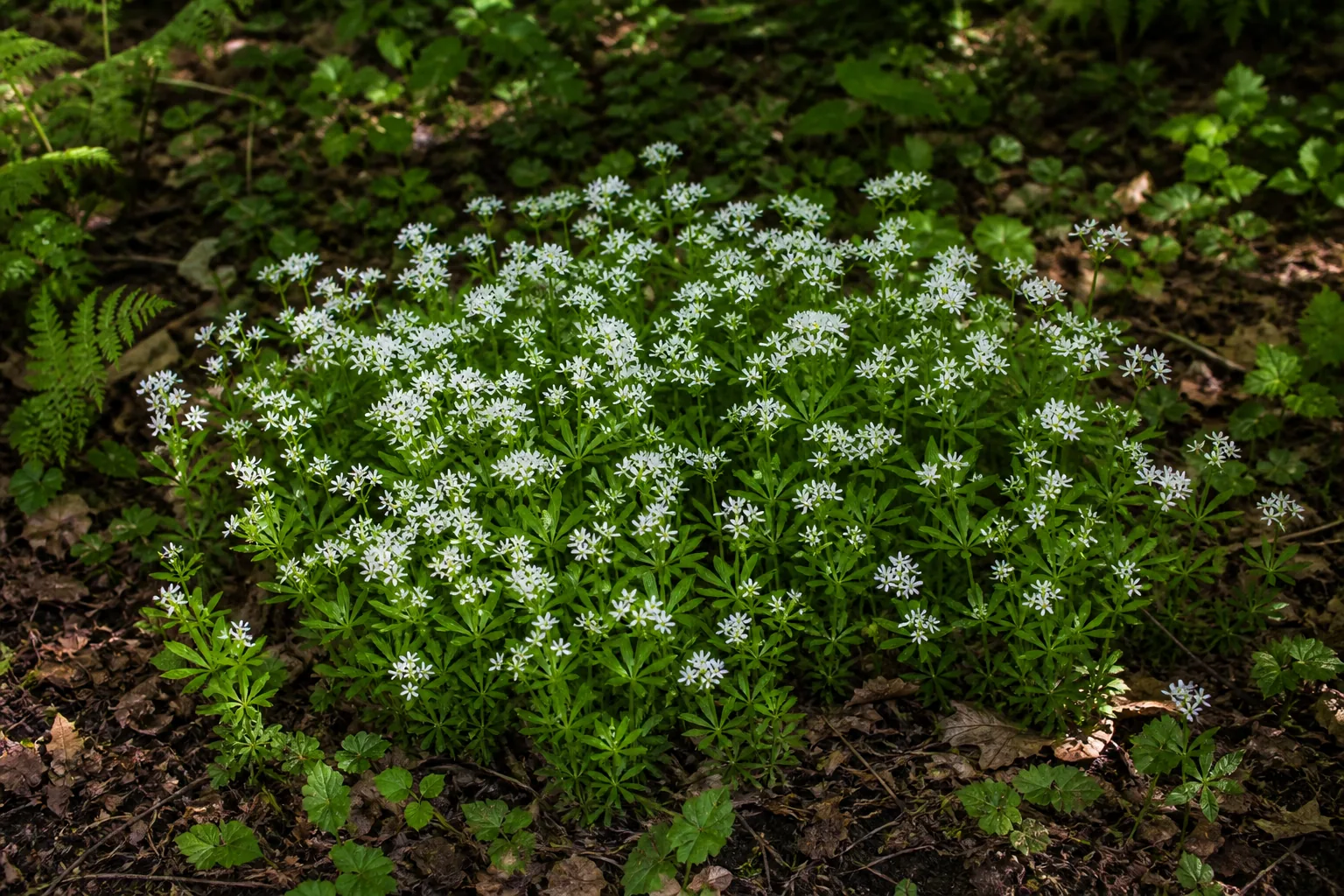
Galium odoratum
Sweet woodruff (Galium odoratum) is a fragrant, rhizomatous perennial ground cover in the coffee family, grown for whorls of bright green leaves, small starry white spring flowers, and a sweet, hay-like scent that intensifies as foliage dries. Native to Europe, western Asia, and North Africa, it forms a soft mat in moist shade beneath trees.
 Pet-friendlier
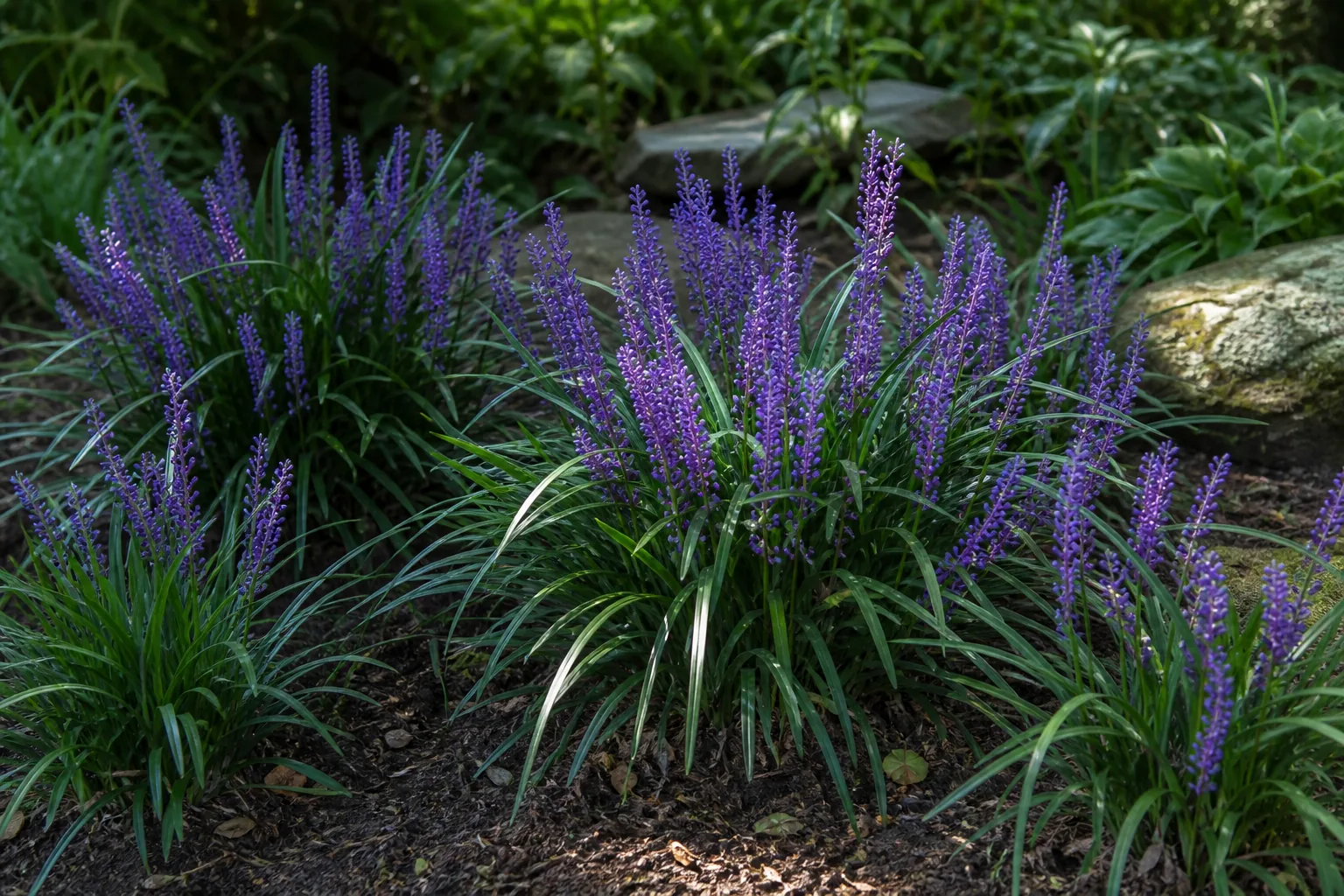
Liriope muscari
Lilyturf (Liriope muscari) is a clump-forming, grasslike evergreen perennial in the asparagus family, grown for arching strap leaves and spikes of small purple flowers in late summer followed by black berries. Native to China, Taiwan, and Japan, it is a tough ground cover and edging plant for sun or shade.
 intermediate
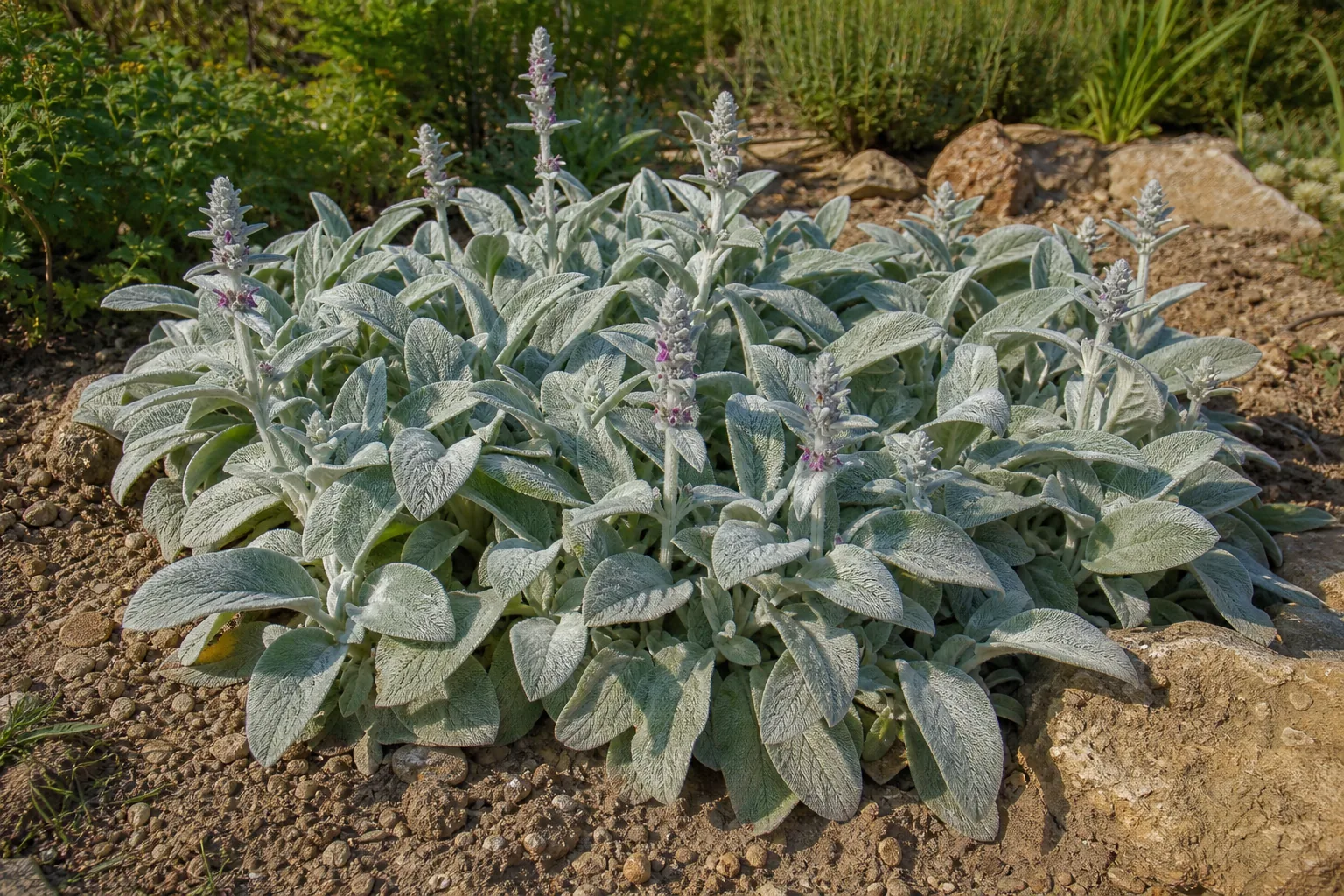
Stachys byzantina
Lamb's ear (Stachys byzantina) is a silver-felted, semi-evergreen perennial ground cover in the mint family, grown for thick, velvety, woolly leaves and summer spikes of tiny purplish-pink flowers. Native to Turkey, the Caucasus, and Iran, it forms a soft mat that suits borders, rock gardens, and children's sensory gardens.
 intermediate
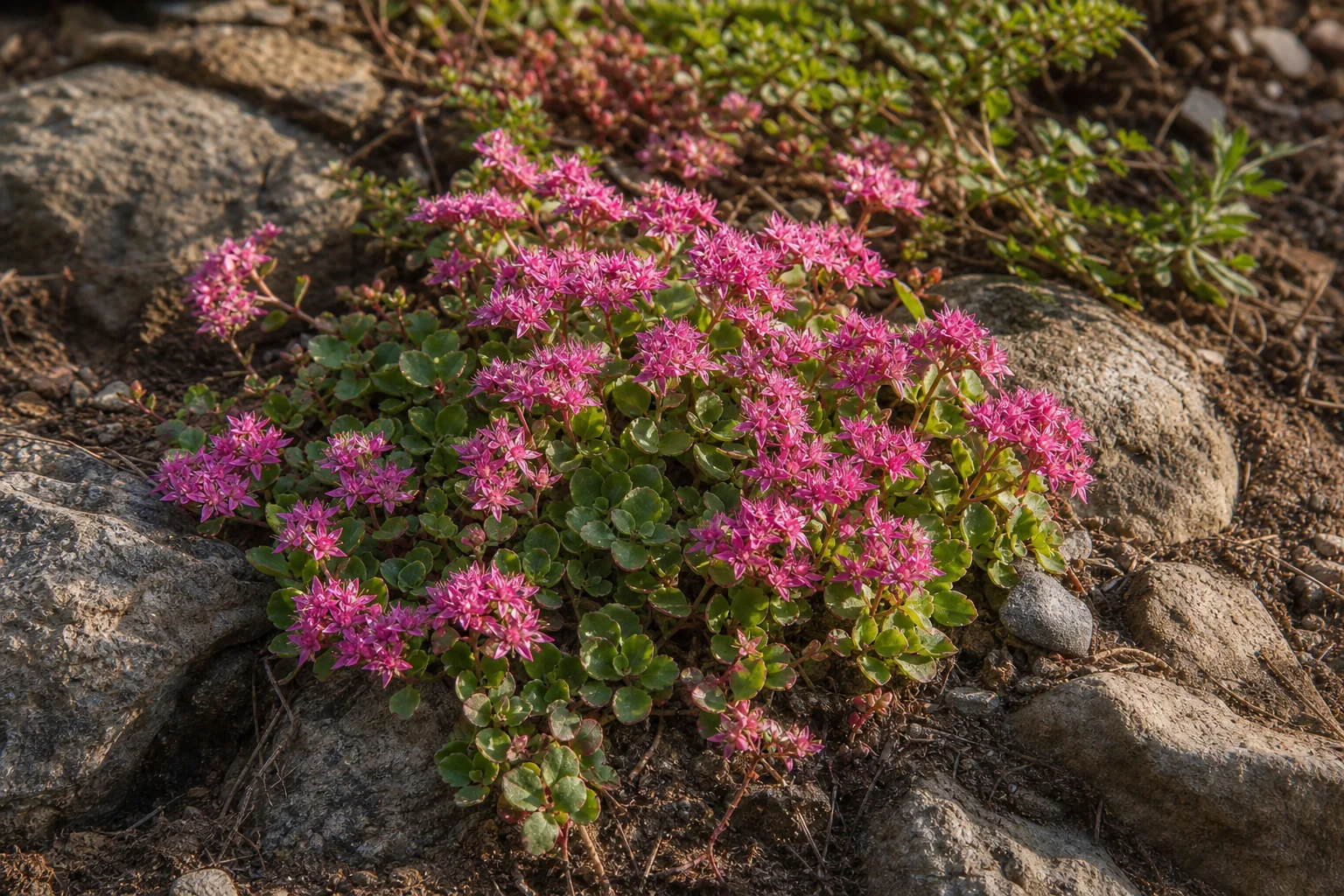
Sedum spurium
Stonecrop (Sedum spurium, now classified by Kew as Phedimus spurius) is a creeping, semi-evergreen succulent perennial ground cover in the stonecrop family, grown for fleshy leaves and long-lasting star-shaped flowers in late spring and summer. Native to the Caucasus region of Turkey and Iran, it forms a dense mat for rock gardens, slopes, and green roofs.
 intermediate
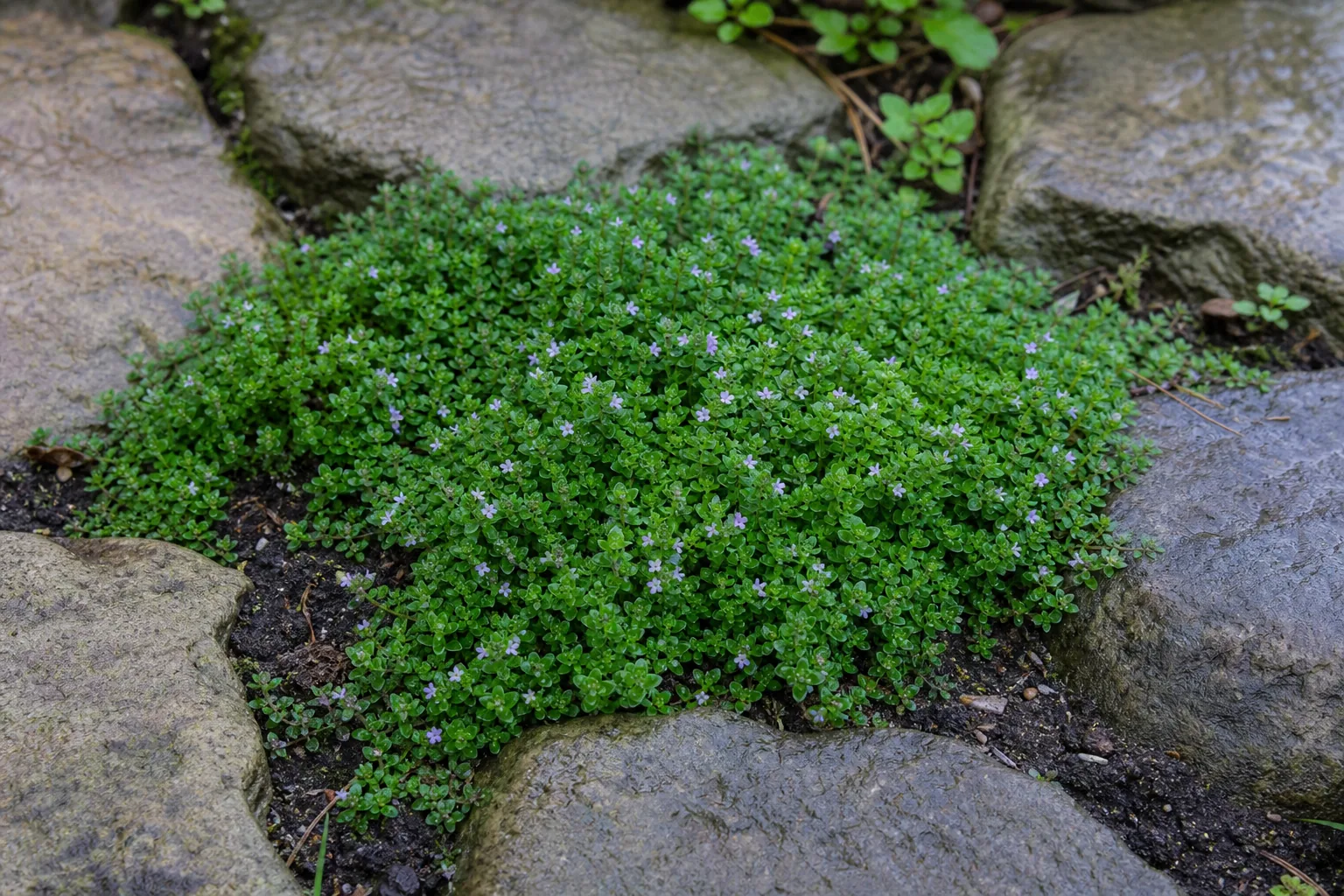
Mentha requienii
Corsican mint (Mentha requienii) is a miniature, mat-forming perennial mint native to Corsica, Sardinia, and Italy, grown for its creeping, rooting stems and tiny bright-green, peppermint-scented leaves. It forms a dense aromatic carpet between stepping stones and in moist part-shade beds.
 Pet-friendlier
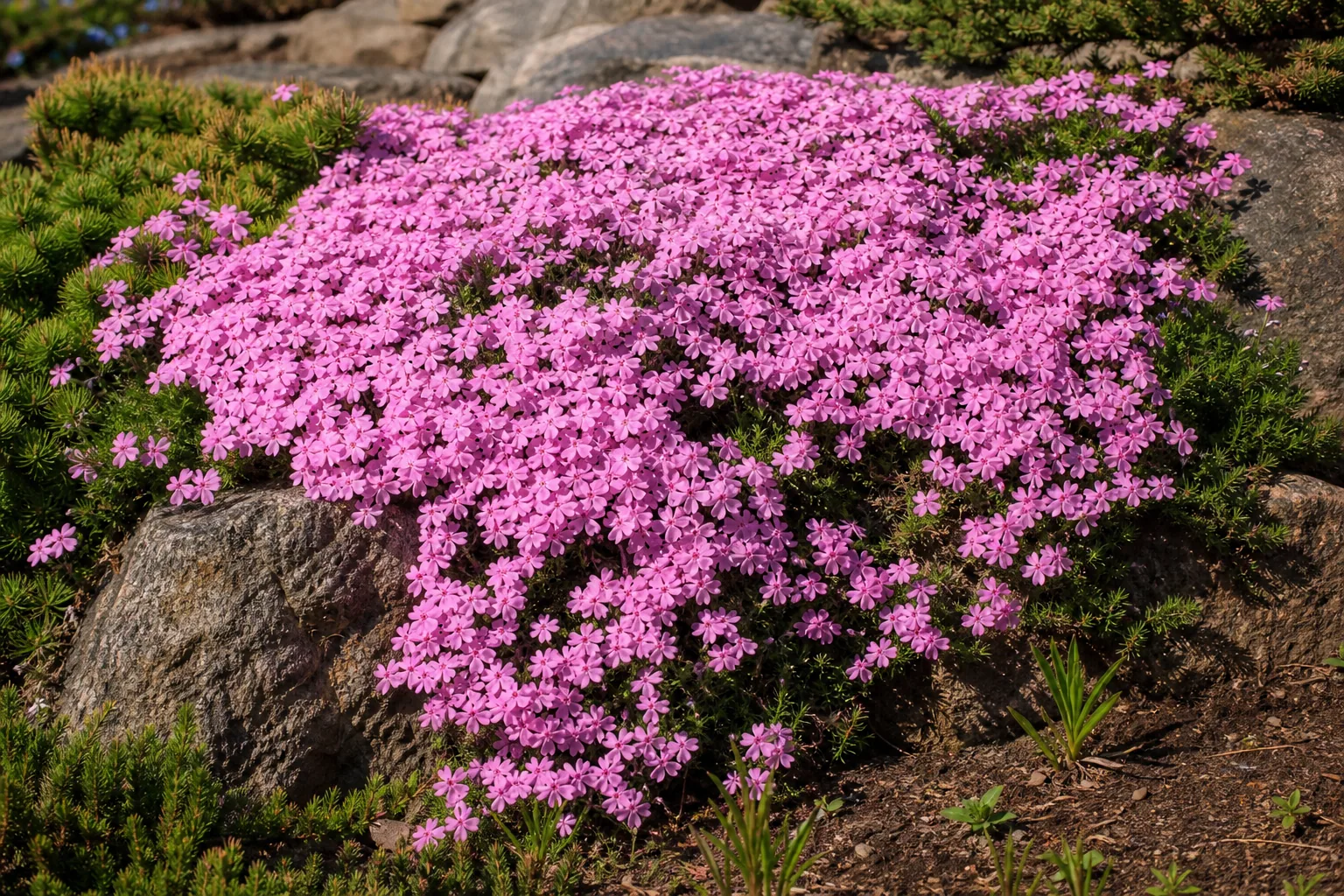
Phlox subulata
Creeping phlox (Phlox subulata) is a vigorous, mat-forming, sun-loving perennial ground cover native to eastern and central North America, grown for carpets of red-purple, pink, or white star-shaped flowers in mid-spring above awl-shaped, needlelike evergreen leaves. It spreads to about 24 inches wide and only 6 inches tall.
 intermediate
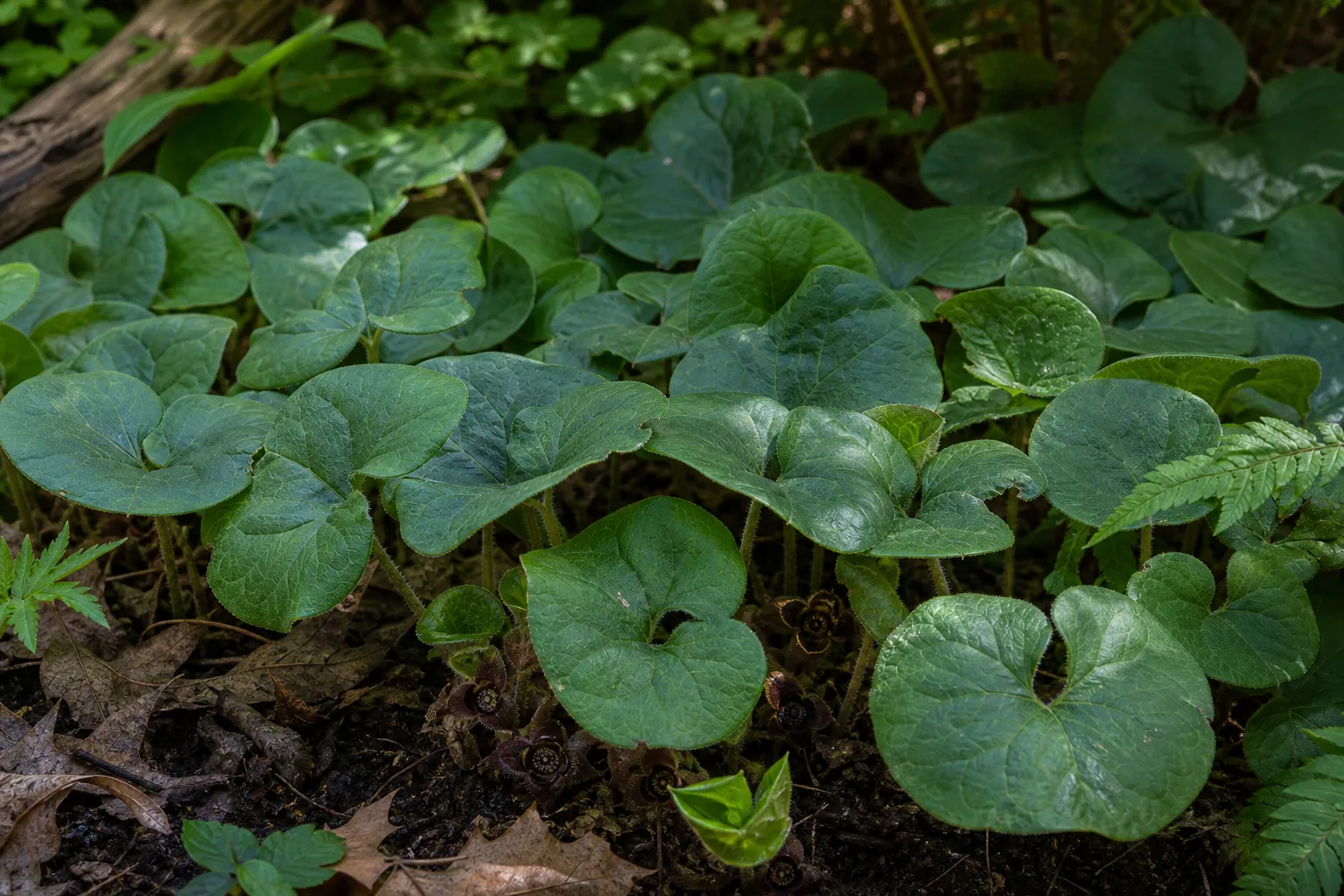
Asarum canadense
Canadian wild ginger (Asarum canadense) is a deciduous, rhizomatous woodland perennial native to eastern North America, grown for large, heart-shaped, velvety green leaves that form a low ground cover in shade. Small, dark, bell-shaped flowers hide beneath the foliage in spring, and the creeping rhizome has a ginger-like odor.
 intermediate
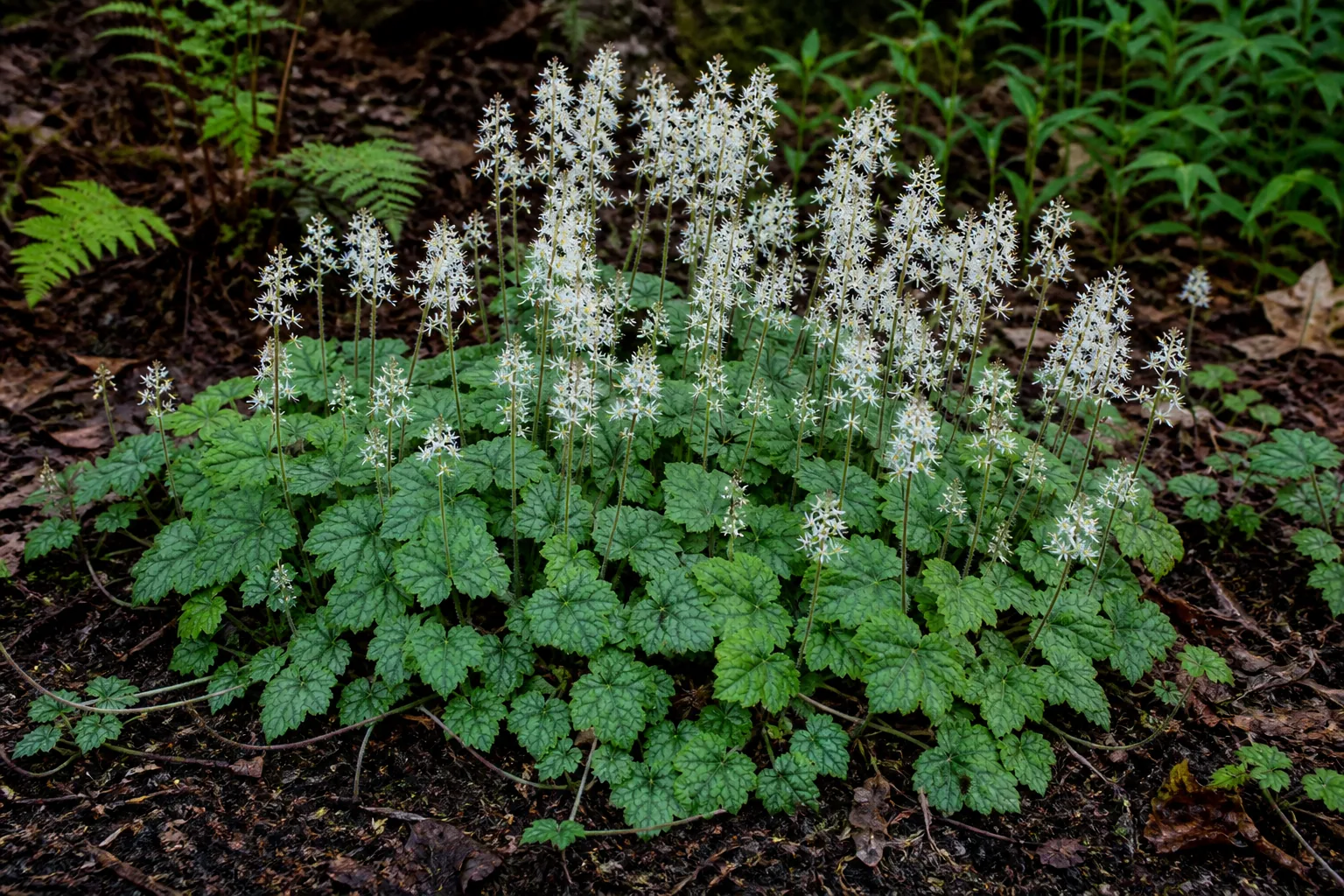
Tiarella cordifolia
Foamflower (Tiarella cordifolia) is a low, clump-forming woodland perennial in the saxifrage family, grown for its heart-shaped, lobed foliage and airy spikes of tiny white to pink flowers in spring. Native to woodlands of eastern North America, it spreads by runners into dense colonies and is a signature ground cover for shade gardens.
 intermediate
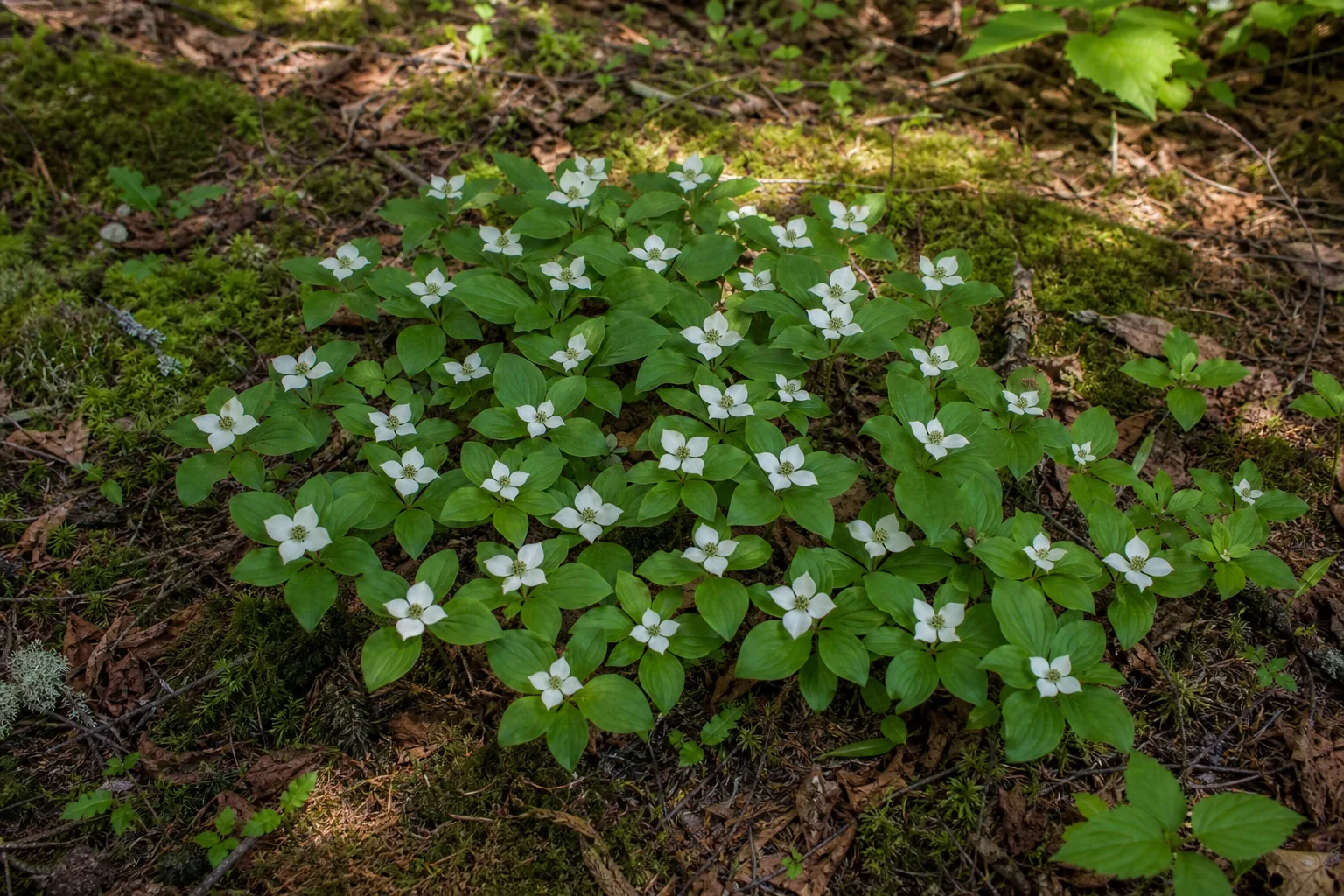
Cornus canadensis
Bunchberry (Cornus canadensis) is a low, shrubby perennial dogwood in the Cornaceae family, native to cool northern forests of North America and eastern Asia. It forms mats of whorled leaves topped in late spring by four showy white petal-like bracts, followed in late summer by clusters of bright red, edible drupes.
 intermediate
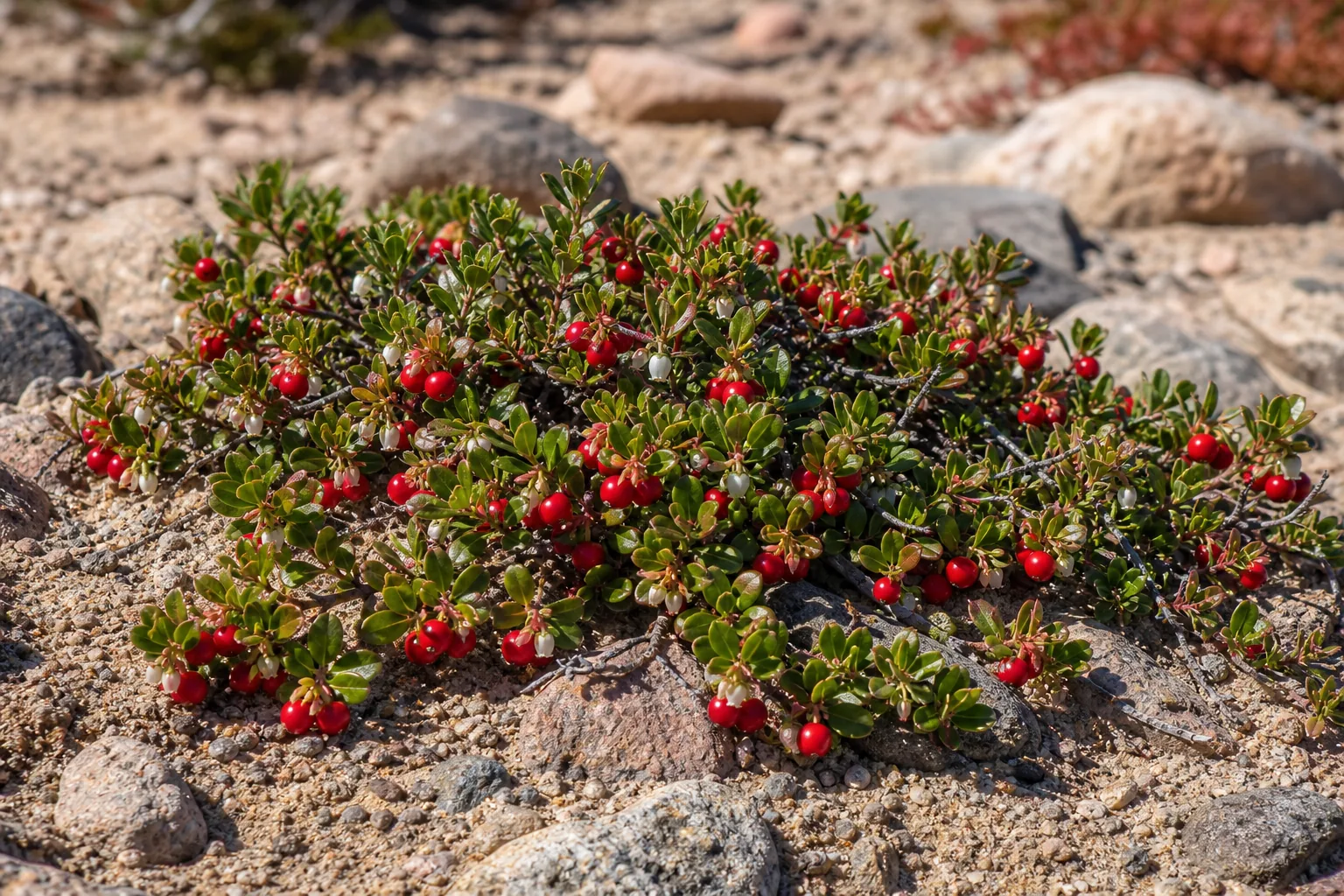
Arctostaphylos uva-ursi
Bearberry (Arctostaphylos uva-ursi) is a prostrate, evergreen, woody shrub in the heather family, native to cool, sandy, and rocky sites across the northern Hemisphere. It forms a ground-hugging mat of small leathery leaves with tiny white-pink urn-shaped flowers in spring and red drupes in late summer and fall.
 intermediate
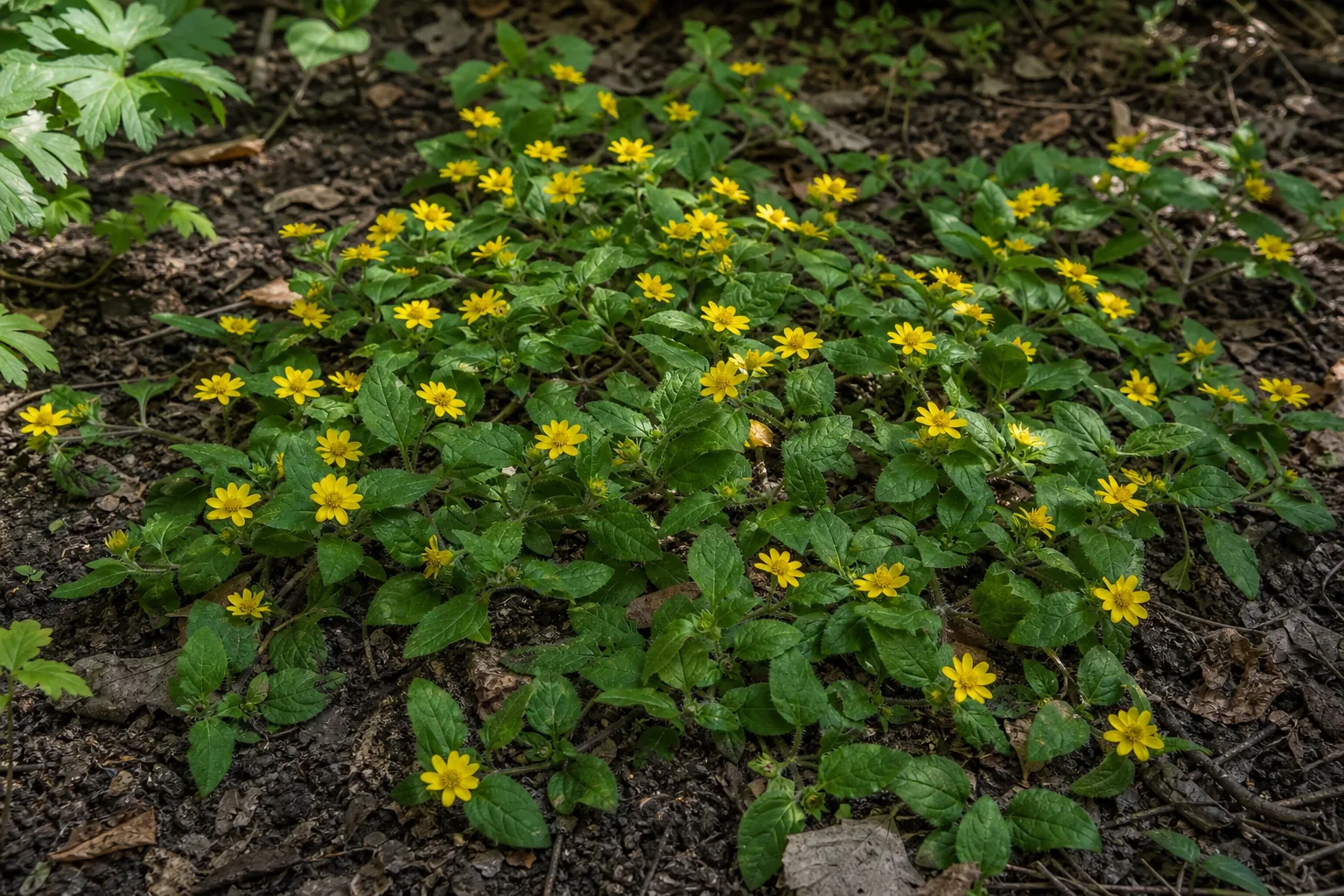
Chrysogonum virginianum
Green-and-gold (Chrysogonum virginianum) is a low, rhizomatous perennial in the aster family, native to woodlands of the eastern United States. It forms a mat of bright green, toothed leaves topped from spring to fall by star-shaped, golden-yellow daisy flowers, making it a long-blooming native ground cover.
 Pet-friendlier
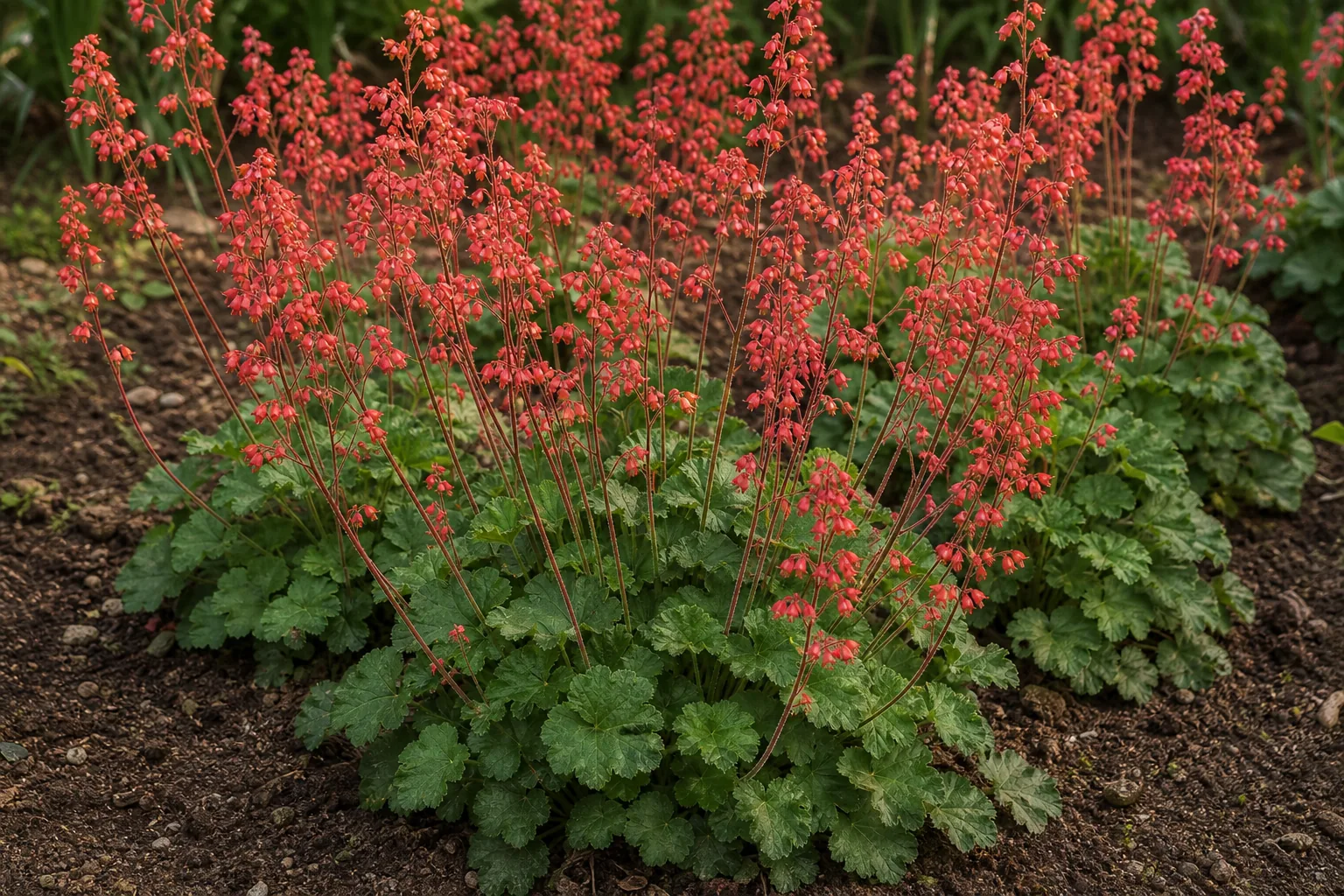
Heuchera sanguinea
Coral bells (Heuchera sanguinea) is a clump-forming herbaceous perennial in the saxifrage family, native to cliffs and alpine areas of Arizona, New Mexico, and northern Mexico. It is grown for mounds of heart-shaped foliage and airy panicles of bright coral-red to pink bell-shaped flowers in late spring and early summer.
 intermediate
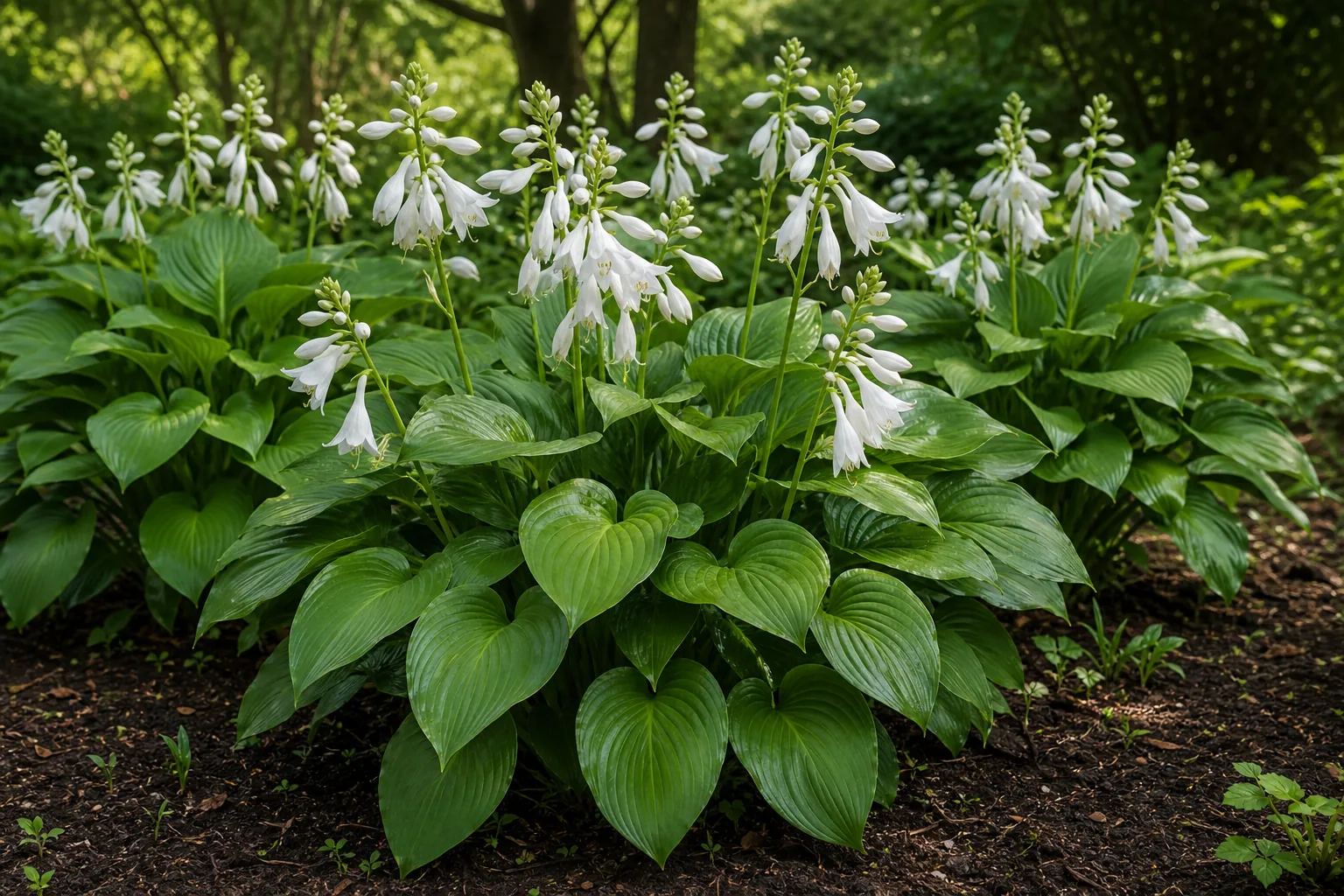
Hosta plantaginea
Hosta (Hosta plantaginea), the fragrant plantain lily, is a bold-leafed herbaceous perennial in the asparagus family, native to China. It forms mounds of glossy, heart-shaped leaves and in late summer produces large, white, heavily fragrant trumpet flowers on tall scapes.
 intermediate
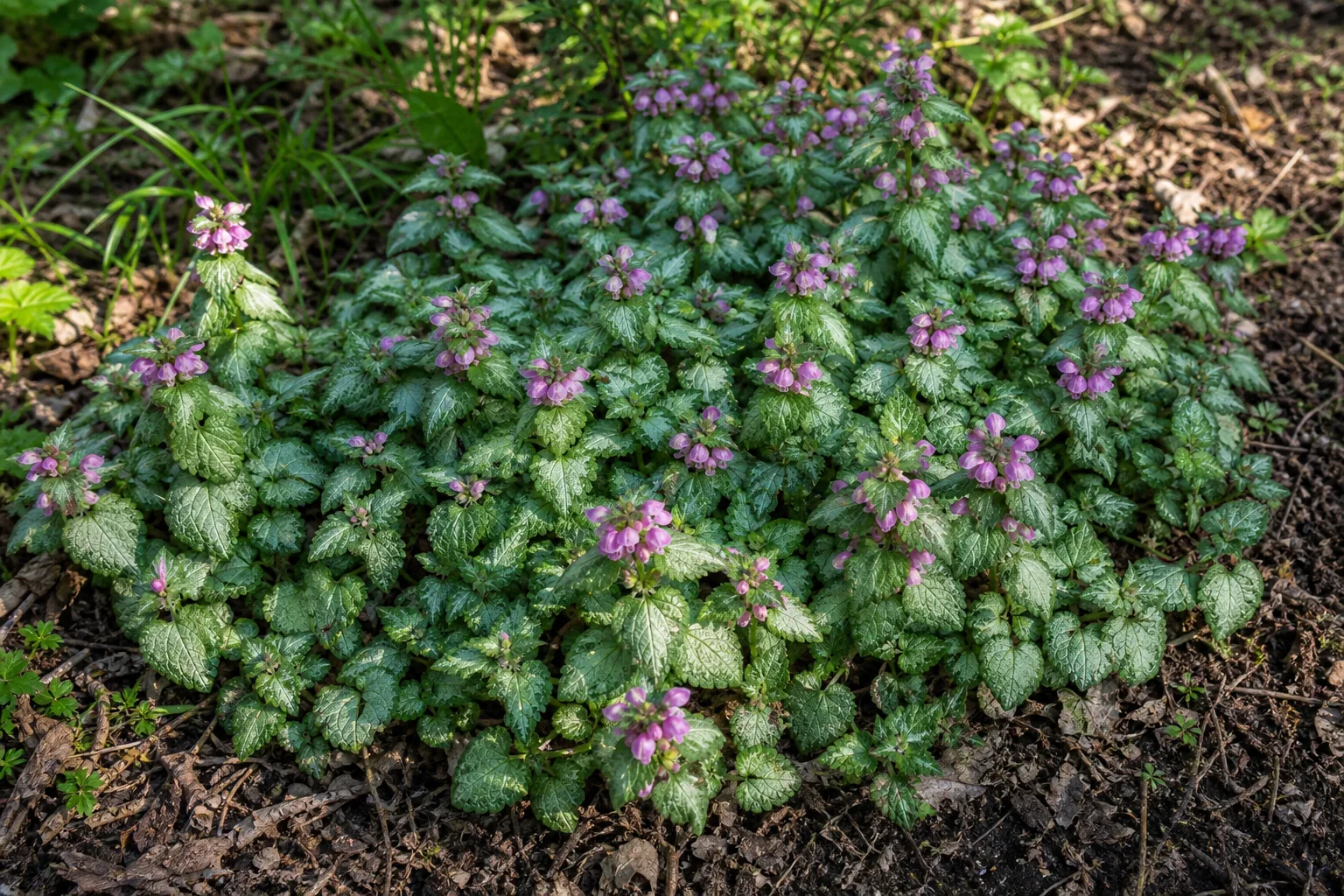
Lamium maculatum
Spotted dead-nettle (Lamium maculatum) is a fast-growing, mat-forming herbaceous perennial in the mint family, native to Europe, western Asia, and North Africa. It is grown for its silver-marked, sometimes variegated foliage and clusters of pink to purple two-lipped flowers in late spring and early summer, lighting up shade gardens.
 intermediate
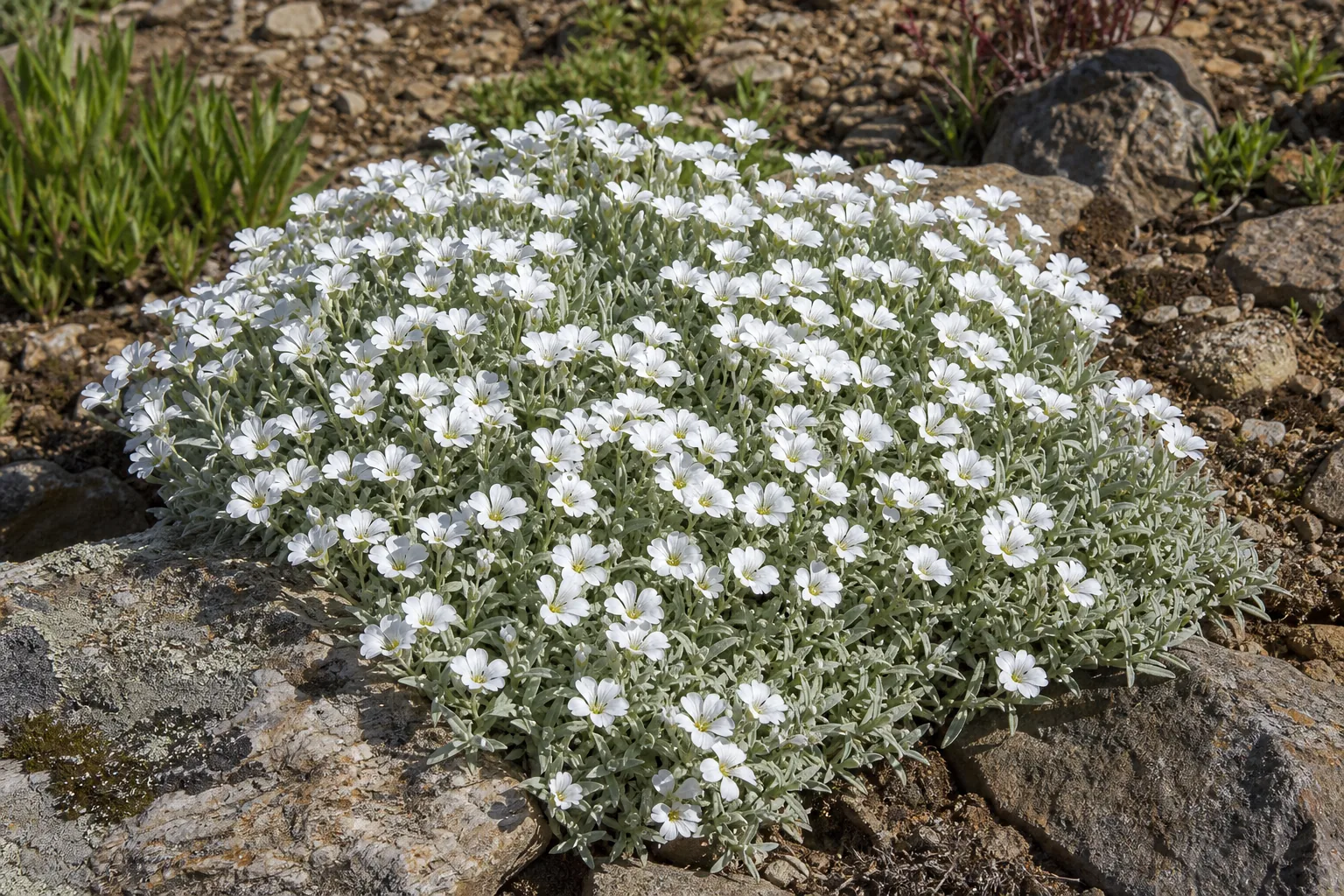
Cerastium tomentosum
Snow-in-summer (Cerastium tomentosum) is a low, mat-forming perennial in the pink family, native to Italy, Corsica, and Sicily. It is grown for silvery, woolly grey-green foliage and dense clusters of white flowers in late spring that blanket the mat like snow.
 intermediate
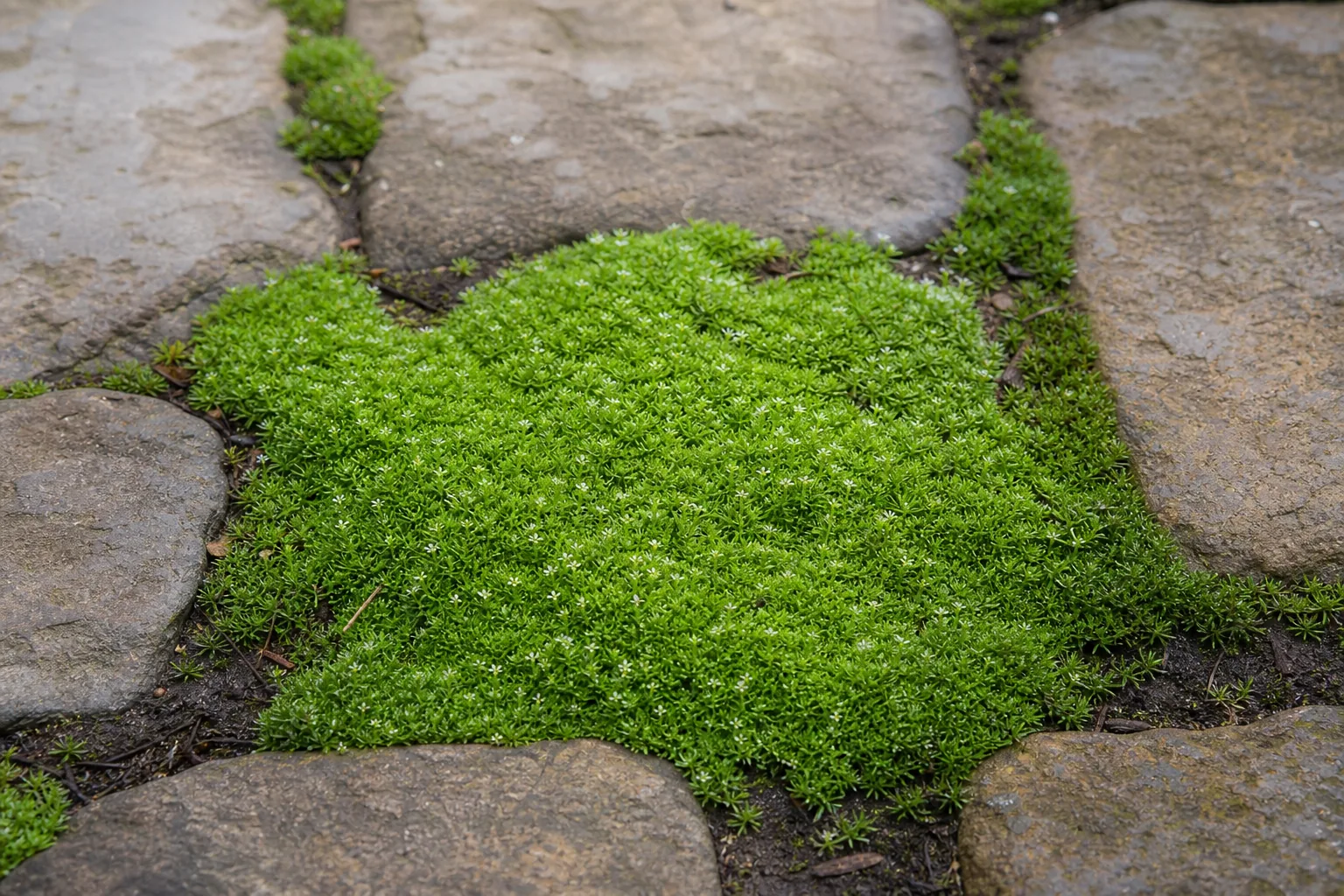
Sagina subulata
Irish moss (Sagina subulata), also called heath pearlwort, lawn pearlwort, or Scottish moss, is a low, moss-like evergreen perennial in the pink family, native to Europe. It forms dense, emerald-green mats of fine awl-shaped leaves dotted with tiny white flowers in spring and summer, and tolerates light foot traffic between stepping stones.
 intermediate
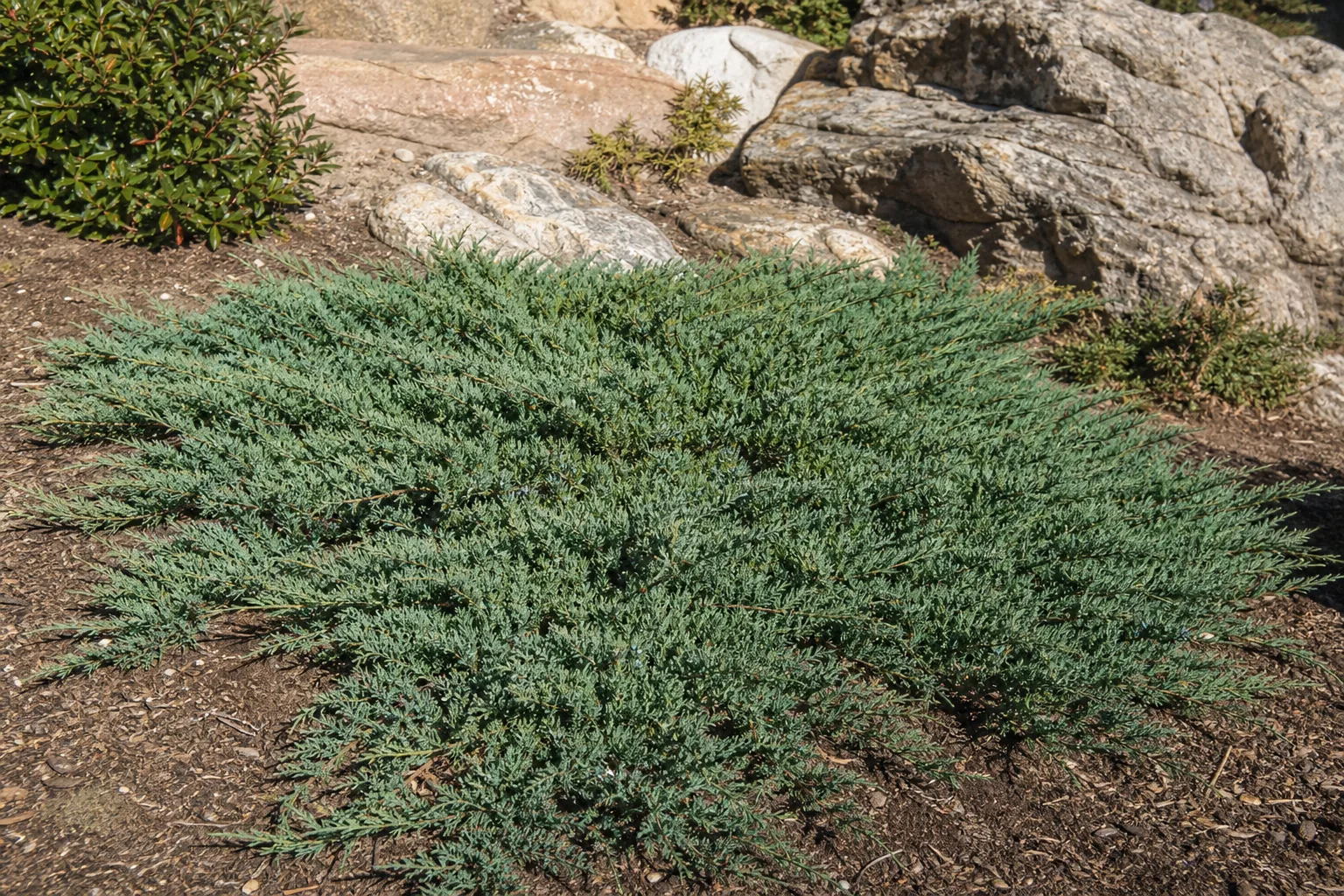
Juniperus horizontalis
Creeping juniper (Juniperus horizontalis) is a low, procumbent evergreen conifer in the cypress family, native to northern North America. It spreads by long trailing branches into dense, wide mats of scale-like blue-green foliage that often tints purple in winter, making it a durable ground cover for slopes and rocky sites.
Water new ground-cover plugs consistently until they knit together, then reduce irrigation gradually.