Key takeaways
- Plant in full sun in average, well-drained soil; avoid wet, poorly drained sites that cause root rot.
- Water to establish, then little - established plants tolerate drought and poor soils.
- Prune lightly to remove dead or blighted growth; handle foliage with care as some people get contact dermatitis.
How to care for creeping juniper
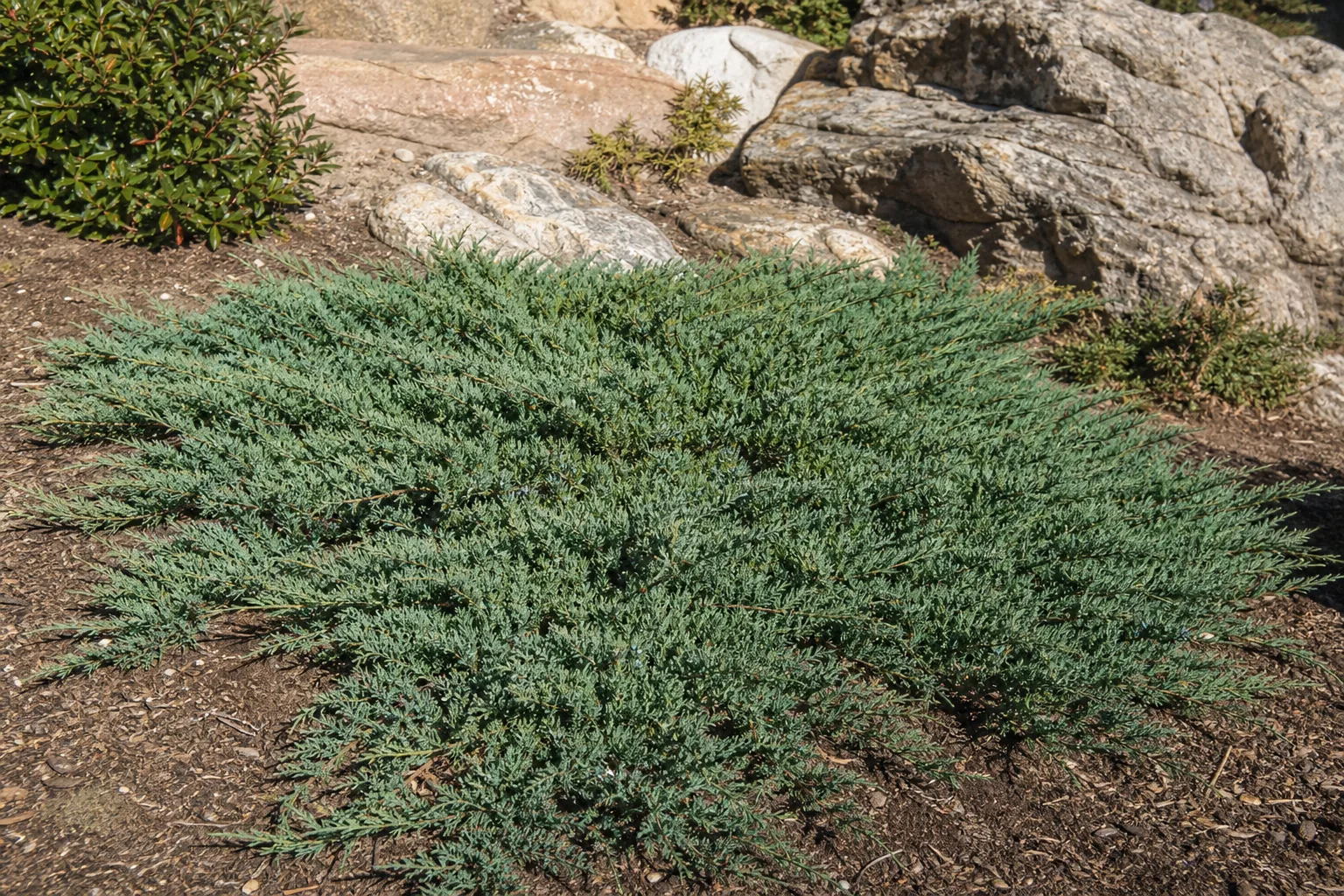
Creeping juniper (Juniperus horizontalis) is a tough, low evergreen conifer for sunny, well-drained sites. Plant it in full sun in average, medium-moisture, well-drained soil - it adapts to a wide range of soils but prefers a dryish, sandy ground and is intolerant of wet soil. Space plants 6-12 feet apart according to cultivar so the trailing branches can form a dense mat. Water to establish, then little; established plants tolerate drought, heat, poor soils, and city pollution. Prune only to remove dead growth and to control spread, and note that the foliage can cause contact dermatitis in some people.
Light
Creeping juniper requires full sun (6 or more hours of direct sunlight daily). It is native to open, rocky, and sandy sites and becomes thin and open in shade. Give it the sunniest position available for the densest, most evenly colored mat.
Water
Water new plants regularly through the first season to establish, then let rainfall take over; the Missouri Botanical Garden rates the water need as medium and notes the plant tolerates hot, relatively dry growing conditions. It is intolerant of wet soils, which invite root rot, so ensure sharp drainage and avoid irrigating established plants.
Soil and planting
Creeping juniper grows in average, medium-moisture, well-drained soils and adapts to a wide range, preferring a dryish, sandy soil; it tolerates somewhat poor soils and shallow rocky ground. It is intolerant of wet soils, so avoid low spots. In containers, use a well-drained gritty mix and repot infrequently, keeping the root ball dryish between waterings.
Temperature, humidity, and fertilizer
Hardy in USDA zones 3-9, creeping juniper tolerates hot, relatively dry conditions and many city air pollutants; it is native to northern North America and thrives in cool to moderate climates with good airflow. Fertilizer is rarely needed - this low-maintenance plant grows well in lean soils, and feeding simply encourages soft growth.
Pruning and propagation
Prune lightly to remove dead, damaged, or blighted branch tips, and trim trailing branches to control spread. Junipers are generally susceptible to blights (dieback of stem tips) in unusually rainy or wet springs, so remove affected growth promptly. Propagate by cuttings or layering; named cultivars should be propagated vegetatively to remain true to type.
Common problems
Start with the pattern, current soil moisture, and recent changes. One symptom can have several causes, so change the most likely factor first and observe before making another major adjustment.
| Symptom | Check first | First action |
|---|---|---|
| Browning, dying branch tips in a wet spring | Check for juniper blights, which are worse in rainy, wet springs. | Prune out affected branch tips and improve airflow; avoid overhead watering. |
| Center of the mat dies back | Check plant age and crowded growth; mature foliage sometimes dies back in the center. | Prune out dead growth and consider replacing old, tired plantings. |
| Orange or gelatinous growths on foliage | Check for cedar-apple and related rust diseases, which spend part of their life cycle on junipers. | Remove affected galls and prune for airflow; consult local extension for rust management. |
| Plants yellow or collapse in wet ground | Check drainage; root rot occurs in wet, poorly drained soils. | Improve drainage or replant on a slope; junipers are intolerant of wet soil. |
| Fine webbing and stippled needles | Check for spider mites, bagworms, aphids, or scale. | Identify the pest first, then treat with an appropriate, locally recommended control. |
Pet and household safety
Creeping juniper is not listed on the ASPCA toxic or non-toxic plant lists, and NC State Extension records no pet-toxicity classification for the species (it does tag the plant for contact dermatitis in people). Because no authoritative pet-safety source confirms it as non-toxic to cats and dogs, treat the plant as potentially toxic and discourage chewing; contact a veterinarian after substantial ingestion.
Frequently asked questions
How much sun does creeping juniper need?
Full sun (6+ hours daily). It becomes thin and open in shade and needs a sunny, open position for the densest mat.
How often should I water creeping juniper?
Water to establish, then little - it tolerates hot, dry conditions and is intolerant of wet soil.
What soil suits creeping juniper?
Average, well-drained soil; it prefers dryish sandy ground and tolerates poor and shallow rocky soils, but not wet ones.
Why are the branch tips of my juniper browning?
Usually juniper blights in wet springs, or root rot in wet soil. Prune affected tips, improve airflow, and check drainage.
How do I propagate creeping juniper?
By cuttings or layering; named cultivars should be propagated vegetatively to remain true to type.
Is creeping juniper safe for pets?
It is not on the ASPCA toxic or non-toxic lists and no pet-toxicity classification is recorded by NC State (foliage can cause contact dermatitis in people), so treat it as potentially toxic to cats and dogs and prevent chewing.
Sources and editorial review
This editorial draft is based on the sources below and awaits named horticulture-expert approval before publication.
- Juniperus horizontalisRoyal Botanic Gardens, Kew (Plants of the World Online) · Checked
- Toxic and Non-Toxic Plants ListASPCA · Checked
- Juniperus horizontalisNorth Carolina State University Extension · Checked
- Juniperus horizontalisMissouri Botanical Garden · Checked
What works well
- Durable, wide-spreading evergreen mat for slopes, banks, and erosion control.
- Drought, deer, salt, and urban-pollution tolerant with good winter color.
- Low maintenance and adaptable to a wide range of soils.
What to consider
- Intolerant of wet soil; root rot and blights are problems in poorly drained sites.
- Foliage can cause contact dermatitis in some people (NC State).
- Not classified as non-toxic by the ASPCA; treat as potentially toxic to pets.