Key takeaways
- Grow in light to deep shade in high-organic-matter soil that maintains constant moisture.
- Divide the thick, surface-creeping rhizomes in early spring; seed needs a warm-moist then cold-moist cycle.
- Never consume any part - aristolochic acid is nephrotoxic and a carcinogen per NC State.
How to care for Canadian wild ginger
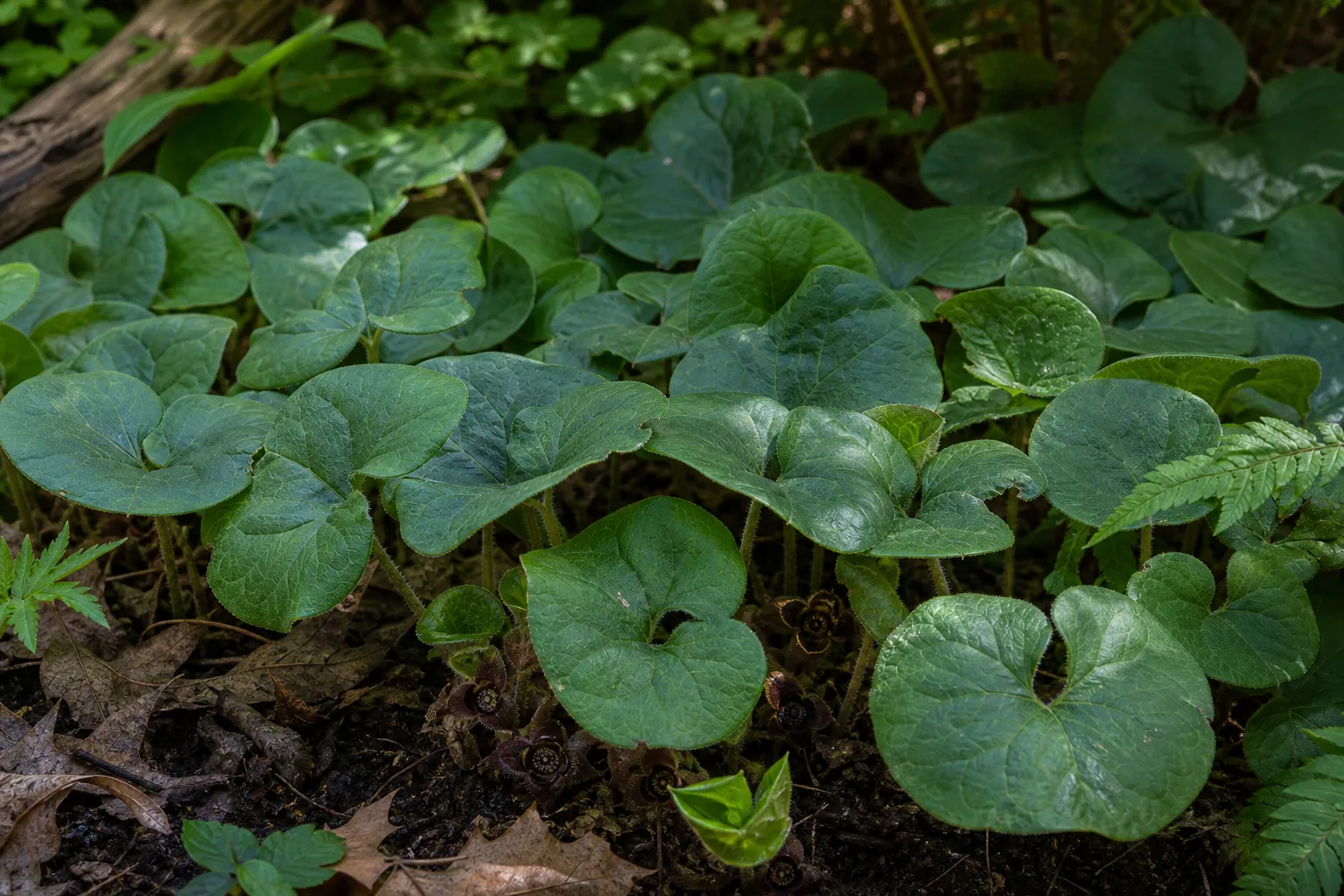
Canadian wild ginger (Asarum canadense) is a slow-spreading woodland perennial grown for its large, heart-shaped, deciduous leaves. Plant it in light to deep shade in high-organic-matter soil that maintains constant moisture; it has poor drought tolerance. Space plants 12-24 inches apart in groups to form a carpet. The small, dark, bell-shaped flowers are produced near the ground in spring, hidden by the leaves. It spreads slowly by underground rhizomes and, once established, forms dense colonies with minimal care.
Light
Canadian wild ginger prefers light to deep shade - dappled sunlight, partial shade, or deep shade. It can be grown in partial shade, although the leaves may burn in hot summer sun. This is a true woodland plant that thrives beneath deciduous trees.
Water
Keep the soil consistently moist; Canadian wild ginger has poor drought tolerance and performs best in soil that maintains constant moisture. It tolerates wet soils better than most garden plants. Mulch with leaf litter to conserve moisture and mimic its woodland home.
Soil and planting
Canadian wild ginger grows best in high-organic-matter soil that maintains constant moisture, often found on rocky, acidic soils in the wild. Work compost or leaf mold into the bed before planting and keep the crown at the soil line. It spreads slowly by rhizomes close to the surface; division is the standard way to increase plants.
Temperature, humidity, and fertilizer
Hardy in roughly USDA zones 3-7, Canadian wild ginger is a deciduous perennial that dies back in winter and re-emerges in spring. It prefers cool, moist woodland conditions and suffers in hot, dry sites. No fertilizer is needed - a yearly top-dressing of leaf compost mirrors its natural habitat.
Pruning and propagation
Canadian wild ginger needs no pruning; simply remove tattered leaves as they decline. Propagate by dividing the thick rhizomes, which grow very close to the soil surface - early spring is the best time. It can also be grown from seed: fresh seed germinates best and needs a warm, moist period followed by a cold, moist period, so sow outdoors in summer to early fall.
Common problems
Start with the pattern, current soil moisture, and recent changes. One symptom can have several causes, so change the most likely factor first and observe before making another major adjustment.
| Symptom | Check first | First action |
|---|---|---|
| Leaves burn or crisp in summer heat | Check sun exposure and soil moisture. | Move to deeper shade and keep the soil consistently moist. |
| Thin, slow growth | Check organic matter and moisture; wild ginger is slow by nature. | Amend with compost, mulch with leaves, and be patient - it spreads slowly. |
| Holes chewed in leaves | Check for slugs and snails, occasional pests in moist shade. | Hand-pick at night or use an iron-phosphate bait; reduce debris. |
| Foliage yellowing in dry soil | Check moisture - this plant has poor drought tolerance. | Water during dry spells and mulch to hold moisture. |
| Uneven establishment from seed | Check seed treatment - seed needs warm-moist then cold-moist stratification. | Sow fresh seed outdoors in summer to early fall, or divide established plants instead. |
Pet and household safety
Canadian wild ginger is toxic and must not be consumed. The NC State Extension profile marks it as a medium-severity poison: aristolochic acid is nephrotoxic and a carcinogen, and no part of the plant should be eaten by people or pets. Because it is toxic to cats and dogs if ingested, keep pets from digging up or chewing the rhizomes and leaves, and contact a veterinarian after any ingestion.
Frequently asked questions
How much light does Canadian wild ginger need?
Light to deep shade - dappled, partial, or full shade. Leaves may burn in hot summer sun.
How often should I water wild ginger?
Keep soil consistently moist; it has poor drought tolerance and prefers constantly moist, humus-rich soil.
How fast does wild ginger spread?
Slowly, by underground rhizomes. Space plants 12-24 inches apart and give it time to form a carpet.
How do I propagate Canadian wild ginger?
Divide the thick rhizomes in early spring, or sow fresh seed outdoors in summer to early fall after warm-cold stratification.
Why is my wild ginger turning brown?
Usually dry soil or too much sun. Move to shade and keep the soil moist.
Is Canadian wild ginger safe for pets?
No - NC State lists it as a medium-severity poison. Aristolochic acid is nephrotoxic and carcinogenic, so it is toxic to cats and dogs if ingested; keep pets away and contact a veterinarian after any ingestion.
Sources and editorial review
This editorial draft is based on the sources below and awaits named horticulture-expert approval before publication.
- Asarum canadenseRoyal Botanic Gardens, Kew (Plants of the World Online) · Checked
- Toxic and Non-Toxic Plants ListASPCA · Checked
- Asarum canadenseNorth Carolina State University Extension · Checked
- Wild Ginger, Asarum spp.University of Wisconsin-Madison Extension · Checked
What works well
- Beautiful heart-shaped foliage forms a dense, weed-suppressing carpet in shade.
- Native to eastern North America and a larval host plant for pipevine swallowtail butterflies.
- Deer resistant and tolerant of wet soils and heavy shade.
What to consider
- Poor drought tolerance; needs consistently moist, humus-rich soil.
- Medium-severity toxicity: aristolochic acid is nephrotoxic and carcinogenic - do not consume any part.
- Slow to establish and spreads gradually, so it is not a fast ground cover.