Key takeaways
- Grow carpet bugle in light to moderate shade (it also tolerates full sun with moisture) in soil that is moist but well drained.
- Water to establish, then let moderately dry conditions pass; avoid wet, heavy soils that cause crown rot.
- Contain its stoloniferous spread and divide overcrowded patches in spring or fall.
How to care for carpet bugle
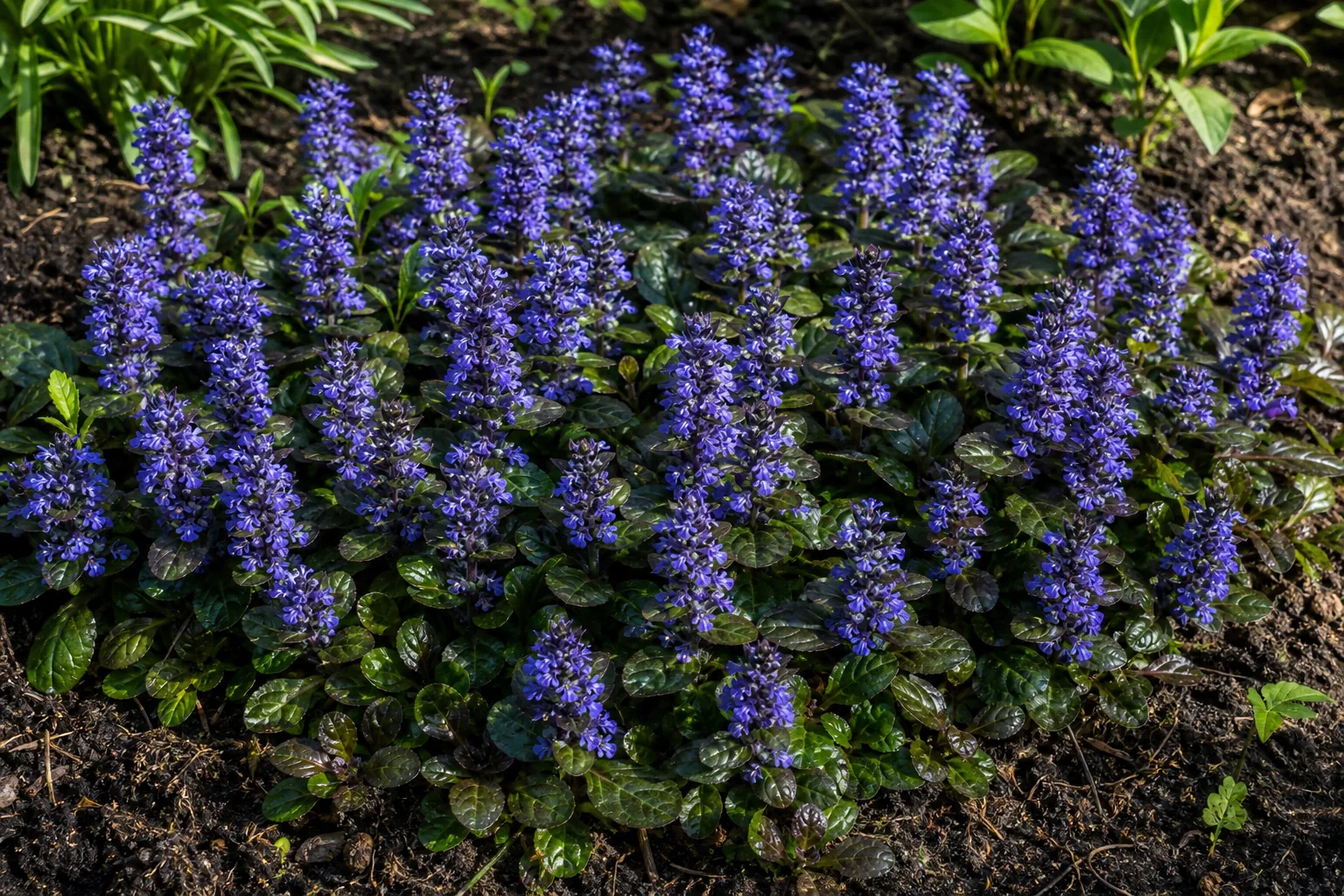
Carpet bugle (Ajuga reptans) is an easy ground cover that rewards good siting. Set plants in cool, shady spots where grass struggles - under trees, on slopes, or in a woodland garden - spacing them less than 12 inches apart. It tolerates all light levels and is an excellent choice for moist areas, although it will tolerate moderately dry soils. Avoid planting in wet, heavy soils and keep good air circulation around the foliage. A dense mat smothers weeds, but keep it away from perennial beds and lawns where its spreading runners become a removal problem.
Light
Carpet bugle performs in full sun, partial shade, dappled light, and deep shade - the NC State Extension plant database lists it as tolerant of all light levels. Colorful and variegated cultivars hold their best color with some sun; in hot climates afternoon shade prevents leaf scorch. Flowering is heaviest with brighter light, but the foliage mat fills in even in deep shade.
Water
Water young plants regularly through the first season to establish a dense root system. Once established, carpet bugle is tolerant of moderately dry soils and only needs supplemental water during extended drought. The bigger risk is the opposite - saturated soil. Wet, heavy ground invites crown rot, so let the surface dry between waterings and avoid sites that stay soggy after rain.
Soil and planting
Carpet bugle grows in clay, loam, and sand, preferring rich, well-drained soil with a slightly acid pH. Work in compost before planting and set the crown at - not above or below - the soil line; burying the crown invites rot. In containers, use a well-drained potting mix and repot or divide when the mat outgrows the pot. For ground-cover plantings, space small divisions 8-12 inches apart.
Temperature, humidity, and fertilizer
Carpet bugle is a hardy temperate perennial (roughly USDA zones 3-9) that stays evergreen to semi-evergreen depending on winter severity. It dislikes stagnant, humid air combined with wet foliage; thin crowded plantings to improve airflow. Fertilizer is rarely needed - a light spring top-dressing of compost is enough. Excess nitrogen simply encourages softer, more rot-prone growth.
Pruning and propagation
Trim spent flower spikes after bloom to tidy the mat, and shear or rake out tattered foliage in late winter where it stays semi-evergreen. Divide plants when they grow too crowded in spring or fall, or propagate by seed. Because most named cultivars are hybrids, division is the reliable way to keep a cultivar true to type.
Common problems
Start with the pattern, current soil moisture, and recent changes. One symptom can have several causes, so change the most likely factor first and observe before making another major adjustment.
| Symptom | Check first | First action |
|---|---|---|
| Bare center with the mat dying out from the middle | Check plant age, crowding, and whether soil stays wet. | Divide and replant healthy outer sections in spring or fall and improve drainage. |
| Crown rot and collapse in humid or wet conditions | Check drainage, heavy clay, and air circulation around the crown. | Avoid wet heavy soils, plant on a slight slope or raised bed, and thin crowded patches to improve airflow. |
| Spread into lawn or perennial beds | Check whether stolons have rooted beyond the planting area. | Edge the bed, pull rooted runners, and replant or discard the extras. |
| Scorched, bleached foliage in full sun | Check whether the site is hot and dry in summer. | Move to partial shade or provide consistent moisture; choose sun-tolerant cultivars such as 'Catlin's Giant'. |
| Leaf spots or wilted stems | Check for phytophthora, leaf spot, or fusarium wilt in humid, crowded growth. | Improve airflow, avoid overhead watering, and remove affected foliage; some cultivars have better disease resistance. |
Pet and household safety
Carpet bugle is not listed on the ASPCA toxic or non-toxic plant lists, so a species-specific pet-safety classification was not confirmed. Several horticultural references note potential low-level toxicity (saponins) and possible gastrointestinal upset from large ingestions, so treat the plant as potentially toxic to cats and dogs and discourage chewing. Contact a veterinarian after a substantial ingestion or concerning symptoms.
Frequently asked questions
How much light does carpet bugle need?
It tolerates everything from full shade to full sun, which is rare for a ground cover. Flowering is best with some sun; variegated cultivars keep better color in partial shade.
How often should I water carpet bugle?
Water to establish, then only during extended dry spells. It tolerates moderately dry soil; the main killer is the opposite - soil that stays wet and triggers crown rot.
What soil suits carpet bugle?
Rich, well-drained soil from clay to sand with a slightly acid pH. Avoid wet, heavy ground and never bury the crown.
How do I keep carpet bugle from taking over?
Edge the bed, pull rooted runners, or plant it where containment is easy. Some cultivars are less aggressive than the straight species.
When should I divide carpet bugle?
Divide overcrowded clumps in spring or fall, which also refreshes the center of old mats.
Is carpet bugle safe for pets?
The ASPCA does not list carpet bugle on its toxic or non-toxic lists. Because no species-specific non-toxic classification was confirmed, treat it as potentially toxic to cats and dogs and prevent chewing.
Sources and editorial review
This editorial draft is based on the sources below and awaits named horticulture-expert approval before publication.
- Ajuga reptansRoyal Botanic Gardens, Kew (Plants of the World Online) · Checked
- Toxic and Non-Toxic Plants ListASPCA · Checked
- Ajuga reptansNorth Carolina State University Extension · Checked
- BugleweedUniversity of Illinois Extension · Checked
What works well
- Forms a dense, weed-suppressing mat that stays attractive most of the year.
- Tolerates full shade to full sun, moist areas, and moderately dry soil once established.
- Spikes of blue-violet flowers attract bees; plants resist deer browsing.
What to consider
- Aggressive stoloniferous spread and self-seeding make it weedy in some regions.
- Crown rot is common in humid, poorly drained, or heavy-soil sites.
- Not classified as non-toxic to pets by the ASPCA; prevent chewing.