Key takeaways
- Grow in part shade to full shade in moist, well-drained, fertile soil; it tolerates heavy shade and grows near black walnuts.
- Water during dry spells in summer or the foliage goes dormant; expect vigorous spreading where conditions are good.
- Propagate by division in spring; the plant also self-seeds and can be mowed high to keep it in bounds.
How to care for sweet woodruff
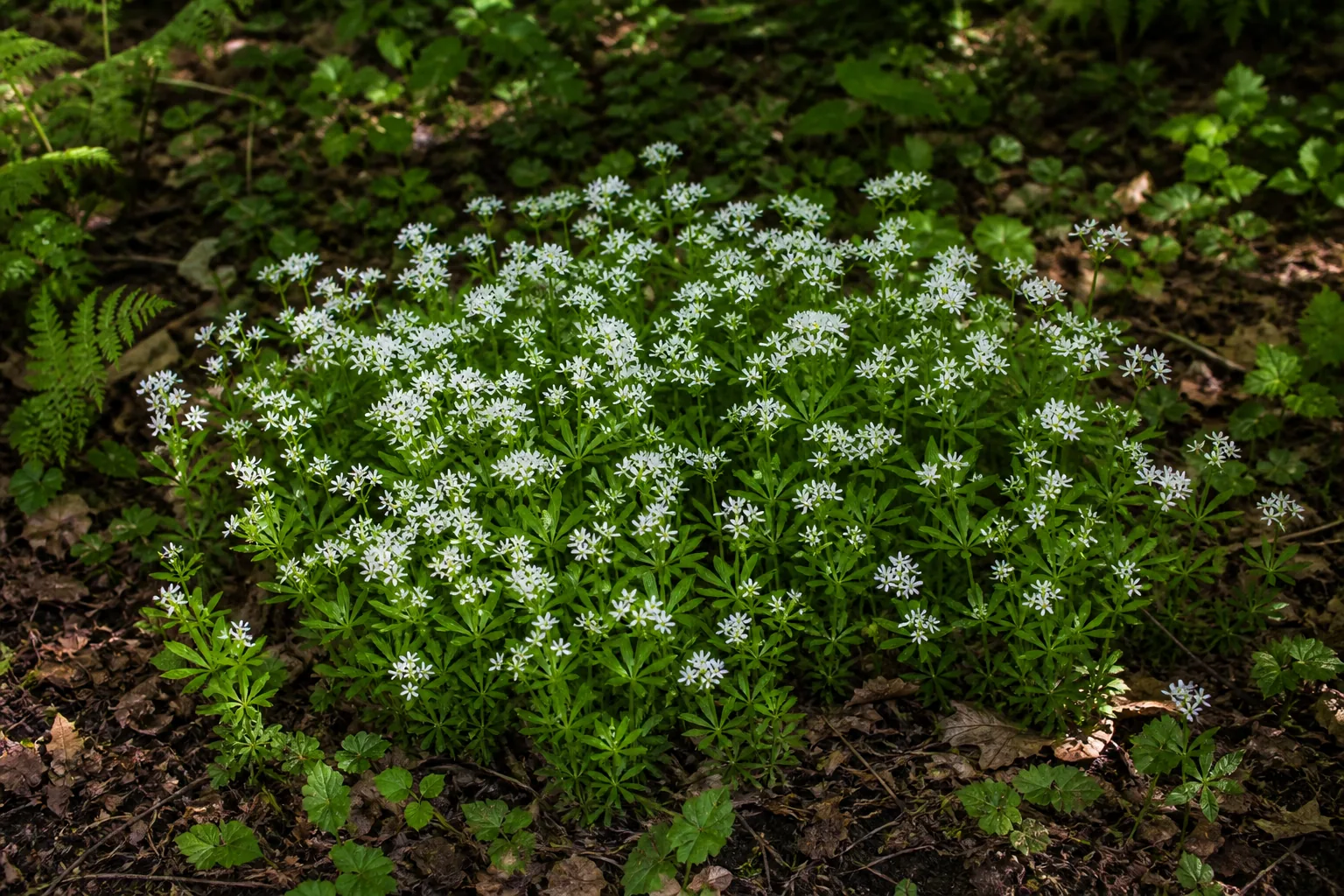
Sweet woodruff (Galium odoratum) is a low, spreading perennial for the shade garden. Plant it in moist, well-drained, fertile soil in part to full shade, spacing plants about a foot apart. It grows 6-12 inches tall and spreads by rhizomes and seeds, forming a dense, weed-suppressing mat under trees and in woodland borders. Water during dry summer spells to keep it from going dormant. It can be somewhat aggressive under optimal conditions; a rotary mower set high keeps growth in check where needed.
Light
Sweet woodruff does well in partial to full shade, including the deep shade under large trees. It tolerates heavy shade and dry shade, although growth is lusher with moisture and a little more sun. Avoid hot, bright sites where the foliage scorches and yellows.
Water
Keep sweet woodruff evenly moist. It prefers moist, fertile soils and needs watering during dry summer spells to prevent dormancy. While it survives dry shade, plants in dry soil are not as lush. Good drainage matters - it dislikes constantly saturated ground.
Soil and planting
Sweet woodruff grows in average to rich, moist, well-drained soil with a slightly acid to neutral pH, in clay, loam, or amended sand with high organic matter. Work compost into the bed before planting and keep the crown at the soil line. It is a ground cover, not a houseplant, so plan the bed for the full spread and divide or replant if it outgrows its area.
Temperature, humidity, and fertilizer
Hardy in roughly USDA zones 4-9, sweet woodruff is a cool-climate woodland perennial that dies back in most winters and reappears early in spring. It prefers cool, moist shade and suffers in hot, dry conditions. Fertilizer is rarely needed - compost at planting and an occasional top-dressing is enough for this self-sufficient ground cover.
Pruning and propagation
Sweet woodruff needs little real pruning; mow or shear high after bloom if it becomes untidy, and trim edges to keep the mat in bounds. Propagate most easily by division in spring; clumps can also be moved through the season if kept moist. It grows from seed - sow in place in late summer for germination the next spring.
Common problems
Start with the pattern, current soil moisture, and recent changes. One symptom can have several causes, so change the most likely factor first and observe before making another major adjustment.
| Symptom | Check first | First action |
|---|---|---|
| Foliage goes brown and dormant in summer | Check soil moisture; sweet woodruff dries out in hot spells. | Water deeply during dry summers to keep the mat green. |
| Thin, scorched leaves in bright sites | Check sun exposure. | Move to part or full shade; this is a woodland plant, not a sun plant. |
| Aggressive spread into surrounding beds | Check rhizomes and self-seeded seedlings at the mat edge. | Edge the bed, pull stray growth, or mow high to hold it in check. |
| Powdery mildew on foliage in humid weather | Check airflow in crowded, humid plantings. | Thin the mat, avoid overhead watering, and remove affected foliage. |
| Patchy establishment in dry shade | Check competition from tree roots and soil moisture. | Water through establishment and amend soil with compost. |
Pet and household safety
Sweet woodruff is not listed on the ASPCA toxic or non-toxic plant lists. The foliage and flowers contain coumarin, which is toxic in large amounts and can have a blood-thinning (anticoagulant) effect - the NC State Extension profile notes the flowers can have a blood-thinning effect if eaten in large amounts, and coumarin levels rise as foliage dries. Treat the plant as potentially toxic to cats and dogs if large amounts are ingested, keep pets from grazing the dried foliage, and contact a veterinarian after a concerning exposure.
Frequently asked questions
How much light does sweet woodruff need?
Partial to full shade. It tolerates heavy shade and even grows happily under black walnut trees.
How often should I water sweet woodruff?
Water during dry summer spells to prevent dormancy; it prefers consistently moist soil and is lusher with regular moisture.
Why is my sweet woodruff turning brown?
Usually dry soil in summer heat. Water deeply during dry spells and it will recover.
How do I control sweet woodruff's spread?
Edge the planting, pull self-seeded seedlings, or mow the patch high with a rotary mower.
How do I propagate sweet woodruff?
Divide clumps in spring - the easiest method. It also grows from seed sown in late summer.
Is sweet woodruff safe for pets?
It is not on the ASPCA toxic or non-toxic lists. The foliage contains coumarin, which can have a blood-thinning effect and is toxic in large amounts, so treat it as potentially toxic to cats and dogs and prevent chewing, especially of dried foliage.
Sources and editorial review
This editorial draft is based on the sources below and awaits named horticulture-expert approval before publication.
- Galium odoratumRoyal Botanic Gardens, Kew (Plants of the World Online) · Checked
- Toxic and Non-Toxic Plants ListASPCA · Checked
- Galium odoratumNorth Carolina State University Extension · Checked
- Sweet Woodruff, Galium odoratumUniversity of Wisconsin-Madison Extension · Checked
What works well
- Sweet-smelling foliage and edible, fragrant white flowers with a nutty, vanilla-like flavor.
- Forms a dense, weed-suppressing mat in the moist shade where lawn grass fails.
- Tolerates heavy shade, dry shade, and juglone (walnut) toxicity.
What to consider
- Aggressive spread by rhizomes and seed where conditions are ideal; invasive in some regions.
- Goes dormant and turns brown if the soil dries out in summer.
- Dried foliage contains coumarin, which can have a blood-thinning effect if eaten in large amounts.