Key takeaways
- Plant in full sun with some midday shade in moderately fertile, acid-to-neutral, moist well-drained soil.
- Water regularly in cool conditions; intense heat, drought, or overwatering all damage the mat.
- Propagate by division in spring or by seed; note the ASPCA 'Irish moss' entry refers to a different plant (Selaginella kraussiana).
How to care for Irish moss
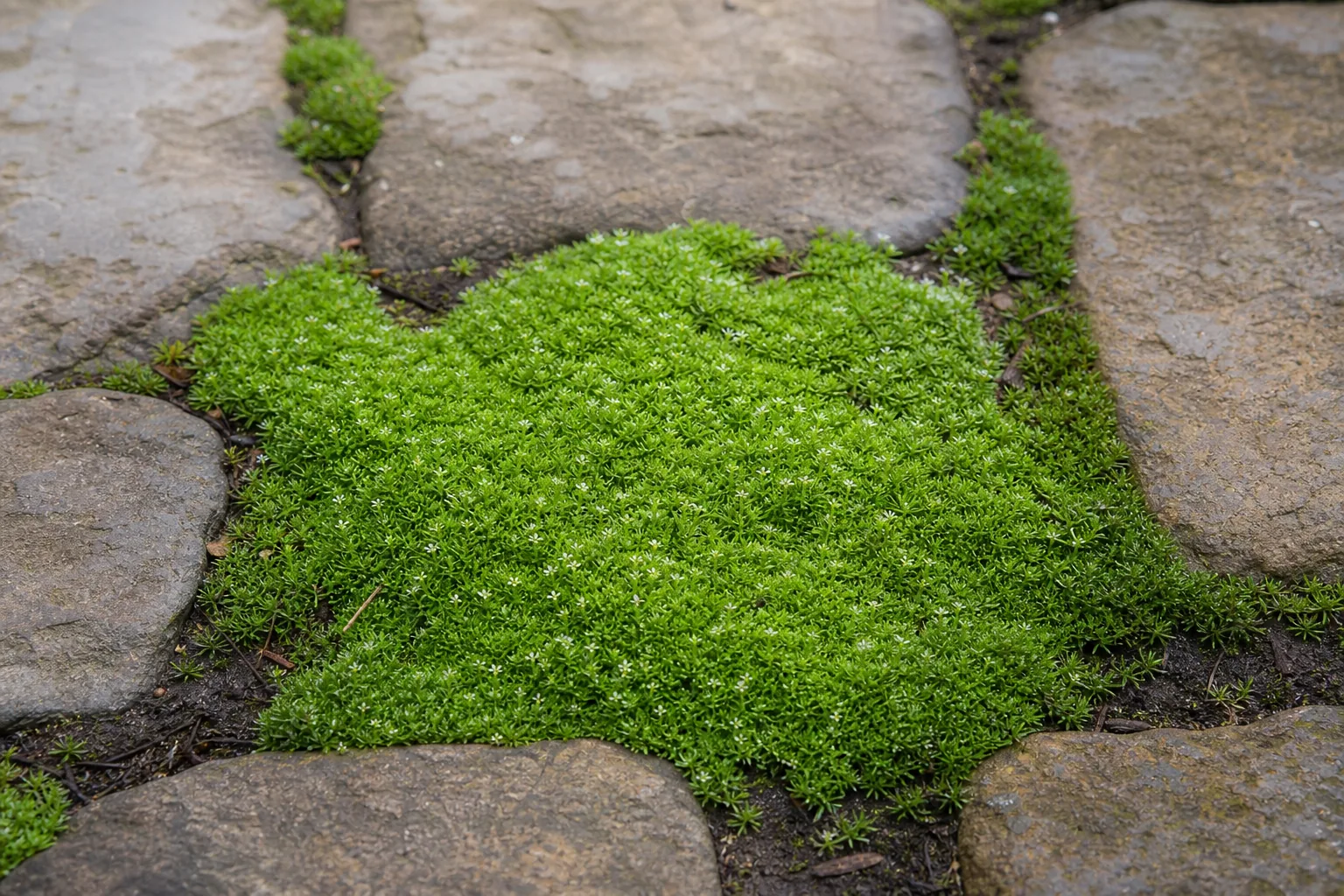
Irish moss (Sagina subulata) is a fine-textured evergreen mat for cool, moist spots. Plant it in full sun with some midday shade, in moderately fertile, acid-to-neutral, moist but well-drained soil - ideal for gaps in paving, rock gardens, troughs, and low-use lawns. It prefers cool, moist conditions and most growth happens in spring while weather is moist and cool; intense heat, drought, and overwatering are all damaging. It spreads by reseeding and by stems that root at the nodes, and it tolerates light foot traffic.
Light
Irish moss does best in full sun with some midday shade; the RHS lists it for full sun or partial shade. It prefers cool, moist conditions and becomes leggy in too much shade. In hot-summer regions a spot with afternoon shade protects the mat from burning out.
Water
Water regularly to keep the soil moist but well drained; the RHS specifies moist but well-drained conditions, and NC State notes that overwatering can be a problem. The plant dislikes intense heat, drought, and waterlogging alike, so aim for even moisture and check the soil rather than watering on a fixed schedule.
Soil and planting
Irish moss prefers moderately fertile, acid-to-neutral soil that is moist but well drained, and it grows well in rocky or sandy ground - good for planting between pavers and in troughs. In containers, use a gritty, well-drained mix and divide or refresh when the mat outgrows the pot. It spreads by reseeding and rooting stems, forming small mossy colonies.
Temperature, humidity, and fertilizer
Hardy in roughly USDA zones 4-8, Irish moss is a cool-weather plant that thrives in cool, moist conditions and suffers in intense heat or drought. Most vegetative growth occurs in spring while the weather is moist and cool. Fertilizer is rarely needed; rich soil or heavy feeding simply encourages soft, less compact growth.
Pruning and propagation
No pruning is required, but the mat may be trimmed back from paving to keep edges neat, and can be mowed before flowers fade to reduce self-seeding. Propagate by division in spring or by seed sown in containers in autumn; the RHS lists both methods. Divided sections re-establish quickly in moist, cool weather.
Common problems
Start with the pattern, current soil moisture, and recent changes. One symptom can have several causes, so change the most likely factor first and observe before making another major adjustment.
| Symptom | Check first | First action |
|---|---|---|
| Mat browns or dies out in a heat wave | Check for intense heat or drought stress. | Provide some midday shade, water consistently, and revive the mat in cool, moist weather. |
| Matted, mushy, or collapsed sections | Check for overwatering or poor drainage. | Reduce watering and improve drainage; Irish moss is damaged by waterlogging. |
| Leggy, thin growth with fewer flowers | Check for too much shade. | Move to a sunnier spot with some midday shade. |
| Trampled or worn paths through the mat | Check heavy foot traffic. | Use stepping stones to concentrate traffic; Irish moss tolerates only light footfall. |
| Seedlings colonize nearby paving | Check whether the mat is self-seeding into gaps. | Mow or trim before flowers fade to reduce self-seeding, and pull unwanted seedlings. |
Pet and household safety
The ASPCA 'Irish moss' page actually describes Selaginella kraussiana (a spikemoss), not Sagina subulata, and no ASPCA listing exists for Sagina subulata itself; NC State and RHS record no toxicity for the species. Because no authoritative pet-safety source confirms it as non-toxic to cats and dogs, treat the plant as potentially toxic and discourage chewing; contact a veterinarian after substantial ingestion.
Frequently asked questions
How much light does Irish moss need?
Full sun with some midday shade is best; it also grows in partial shade but becomes leggy in too much shade.
How often should I water Irish moss?
Keep the soil moist but well drained. It dislikes both drought and overwatering, so check the soil and water in cool, even conditions.
What soil suits Irish moss?
Moderately fertile, acid-to-neutral soil that is moist but well drained, including rocky or sandy ground.
Why is my Irish moss browning out?
Usually intense heat, drought, or overwatering. Provide some midday shade, water consistently but not heavily, and let it recover in cool weather.
How do I propagate Irish moss?
Divide the mat in spring, or sow seed in containers in autumn. Divided sections re-establish quickly in moist, cool conditions.
Is Irish moss safe for pets?
The ASPCA 'Irish moss' listing actually describes a different plant (Selaginella kraussiana), and no authoritative source confirms Sagina subulata as non-toxic to cats and dogs, so treat it as potentially toxic and prevent chewing.
Sources and editorial review
This editorial draft is based on the sources below and awaits named horticulture-expert approval before publication.
- Sagina subulataRoyal Botanic Gardens, Kew (Plants of the World Online) · Checked
- Toxic and Non-Toxic Plants ListASPCA · Checked
- Sagina subulataNorth Carolina State University Extension · Checked
- Sagina subulata (heath pearlwort)Royal Horticultural Society · Checked
What works well
- Fine-textured, moss-like evergreen mat for rock gardens, troughs, and between pavers.
- Tolerates light foot traffic and works as a low lawn alternative.
- Generally pest and disease free, with a spring show of tiny white flowers.
What to consider
- Does poorly in intense heat or drought and can be damaged by overwatering.
- Becomes leggy in too much shade; may need trimming back from paving.
- Not confirmed as non-toxic for pets - the ASPCA 'Irish moss' listing covers a different species.