Key takeaways
- Site in part shade to full shade; foamflower is a woodland plant that dislikes hot, dry sites.
- Keep the soil humus-rich and consistently moist but well drained; wet winter soil can be fatal.
- Propagate by division of rooted runners in spring or fall, or by seed (two genotypes are needed for viable seed).
How to care for foamflower
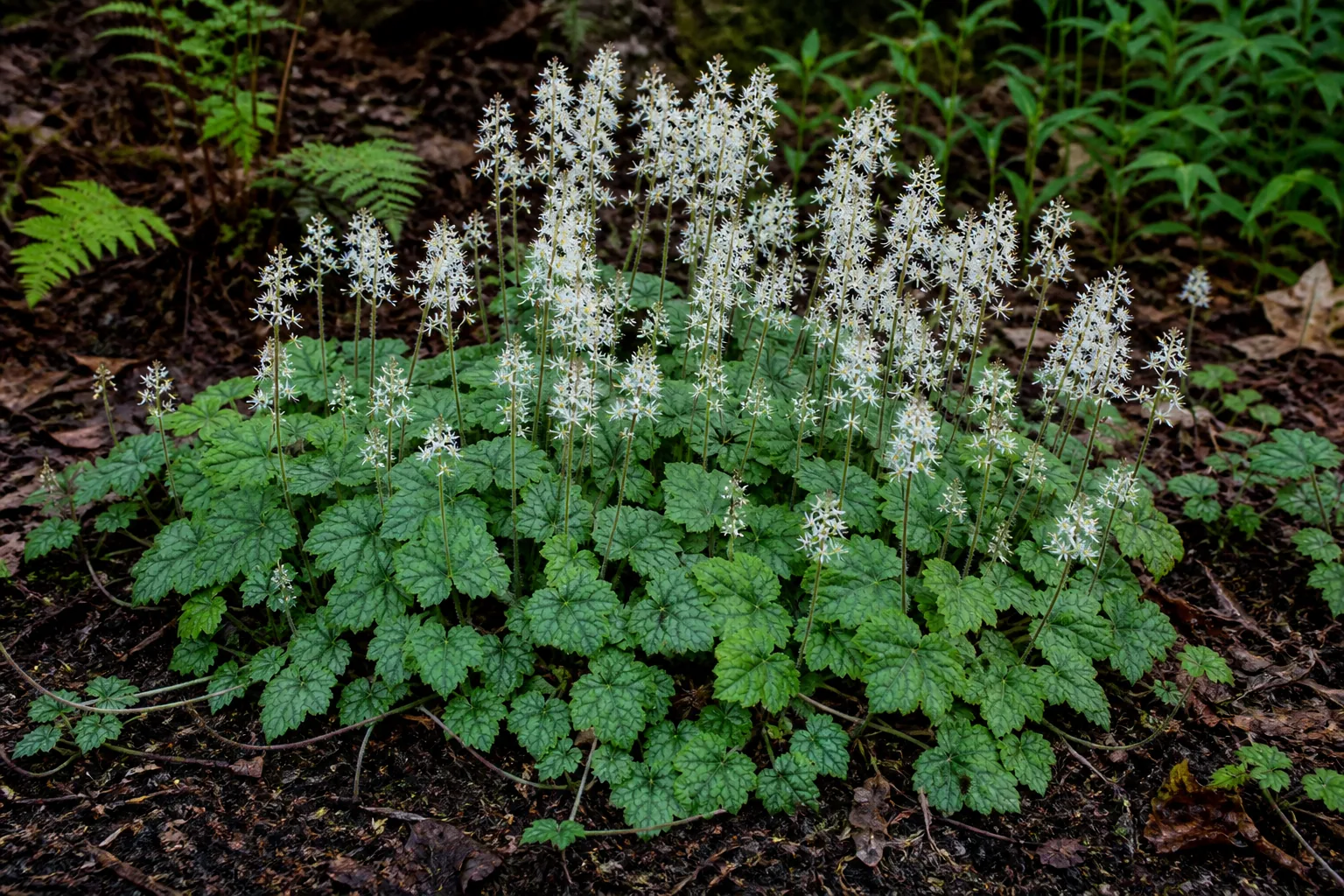
Foamflower (Tiarella cordifolia) is an easy woodland ground cover that rewards good siting. Plant it in part shade to full shade, in humusy, organically rich, moisture-retentive soil that still drains well, spacing plants about a foot apart so the stoloniferous runners can knit together. Keep the root zone from drying out during the growing season; wet soils, especially in winter, can be fatal. After bloom, remove the spent flower spikes to tidy the foliage mound, and divide crowded clumps in spring or fall to keep the planting vigorous.
Light
Foamflower performs best in part shade to full shade - the dappled light of a woodland understory is ideal. It is rated tolerant of partial, dappled, and deep shade by NC State Extension. Full-sun sites are too harsh unless the soil stays reliably moist, and strong sun combined with dry soil quickly browns the foliage.
Water
Water new plants regularly through the first season to establish a dense root system, then keep the soil consistently moist; the Missouri Botanical Garden lists the water need as medium and notes the soil should not be allowed to dry out. The greater risk is the opposite extreme - saturated soil, particularly over winter, which can kill the crown. Water at the base and let the surface dry slightly between waterings.
Soil and planting
Foamflower prefers humusy, organically rich, well-drained soil with a neutral to slightly acid pH; work in leaf mold or compost before planting. Set the crown at grade and keep mulch away from the crown itself. In containers, use a rich, well-drained potting mix and divide or repot when the clump fills the pot. As a ground cover, space plants 10-12 inches apart for quicker coverage.
Temperature, humidity, and fertilizer
Hardy in roughly USDA zones 4-9 (NC State lists 3a-8b), foamflower is a temperate woodland perennial that stays semi-evergreen in mild winters. It prefers cool, humid shade and suffers where summers are hot and dry. Fertilizer is rarely needed - a light spring top-dressing of compost is enough, since rich soil simply encourages soft growth.
Pruning and propagation
Remove spent flower spikes after bloom to improve the appearance of the foliage mound, and tidy tattered leaves in late winter where foliage is semi-evergreen. Propagate by division of rooted runners or stolon plantlets in spring or fall, or by seed; because most garden plants are a single clone, two genetically different plants are usually required for seed set, so division is the more reliable method.
Common problems
Start with the pattern, current soil moisture, and recent changes. One symptom can have several causes, so change the most likely factor first and observe before making another major adjustment.
| Symptom | Check first | First action |
|---|---|---|
| Brown, scorched foliage in a sunny or dry spot | Check sun exposure and whether the soil has dried out. | Move to part shade to full shade and water more consistently; mulch to hold soil moisture. |
| Crown collapses or dies over a wet winter | Check drainage and whether the crown sat in saturated soil. | Improve drainage, avoid low spots, and replant divisions on a slight mound. |
| Thin, slow spread that fails to knit together | Check soil organic matter, moisture, and competition from tree roots. | Amend with compost, water during dry spells, and be patient - establishment is slow. |
| Sparse bloom with mostly foliage | Check plant age, light level, and whether flower spikes were removed. | Site in more consistent part shade, keep soil evenly moist, and divide old clumps in spring. |
| Ragged, tattered foliage by late winter | Check for normal semi-evergreen leaf decline in cold winters. | Cut back tattered leaves in late winter before new growth; no treatment needed. |
Pet and household safety
Foamflower is not listed on the ASPCA toxic or non-toxic plant lists, and the NC State Extension profile records no toxicity for the species. Because no authoritative pet-safety source confirms it as non-toxic to cats and dogs, treat the plant as potentially toxic and discourage chewing; contact a veterinarian after substantial ingestion.
Frequently asked questions
How much light does foamflower need?
Part shade to full shade is best - dappled woodland light is ideal. It will not thrive in hot, sunny, dry sites.
How often should I water foamflower?
Water to establish, then keep the soil consistently moist; the Missouri Botanical Garden notes the soil should not be allowed to dry out. Avoid saturated soil, especially in winter.
What soil suits foamflower?
Humusy, organically rich, well-drained soil with a neutral to slightly acid pH. Amend with leaf mold or compost before planting.
How do I propagate foamflower?
Divide rooted runners or stolon plantlets in spring or fall. Seed is possible but needs two different genotypes, so division is more reliable.
Why is my foamflower not spreading?
Usually too little moisture, too much sun, or competition from tree roots. Improve the soil, water consistently, and give it time - it grows slowly at first.
Is foamflower safe for pets?
It is not on the ASPCA toxic or non-toxic lists and no toxicity is recorded by NC State, but because no authoritative source confirms it as non-toxic to cats and dogs, treat it as potentially toxic and prevent chewing.
Sources and editorial review
This editorial draft is based on the sources below and awaits named horticulture-expert approval before publication.
- Tiarella cordifoliaRoyal Botanic Gardens, Kew (Plants of the World Online) · Checked
- Toxic and Non-Toxic Plants ListASPCA · Checked
- Tiarella cordifoliaNorth Carolina State University Extension · Checked
- Tiarella cordifoliaMissouri Botanical Garden · Checked
What works well
- Dense, weed-suppressing ground cover for shade that spreads readily by runners.
- Airy spring bloom plus semi-evergreen foliage that turns reddish-bronze in cold weather.
- Deer and rabbit resistant, with no serious insect or disease problems.
What to consider
- Demands consistent moisture and humus-rich soil; it declines in hot, dry sites.
- Slow to establish and may need help to fill large areas.
- Not classified as non-toxic by the ASPCA; treat as potentially toxic to pets.