Key takeaways
- Plant in full sun in acidic, dry to medium, well-drained sandy or gritty soil; avoid rich or wet ground.
- Water to establish, then leave alone - bearberry is drought tolerant and should not be fertilized.
- Propagate by cuttings, layering, or seed; established plants resent root disturbance and transplanting.
How to care for bearberry
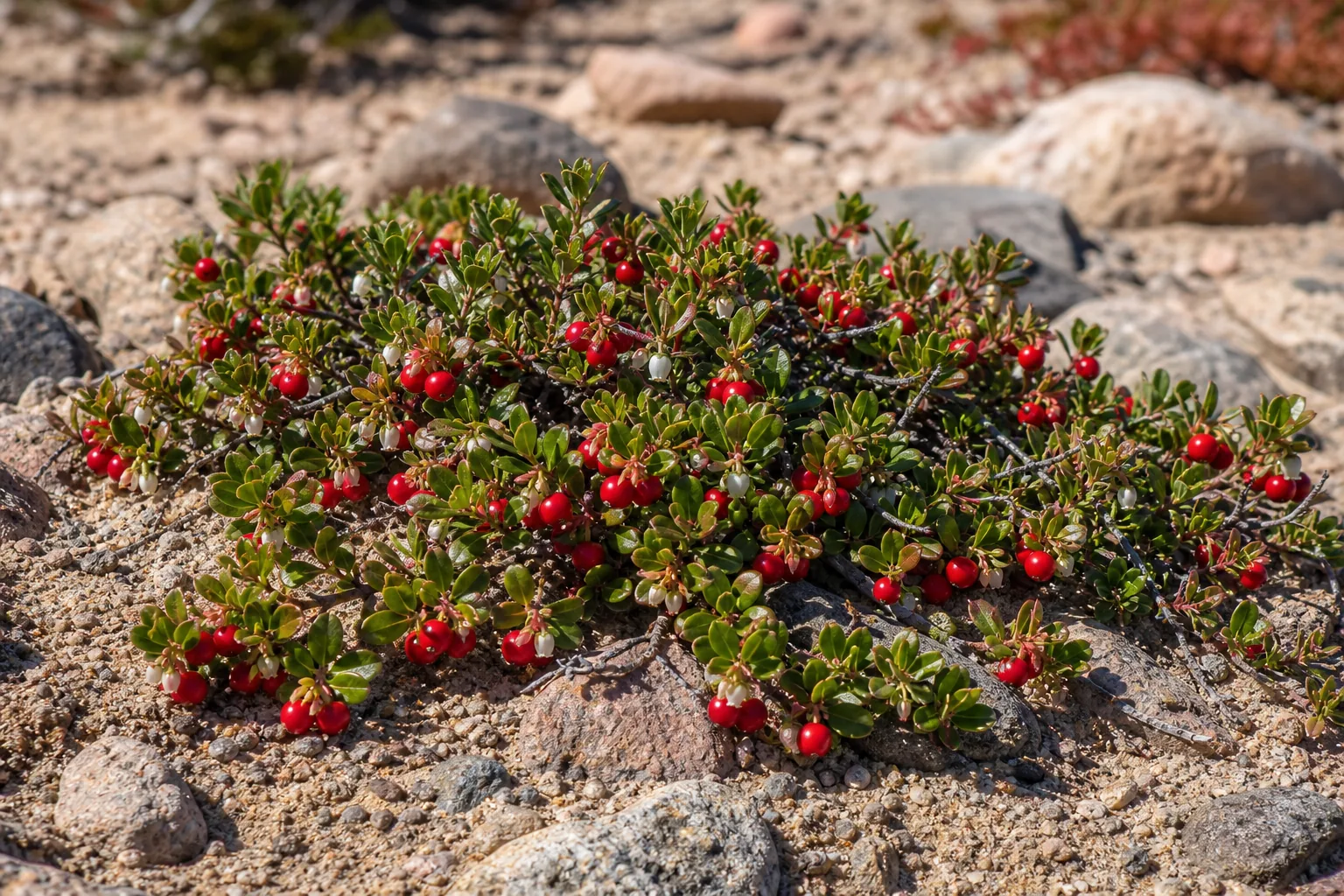
Bearberry (Arctostaphylos uva-ursi) is a tough, low evergreen shrub for open, sunny, sandy sites. Plant it in full sun in acidic, dry to medium, well-drained sandy or gritty soil, spacing plants 12-24 inches apart; it usually grows well in poor, infertile ground. Water to establish, then leave it alone - it is drought tolerant once established and should never be fertilized. Because established plants do not tolerate root disturbance well, choose the final site carefully and avoid moving it once planted.
Light
Bearberry does best in full sun and tolerates light shade. It is native to exposed, open, gravelly sites and grows poorly in shade, where the mat thins and flowering declines. Give it the sunniest, most open position you have.
Water
Water young plants regularly through the first season to build roots, then rely on rainfall; bearberry is drought tolerant once established and prefers dry to medium conditions. It grows poorly in hot, humid summer climates and can develop root rot in poorly drained or consistently wet soils, so err on the side of too dry rather than too wet.
Soil and planting
Bearberry wants acidic, dry to medium, well-drained sandy or gritty soil and tolerates shallow rocky ground. It grows well in poor, infertile soils and should not be fertilized. Since established plants resent root disturbance and are difficult to divide and transplant, site it correctly the first time; in containers use a gritty, acid, fast-draining mix and disturb the roots as little as possible when repotting.
Temperature, humidity, and fertilizer
Extremely winter hardy (best in USDA zones 2-6, with 7 marginal), bearberry is a circumpolar plant of cool northern regions that dislikes hot, humid summers; it is not recommended for most areas south of zone 7. No fertilizer is needed - feeding encourages soft growth and is explicitly discouraged by the Missouri Botanical Garden. Poorly drained or too-warm sites increase susceptibility to root rot, black mildew, leaf gall, leaf spot, and rust.
Pruning and propagation
Little pruning is required; remove only dead or damaged stems. Propagate by cuttings from the current season's growth, by layering, or from seed for straight-species plants. Because the prostrate stems root where they touch the ground, naturally layered sections are an easy source of new plants.
Common problems
Start with the pattern, current soil moisture, and recent changes. One symptom can have several causes, so change the most likely factor first and observe before making another major adjustment.
| Symptom | Check first | First action |
|---|---|---|
| Yellowing, thinning mat in a hot or wet site | Check drainage and whether the summer climate is too hot and humid. | Move to a well-drained, cooler site; avoid irrigation and fertilizer, which encourage soft, rot-prone growth. |
| Blackened stems and root rot | Check for poorly drained or consistently wet soil. | Improve drainage or replant on a slope; bearberry must have sharply drained ground. |
| Leaf spots, galls, or rust | Check for fungal diseases favored by heat, humidity, or wet foliage. | Improve airflow, avoid overhead watering, and remove affected growth; site in open, dry conditions. |
| Plant dies after transplanting | Check root disturbance - established bearberry resents being moved. | Site it correctly the first time; propagate new plants by cuttings or layering instead of transplanting. |
| Sparse mat with little bloom | Check light level and soil fertility. | Move to full sun in lean, sandy soil; do not fertilize. |
Pet and household safety
Bearberry is not listed on the ASPCA toxic or non-toxic plant lists, and neither NC State Extension nor the Missouri Botanical Garden record toxicity for the species (the drupes are technically edible for humans, though mealy). Because no authoritative pet-safety source confirms it as non-toxic to cats and dogs, treat the plant as potentially toxic and discourage chewing; contact a veterinarian after substantial ingestion.
Frequently asked questions
How much sun does bearberry need?
Full sun is best, with light shade tolerated. It is native to exposed, open sites and thins out in shade.
How often should I water bearberry?
Water to establish, then only during extended drought. It is drought tolerant once established and grows poorly in wet soil.
What soil suits bearberry?
Acidic, dry to medium, well-drained sandy or gritty soil, including shallow rocky ground. It grows well in poor soil and should not be fertilized.
Can I transplant an established bearberry?
It is best not to - established plants resent root disturbance and are difficult to divide or transplant. Site it correctly the first time and propagate new plants by cuttings or layering.
Why does my bearberry look sick in summer?
It dislikes hot, humid summers and wet ground, which invite root rot and fungal diseases. Give it sharp drainage and an open, cool site.
Is bearberry safe for pets?
It is not on the ASPCA toxic or non-toxic lists and no toxicity is recorded by NC State, but because no authoritative source confirms it as non-toxic to cats and dogs, treat it as potentially toxic and prevent chewing.
Sources and editorial review
This editorial draft is based on the sources below and awaits named horticulture-expert approval before publication.
- Arctostaphylos uva-ursiRoyal Botanic Gardens, Kew (Plants of the World Online) · Checked
- Toxic and Non-Toxic Plants ListASPCA · Checked
- Arctostaphylos uva-ursiNorth Carolina State University Extension · Checked
- Arctostaphylos uva-ursiMissouri Botanical Garden · Checked
What works well
- Tough, evergreen, drought-tolerant mat for slopes, rock gardens, and poor sandy sites.
- Very winter hardy, with red fall-winter drupes attractive to birds and small mammals.
- Low maintenance once established and effective for erosion control.
What to consider
- Grows poorly in hot, humid summer climates and is not recommended south of zone 7.
- Slow-growing and difficult to divide or transplant successfully.
- Not classified as non-toxic by the ASPCA; treat as potentially toxic to pets.