Key takeaways
- Grow in full sun with well-drained soil - sandy or gravelly sites are fine and it tolerates heat and drought.
- Cut back the stems by half after flowering to maintain shape and promote denser growth.
- Propagate by division, root cuttings, or stem cuttings in late spring after bloom.
How to care for creeping phlox
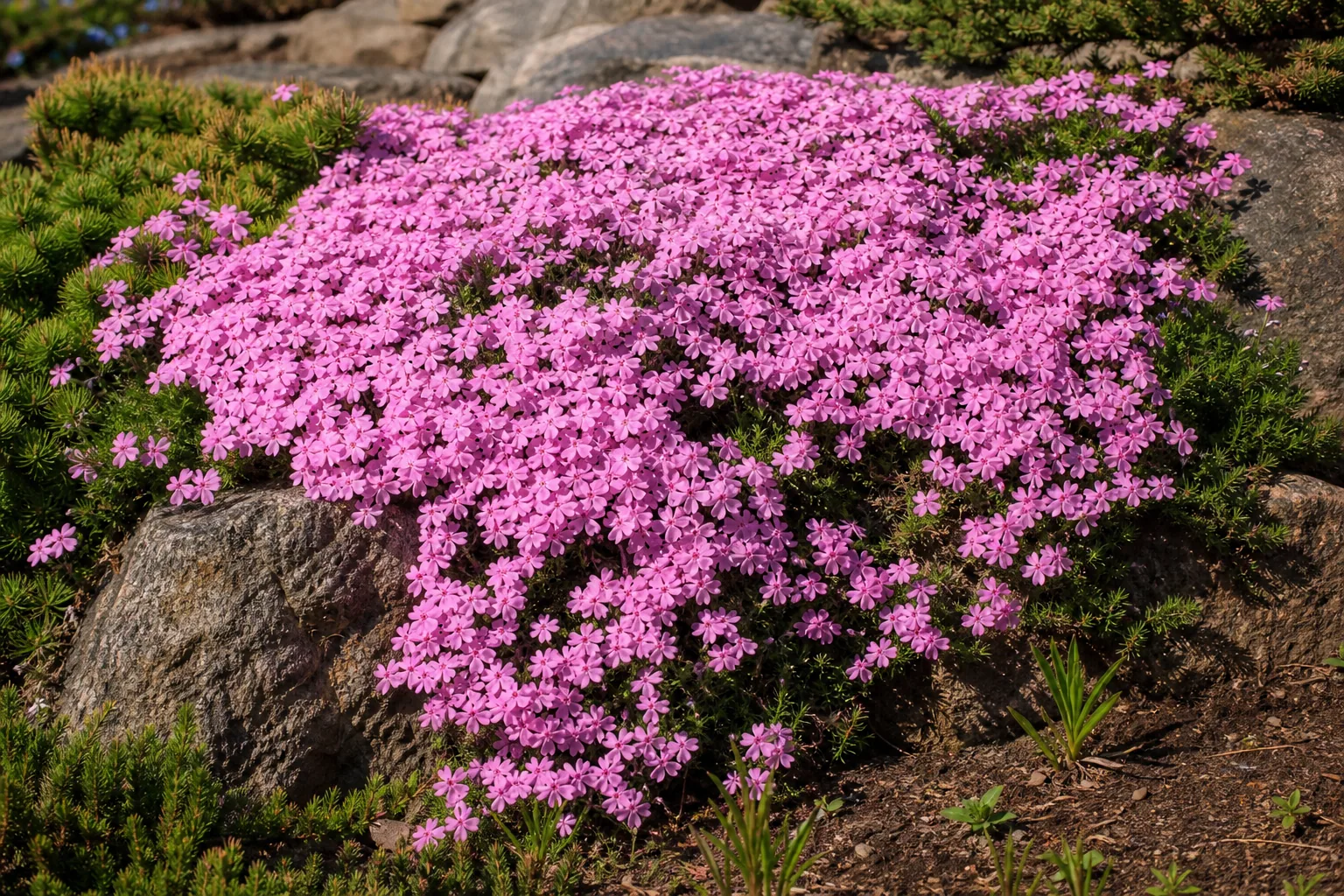
Creeping phlox (Phlox subulata) is a vigorous, spreading, mat-forming perennial that grows only about 6 inches tall but spreads to 24 inches wide. Plant it in full sun and humusy, medium-moisture, well-drained soil, spacing plants about 12-24 inches apart. It grows well in sandy or gravelly soils and tolerates hot, dry exposures better than most other phlox species. It flowers best in full sun, though it appreciates some dappled sun in areas with hot, humid summers. Cut the stems back by half after flowering to maintain form, promote denser growth, and stimulate a possible light rebloom.
Light
Creeping phlox flowers best in full sun, and good soil drainage is important. In hot, humid summers the plant appreciates some dappled sun, but too much shade reduces flowering and promotes leggy growth. The awl-shaped leaves retain some green in winter.
Water
Creeping phlox prefers medium moisture but is drought tolerant once established, and it performs well in dry, rocky, or sandy soils. Water during establishment and extended dry spells; good drainage matters more than frequent watering. Avoid soggy soil, which invites root problems.
Soil and planting
Creeping phlox grows best in humusy, medium-moisture, well-drained soils and thrives in sandy or gravelly soil, tolerating hot, dry exposures. It grows well in raised beds, containers, or between rocks, cascading over walls. In containers, use a well-drained mix and water more frequently than in the ground.
Temperature, humidity, and fertilizer
Hardy in roughly USDA zones 3-9, creeping phlox tolerates drought, deer, erosion, and air pollution, and is resistant to powdery mildew. In hot, dry conditions watch for spider mites; in wet, humid conditions foliar nematodes can damage leaves. It needs little to no fertilizer - lean, well-drained soil keeps the mat compact.
Pruning and propagation
After flowering, cut the stems back by half to maintain shape and encourage dense growth; this is the key maintenance task. Propagate by division, root cuttings, or stem cuttings taken after blooming. Plants also self-seed in optimum growing conditions.
Common problems
Start with the pattern, current soil moisture, and recent changes. One symptom can have several causes, so change the most likely factor first and observe before making another major adjustment.
| Symptom | Check first | First action |
|---|---|---|
| Spider mite damage in hot, dry weather | Check for stippled foliage in dry, sunny sites. | Water during dry spells, rinse foliage, and improve conditions before resorting to controls. |
| Foliage damage in wet, humid weather | Check for foliar nematodes in wet conditions. | Improve airflow, avoid overhead watering, and remove affected growth. |
| Sparse flowering or leggy mats | Check light and whether plants were sheared after bloom. | Move to full sun and cut stems back by half after flowering. |
| Rabbit damage to new growth | Check for nibbled foliage in spring. | Use barriers or repellents where rabbits are active. |
| Bare, woody centers in old plantings | Check plant age and crowding. | Divide and replant young, healthy sections in late spring. |
Pet and household safety
Creeping phlox is non-toxic to cats, dogs, and horses - the NC State Extension plant profile carries non-toxic-for-cats, non-toxic-for-dogs, and non-toxic-for-horses classifications. As with any plant, eating large amounts may still cause mild stomach upset, so discourage chewing and contact a veterinarian if a pet shows persistent symptoms.
Frequently asked questions
How much sun does creeping phlox need?
Full sun for the best flower display; it appreciates some dappled shade in hot, humid summers.
How often should I water creeping phlox?
Moderately - it is drought tolerant once established and prefers well-drained soil. Water in dry spells.
When should I cut back creeping phlox?
Cut the stems back by half after flowering to keep the mat dense and encourage possible rebloom.
How do I propagate creeping phlox?
By division, root cuttings, or stem cuttings after blooming; it also self-seeds in good conditions.
Why isn't my creeping phlox blooming well?
Usually too little sun, or it was not sheared after the previous bloom. Move to full sun and shear after flowering.
Is creeping phlox safe for pets?
Yes - the NC State Extension profile classifies creeping phlox (Phlox subulata) as non-toxic to cats, dogs, and horses. Large amounts of any plant can still cause mild stomach upset, so prevent heavy chewing.
Sources and editorial review
This editorial draft is based on the sources below and awaits named horticulture-expert approval before publication.
- Phlox subulataRoyal Botanic Gardens, Kew (Plants of the World Online) · Checked
- Toxic and Non-Toxic Plants ListASPCA · Checked
- Phlox subulataNorth Carolina State University Extension · Checked
- Phlox subulataMissouri Botanical Garden Plant Finder · Checked
What works well
- Spectacular carpet of spring flowers in red-purple, pink, or white over evergreen needlelike foliage.
- Resistant to powdery mildew, unlike most other species of phlox.
- Drought, deer, and erosion tolerant; ideal for rock gardens, slopes, and sunny borders.
What to consider
- Bloom season is brief - the flower carpet lasts only a few weeks in spring.
- Spider mites can be a problem in hot, dry conditions; rabbits may nibble the foliage.
- Needs full sun and sharp drainage; flops and declines in rich, wet, or shaded sites.