Key takeaways
- Plant in part shade to full shade in rich, moist, well-drained soil with consistent summer moisture.
- Divide plants in early spring before leaves unfurl, or in autumn.
- Toxic to cats and dogs (ASPCA: saponins; vomiting, diarrhea, depression) - keep pets from chewing.
How to care for hosta
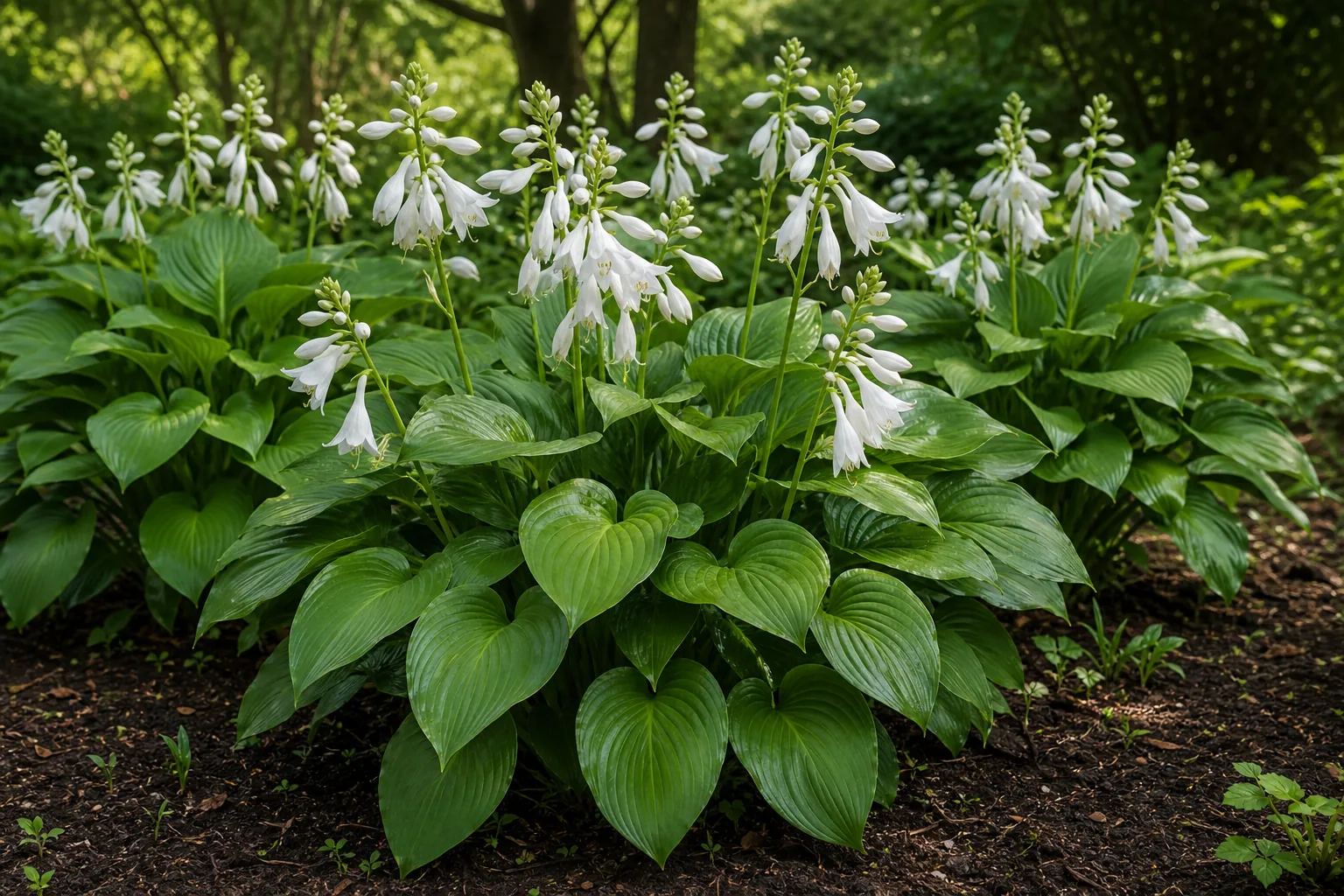
Hosta (Hosta plantaginea) is one of the easiest and most rewarding shade perennials. Plant it in part shade to full shade in rich, moist, well-drained soil, spacing plants so the mature mounds can spread; this species is more heat- and sun-tolerant than most hostas but still does best out of harsh sun. Water consistently through the growing season, ideally directly to the soil beneath the leaves, and divide plants in spring or autumn as needed - division is easiest in early spring before the leaves unfurl. All parts are toxic to cats, dogs, and horses, so site it away from pets that chew foliage.
Light
Hosta plantaginea grows best in part shade to full shade. It is one of the most sun-tolerant hosta species, and NC State notes it can take full sun only in cooler climates with consistent moisture, but in most gardens part shade to full shade keeps foliage lush and unfaded.
Water
Water consistently through the growing season; hosta needs medium moisture and performs best in rich, moist soil. Apply water directly to the soil beneath the leaves rather than overhead to keep foliage dry, which reduces slug and disease pressure. Avoid both drought and persistently soggy ground.
Soil and planting
Hosta tolerates a wide range of soils but performs best in rich, moist, organically rich soil that drains well; it tolerates heavy shade, black walnut toxicity, and even slightly alkaline or acidic conditions. Set the crown at the soil line. In containers use a rich, moisture-retentive potting mix and divide or repot when the roots fill the pot - division in early spring before leaves unfurl is easiest.
Temperature, humidity, and fertilizer
Hardy in USDA zones 3-9, hosta is a dependable temperate perennial that needs consistent moisture through the growing season. It is among the most heat- and sun-tolerant hosta species and is also tolerant of heavy shade and black walnut. Fertilizer is rarely needed - a light spring top-dressing of compost is enough for this low-maintenance plant.
Pruning and propagation
Cut back tattered foliage in late autumn or early spring, and remove spent flower scapes after bloom if desired. Propagate by division, the recommended strategy - divide in early spring before the leaves unfurl, or in autumn. Slugs and snails are the main pests, so remove debris where they hide and consider hand-picking or other controls if damage is severe.
Common problems
Start with the pattern, current soil moisture, and recent changes. One symptom can have several causes, so change the most likely factor first and observe before making another major adjustment.
| Symptom | Check first | First action |
|---|---|---|
| Holes and ragged edges on leaves | Check for slugs and snails, most active at night in moist conditions. | Remove hiding places, water at the base, and hand-pick or use approved controls; consult local extension for rates. |
| Brown, scorched leaf edges | Check soil moisture and sun exposure. | Water consistently and move to more shade if the site is too bright. |
| Distorted or streaked foliage | Check for Hosta Virus X or other viruses, which require removal. | Remove and destroy infected plants and disinfect tools between plants. |
| Crowns rot or fail to emerge in spring | Check drainage, crown depth, and wet winter conditions. | Improve drainage, keep crowns at grade, and replant healthy divisions. |
| Caved-in or eaten crowns | Check for vole or rodent damage at the roots. | Protect crowns with a cage or granular repellents and replant healthy divisions. |
Pet and household safety
Hosta is listed as toxic to dogs, cats, and horses by the ASPCA, with saponins as the toxic principle and vomiting, diarrhea, and depression as clinical signs; NC State Extension confirms that all parts of the plant are toxic to cats, dogs, and horses. Keep pets from chewing the leaves and contact a veterinarian after a concerning exposure.
Frequently asked questions
How much light does hosta need?
Part shade to full shade is best. Hosta plantaginea is one of the most sun-tolerant species, but in most gardens shade keeps foliage lush.
How often should I water hosta?
Consistently through the growing season - it needs medium moisture and rich, moist soil. Water directly to the soil beneath the leaves.
What soil suits hosta?
Rich, moist, organically rich, well-drained soil. It tolerates a wide range of conditions, including heavy shade and black walnut.
Why are there holes in my hosta leaves?
Slugs and snails are the most common culprits. Remove hiding places, water at the base, and use approved controls if damage is severe.
When should I divide hosta?
Divide in early spring before the leaves unfurl, or in autumn, whenever the clump is crowded.
Is hosta safe for pets?
No - the ASPCA lists hosta as toxic to cats and dogs (and horses) due to saponins, with vomiting, diarrhea, and depression as signs. Keep pets from chewing it.
Sources and editorial review
This editorial draft is based on the sources below and awaits named horticulture-expert approval before publication.
- Hosta plantagineaRoyal Botanic Gardens, Kew (Plants of the World Online) · Checked
- HostaASPCA · Checked
- Hosta plantagineaNorth Carolina State University Extension · Checked
- Hosta plantagineaMissouri Botanical Garden · Checked
What works well
- Large, glossy foliage and some of the most fragrant flowers in the genus.
- One of the most heat- and sun-tolerant hosta species, tolerant of heavy shade and black walnut.
- Low-maintenance, weed-smothering perennial that is easy to divide.
What to consider
- All parts are toxic to cats, dogs, and horses (saponins).
- Slugs and snails can seriously damage the foliage.
- Needs consistent moisture; foliage edges brown in dry soil or too much sun.