Key takeaways
- Give stonecrop full sun and sharply drained, sandy or shallow rocky soil; overwatering is the main failure.
- Water to establish, then let it stay dry; established plants are strongly drought tolerant.
- Propagate by division in spring or softwood stem cuttings in early summer.
How to care for stonecrop
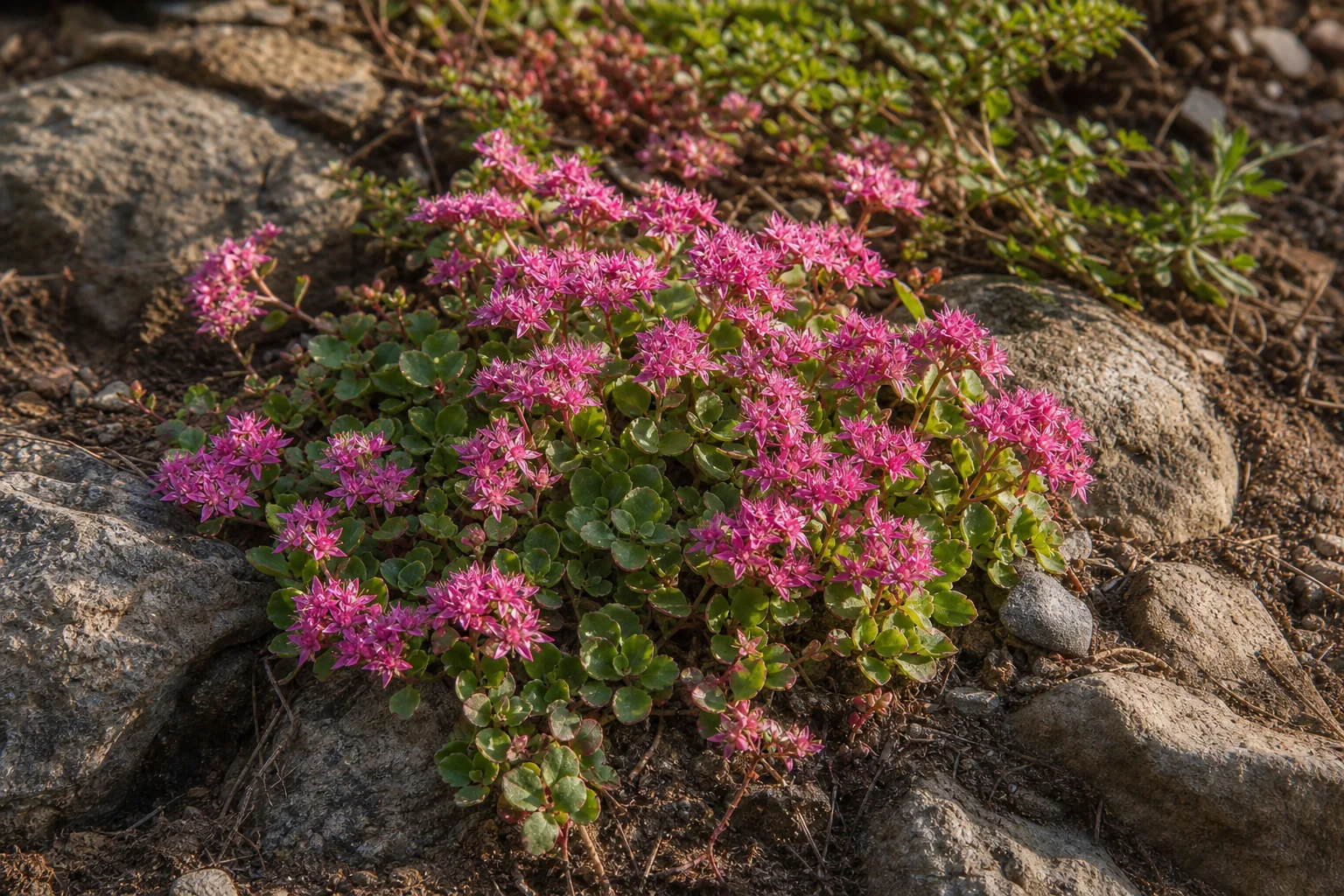
Stonecrop (Sedum spurium, accepted by Kew as Phedimus spurius) is a tough, creeping succulent ground cover. Plant it in full sun and well-drained, sandy or shallow rocky soil, where it grows 2-6 inches tall and spreads 2-3 feet wide. Do not overwater - it prefers very dry soil and is tolerant of drought. The long-lasting, star-shaped flowers bloom in spring and summer in an array of colors depending on the cultivar. It is a recommended plant for green roofs and works well in rock, pollinator, and drought-tolerant gardens.
Light
Stonecrop requires full sun to keep its compact, colorful habit; in too much shade stems stretch and foliage fades. A sheltered position in full sun with well-drained soil is ideal. Light shade may be tolerated briefly, but flowers and foliage color suffer.
Water
Water young plants to establish, then back off dramatically. Stonecrop prefers very dry soil and is drought tolerant; allow the soil to dry out completely between waterings. Soggy conditions cause stem and root rots, especially in winter.
Soil and planting
Plant stonecrop in well-drained, sandy or shallow rocky soil with a neutral to alkaline pH. Poor, gritty soil is fine - rich, moist soil produces weak, floppy growth. Space plants about 12 inches apart to form a mat, and in containers use a sharply draining cactus-style mix with large drainage holes.
Temperature, humidity, and fertilizer
Hardy in roughly USDA zones 3-9 (H5 in the UK), stonecrop survives cold winters and heat if drainage is sharp. High humidity plus wet soil invites crown and root rots, so site it where air moves. It needs no fertilizer; feeding simply softens the succulent growth.
Pruning and propagation
Trim stonecrop back after flowering to maintain shape and keep the mat dense. Propagate by division in spring or by softwood stem cuttings in early summer; stems root readily where they touch moist soil.
Common problems
Start with the pattern, current soil moisture, and recent changes. One symptom can have several causes, so change the most likely factor first and observe before making another major adjustment.
| Symptom | Check first | First action |
|---|---|---|
| Soft, collapsing stems and blackened roots | Check drainage and overwatering - stonecrop rots in wet soil. | Improve drainage, reduce watering, and replant healthy pieces in gritty soil. |
| Leggy, weak growth with pale foliage | Check light and soil fertility. | Move to full sun and lean, gritty soil; stop fertilizing. |
| Chewed or ragged new growth | Check for slugs and snails in moist conditions. | Hand-pick or use bait in spring, and improve airflow around the mat. |
| Bare center in an old mat | Check plant age and crowding. | Divide and replant healthy outer sections in spring. |
| Foliage discolored after a wet winter | Check for crown and root rots from cold, wet soil. | Improve drainage, remove affected growth, and replant on a raised, gritty bed. |
Pet and household safety
Stonecrop is not listed on the ASPCA toxic or non-toxic plant lists, but the NC State Extension profile marks it as a low-severity poison with the toxic principle being alkaloids (sedine, sedamine and others) and possible gastrointestinal symptoms. Because an authoritative source flags low-severity toxicity, treat stonecrop as potentially toxic to cats and dogs, prevent chewing, and contact a veterinarian after substantial ingestion.
Frequently asked questions
How much sun does stonecrop need?
Full sun is essential for compact growth and good flower color; it flops and fades in shade.
How often should I water stonecrop?
Rarely - it prefers very dry soil and is drought tolerant. Water to establish, then let the soil dry out completely between waterings.
What soil suits stonecrop?
Well-drained, sandy or shallow rocky soil with a neutral to alkaline pH. Poor, gritty soil is fine; rich moist soil causes weak growth.
Why is my stonecrop rotting?
Almost always too much water or poor drainage. Replant in gritty, sharply drained soil and water far less.
How do I propagate stonecrop?
Divide in spring or take softwood stem cuttings in early summer - stems root readily.
Is stonecrop safe for pets?
It is not on the ASPCA lists, but NC State flags it as a low-severity poison (alkaloids, possible gastrointestinal upset). Treat it as potentially toxic to cats and dogs and prevent chewing.
Sources and editorial review
This editorial draft is based on the sources below and awaits named horticulture-expert approval before publication.
- Sedum spuriumRoyal Botanic Gardens, Kew (Plants of the World Online) · Checked
- Toxic and Non-Toxic Plants ListASPCA · Checked
- Phedimus spuriusNorth Carolina State University Extension · Checked
- Sedum spuriumRoyal Horticultural Society · Checked
What works well
- Very low-maintenance, drought-tolerant succulent mat for rock gardens, slopes, and green roofs.
- Long-lasting star-shaped flowers in spring and summer attract bees, butterflies, and songbirds.
- Foliage color ranges from green to golden to bronze-red, adding season-long interest.
What to consider
- Rots in wet, poorly drained soil; needs full sun to stay compact.
- Listed by NC State as a low-severity poison (alkaloids sedine and sedamine) - treat as potentially toxic to pets.
- Can be knocked back by slugs, snails, and crown rots in wet conditions.