Key takeaways
- Grow in full sun to shade; it tolerates high heat and nearly full shade but prefers moist, well-drained soil.
- Expect rapid growth - stems root at the nodes and form a dense mat that can be hard to remove.
- Handle as a toxic plant: vinca alkaloids in all parts mean pets and people should not ingest any of it.
How to care for common periwinkle
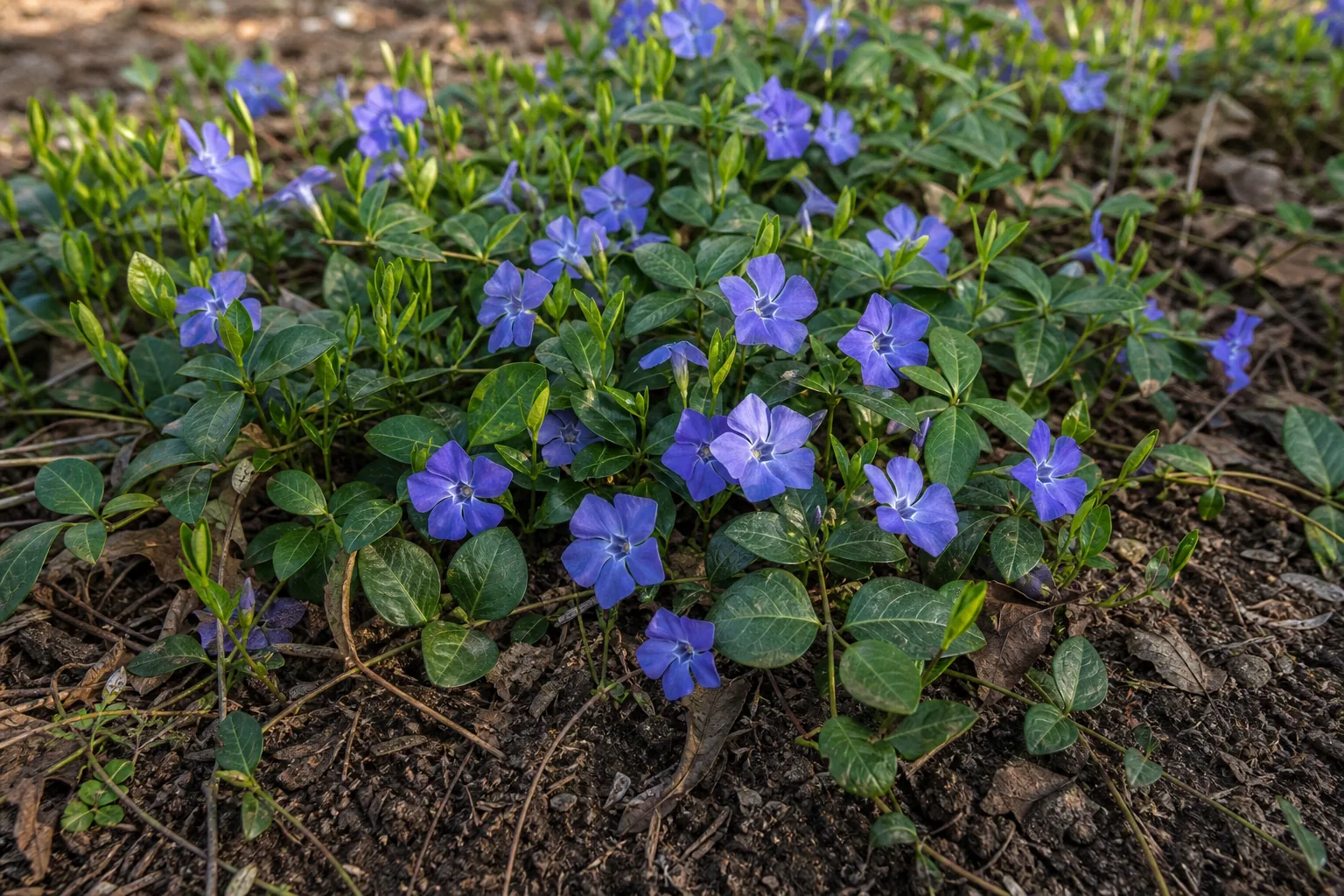
Common periwinkle (Vinca minor) is a tough broadleaf evergreen ground cover that forms a dense mat by rooting at the nodes. Plant it in full sun, partial shade, or dappled sunlight in moist soil with good drainage, spacing it where its spread is welcome. It grows 3-6 inches high but can run widely, so its rapid growth and ability to root at the nodes make it weedy and high-maintenance in a short time. Because it is classified as invasive by many state invasive-plant councils, consider native alternatives and contain plantings carefully.
Light
Common periwinkle tolerates the widest range of light of any ground cover: full sun, partial shade, or dappled sunlight. It also handles nearly full shade and high heat. Best growth occurs with at least some shade, and the glossy foliage stays greenest where it avoids harsh, reflected afternoon sun.
Water
Water new plantings to establish, then periwinkle is drought tolerant and needs little supplemental irrigation. It prefers moist, well-drained soil but tolerates dry conditions. Poorly drained sites promote stem canker, so keep drainage paths open and avoid water standing around the mat.
Soil and planting
Common periwinkle grows in clay, loam, or sand in moist, well-drained soil with a slightly acid to neutral pH. Set divisions or rooted sections a foot or more apart on slopes or under trees where it can run; it is not a container plant in practice. To keep it in bounds, plant with a physical barrier or on mowed edges.
Temperature, humidity, and fertilizer
Hardy in roughly USDA zones 4-9, periwinkle tolerates summer heat, drought, and winter cold while staying evergreen. It needs no routine fertilizer - feeding simply pushes faster, weedier growth. Air circulation matters most in humid regions: stem canker (Phomopsis blight) is worse in wet, poorly drained areas or too much sun.
Pruning and propagation
Where periwinkle must be kept tidy, shear or mow the mat high in early spring or after flowering. Propagate easily by division or by stem cuttings - stems root readily at the nodes, which is also why the plant escapes and spreads so quickly.
Common problems
Start with the pattern, current soil moisture, and recent changes. One symptom can have several causes, so change the most likely factor first and observe before making another major adjustment.
| Symptom | Check first | First action |
|---|---|---|
| Dead patches and dying stems | Check for vine stem canker (Phomopsis blight) in wet or sunny sites. | Remove affected stems, improve drainage, and avoid stress from drought or poor soil. |
| Yellowing foliage and thinning mat | Check drainage and soil compaction; periwinkle dislikes soggy feet. | Improve drainage and lift the crown by replanting on a mound or slope. |
| Escape into lawn, garden, or natural areas | Check the mat edge for rooting stems beyond the boundary. | Edge beds, pull rooted runners, and avoid planting adjacent to woods where it is invasive. |
| Foliage discoloration in late winter | Check for winter burn or salt exposure near treated walks. | Rinse salt, shield exposed sites, and shear damaged growth back in early spring. |
| Sparse establishment in dry shade | Check moisture and competition from tree roots. | Water through the first season and mulch lightly; mature mats are much more tolerant. |
Pet and household safety
Common periwinkle is toxic to dogs, cats, and horses. The ASPCA lists Periwinkle (scientific name Vinca rosea) as toxic with the toxic principle being vinca alkaloids; common periwinkle (Vinca minor) is the same genus and carries the same vinca-alkaloid chemistry. Clinical signs after ingestion include vomiting, diarrhea, low blood pressure, depression, tremors, and seizures. Keep pets from chewing any part and contact a veterinarian after ingestion.
Frequently asked questions
How much light does common periwinkle need?
Full sun to shade. It tolerates high heat and nearly full shade and does best with at least some shade and moist soil.
How often should I water periwinkle?
Only to establish. Once established it is drought tolerant and needs little supplemental irrigation, though it prefers moist, well-drained soil.
Is common periwinkle invasive?
It spreads aggressively by rooting stems and is classified as an invasive species by many state invasive-plant councils, including the NC Invasive Plant Council.
Why are stems dying in patches?
Usually stem canker (Phomopsis blight), worse in wet, poorly drained areas or in too much sun. Remove affected growth and improve drainage.
How do I propagate periwinkle?
By division or stem cuttings - stems root readily at the nodes, which is also why the plant spreads so fast.
Is periwinkle safe for pets?
No - periwinkle contains vinca alkaloids and is toxic to dogs, cats, and horses according to the ASPCA. Keep pets from chewing any part and call a veterinarian if ingested.
Sources and editorial review
This editorial draft is based on the sources below and awaits named horticulture-expert approval before publication.
- Vinca minorRoyal Botanic Gardens, Kew (Plants of the World Online) · Checked
- PeriwinkleASPCA · Checked
- Vinca minorNorth Carolina State University Extension · Checked
- Vinca, Common Periwinkle (Vinca minor)University of Illinois Extension · Checked
What works well
- Evergreen, glossy ground cover that takes sun or shade and tolerates heat, drought, and poor soil.
- Quick, reliable coverage and erosion control on slopes and under trees.
- Blue-lavender spring flowers attract bumblebees.
What to consider
- Toxic to dogs, cats, and horses (vinca alkaloids) if ingested.
- Aggressive spread that is classified as invasive in many states and hard to remove.
- Susceptible to stem canker (Phomopsis blight) in wet or poorly drained sites.