Key takeaways
- Plant in part shade to full shade (full sun only with consistent moisture) in moist, well-drained soil.
- Keep the root zone evenly moist; hot, dry summers suppress bloom and stress the mat.
- Divide in spring or fall, or start from seed; remove spent flowers to tidy the mat.
How to care for green-and-gold
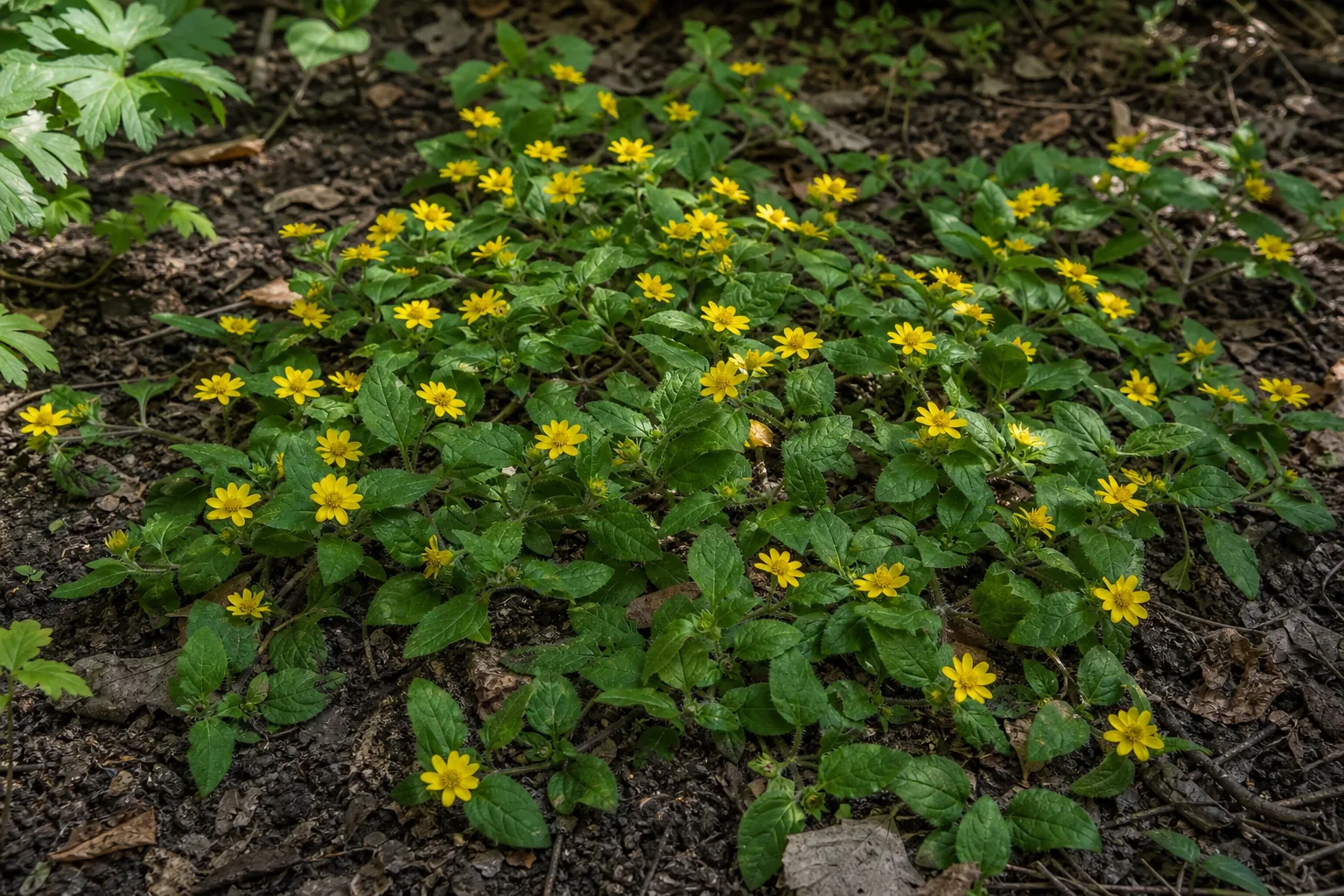
Green-and-gold (Chrysogonum virginianum) is an easy, long-blooming native ground cover for shade. Plant it in part shade to full shade in moist, acidic, organically rich soil, and it will spread by rhizomes into a low mat that is easily controlled. It tolerates full sun only where the soil stays consistently moist. Remove spent flower stems to keep the ground cover looking its best, and divide or seed new plants in spring or fall as the planting matures.
Light
Green-and-gold performs best in part shade to full shade, including sun-dappled woodland conditions. In consistently moist soil it will also tolerate full sun, but in hot summer climates bloom is profuse in spring, becomes sparse or stops during the heat, and returns lightly in fall - the Missouri Botanical Garden notes this pattern for sites like St. Louis.
Water
Water young plants regularly to establish, then keep the soil evenly moist; the Missouri Botanical Garden rates the water need as medium to wet and notes the plant prefers moist, acidic, organically rich soils. In hot, dry summers the mat stresses and flowering stops, so check the root zone and water during dry spells. Avoid letting the soil dry out entirely.
Soil and planting
Green-and-gold prefers moist, acidic, organically rich soil that drains well; work in leaf mold or compost before planting. Set the crown at grade and space plants about a foot apart for a solid mat. In containers, use a rich, well-drained potting mix and divide or repot when the rhizomes fill the pot. As a ground cover it spreads by rhizomes but stays easy to control.
Temperature, humidity, and fertilizer
Hardy in roughly USDA zones 5-9, green-and-gold is a temperate woodland perennial that blooms spring to fall in cool summer climates but goes quiet in the heat of the summer in hot regions. It prefers cool, humid shade and consistent moisture. Fertilizer is rarely needed; a light spring top-dressing of compost is plenty for this low-maintenance plant.
Pruning and propagation
Remove spent flower stems after bloom to improve the appearance of the ground cover and encourage continued flowering. Propagate by division in spring or fall, or easily from seed - the plant may self-seed in the garden when happy. Division also refreshes old mats and speeds coverage of new areas.
Common problems
Start with the pattern, current soil moisture, and recent changes. One symptom can have several causes, so change the most likely factor first and observe before making another major adjustment.
| Symptom | Check first | First action |
|---|---|---|
| Flowering stops during summer heat | Check the season and local summer temperatures. | Site in part shade and keep soil consistently moist; expect a light fall rebloom in hot climates. |
| Mat thins or browns in a dry site | Check soil moisture and exposure. | Water consistently, mulch to retain moisture, and move to more shade if the site stays dry. |
| Powdery or dusty film on leaves | Check for mildew, mainly in humid or crowded conditions. | Improve airflow, avoid overhead watering, and remove badly affected foliage. |
| Uneven, patchy mat | Check soil organic matter, moisture, and competition from tree roots. | Amend with compost, water during dry spells, and divide rhizomes to refill gaps. |
| Self-seeding seedlings in unwanted spots | Check whether spent flowers were left to set seed. | Remove spent flower stems after bloom or pull unwanted seedlings in spring. |
Pet and household safety
Green-and-gold is not listed on the ASPCA toxic or non-toxic plant lists, and the NC State Extension profile records no toxicity for the species. Because no authoritative pet-safety source confirms it as non-toxic to cats and dogs, treat the plant as potentially toxic and discourage chewing; contact a veterinarian after substantial ingestion.
Frequently asked questions
How much light does green-and-gold need?
Part shade to full shade is best; it tolerates full sun only where the soil stays consistently moist.
How often should I water green-and-gold?
Keep the soil evenly moist; it prefers medium to wet conditions and dislikes drying out, especially in summer heat.
What soil suits green-and-gold?
Moist, acidic, organically rich soil that drains well. Amend with leaf mold or compost before planting.
Why does my green-and-gold stop blooming in summer?
Hot summer temperatures suppress bloom in regions like St. Louis; flowering resumes lightly in fall. Part shade and consistent moisture help.
How do I propagate green-and-gold?
Divide the rhizomes in spring or fall, or start easily from seed - it may also self-seed in the garden.
Is green-and-gold safe for pets?
It is not on the ASPCA toxic or non-toxic lists and no toxicity is recorded by NC State, but because no authoritative source confirms it as non-toxic to cats and dogs, treat it as potentially toxic and prevent chewing.
Sources and editorial review
This editorial draft is based on the sources below and awaits named horticulture-expert approval before publication.
- Chrysogonum virginianumRoyal Botanic Gardens, Kew (Plants of the World Online) · Checked
- Toxic and Non-Toxic Plants ListASPCA · Checked
- Chrysogonum virginianumNorth Carolina State University Extension · Checked
- Chrysogonum virginianumMissouri Botanical Garden · Checked
What works well
- Long bloom season - star-shaped yellow flowers from spring to fall in cool climates.
- Rhizomatous native ground cover that is easily controlled and naturalizes in woodland beds.
- No serious insect or disease problems; only minor mildew susceptibility.
What to consider
- Bloom fades in the heat of summer in hot climates, with only a light fall rebloom.
- Needs reliably moist soil and dislikes drying out.
- Not classified as non-toxic by the ASPCA; treat as potentially toxic to pets.