Key takeaways
- Site in part shade (dappled to nearly full shade) in cool, moist, acidic, well-drained soil.
- Keep the root zone consistently moist and never let it dry out; avoid dry sites and foot traffic.
- Propagate by division of rooted rhizomes or from seed, and expect slow establishment.
How to care for bunchberry
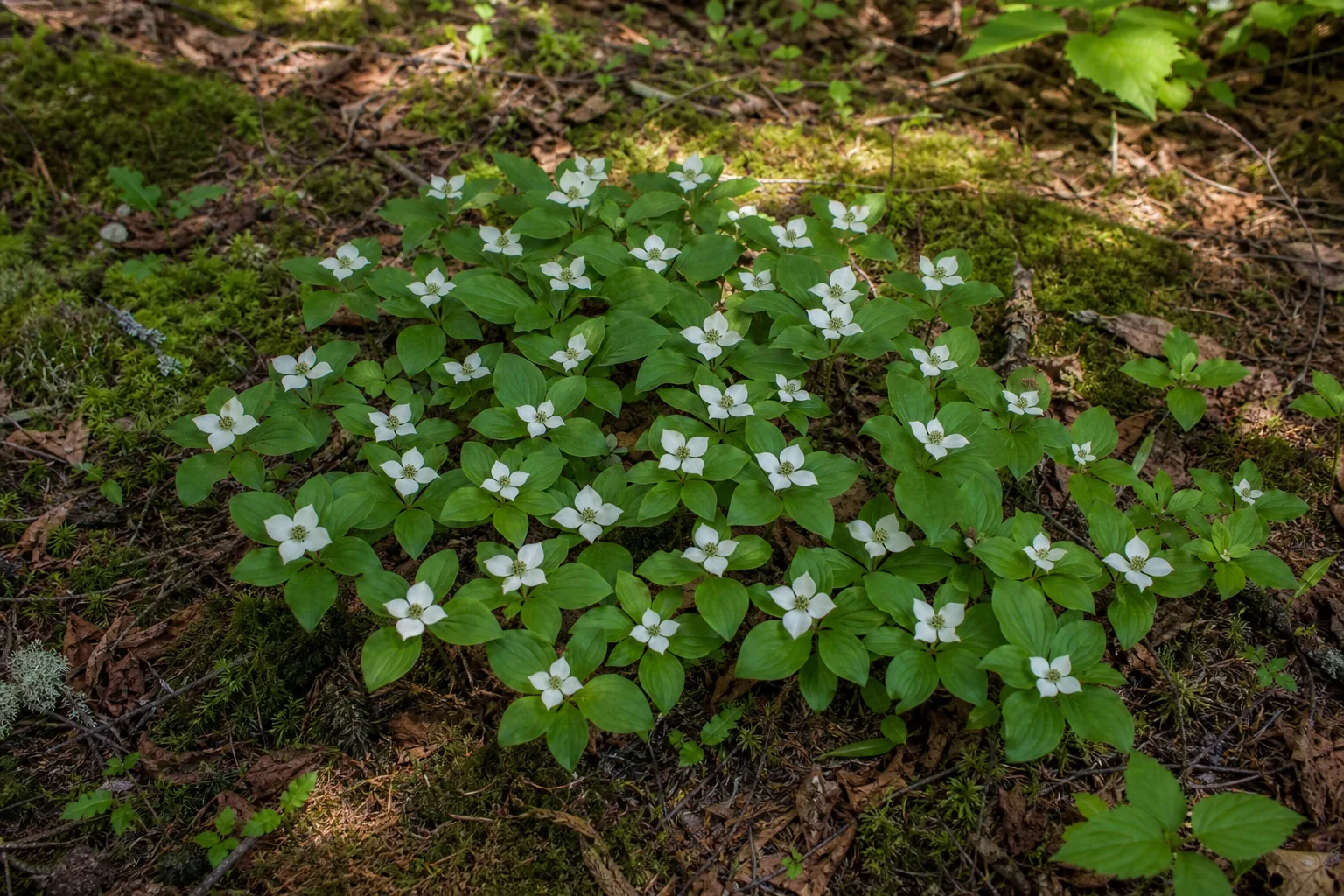
Bunchberry (Cornus canadensis) is a slow, rhizomatous ground cover that asks for cool, moist shade. Plant it in part shade - sun-dappled conditions close to full shade are ideal - in moist, acidic, organically rich soil that drains well. It spreads by creeping rhizomes to form a low mat, but plants are often slow to establish and can be difficult to get going, so prepare the bed well and be patient. Water consistently and avoid dry soil, which the plant will not tolerate, and keep the mat out of foot-traffic paths.
Light
Bunchberry grows best in part shade, including sun-dappled to nearly full-shade conditions under trees and shrubs, per the Missouri Botanical Garden and NC State Extension. It is a woodland species of cool, northern forests and does not perform well in hot, exposed sites.
Water
Water young plants regularly and keep the soil consistently moist; bunchberry prefers medium moisture and avoids dry soils. It thrives in cool, humid conditions where the root zone stays damp but not soggy. During hot spells, check the soil frequently, because this plant wilts and declines quickly when the ground dries out.
Soil and planting
Bunchberry prefers moist, acidic (pH below about 6.0), organically rich, well-drained soil with high organic matter. Work leaf mold or compost into the bed before planting and set the crown at grade. It is best grown in the ground in a woodland setting; in containers use an acidic, organic-matter-rich mix and repot or divide when rootbound. Mulch to keep roots cool and moist.
Temperature, humidity, and fertilizer
Winter hardy to roughly USDA zones 2-6, bunchberry performs best in cool to cold climates in the shade of trees and shrubs; it generally does not do well in the hot summer conditions of the central to southern U.S. south of zone 6. It appreciates humid, cool air. Fertilizer is rarely needed - a light spring top-dressing of compost is sufficient for this low-maintenance ground cover.
Pruning and propagation
Little pruning is needed; remove any dead or damaged stems in spring. Propagate by division of the creeping rhizomes, by stem cuttings, or from seed. Division is best attempted in early spring or fall, and since established plants can be slow to re-establish, handle divisions carefully and keep them moist.
Common problems
Start with the pattern, current soil moisture, and recent changes. One symptom can have several causes, so change the most likely factor first and observe before making another major adjustment.
| Symptom | Check first | First action |
|---|---|---|
| Foliage wilts or browns despite planting | Check soil moisture and drainage; bunchberry dislikes dry soil. | Water consistently, mulch to keep roots cool, and move to a moister, more shaded site if needed. |
| Plants stay tiny and fail to spread | Check establishment and whether the soil is acidic and rich enough. | Amend with compost, keep soil moist, and be patient - growth is slow in the first years. |
| Brown, crispy edges on leaves in summer | Check for hot, dry conditions or too much sun exposure. | Provide more shade and consistent moisture; avoid hot south- or west-facing sites. |
| Mat dies out in soggy ground | Check drainage and whether the crown is waterlogged. | Improve drainage and replant on a slight slope or raised bed; avoid low spots. |
| Plants fail to come back after winter | Check hardiness zone, exposure, and whether the site froze dry. | Mulch heavily in fall and site in protected, shaded positions; choose hardier provenances. |
Pet and household safety
Bunchberry is not listed on the ASPCA toxic or non-toxic plant lists, and neither NC State Extension nor the Missouri Botanical Garden record toxicity for the species (the fruits are noted as edible for people). Because no authoritative pet-safety source confirms it as non-toxic to cats and dogs, treat the plant as potentially toxic and discourage chewing; contact a veterinarian after substantial ingestion.
Frequently asked questions
How much light does bunchberry need?
Part shade, including sun-dappled to nearly full shade under trees, is best. It is a cool-forest plant that dislikes hot, exposed sites.
How often should I water bunchberry?
Keep the soil consistently moist; it dislikes dry soil and declines quickly when the root zone dries out. Water more often during hot spells.
What soil suits bunchberry?
Moist, acidic (pH below about 6.0), organically rich, well-drained soil with high organic matter. Amend with leaf mold or compost.
Are bunchberry fruits edible?
Yes - the red drupes are edible for humans and are enjoyed by birds, but the plant is slow to establish and the fruit is sparse in most gardens.
Why is my bunchberry so slow to spread?
It is naturally slow-growing and can be difficult to establish. Improve the soil, keep it moist, and give it several seasons; divide the rhizomes to increase coverage.
Is bunchberry safe for pets?
It is not on the ASPCA toxic or non-toxic lists and no toxicity is recorded by NC State, but because no authoritative source confirms it as non-toxic to cats and dogs, treat it as potentially toxic and prevent chewing.
Sources and editorial review
This editorial draft is based on the sources below and awaits named horticulture-expert approval before publication.
- Cornus canadensisRoyal Botanic Gardens, Kew (Plants of the World Online) · Checked
- Toxic and Non-Toxic Plants ListASPCA · Checked
- Cornus canadensisNorth Carolina State University Extension · Checked
- Cornus canadensisMissouri Botanical Garden · Checked
What works well
- Four-season ground cover with white flower bracts and clusters of bright red edible drupes.
- A native woodland plant for cool gardens and a good underplanting beneath trees and shrubs.
- No serious insect or disease problems and good resistance to dogwood anthracnose.
What to consider
- Performs poorly in hot summer climates south of zone 6 and is intolerant of dry soil.
- Slow to establish and difficult to transplant.
- Not classified as non-toxic by the ASPCA; treat as potentially toxic to pets.