Key takeaways
- Grow in full sun (some afternoon shade in hot summers) in dry to medium, very well-drained soil.
- Avoid overwatering and overhead irrigation - woolly leaves trap moisture and rot in humid weather.
- Remove flower stems to keep the foliage dense; divide clumps every 2-4 years.
How to care for lamb's ear
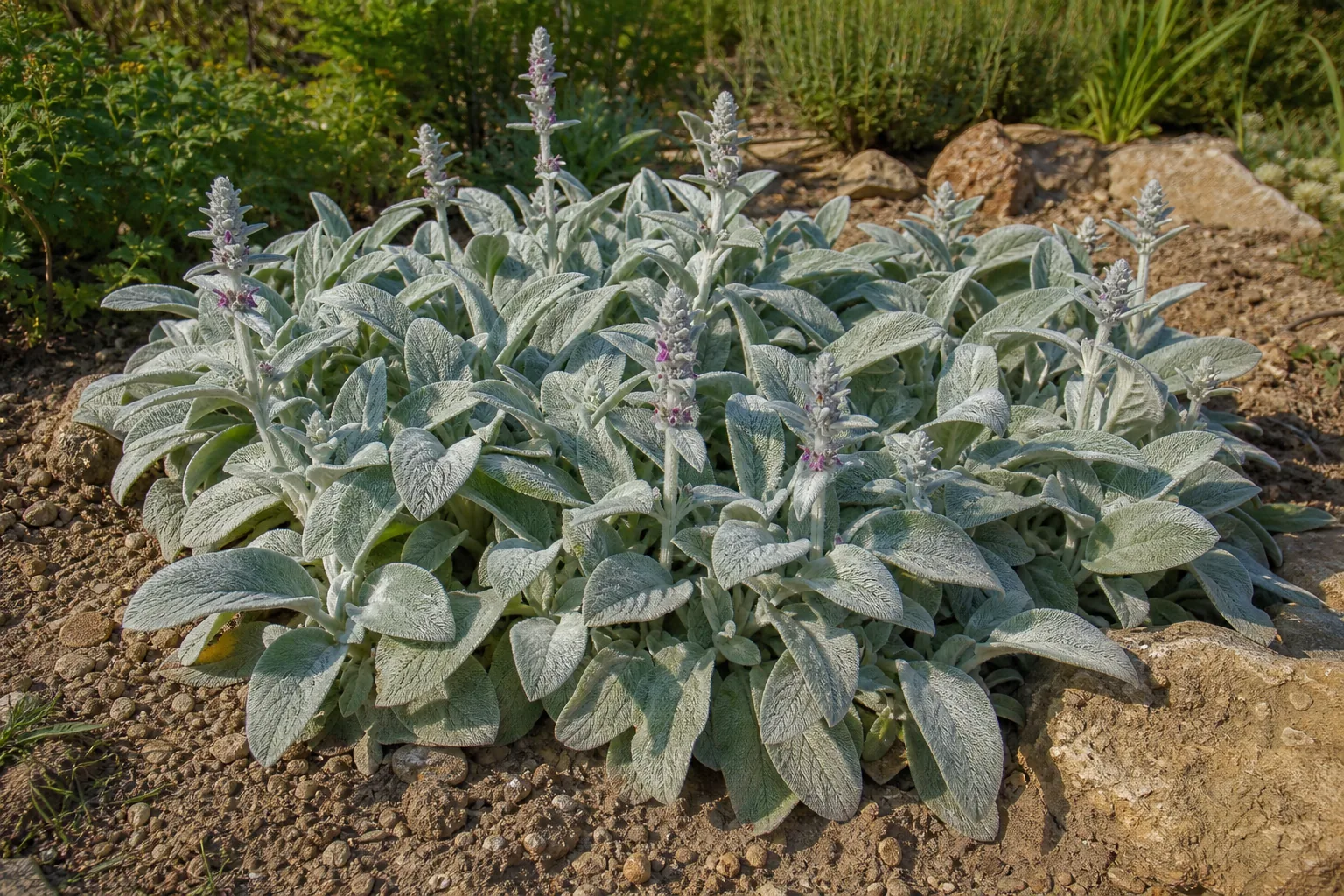
Lamb's ear (Stachys byzantina) is grown for its thick, soft, velvety silver leaves that form a low-spreading mat about 4-6 inches off the ground. Plant it in average, dry to medium, very well-drained soils in full sun to partial shade, in a site with good airflow. Avoid overwatering - wet leaves invite disease, as do high-humidity summers. The plant likes some afternoon shade in hot summer climates. Divide it every 2-4 years and, in hot humid areas, plant on a slope or hill to prevent root rot.
Light
Lamb's ear grows best in full sun, with some light afternoon shade appreciated in hot summer climates. In cool regions it takes full sun all day. Too much shade impedes leaf drying and promotes disease, so keep it out of dense shade.
Water
Water lamb's ear sparingly. It prefers dry to medium soil and is drought tolerant once established; the woolly leaves trap moisture, so keep them as dry as possible. Overwatering and overhead irrigation are the most common causes of rot, especially in humid summers.
Soil and planting
Lamb's ear thrives in average, dry to medium, very well-drained soils in clay, loam, sand, or shallow rocky ground with a neutral to alkaline pH. Site starter plants 12-18 inches apart for ground-cover use and divide when necessary. In containers, use a very well-drained mix and let the soil dry between waterings.
Temperature, humidity, and fertilizer
Hardy in roughly USDA zones 4-9, lamb's ear is evergreen in warm climates and dies back in harsh winters. Humid summers are its weak point - the woolly leaves trap moisture and are susceptible to rot and leaf spot where too much moisture is present. No fertilizer is needed; lean soil keeps the mat compact.
Pruning and propagation
Flowers are not particularly showy, and many gardeners remove the flowering stems as they appear to enhance the ground-cover effect. In midsummer, pick off damaged leaves as needed. Propagate by division in spring or fall, or by rooted stem cuttings - the stems root as they creep along the ground.
Common problems
Start with the pattern, current soil moisture, and recent changes. One symptom can have several causes, so change the most likely factor first and observe before making another major adjustment.
| Symptom | Check first | First action |
|---|---|---|
| Rotting leaves in humid summer weather | Check humidity, overhead watering, and airflow around the woolly foliage. | Improve drainage and airflow, water at the base, and pick off affected leaves. |
| Leaf spots on the felted foliage | Check for fungal leaf spot where moisture collects on the leaves. | Avoid wetting the foliage, space plants for airflow, and remove damaged leaves. |
| Mat thinning or dying out in the center | Check plant age and crowding. | Divide the clump and replant healthy outer rosettes. |
| Mildly aggressive spread into adjacent beds | Check rooting stems at the mat edge. | Edge the bed or pull rooted stems to keep it in bounds. |
| Scorched foliage in hot afternoon sun | Check sun exposure and soil moisture. | Provide light afternoon shade and avoid overwatering in the heat. |
Pet and household safety
Lamb's ear is not listed on the ASPCA toxic or non-toxic plant lists, and the NC State Extension profile records no toxicity for the species. Because no authoritative pet-safety source confirms it as non-toxic to cats and dogs, treat the plant as potentially toxic to pets, prevent chewing of the fuzzy leaves, and contact a veterinarian after substantial ingestion.
Frequently asked questions
How much light does lamb's ear need?
Full sun is best, with light afternoon shade in hot summer climates. Dense shade promotes rot.
How often should I water lamb's ear?
Sparingly - it is drought tolerant and prefers dry to medium soil. Keep the woolly leaves dry.
Why does my lamb's ear turn brown and rot?
Usually too much moisture on the woolly leaves, high humidity, or poor drainage. Improve airflow and water at the base.
Should I remove lamb's ear flowers?
Many gardeners do - the flowers are insignificant and removing the stems keeps the foliage mat dense and neat.
How do I propagate lamb's ear?
Divide clumps in spring or fall, or root stem cuttings; stems root where they touch the ground.
Is lamb's ear safe for pets?
It is not on the ASPCA toxic or non-toxic lists and no toxicity is recorded by NC State, but because no authoritative source confirms it as non-toxic to cats and dogs, treat it as potentially toxic and prevent chewing.
Sources and editorial review
This editorial draft is based on the sources below and awaits named horticulture-expert approval before publication.
- Stachys byzantinaRoyal Botanic Gardens, Kew (Plants of the World Online) · Checked
- Toxic and Non-Toxic Plants ListASPCA · Checked
- Stachys byzantinaNorth Carolina State University Extension · Checked
- Stachys byzantinaMissouri Botanical Garden Plant Finder · Checked
What works well
- Distinctive soft, velvety, silver foliage that adds texture to borders and sensory gardens.
- Deer and rabbit resistant and moderately drought tolerant once established.
- Low maintenance: grows in poor, dry soil and needs little feeding.
What to consider
- Foliage rots and develops leaf spots in humid summers or with wet leaves.
- Spreads by rooting stems and can be mildly aggressive in rich soils.
- Not classified as non-toxic to pets by the ASPCA; prevent chewing.