Key takeaways
- Plant in full sun in dry, sandy, well-drained soil; poor drainage causes root rot.
- Shear spent flower stems after bloom to neaten the mat and reduce self-seeding.
- Expect a short-lived plant - divide regularly and replace as dead patches appear.
How to care for snow-in-summer
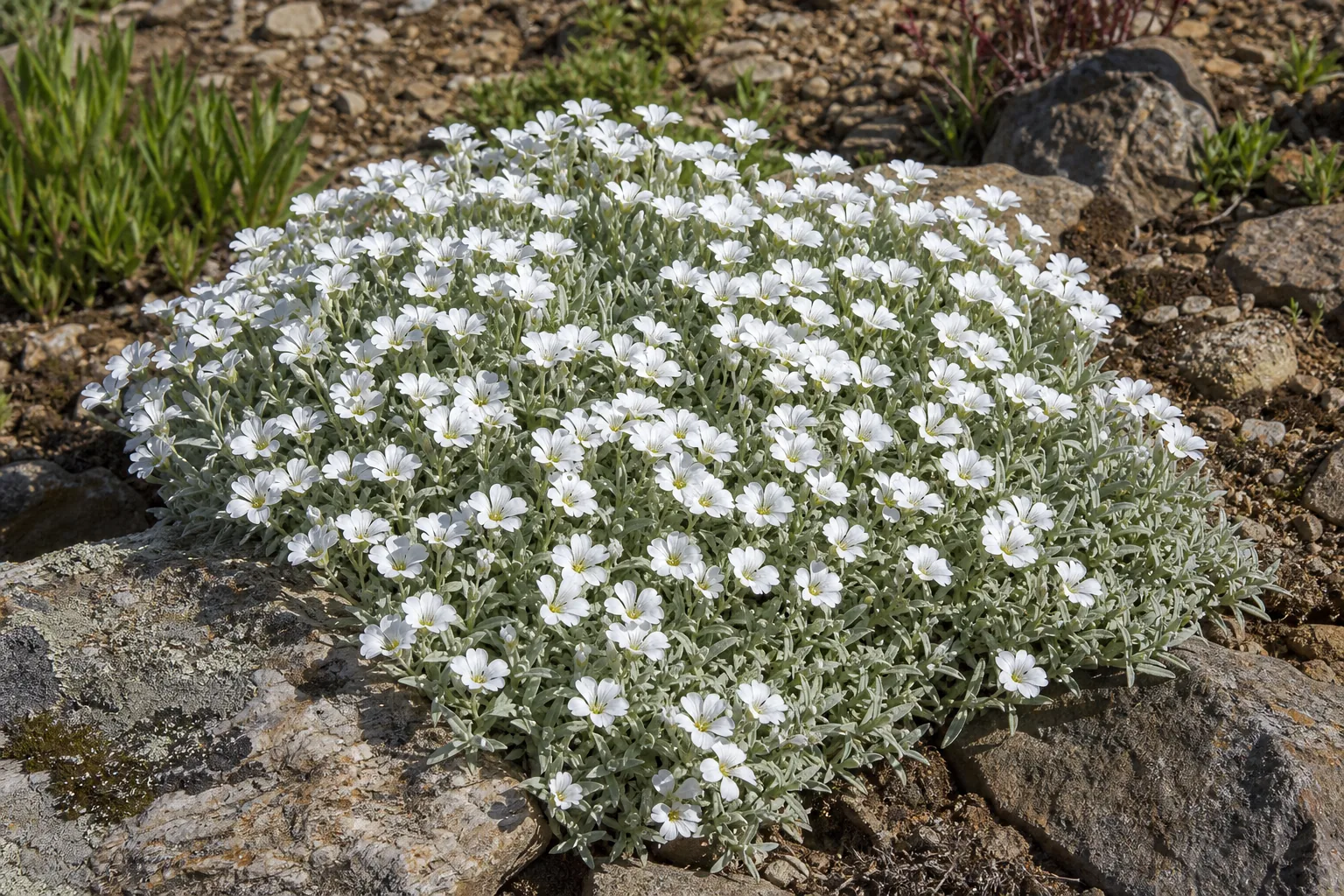
Snow-in-summer (Cerastium tomentosum) is a silvery, mat-forming perennial for sunny, dry, sharply drained sites. Plant it in full sun in dry, sandy, well-drained soil, spacing starter plants 9-12 inches apart to quickly cover areas. It is short-lived, so shear off the flower stems after bloom to prevent self-seeding and keep the foliage mat neat, and divide or replace plants as dead patches appear after a few years. It grows best in cool summer climates and declines in hot, humid regions.
Light
Snow-in-summer needs full sun and is rated as intolerant of heat and humidity by NC State Extension; it performs best where summers stay cool. In too much shade the mat grows soft and leggy, flowering declines, and damping off is more likely.
Water
Water young plants to establish, then let the soil dry between waterings; the Missouri Botanical Garden rates the water need as dry. Snow-in-summer is drought tolerant once established, and root rot becomes a serious problem in poorly drained or consistently wet soils. Err on the dry side in all seasons.
Soil and planting
Snow-in-summer is best grown in dry, sandy, well-drained soil in full sun, and it tolerates a somewhat wide range of soils except poorly drained ones. It grows well in shallow rocky soil and poor ground. Space starter plants 9-12 inches apart for quick coverage. In containers, use a gritty, fast-draining mix and divide or refresh the mat regularly to keep it compact.
Temperature, humidity, and fertilizer
Plants are winter hardy to about USDA zone 2 and perform best in zones 3-7; they grow well in cool summer climates and tend to perform poorly where summers are hot and humid. The mat is evergreen to semi-evergreen depending on winter severity. Fertilizer is rarely needed - feeding simply encourages soft growth on this tough, drought-tolerant plant.
Pruning and propagation
Shear off flower stems after bloom to prevent self-seeding, reduce future foliage decline, and shape the mat; large beds can be mowed on a high setting. Divide every year if needed to keep the mat compact, and propagate by division, root cuttings, or stem cuttings. Because plants are short-lived, regular division keeps the planting going.
Common problems
Start with the pattern, current soil moisture, and recent changes. One symptom can have several causes, so change the most likely factor first and observe before making another major adjustment.
| Symptom | Check first | First action |
|---|---|---|
| Dead patches appear in the mat after a few years | Check plant age - snow-in-summer is short-lived. | Divide and replant healthy sections, and replace older plants as needed. |
| Plants rot and collapse in wet ground | Check drainage; root rot is serious in poorly drained or wet soils. | Improve drainage, plant on a slope or raised bed, and reduce watering. |
| Foliage declines by midsummer in hot climates | Check for hot, humid summer conditions. | Site in cool summer climates; shear back and replace plants as needed. |
| Mat grows leggy and flowers sparsely | Check light level and crowding. | Move to full sun and divide the mat to restore compact growth. |
| Seedlings pop up all over the garden | Check whether spent blooms were left to set seed. | Shear off flower stems promptly after bloom to prevent self-seeding. |
Pet and household safety
Snow-in-summer is not listed on the ASPCA toxic or non-toxic plant lists, and the NC State Extension profile records no toxicity for the species. Because no authoritative pet-safety source confirms it as non-toxic to cats and dogs, treat the plant as potentially toxic and discourage chewing; contact a veterinarian after substantial ingestion.
Frequently asked questions
How much sun does snow-in-summer need?
Full sun is required; it performs best where summers stay cool and declines in hot, humid climates.
How often should I water snow-in-summer?
Water to establish, then let the soil dry between waterings - it is drought tolerant and root rots in wet soil.
What soil suits snow-in-summer?
Dry, sandy, sharply drained soil in full sun. It tolerates a wide range of soils except poorly drained ones.
Why does my snow-in-summer die out in patches?
It is a short-lived perennial; dead patches normally appear after a few years. Divide and replant healthy sections.
How do I keep snow-in-summer from self-seeding?
Shear off the spent flower stems after bloom, or mow large beds on a high setting.
Is snow-in-summer safe for pets?
It is not on the ASPCA toxic or non-toxic lists and no toxicity is recorded by NC State, but because no authoritative source confirms it as non-toxic to cats and dogs, treat it as potentially toxic and prevent chewing.
Sources and editorial review
This editorial draft is based on the sources below and awaits named horticulture-expert approval before publication.
- Cerastium tomentosumRoyal Botanic Gardens, Kew (Plants of the World Online) · Checked
- Toxic and Non-Toxic Plants ListASPCA · Checked
- Cerastium tomentosumNorth Carolina State University Extension · Checked
- Cerastium tomentosumMissouri Botanical Garden · Checked
What works well
- Silvery foliage and a spring blanket of white flowers for sunny rock gardens and borders.
- Tolerates drought, dry soil, deer, and shallow rocky sites.
- Good for edging, wall pockets, and covering sunny slopes.
What to consider
- Short-lived; the mat thins and develops dead patches after a few years.
- Performs poorly in hot, humid summer climates and in wet, poorly drained soil.
- Not classified as non-toxic by the ASPCA; treat as potentially toxic to pets.