Key takeaways
- Plant in full sun to part shade (afternoon shade in hot climates) in humusy, well-drained soil.
- Water regularly; coral bells scorch and decline if the soil dries out.
- Non-toxic to cats, dogs, and horses (ASPCA); divide every 3-4 years and deadhead for more flowers.
How to care for coral bells
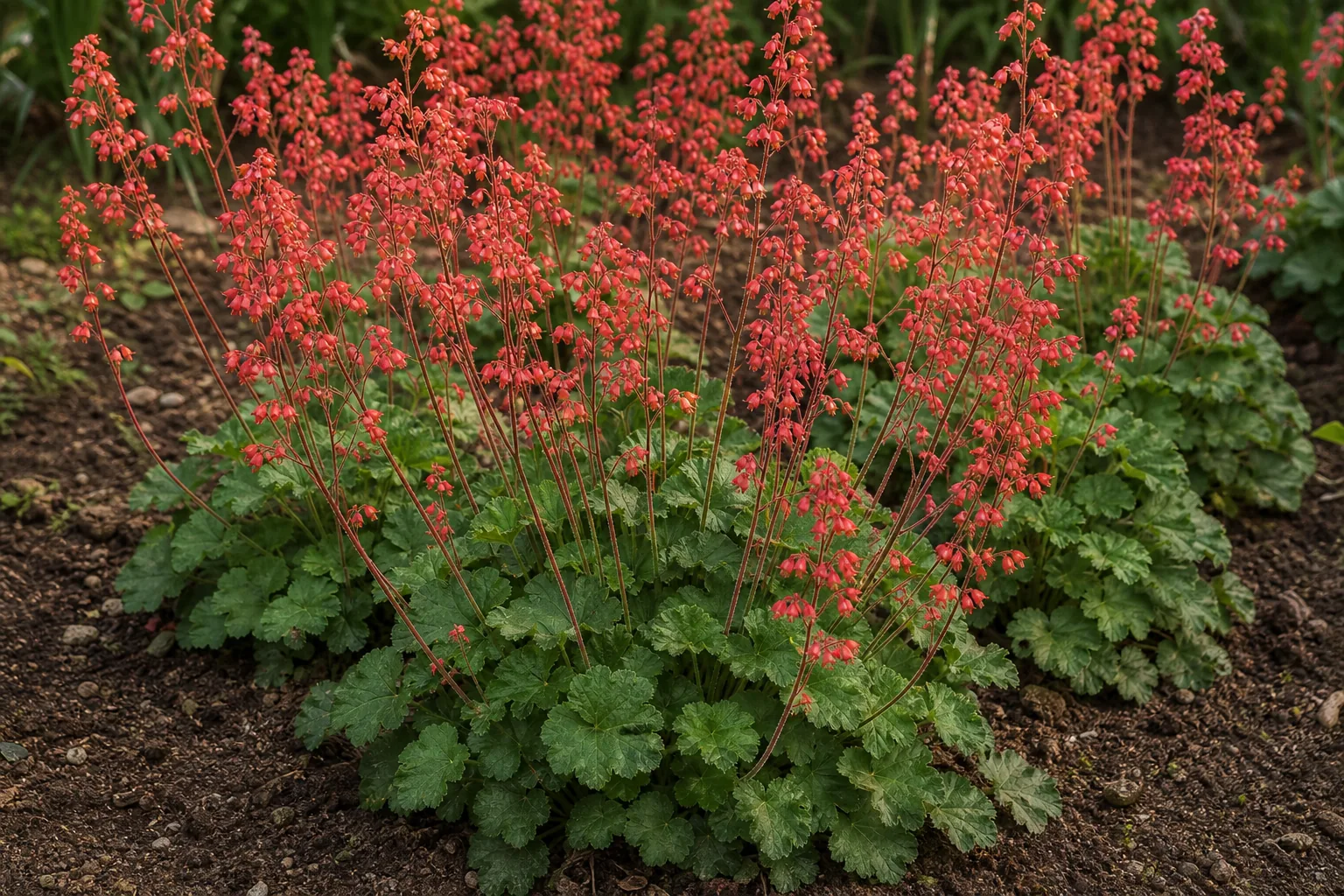
Coral bells (Heuchera sanguinea) is a dependable clump-forming perennial that rewards good siting. Plant it in full sun to part shade in humusy, organically rich, medium-moisture, well-drained soil; it also performs well in rocky soils but should be kept out of heavy clay. In hot southern climates give it some part afternoon shade, and in full sun keep moisture especially consistent. Remove stems of faded flowers to encourage additional bloom, divide clumps in spring every 3-4 years, and apply a winter mulch after the ground freezes in cold regions to prevent root heaving.
Light
Coral bells grows well in full sun to part shade. Full sun produces the best performance in cool northern climates, but in hot southern climates part afternoon shade is preferred, and in the St. Louis area the best foliage color typically occurs in sunny spots with part afternoon shade. Too much hot sun without moisture leads to leaf scorch.
Water
Water regularly and keep the soil at medium moisture; the Missouri Botanical Garden notes that in full sun, consistent moisture is particularly important, and that scorch and general foliage decline occur if soils are allowed to dry out. Water at the base to keep foliage dry, and mulch to conserve moisture. Avoid saturated soil, which invites root rot.
Soil and planting
Coral bells wants humusy, organically rich, medium-moisture, well-drained soil and performs well in rocky soil; avoid heavy clay. Set the crown at the soil line - heaving is worse when crowns sit high or low. In containers use a rich, well-drained potting mix and repot or divide every few years. Divide clumps in spring every 3-4 years to keep plants vigorous.
Temperature, humidity, and fertilizer
Winter hardy to USDA zones 3-8, coral bells is a temperate perennial whose foliage is essentially evergreen in warm winter climates. In cold winter climates the amount of retained foliage color depends on the severity of temperatures, and a winter mulch applied after the ground freezes helps prevent root heaving. Fertilizer is rarely needed; a light spring top-dressing of compost is enough for this medium-maintenance plant.
Pruning and propagation
Remove stems of faded flowers after bloom to encourage additional flowering, and tidy tattered leaves in late winter or early spring before new growth. Divide clumps in spring every 3-4 years to refresh the crown and propagate; straight-species plants may also be grown from seed, though named cultivars should be divided to stay true to type.
Common problems
Start with the pattern, current soil moisture, and recent changes. One symptom can have several causes, so change the most likely factor first and observe before making another major adjustment.
| Symptom | Check first | First action |
|---|---|---|
| Scorched, brown-edged leaves in summer | Check soil moisture and sun exposure; foliage declines when roots dry out. | Water consistently and provide afternoon shade in hot climates. |
| Plants heaved out of the ground after winter | Check for frost heaving from fluctuating winter temperatures. | Replant at the correct crown depth and apply a winter mulch after the ground freezes. |
| Root rot and collapse | Check drainage, heavy clay, and whether the crown is buried. | Improve drainage, keep the crown at grade, and avoid heavy clay soils. |
| Wilted stems or distorted growth | Check for mealybug, strawberry root weevil, or other pests. | Identify the pest first, then prune affected growth; consult local extension for control options. |
| Thin crowns and declining bloom | Check plant age and whether the clump needs division. | Divide clumps in spring every 3-4 years to rejuvenate. |
Pet and household safety
Coral bells (Heuchera sanguinea) is listed as non-toxic to dogs, cats, and horses by the ASPCA, and NC State Extension tags it as non-toxic for cats, dogs, and horses. Eating large amounts of any plant may still cause mild stomach upset, but this species is not considered a poisoning risk; discourage excessive chewing and contact a veterinarian if a pet appears unwell after ingestion.
Frequently asked questions
How much sun does coral bells need?
Full sun to part shade. Full sun suits cool northern climates; hot southern gardens do best with part afternoon shade.
How often should I water coral bells?
Water regularly to keep the soil at medium moisture; in full sun consistent moisture is especially important, because dry soil causes leaf scorch.
What soil suits coral bells?
Humusy, organically rich, medium-moisture, well-drained soil; it also grows in rocky soil but not heavy clay.
Why did my coral bells get pushed out of the ground?
Frost heaving in fluctuating winter temperatures lifts plants. Replant at the correct depth and apply a winter mulch after the ground freezes.
How do I propagate coral bells?
Divide clumps in spring every 3-4 years; straight-species plants can also be grown from seed, while cultivars are best divided to stay true.
Is coral bells safe for pets?
Yes - the ASPCA lists coral bells as non-toxic to dogs, cats, and horses, and NC State Extension confirms it is non-toxic for pets.
Sources and editorial review
This editorial draft is based on the sources below and awaits named horticulture-expert approval before publication.
- Heuchera sanguineaRoyal Botanic Gardens, Kew (Plants of the World Online) · Checked
- Coral BellsASPCA · Checked
- Heuchera sanguineaNorth Carolina State University Extension · Checked
- Heuchera sanguineaMissouri Botanical Garden · Checked
What works well
- Long-lasting coral-red flowers loved by hummingbirds, over a tidy foliage mound.
- Non-toxic to dogs, cats, and horses per the ASPCA and NC State Extension.
- Versatile in borders, rock gardens, containers, and along walkways.
What to consider
- Intolerant of heavy clay and of dry soil; foliage scorches when roots dry out.
- Winter frost heaving can lift plants in climates with fluctuating temperatures.
- Susceptible to mealybug, strawberry root weevil, and root rot.