Key takeaways
- Plant in part shade to full shade (silver types especially) in average, moist, well-drained soil.
- Water to establish, then only in drought; avoid wet, compacted soil and heavy foot traffic.
- Shear back in hot, humid summers to remove bare patches and promote fresh foliage; divide in spring or fall.
How to care for spotted dead-nettle
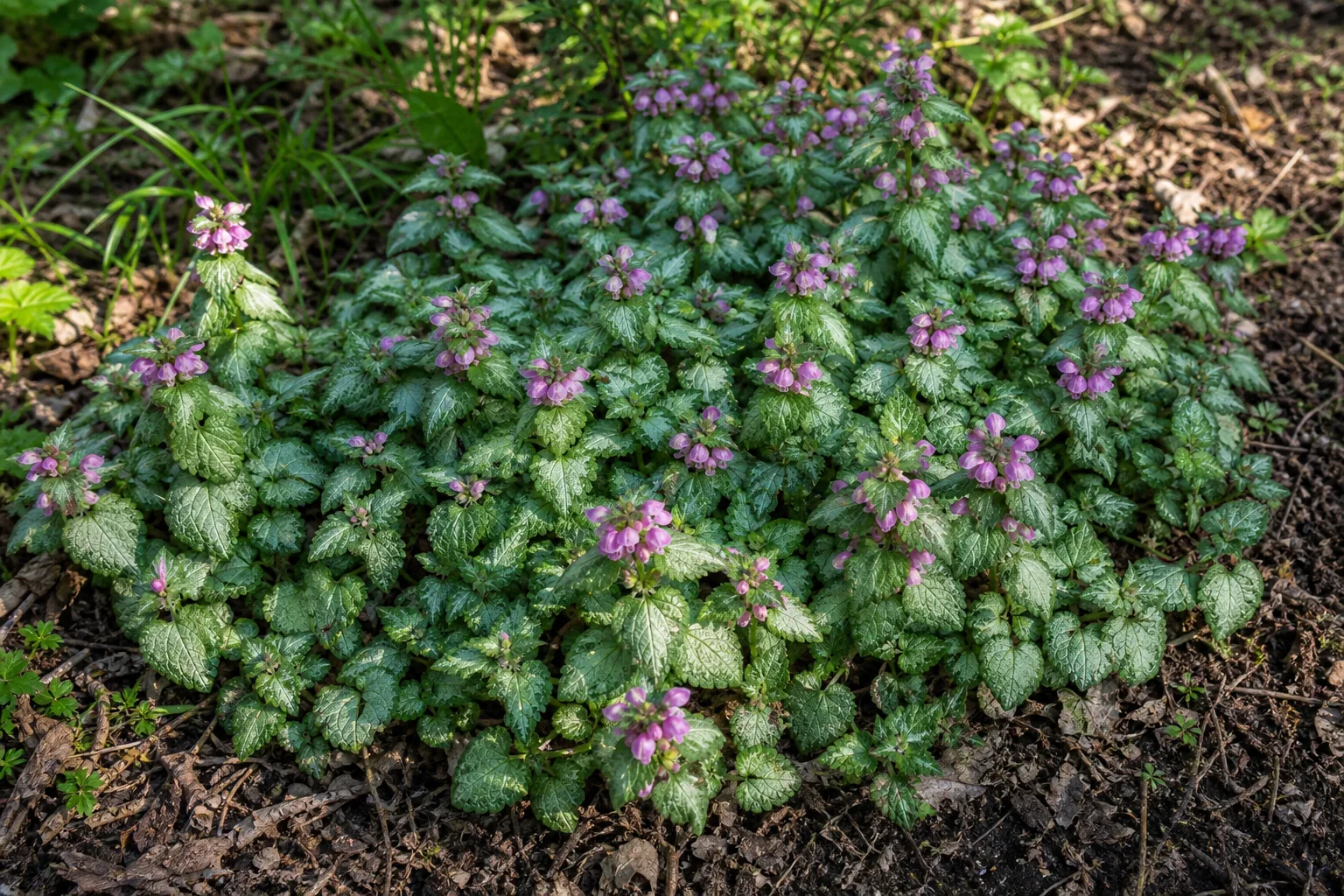
Spotted dead-nettle (Lamium maculatum) is a fast-growing, low ground cover for shady, moist sites. Plant it in part to full shade in average, evenly moist but well-drained soil, spacing starter plants 6-10 inches apart for quick coverage; it will tolerate dry soil but not wet, compacted ground. The stems root as they spread, forming a dense mat, but in hot, humid summers the planting can develop bare patches - cut the plants back to stimulate fresh foliage. It grows vigorously but is easy to control, so site it away from delicate smaller perennials and heavy foot traffic.
Light
Spotted dead-nettle does best in shaded areas, including heavy shade; the University of Wisconsin-Madison Extension notes it performs best in part shade, especially the silver-leaved types, and is adaptable enough to bridge the transition between shade and sun. Too much sun causes leaf scorch, while a bit of morning sun brightens the silver markings.
Water
Water new plants regularly to establish, then keep the soil evenly moist but well drained; spotted dead-nettle will tolerate dry soil once established, per NC State Extension. Leaf scorch can occur if soils are allowed to dry out or the plant is grown in too much sun. Avoid wet, compacted soil, which the plant does not tolerate.
Soil and planting
Spotted dead-nettle grows in average, evenly moist, well-drained soil with a wide pH tolerance, from acid to alkaline. It dislikes compacted or wet soils and does poorly in high heat and humidity. Space starter plants 6-10 inches apart for quick ground-cover coverage. In containers, use a well-drained potting mix and divide or refresh when the mat outgrows the pot.
Temperature, humidity, and fertilizer
Hardy in USDA zones 3-8, spotted dead-nettle is a near-evergreen perennial in mild climates. Hot summers in humid climates can cause bare patches in mass plantings, but plants can be cut back to stimulate new foliage growth. It is a vigorous, low-maintenance plant that rarely needs feeding; a light spring top-dressing of compost is plenty.
Pruning and propagation
Cut plants back after flowering to keep the mat tidy, and shear back in late summer if hot, humid weather has caused bare patches. Remove wayward stems to keep the ground cover in bounds. Propagate by division in spring or fall, or from cuttings; the rooting stems make divisions easy.
Common problems
Start with the pattern, current soil moisture, and recent changes. One symptom can have several causes, so change the most likely factor first and observe before making another major adjustment.
| Symptom | Check first | First action |
|---|---|---|
| Bare patches in the mat during hot, humid summers | Check the season and whether summer heat and humidity are stressing the planting. | Cut the plants back to stimulate fresh foliage; site in cooler shade where possible. |
| Leaf scorch on browned leaves | Check soil moisture and sun exposure. | Water consistently and move to more shade; avoid letting soil dry out. |
| Mat overruns smaller perennials | Check whether rooting stems have spread beyond the planting area. | Pull or cut back wayward stems regularly to keep it in bounds. |
| Plants yellow or collapse in wet, compacted soil | Check drainage and soil compaction. | Improve drainage, avoid low spots, and replant in looser soil. |
| Chewed or curled leaves | Check for aphids and slugs, occasional pests of this species. | Identify the pest first; hand-pick slugs and rinse or treat aphids only if severe. |
Pet and household safety
Spotted dead-nettle is not listed on the ASPCA toxic or non-toxic plant lists, and neither NC State Extension nor the University of Wisconsin-Madison Extension records toxicity for the species. Because no authoritative pet-safety source confirms it as non-toxic to cats and dogs, treat the plant as potentially toxic and discourage chewing; contact a veterinarian after substantial ingestion.
Frequently asked questions
How much light does spotted dead-nettle need?
Part to full shade is best, especially for silver-leaved types. It bridges the transition between shade and sun but scorches in too much sun.
How often should I water spotted dead-nettle?
Water to establish, then keep soil evenly moist; it tolerates dry soil once established. Avoid wet, compacted ground and letting it dry out in sun.
What soil suits spotted dead-nettle?
Average, evenly moist, well-drained soil with a wide pH tolerance. It dislikes compacted or wet soils and high heat and humidity.
Why does my spotted dead-nettle look melted out in summer?
Hot, humid summers cause bare patches in mass plantings. Cut the plants back to stimulate fresh foliage.
How do I propagate spotted dead-nettle?
Divide rooted sections in spring or fall, or take cuttings; the sprawling stems root readily where they touch the ground.
Is spotted dead-nettle safe for pets?
It is not on the ASPCA toxic or non-toxic lists and no toxicity is recorded by NC State or UW-Madison, but because no authoritative source confirms it as non-toxic to cats and dogs, treat it as potentially toxic and prevent chewing.
Sources and editorial review
This editorial draft is based on the sources below and awaits named horticulture-expert approval before publication.
- Lamium maculatumRoyal Botanic Gardens, Kew (Plants of the World Online) · Checked
- Toxic and Non-Toxic Plants ListASPCA · Checked
- Lamium maculatumNorth Carolina State University Extension · Checked
- Spotted deadnettle, Lamium maculatumUniversity of Wisconsin-Madison Extension · Checked
What works well
- Bright silver-marked foliage that lightens shady borders and covers large areas quickly.
- Long bloom from late spring into summer attracts bumblebees and other pollinators.
- Vigorous, easy-care ground cover that tolerates dry soil and is deer-resistant.
What to consider
- Melts out (bare patches) in hot, humid summers unless cut back.
- Vigorous spread can overrun smaller perennials and needs regular trimming.
- Not classified as non-toxic by the ASPCA; treat as potentially toxic to pets.