Key takeaways
- Reserve it for full sun and fast drainage.
- Water new plugs until rooted, then reduce frequency.
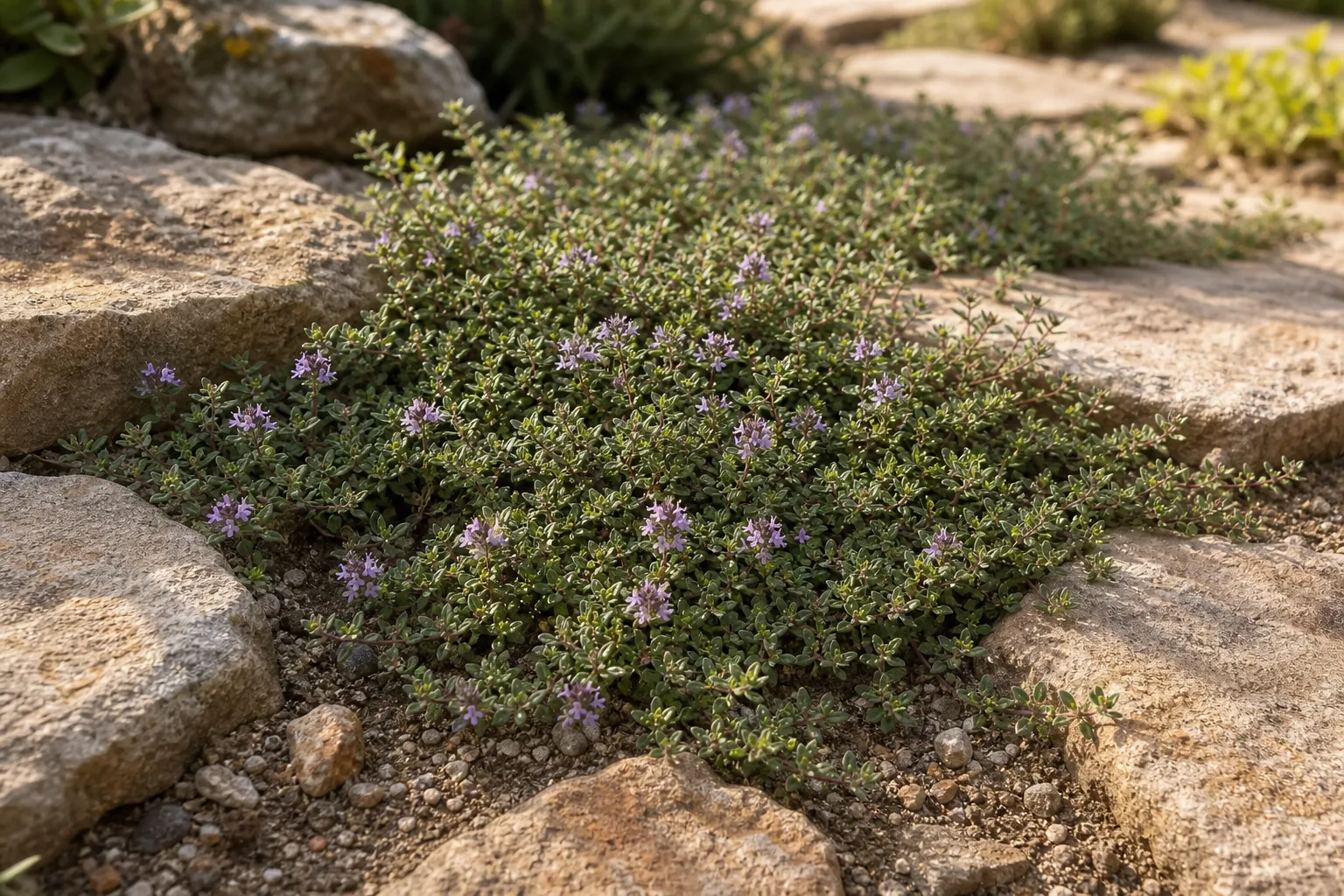
- Use around stepping stones rather than as a surface for heavy traffic.
How to care for Creeping Thyme
Thymus serpyllum is a small woody subshrub used primarily as an ornamental ground cover, not the standard culinary thyme. Set plugs into weed-free soil at spacing that allows their mats to meet, and keep invasive weeds out while the low canopy establishes.
Light
Full sun keeps the mat dense and supports flowering. Shade encourages open growth and slower drying, which is a poor combination for a plant adapted to lean, exposed ground.
Water
Water new plugs consistently enough to establish roots, then allow the soil to dry between soakings. Mature mats tolerate dry periods better than saturated soil; check beneath foliage before adding water.
Soil and repotting
Use sandy, rocky, sharply drained soil without rich moisture-holding amendments. In a trough or pot, keep drainage holes open and avoid burying the woody crown during repotting.
Temperature, humidity, and fertilizer
Creeping thyme handles temperate cold better when roots stay drained. Humid, still sites and rich fertilizer promote soft growth, so use lean soil and feed only when a demonstrated deficiency exists.
Pruning and propagation
Shear lightly after flowering or trim leggy edges without cutting the entire mat into bare old wood. Divide rooted sections or take cuttings for predictable clones; seed is suitable when variation is acceptable.
Common problems
Start with the pattern, current soil moisture, and recent changes. One symptom can have several causes, so change the most likely factor first and observe before making another major adjustment.
| Symptom | Check first | First action |
|---|---|---|
| Brown center in an older mat | Check whether the center is woody, shaded, or staying wet. | Root healthy edge pieces and renew the bare center. |
| Whole patches rot after rain | Check drainage and whether water sits under the mat. | Stop irrigation and improve surface drainage around surviving sections. |
| Sparse, stretched stems | Check hours of direct sun and neighboring shade. | Increase exposure or relocate plugs to a sunnier site. |
| Few flowers | Check light and whether rich feed is driving foliage. | Stop unnecessary fertilizer and preserve full sun. |
| Mat tears between pavers | Check the intensity of foot traffic and root depth. | Redirect heavy traffic and replant rooted edge pieces. |
Pet and household safety
ASPCA lists Thymus vulgaris as non-toxic to cats and dogs, but that is a different species from Thymus serpyllum. The reviewed sources did not establish a species-specific veterinary classification for creeping thyme. Avoid concentrated essential-oil exposure, discourage chewing, and seek veterinary guidance if symptoms occur.
Frequently asked questions
How often should I water Creeping Thyme?
Water new plugs as roots establish, then wait for the soil to dry between deep soakings.
Can Creeping Thyme grow in shade?
It performs best in full sun; shade loosens the mat and keeps soil damp longer.
Can I walk on Creeping Thyme?
It tolerates occasional light steps, but repeated heavy traffic tears stems and compacts roots.
Why is the center turning brown?
Older woody growth, shade, and trapped moisture are common variables; renew from healthy edges.
How do I propagate Creeping Thyme?
Divide rooted sections, take stem cuttings, or sow seed when some variation is acceptable.
Is Creeping Thyme safe for pets?
A species-specific veterinary classification was not found, so this profile does not label it pet-safe.
Sources and editorial review
This editorial draft is based on the sources below and awaits named horticulture-expert approval before publication.
- Breckland Thyme — Thymus serpyllumNC State Extension · Checked
- Thymus serpyllum L.Royal Botanic Gardens, Kew — Plants of the World Online · Checked
- ThymusNC State Extension · Checked
- ThymeASPCA · Checked
What works well
- Low evergreen mat
- Pollinator flowers
- Useful between stones
What to consider
- Rots in wet soil
- Not for heavy traffic
- Center can become woody