Key takeaways
- Use part shade to full shade; pachysandra is intolerant of full sun and bleaches in sun or high wind.
- Plant in moist, slightly acidic, well-drained soil with high organic matter; space 6-12 inches apart.
- Avoid overhead watering and thin dense plantings to reduce leaf blight; shear old foliage in early spring.
How to care for Japanese pachysandra
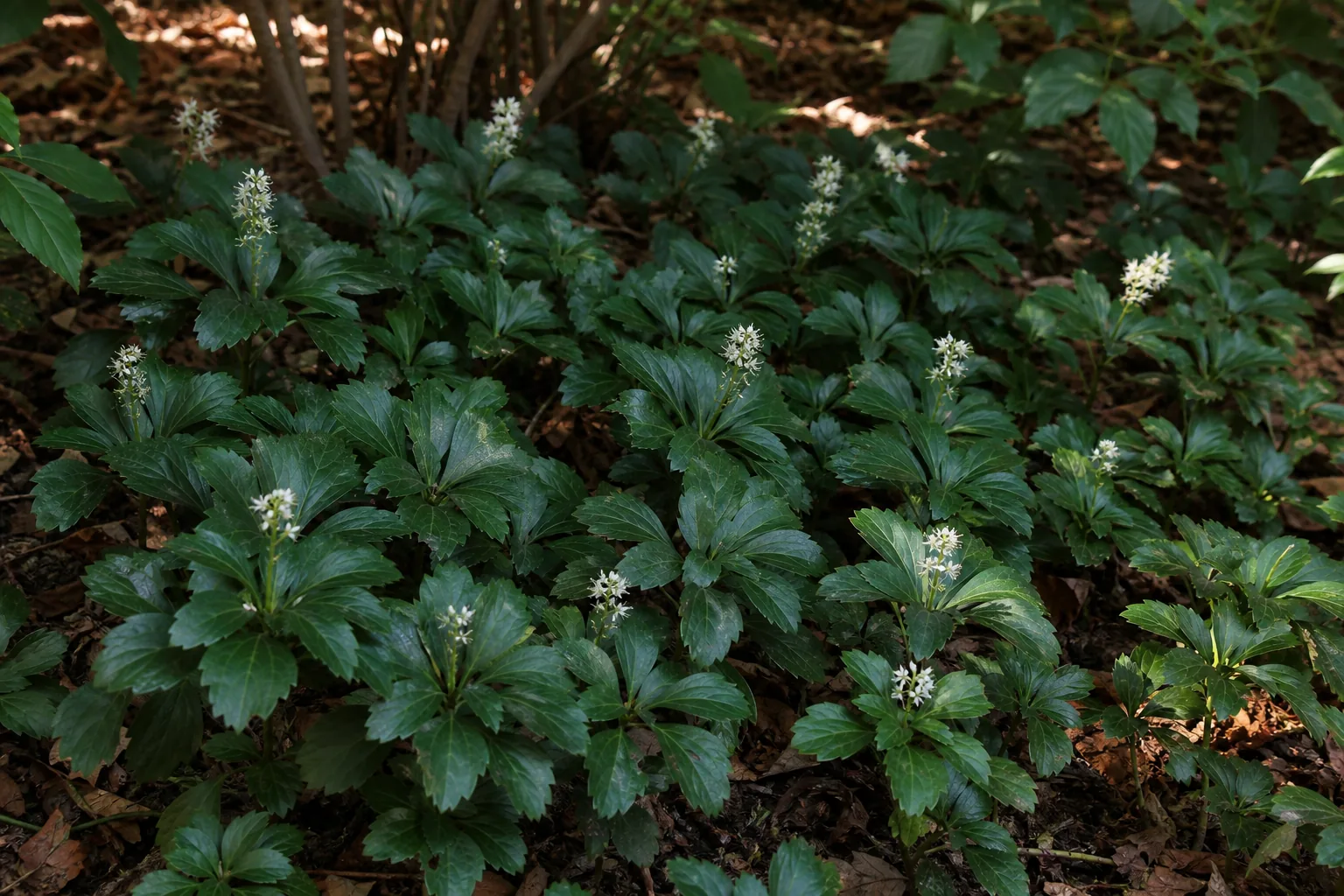
Japanese pachysandra (Pachysandra terminalis) is the classic broadleaf evergreen ground cover for shade. Plant it in part shade to full shade, in moist, slightly acidic, well-drained soil with high organic matter, spacing plants 6-12 inches apart; establishing a solid ground cover takes about three years in suitable climates. It spreads by underground rhizomes to form large colonies beneath trees or shady areas, helping control erosion on slopes and banks. If leaf blight has been a problem, thin the planting to promote air circulation and avoid overhead watering.
Light
Japanese pachysandra does best in part shade to full shade and is intolerant of full sun - foliage bleaches in full sun or high wind. It thrives in the sun-dappled shade that large trees provide, which is why it is so widely used as an underplanting for trees and shrubs. Avoid exposed, sunny sites where the leaves yellow and the mat thins out.
Water
Water new plantings regularly until the roots establish, then rely on rainfall. Pachysandra prefers consistently moist soil but tolerates drought and occasional dry periods once mature. It also withstands occasional wetness if drainage is adequate; the real problems come from poor drainage plus overhead watering, which encourage leaf blight and root rot.
Soil and planting
Japanese pachysandra prefers moist, slightly acidic soil (pH below about 6.0) that is high in organic matter and well drained, in clay, loam, or amended sand. Work compost or leaf mold into the bed before planting and set crowns at grade. It is normally grown in the ground; in containers use an acidic, organic-matter-rich mix and repot or divide when rootbound.
Temperature, humidity, and fertilizer
Hardy in roughly USDA zones 4-9, pachysandra is a slow-growing evergreen perennial that tolerates cold winters and summer heat if shaded. High humidity and wet foliage promote Volutella leaf blight, so keep the planting thin enough for airflow. Fertilizer is rarely required - a light spring application of compost or balanced slow-release feed is plenty for this low-maintenance ground cover.
Pruning and propagation
In early spring, shear or mow the foliage back to about 3 inches to refresh the planting and remove blighted leaves, then clean up the clippings. Remove any dead or damaged stems through the season. Propagate by division of rooted rhizome sections or by stem cuttings; seeds are rarely used in practice.
Common problems
Start with the pattern, current soil moisture, and recent changes. One symptom can have several causes, so change the most likely factor first and observe before making another major adjustment.
| Symptom | Check first | First action |
|---|---|---|
| Yellow, bleached foliage in open sites | Check sun exposure and wind; pachysandra is intolerant of full sun. | Move to shade or plant under trees where dappled light prevails. |
| Brown or black blotches on leaves and stems | Check for Volutella leaf blight, worse in crowded, damp plantings. | Thin the planting for airflow, remove affected foliage, and avoid overhead watering. |
| Wilted or collapsing patches in wet soil | Check drainage and root rot from overly wet, poorly drained ground. | Improve drainage, avoid planting in low spots, and replant healthy divisions. |
| Scaly bumps on stems and leaves | Check for euonymus scale infestation. | Prune heavily infested growth and apply horticultural oil at the right timing; consult local extension for rates. |
| Slow, thin spread | Check soil fertility, organic matter, and competition from tree roots. | Amend with compost, water during drought, and be patient - a full cover takes about three years. |
Pet and household safety
Japanese pachysandra is not listed on the ASPCA toxic or non-toxic plant lists, and the NC State Extension profile records no toxicity for the species. Because no authoritative pet-safety source confirms it as non-toxic to cats and dogs, treat the plant as potentially toxic to pets and discourage chewing; contact a veterinarian after substantial ingestion.
Frequently asked questions
How much light does Japanese pachysandra need?
Part shade to full shade is best; it is intolerant of full sun and the foliage bleaches in bright or windy sites.
How often should I water pachysandra?
Water to establish, then only during drought. It prefers moist soil but tolerates dry periods once mature.
What soil suits Japanese pachysandra?
Moist, slightly acidic, well-drained soil with high organic matter, from clay to amended loam.
Why does my pachysandra have brown leaves?
Usually Volutella leaf blight in crowded, humid plantings. Thin for airflow and stop overhead watering.
How do I propagate Japanese pachysandra?
Divide rooted rhizome sections in spring, or take stem cuttings. Both are straightforward for this ground cover.
Is Japanese pachysandra safe for pets?
It is not on the ASPCA toxic or non-toxic lists and NC State records no toxicity, but because no species-specific pet-safety confirmation exists, treat it as potentially toxic to cats and dogs and prevent chewing.
Sources and editorial review
This editorial draft is based on the sources below and awaits named horticulture-expert approval before publication.
- Pachysandra terminalisRoyal Botanic Gardens, Kew (Plants of the World Online) · Checked
- Toxic and Non-Toxic Plants ListASPCA · Checked
- Pachysandra terminalisNorth Carolina State University Extension · Checked
- Japanese SpurgeUniversity of Illinois Extension · Checked
What works well
- One of the most reliable evergreen ground covers for deep shade under trees.
- Spreads by rhizomes to form a uniform colony and helps control erosion on slopes.
- Deer, rabbit, and drought resistant once established.
What to consider
- Intolerant of full sun; foliage bleaches and growth suffers in exposed sites.
- Susceptible to leaf blight, root rot, and euonymus scale.
- Can spread aggressively and is difficult to remove once established.