 Pet-friendlier
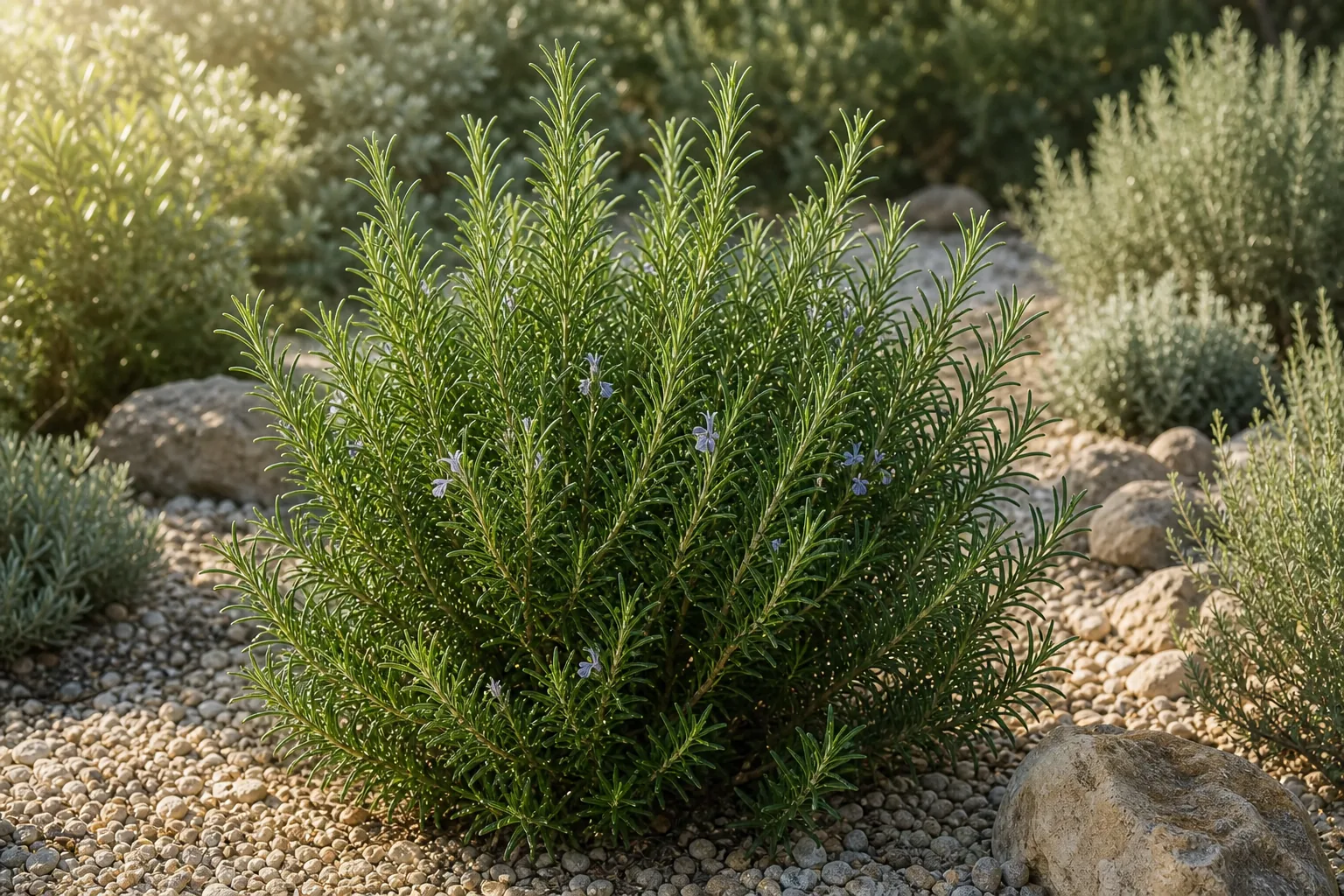
Rosemary
Salvia rosmarinus
An aromatic Mediterranean shrub with narrow evergreen leaves used fresh or dried in cooking.
Group herbs by moisture needs: Mediterranean herbs prefer sharper drainage, while basil, parsley, and mint appreciate more consistent water.
This collection is the permanent home for practical herbs profiles, planning guides, seasonal care, and problem-solving content.
Herbs divide into two watering cultures. Mediterranean types—rosemary, thyme, oregano, sage—want sharp drainage and a dry-down between waterings, while leafy annuals like basil, parsley, and cilantro prefer steadier moisture. Grouping herbs by this preference, in beds or pots, prevents the chronic over- and under-watering that kills most kitchen herbs.
Regular harvesting is the pruning these plants evolved for. Pinch basil above a leaf pair to double its branches, cut parsley from the outside, and shear thyme lightly after flowering. Frequent small harvests keep herbs compact and productive far longer than waiting for a single large cut.
21 plants
Pet-friendlierSalvia rosmarinus
An aromatic Mediterranean shrub with narrow evergreen leaves used fresh or dried in cooking.
 intermediate
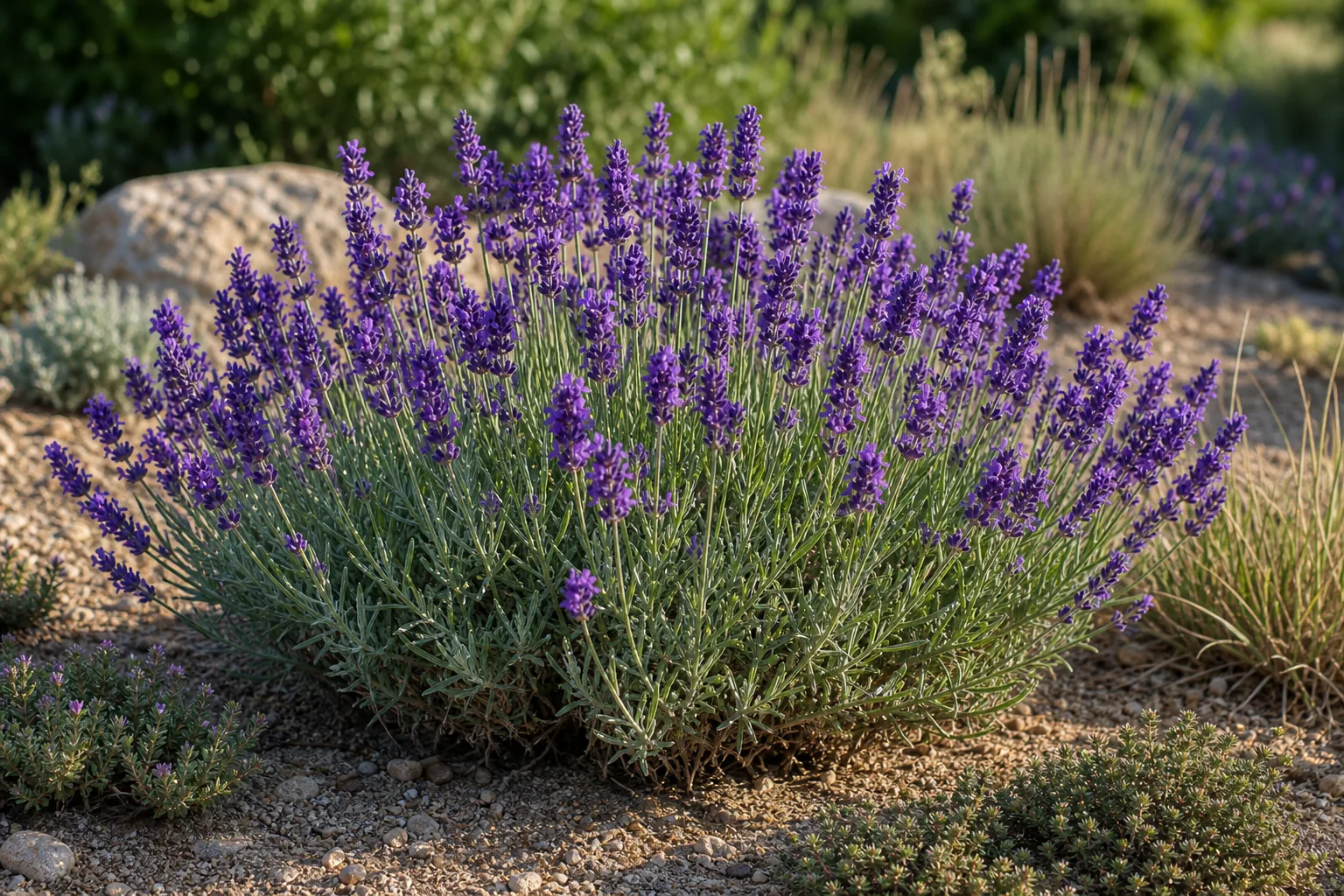
Lavandula angustifolia
English lavender (Lavandula angustifolia) is an evergreen, woody subshrub prized for fragrant grey-green foliage and spikes of purple flowers. Native to southwestern Europe, it is grown worldwide as a drought-tolerant ornamental, culinary herb, and source of lavender oil.
 Pet-friendlier
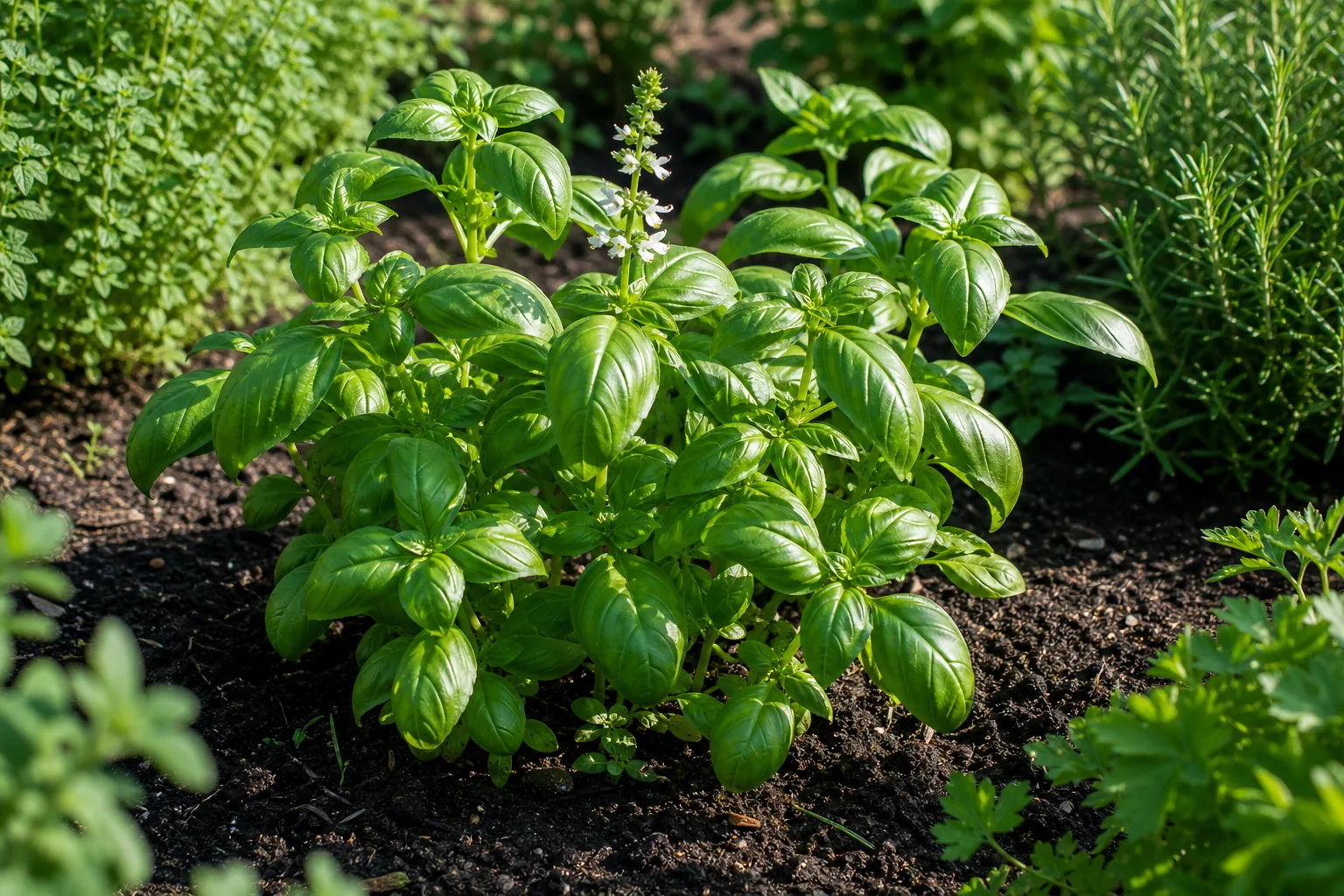
Ocimum basilicum
Sweet basil (Ocimum basilicum) is a tender, aromatic herb in the mint family grown for flavourful leaves used in cuisines worldwide, especially pesto and tomato dishes. Native to tropical Asia, it is grown as a warm-season annual, prized for fragrant foliage and small pollinator-friendly flowers.
 intermediate
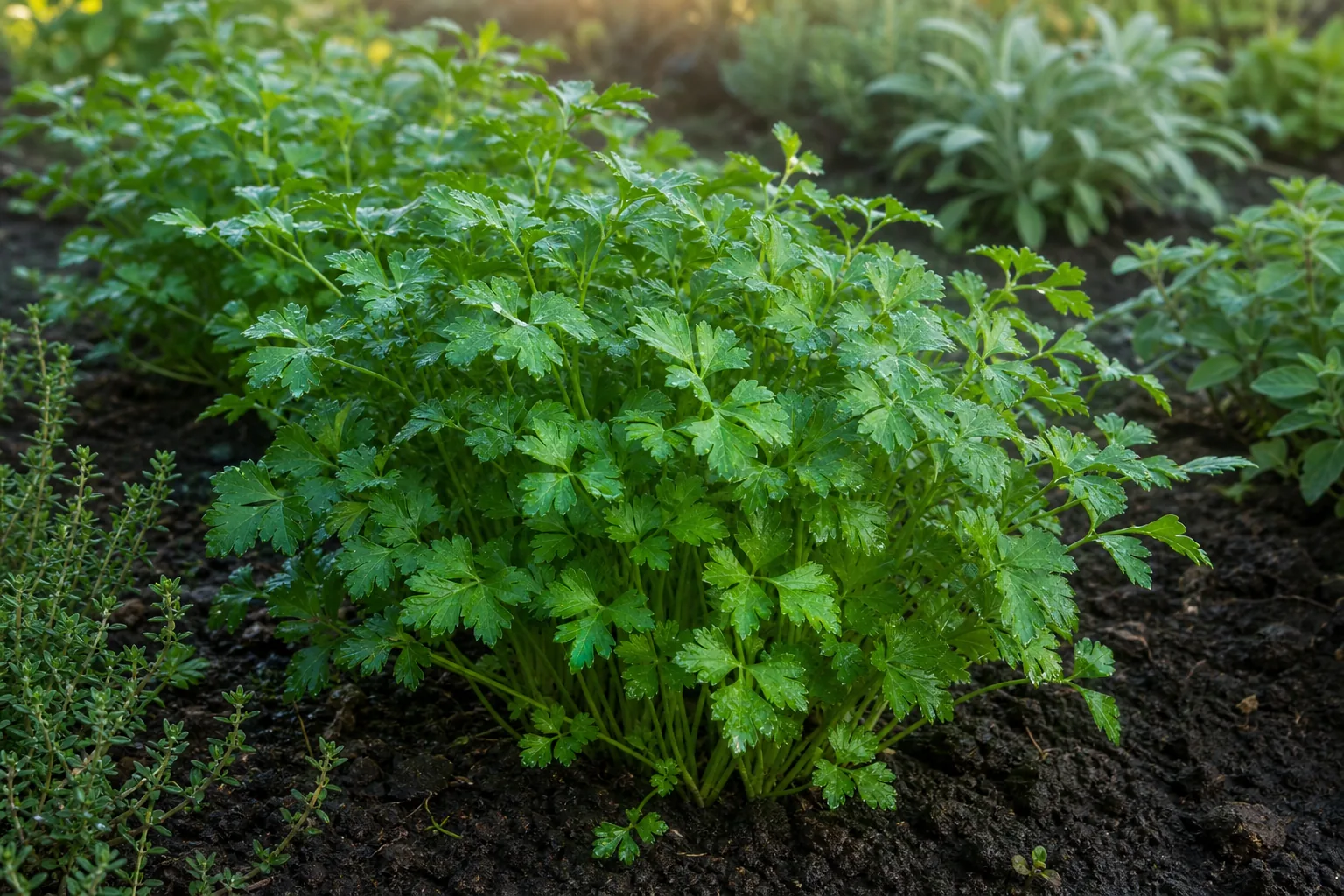
Petroselinum crispum
Flat-leaf parsley (Petroselinum crispum, the neapolitanum form) is a bright, vigorous culinary herb with stronger flavor than curly parsley, grown as an annual or overwintering biennial for its finely divided, deeply serrated leaves. Native to the central Mediterranean, it is a staple seasoning and a larval host for the black swallowtail butterfly.
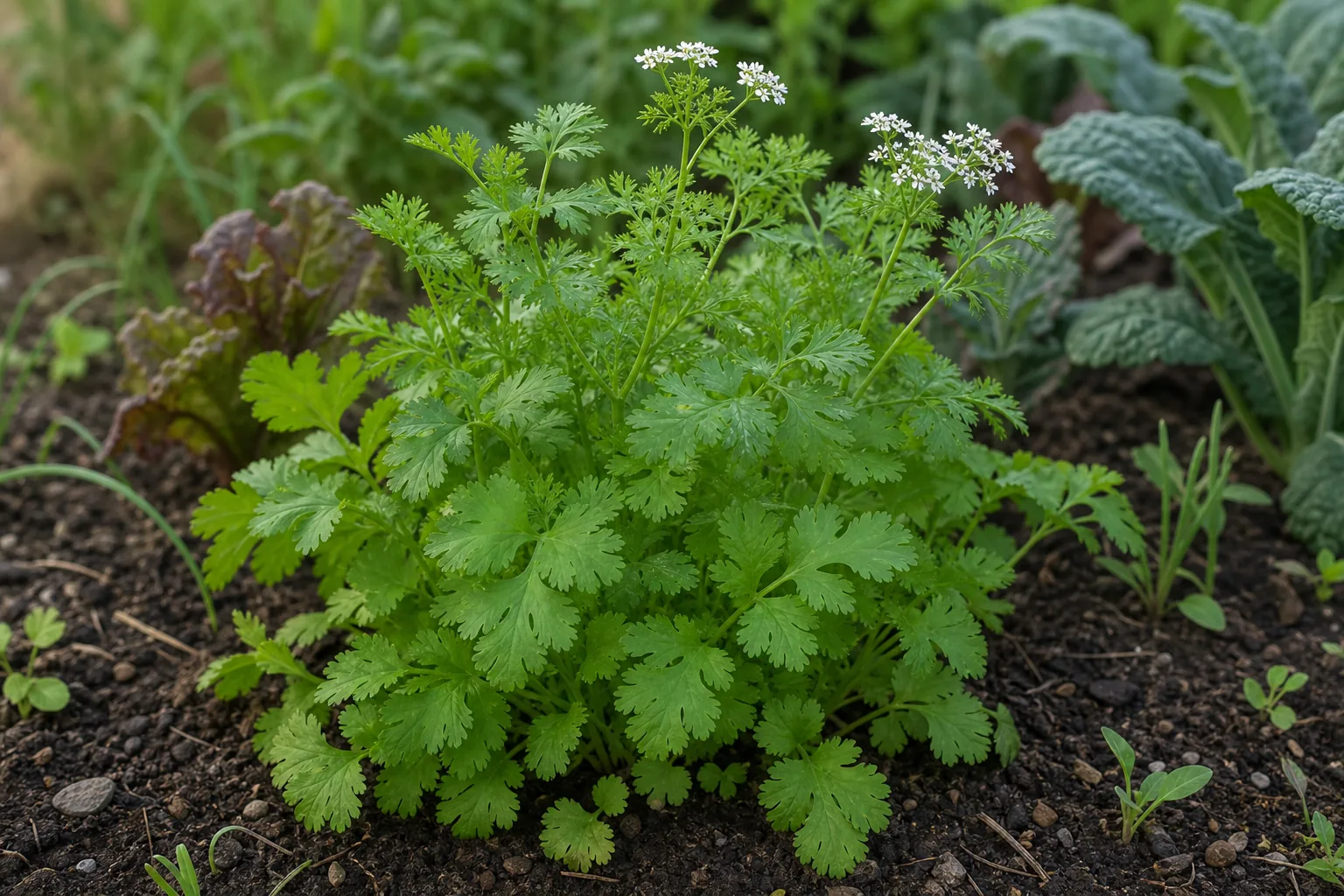 Pet-friendlier
Coriandrum sativum
Cilantro (Coriandrum sativum) is a fast-growing cool-season annual grown for its pungent, finely divided leaves (cilantro) and aromatic seeds (coriander). Native to southern Europe and the western Mediterranean, it is a staple of many cuisines but bolts quickly in summer heat.
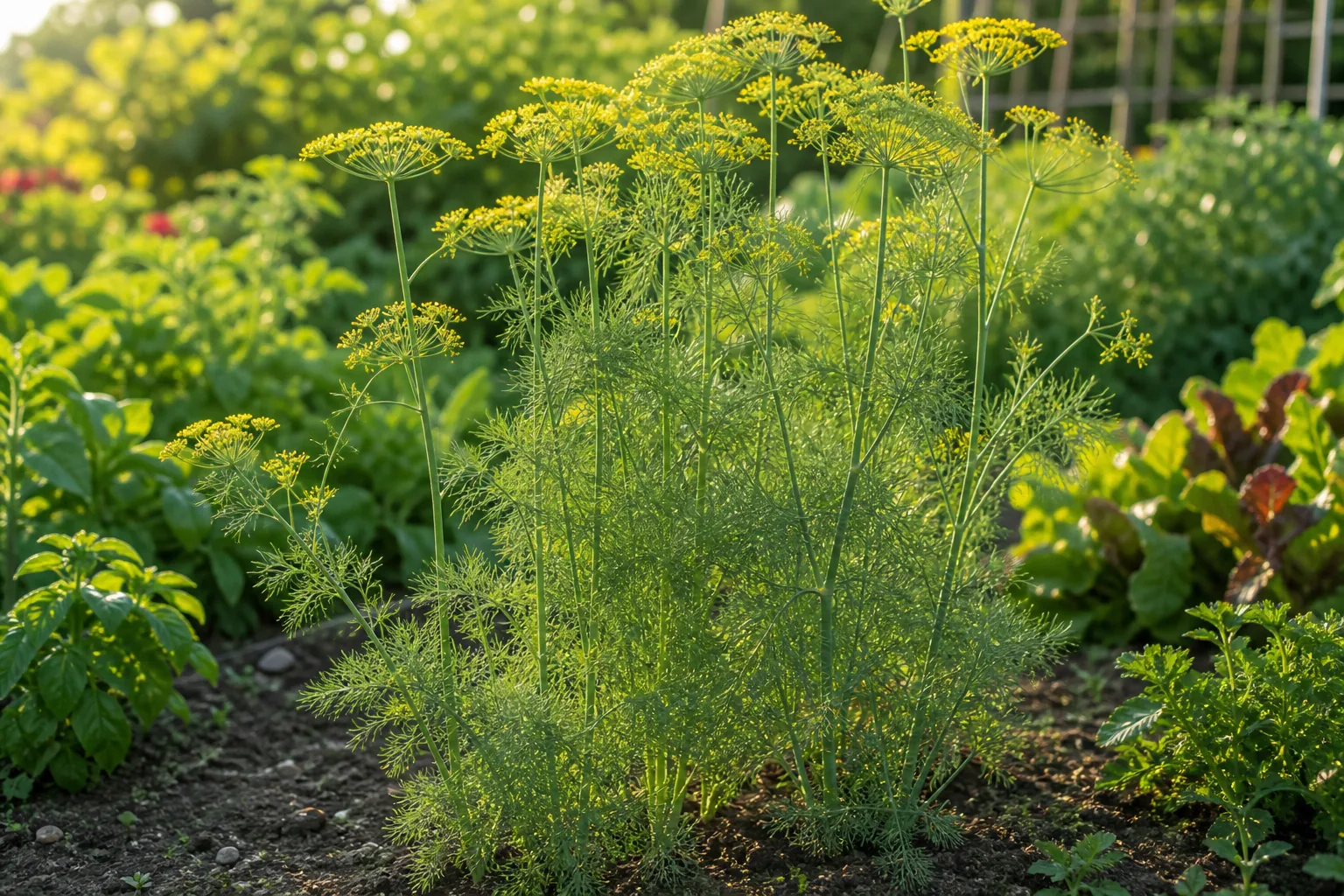 Pet-friendlier
Anethum graveolens
Dill (Anethum graveolens) is a feathery, aromatic annual grown for its tangy leaves (dill weed) and flavorful seeds used in pickling and cooking. Native to southwest Asia and the Mediterranean, it is a favorite larval host for black swallowtail butterflies.
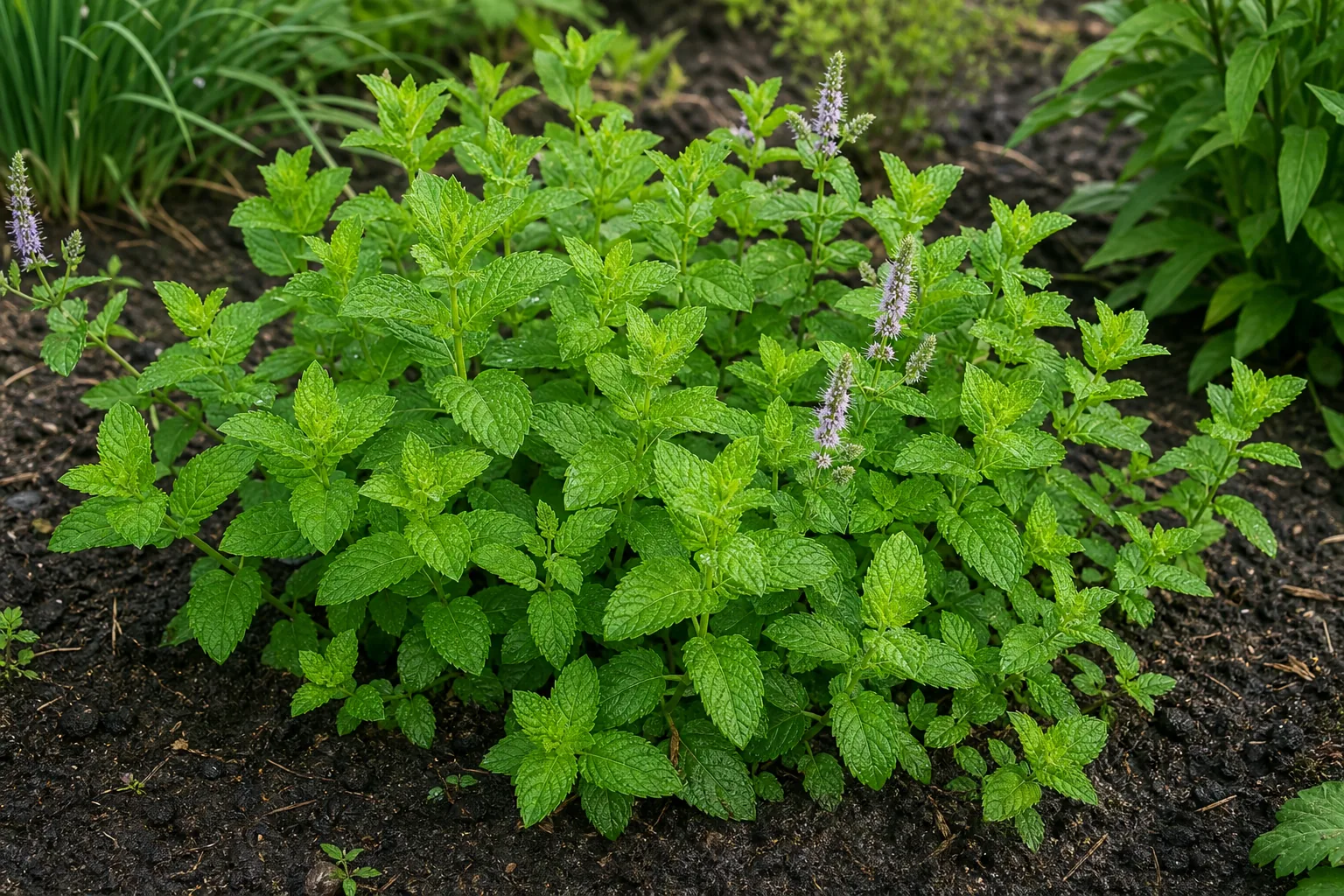 intermediate
Mentha spicata
Spearmint (Mentha spicata) is a vigorous, rhizomatous perennial mint grown for its bright, sweetly aromatic leaves used in tea, sauces, and cooking. Native from Europe to China, it spreads aggressively and is best confined in a container or with a root barrier.
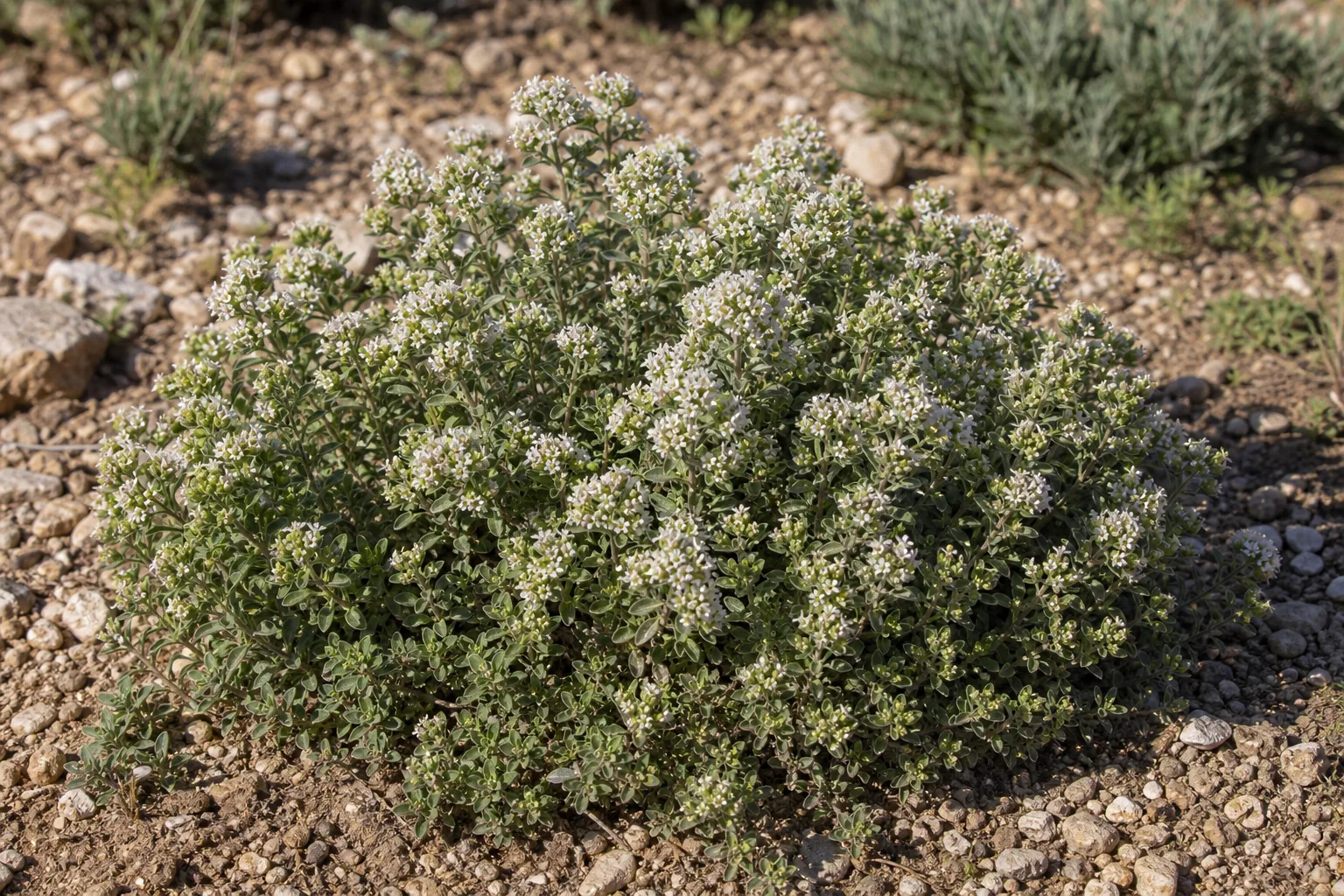 intermediate
Origanum vulgare subsp. hirtum
Greek oregano (Origanum vulgare subsp. hirtum, the true culinary oregano within the variable O. vulgare) is a bushy, woody-branched perennial mint grown for its pungent leaves. Native from Europe to central Asia, it is a pollinator favorite and a cornerstone of Mediterranean cooking.
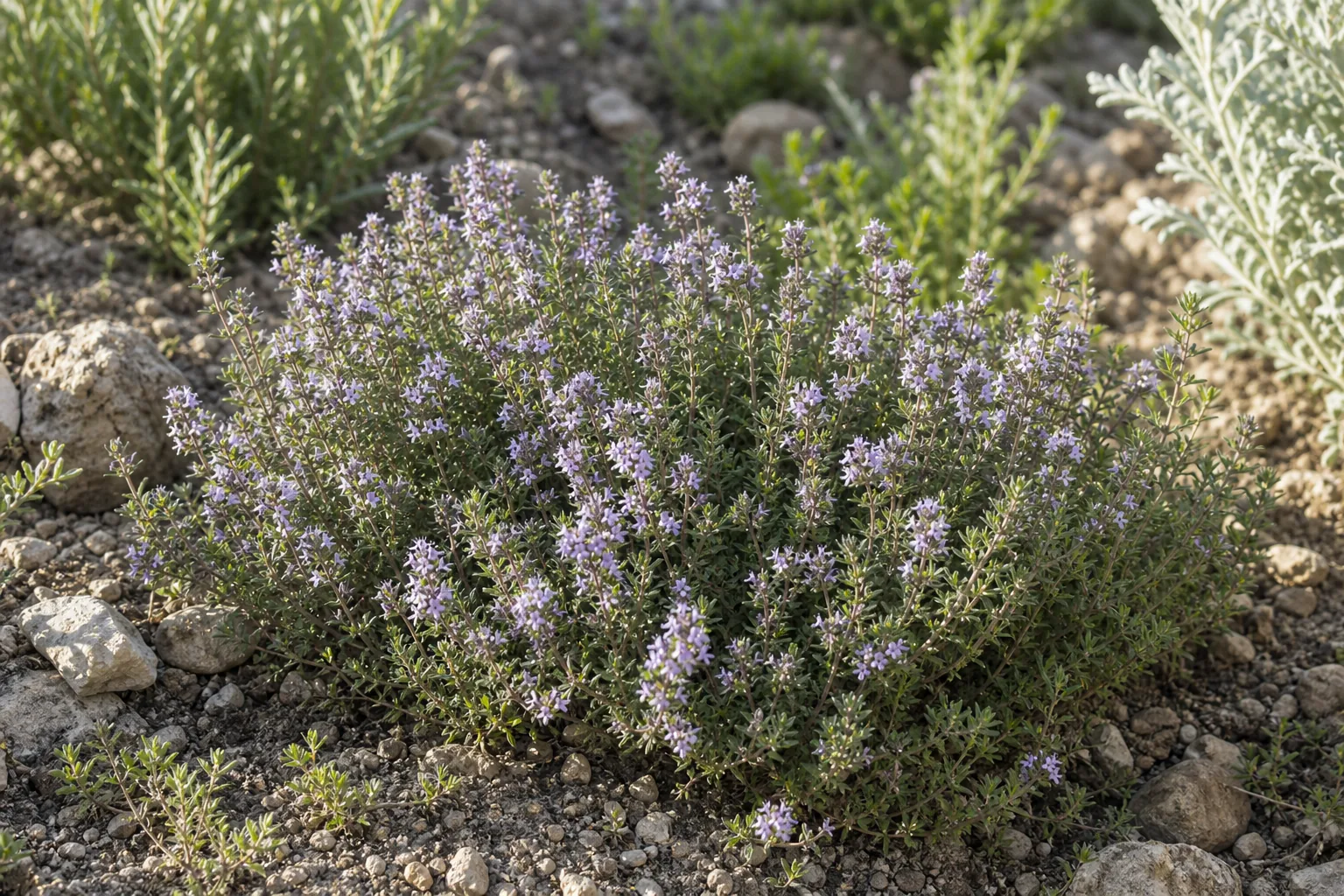 Pet-friendlier
Thymus vulgaris
Common thyme (Thymus vulgaris) is a low, woody-based evergreen perennial mint grown for its tiny, intensely aromatic leaves. Native to southern Europe, it is a classic culinary herb and a nectar source for bees.
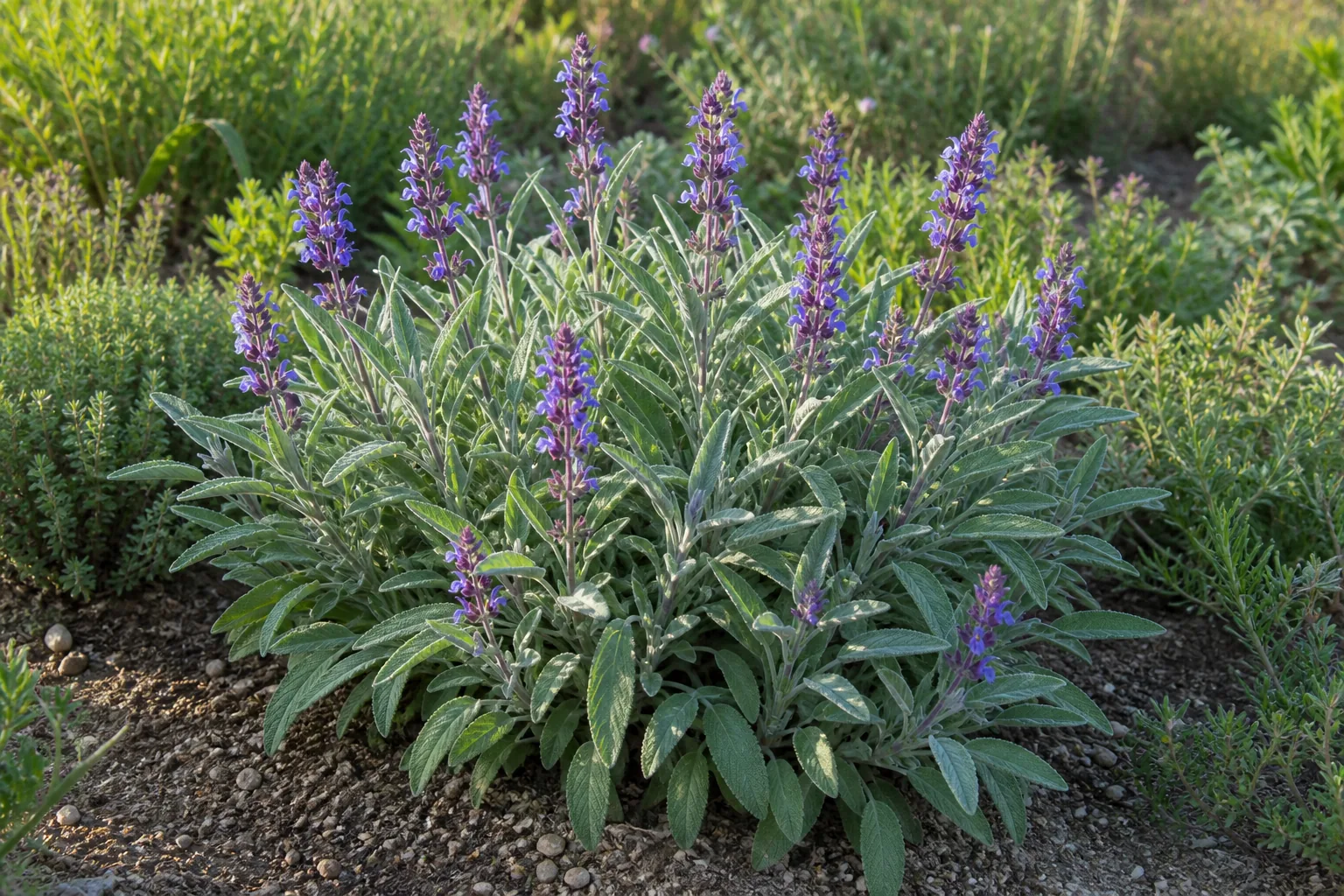 Pet-friendlier
Salvia officinalis
Common sage (Salvia officinalis) is a bushy, semi-woody perennial mint with soft, gray-green, highly aromatic leaves. Native to the northern Mediterranean, it is a cornerstone culinary herb and a bee and butterfly attractor.
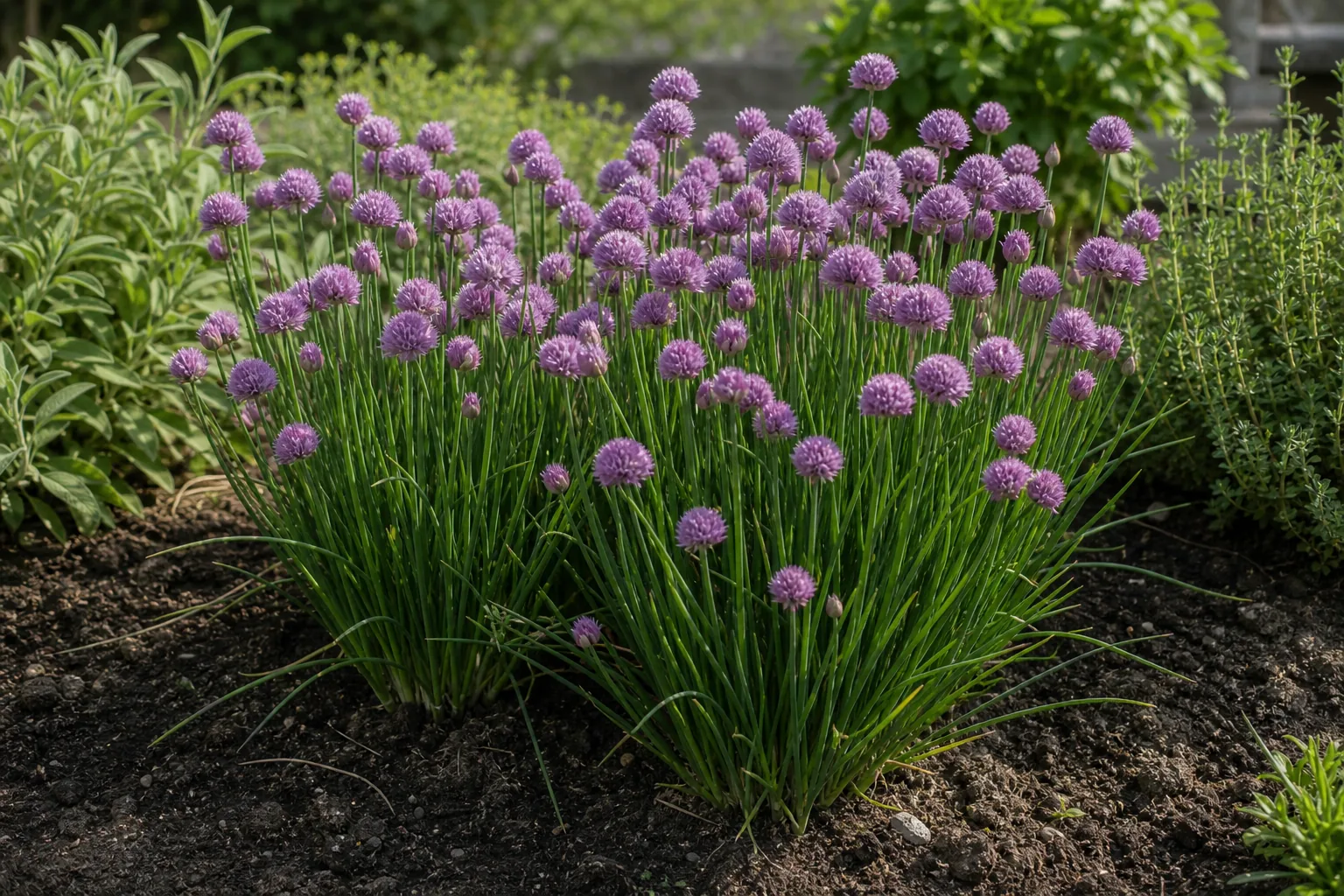 intermediate
Allium schoenoprasum
Chives (Allium schoenoprasum) is a clump-forming bulbous perennial in the onion family grown for its mild, grassy leaves and edible lavender blooms. Native across the north temperate zone, it is one of the easiest herbs to grow and a neat edging plant.
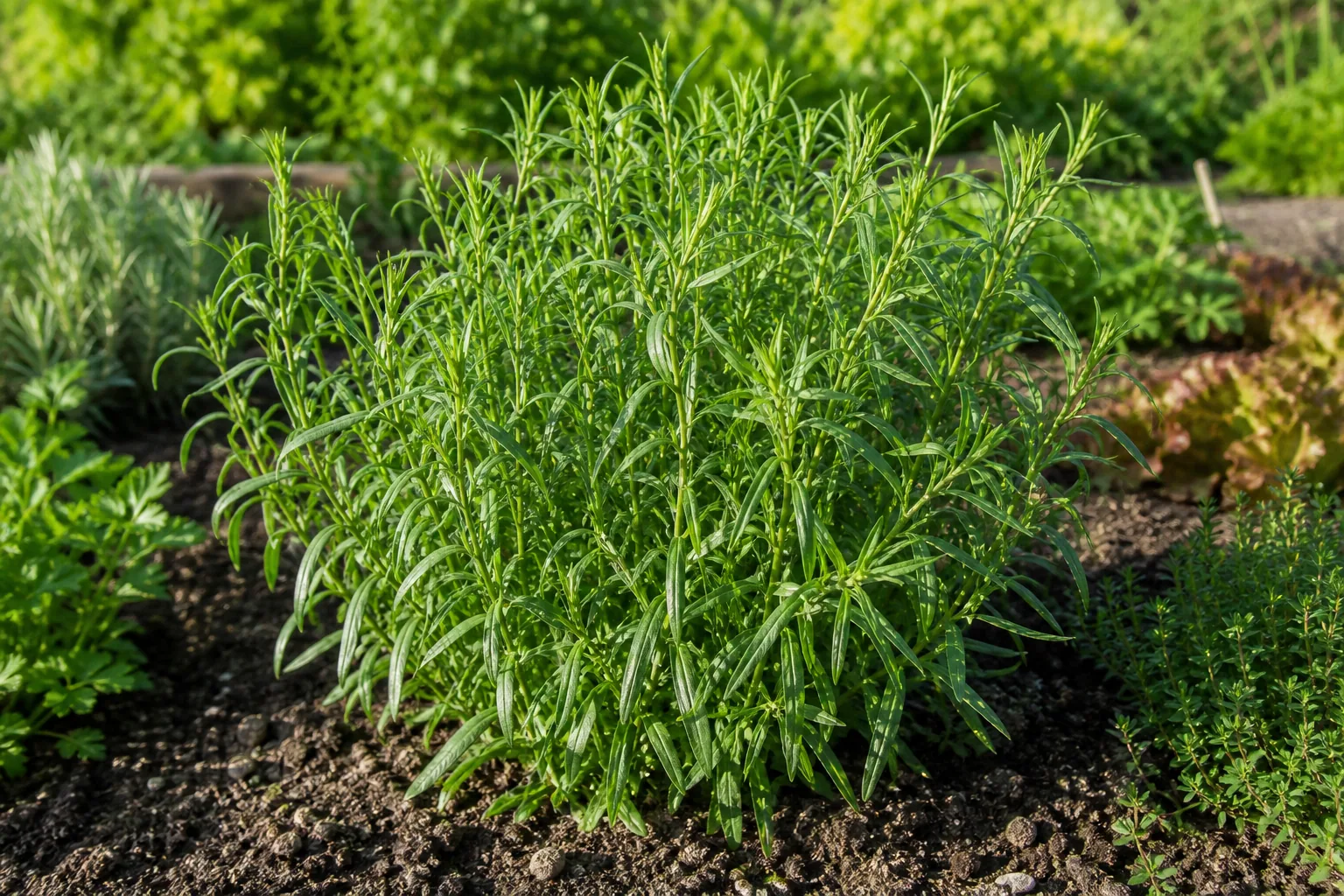 intermediate
Artemisia dracunculus Sativa Group
French tarragon (Artemisia dracunculus 'Sativa', the culinary form of wild tarragon) is a rhizomatous perennial with slim, anise-scented leaves and little ornamental flower. Native across the north temperate zone, it is prized for its distinctive flavor but is sterile and must be propagated vegetatively.
 Pet-friendlier
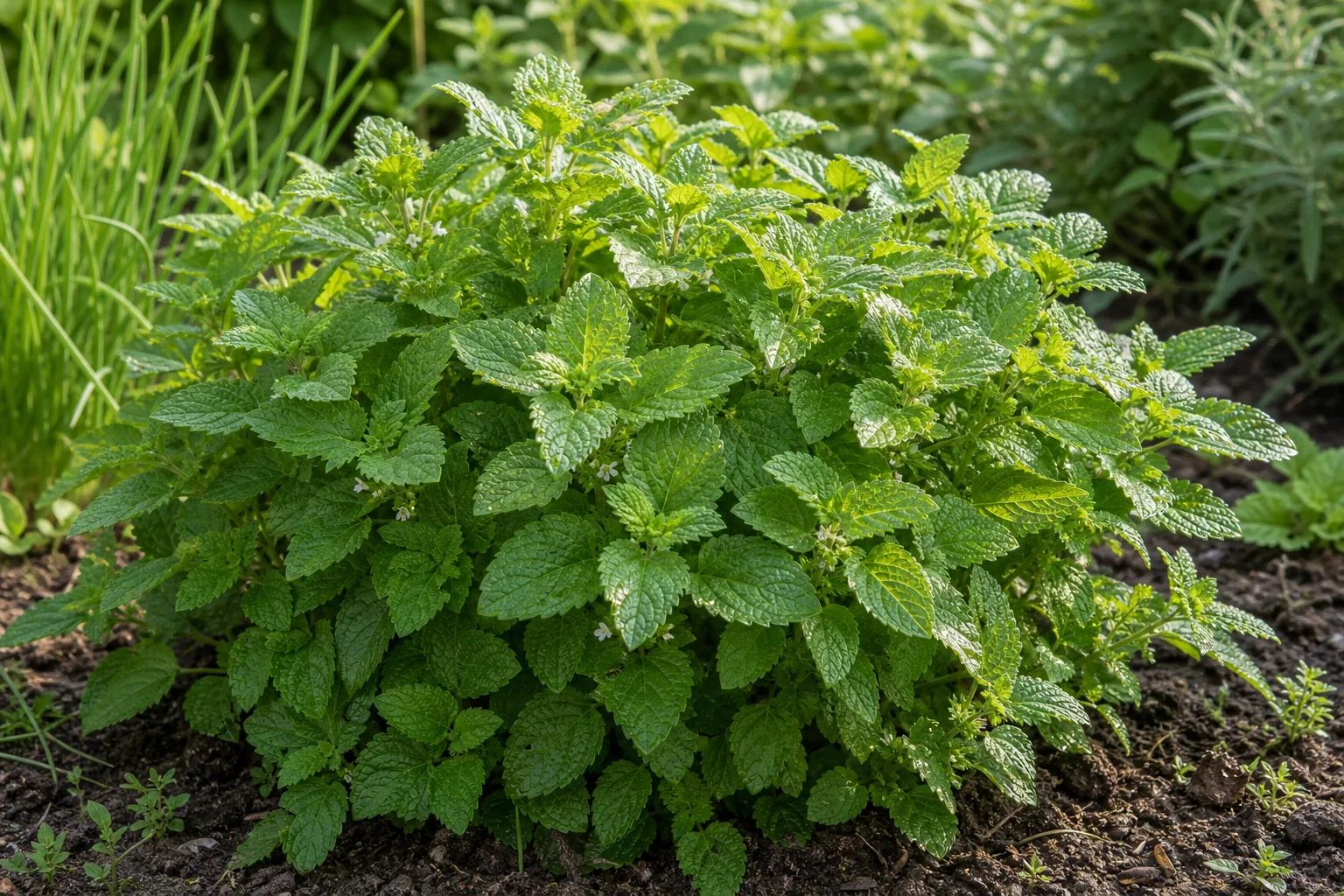
Melissa officinalis
Lemon balm (Melissa officinalis) is a bushy, fragrant perennial in the mint family grown for its bright, lemon-scented leaves used in teas, cooking, and aromatherapy. Native to southern Europe and the Mediterranean, it forms spreading clumps, draws bees and beneficial pollinators, and is one of the easiest herbs to grow.
 intermediate
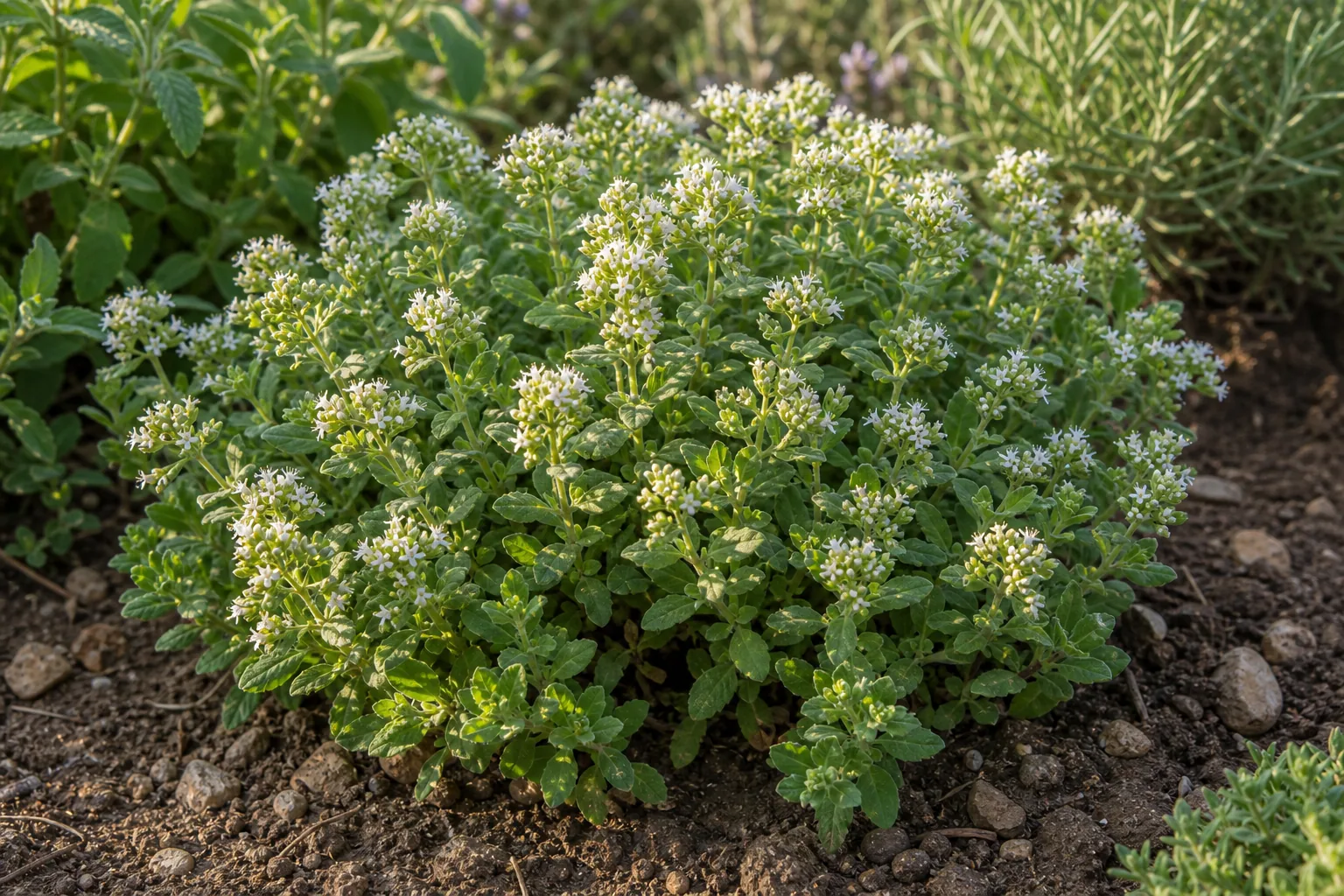
Origanum majorana
Sweet marjoram (Origanum majorana) is a tender, woody-based perennial grown as an annual in most gardens for its small, oval, grey-green leaves with a sweet, mild, almost pine-and-citrus flavor. Native to the Mediterranean and North Africa, it is prized in Mediterranean cooking and makes a tidy, fragrant edging or container plant.
 Pet-friendlier
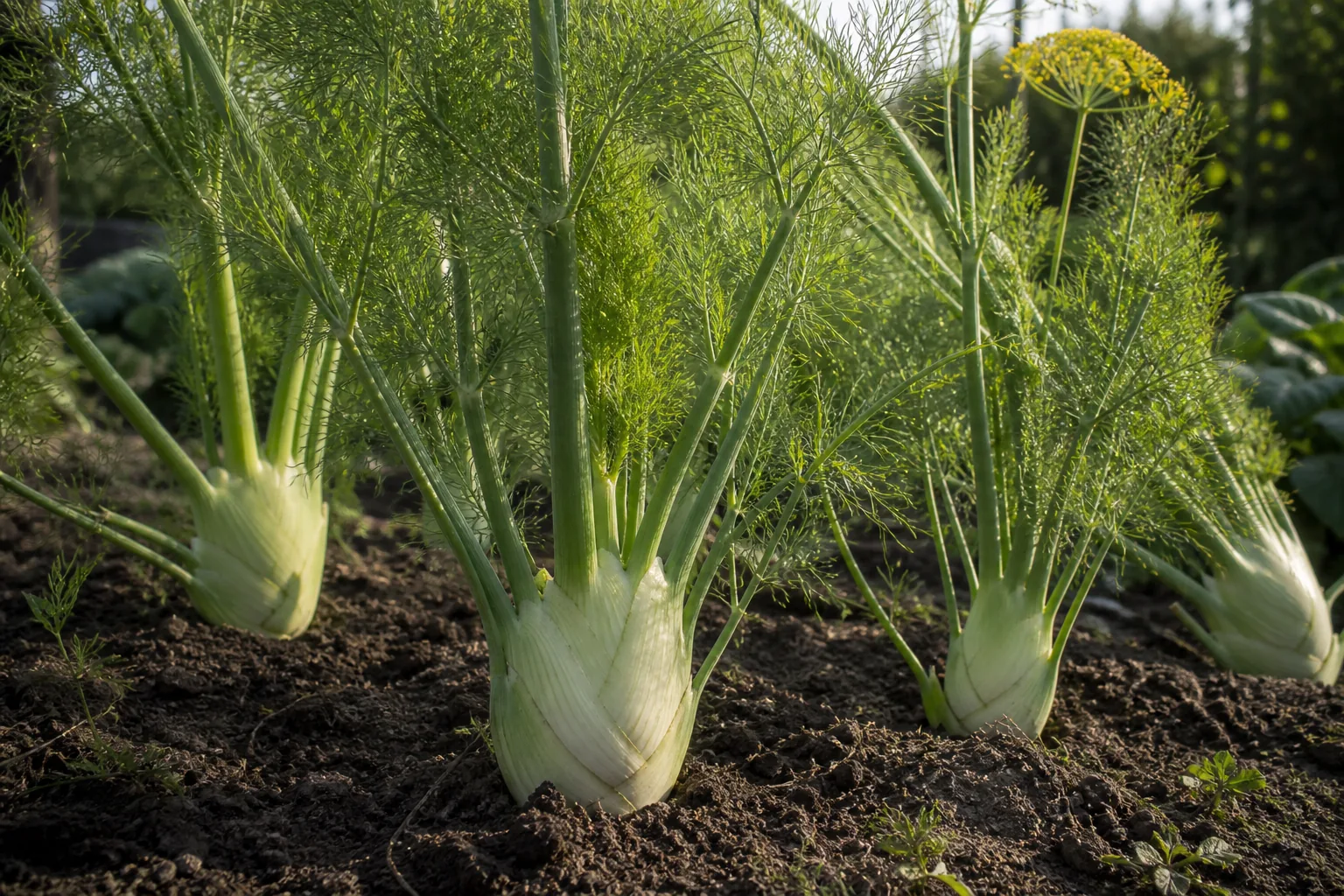
Foeniculum vulgare Azoricum Group
Florence fennel (Foeniculum vulgare, Azoricum Group - also called finocchio) is a tender biennial grown as a cool-season annual for its swollen, crisp, anise-flavored bulbs. Native to the Mediterranean, it is valued both for its bulb and its feathery foliage and seeds, and it is a host plant for swallowtail butterflies.
 intermediate
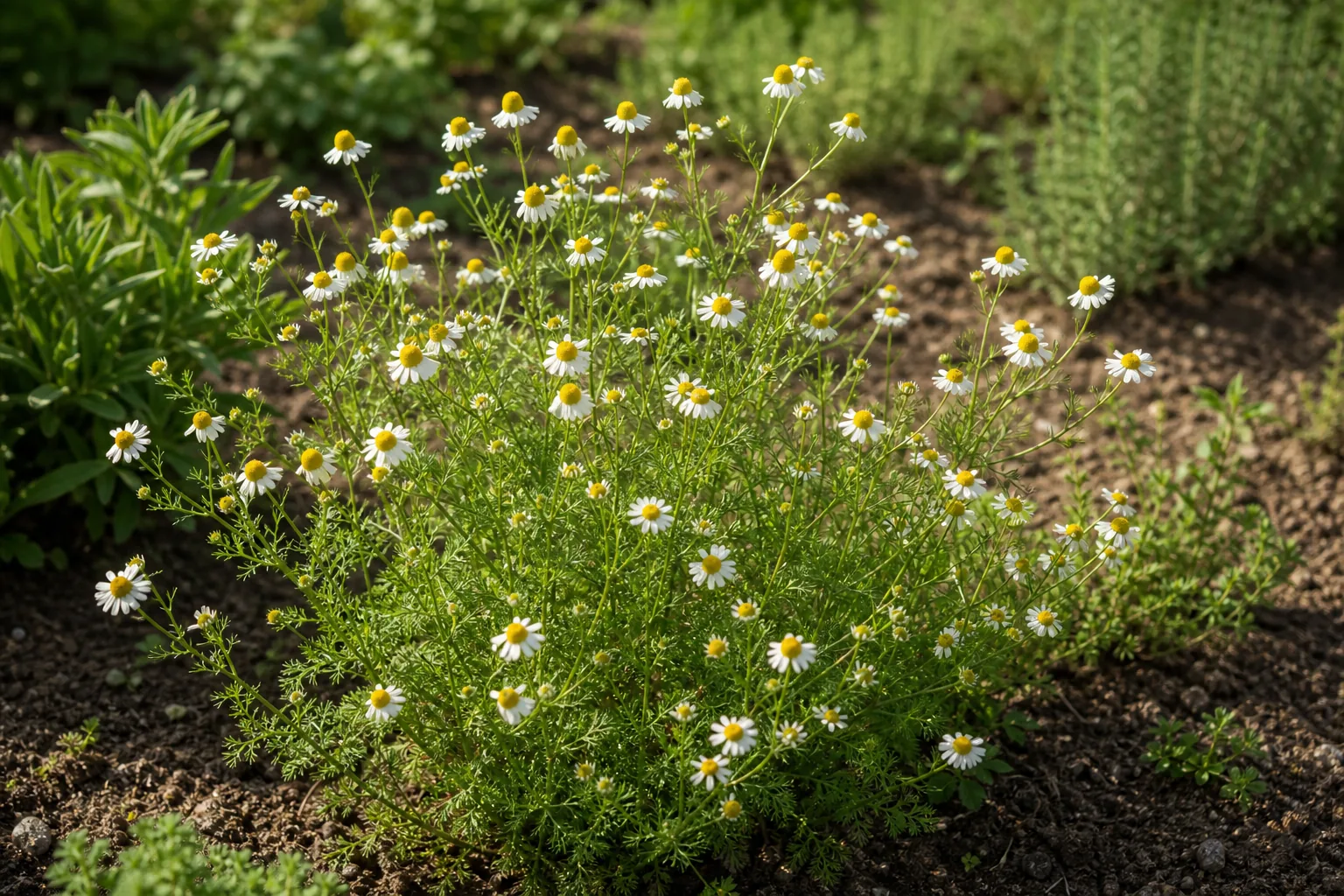
Matricaria chamomilla
German chamomile (Matricaria chamomilla, often listed as Matricaria recutita) is a dainty annual herb with fine, feathery foliage and small, daisy-like flowers with white petals and a fragrant yellow center. Native to Europe and western Asia, it is grown for calming teas made from the dried flower heads and is a favorite of beneficial insects.
 intermediate
Laurus nobilis
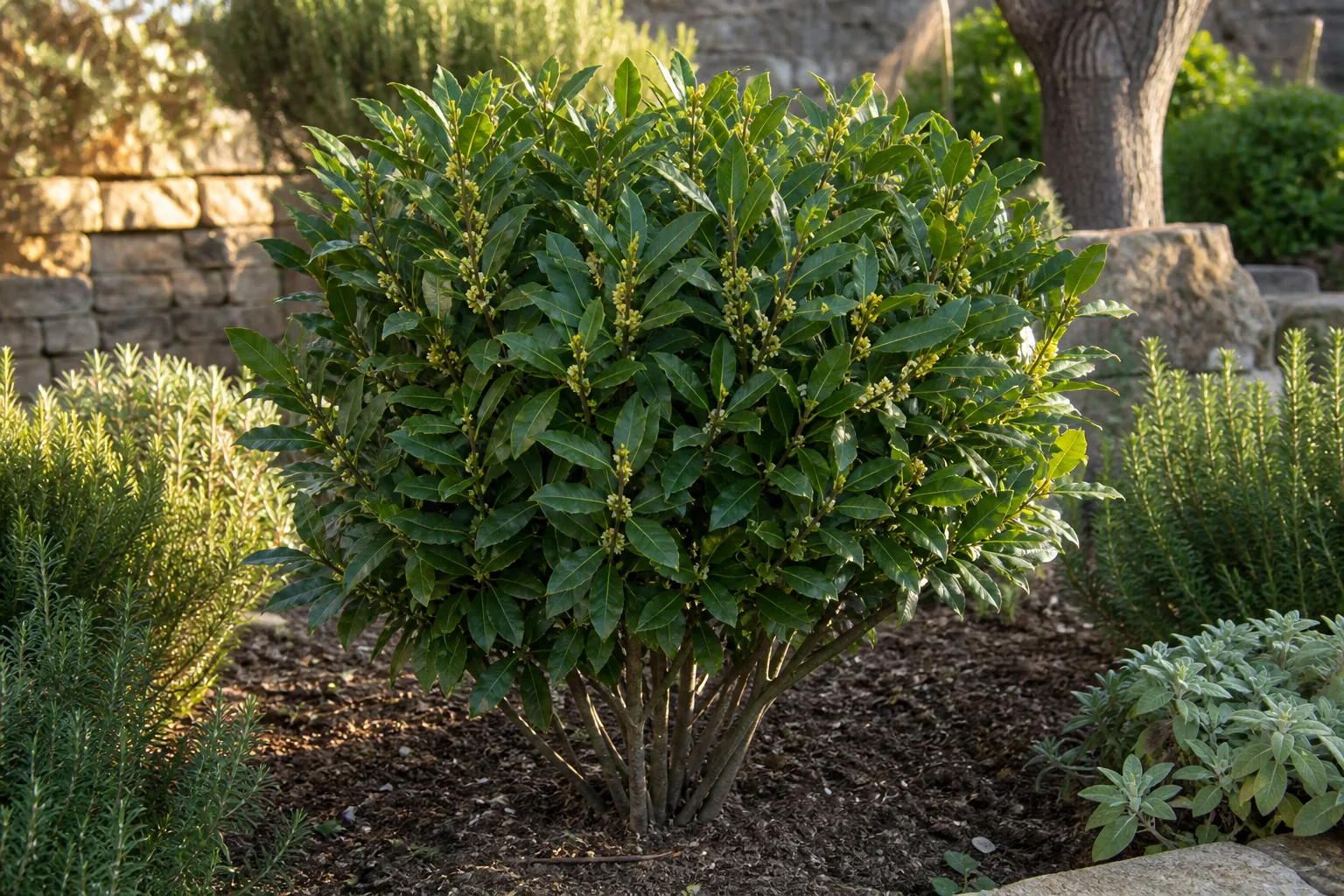
Bay laurel (Laurus nobilis) is a slow-growing, evergreen tree or large shrub grown for its leathery, aromatic leaves used whole or ground as the classic culinary bay leaf. Native to the Mediterranean, it forms a handsome, upright plant that is equally at home in the ground in warm zones or trained as a standard (lollipop) in a container elsewhere.
 intermediate
Cymbopogon citratus
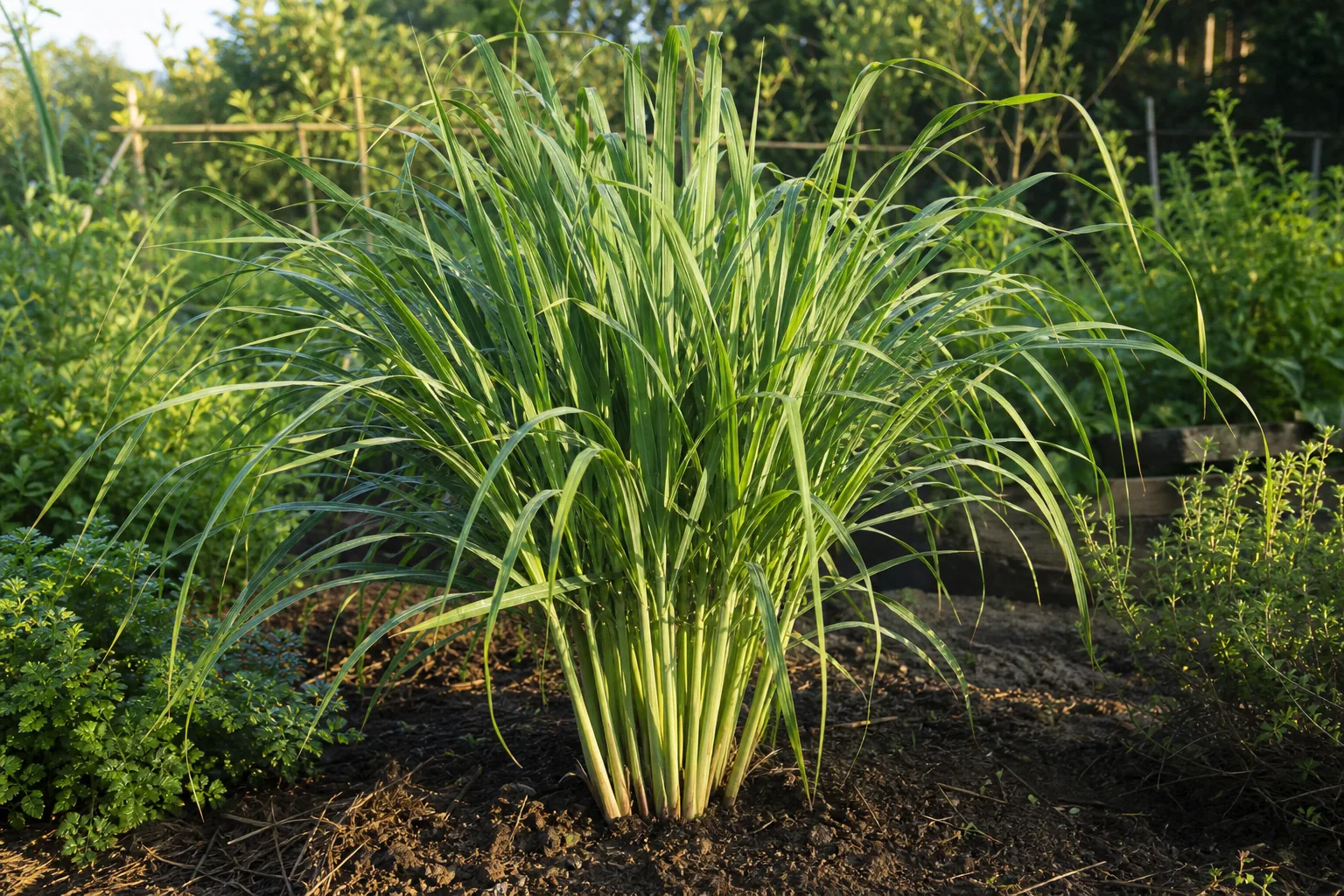
Lemongrass (Cymbopogon citratus) is a tropical, clump-forming grass grown for its fragrant, lemon-scented stalks used in Asian cooking, teas, and everything from curries to marinades. Native to South and Southeast Asia, it is a fast, architectural plant that is grown as an annual or overwintered indoors in most temperate gardens.
 intermediate
Rumex acetosa
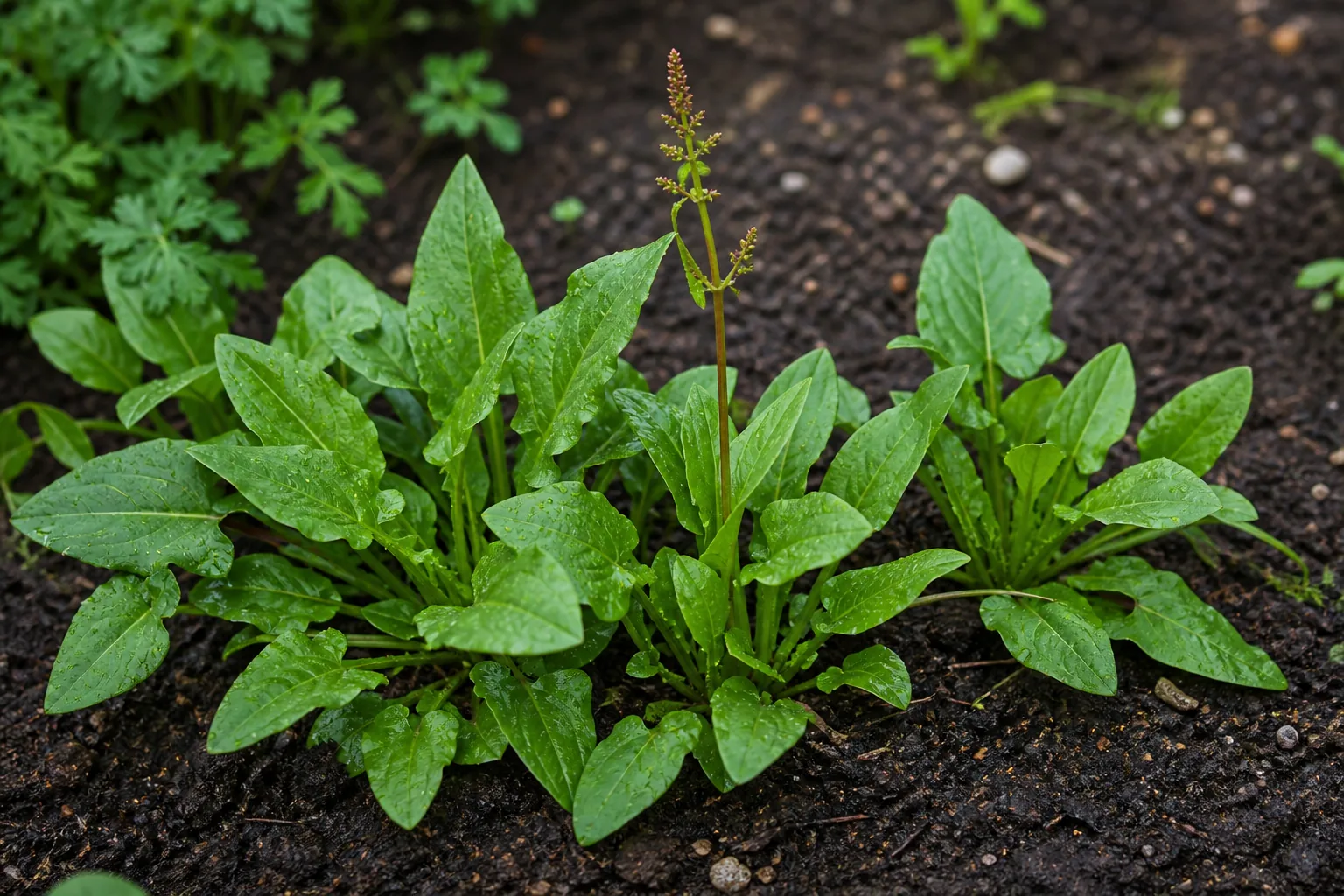
Common sorrel (Rumex acetosa) is a hardy, tangy-leaved perennial grown as a cut-and-come-again leafy herb and vegetable for its sharp, lemony, spinach-like leaves. Native to Eurasia, it forms a clumps of arrow-shaped foliage and is one of the earliest greens of spring, though its oxalic acid means it is best eaten in moderation.
 Pet-friendlier
Satureja hortensis
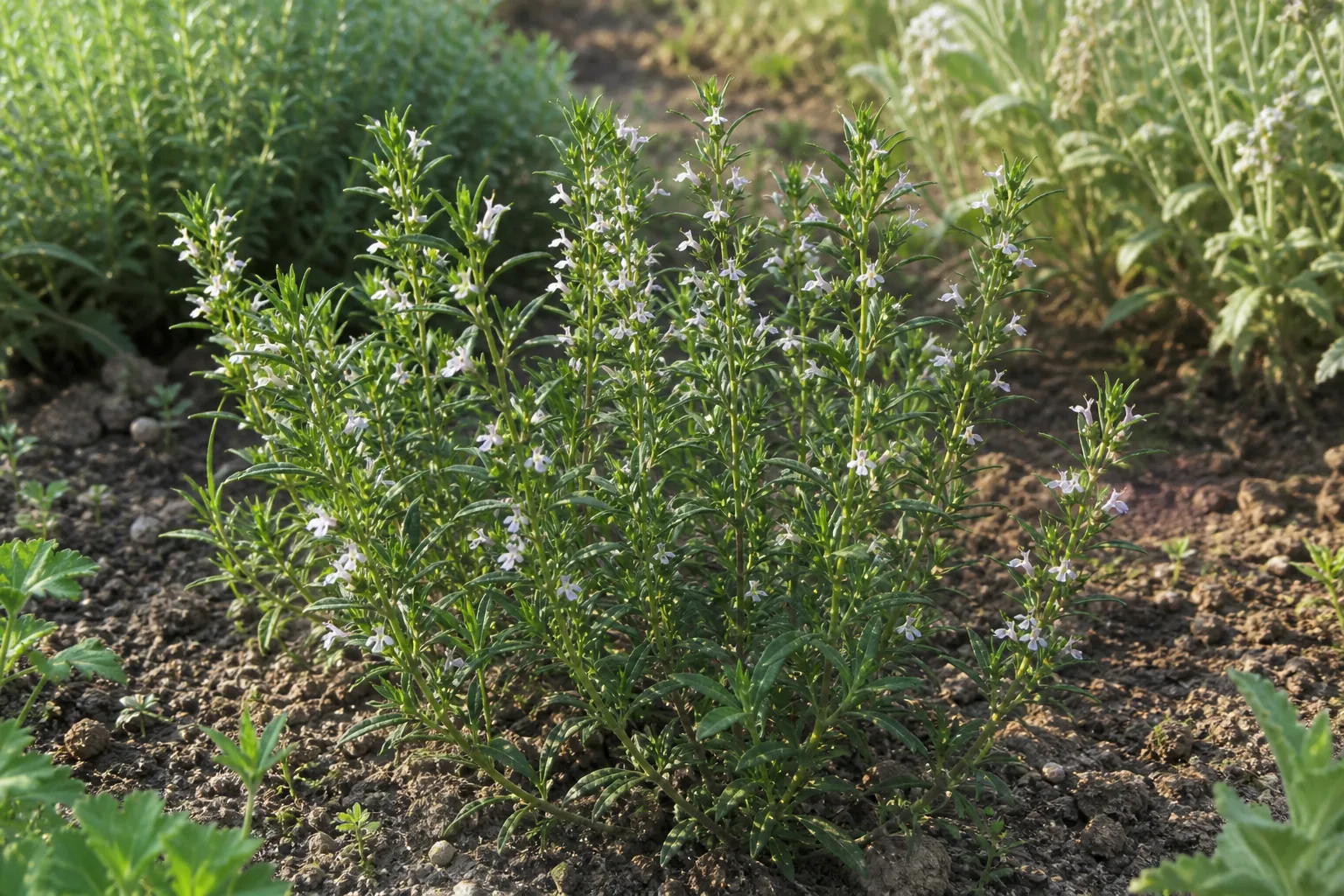
Summer savory (Satureja hortensis) is a fast, bushy annual herb with slender, dark-green leaves and a peppery, thyme-like flavor that is milder than its perennial cousin winter savory. Native to the Mediterranean, it is a classic bean-seasoning herb that grows quickly from seed and flowers with small white or pink blooms that bees love.
 intermediate
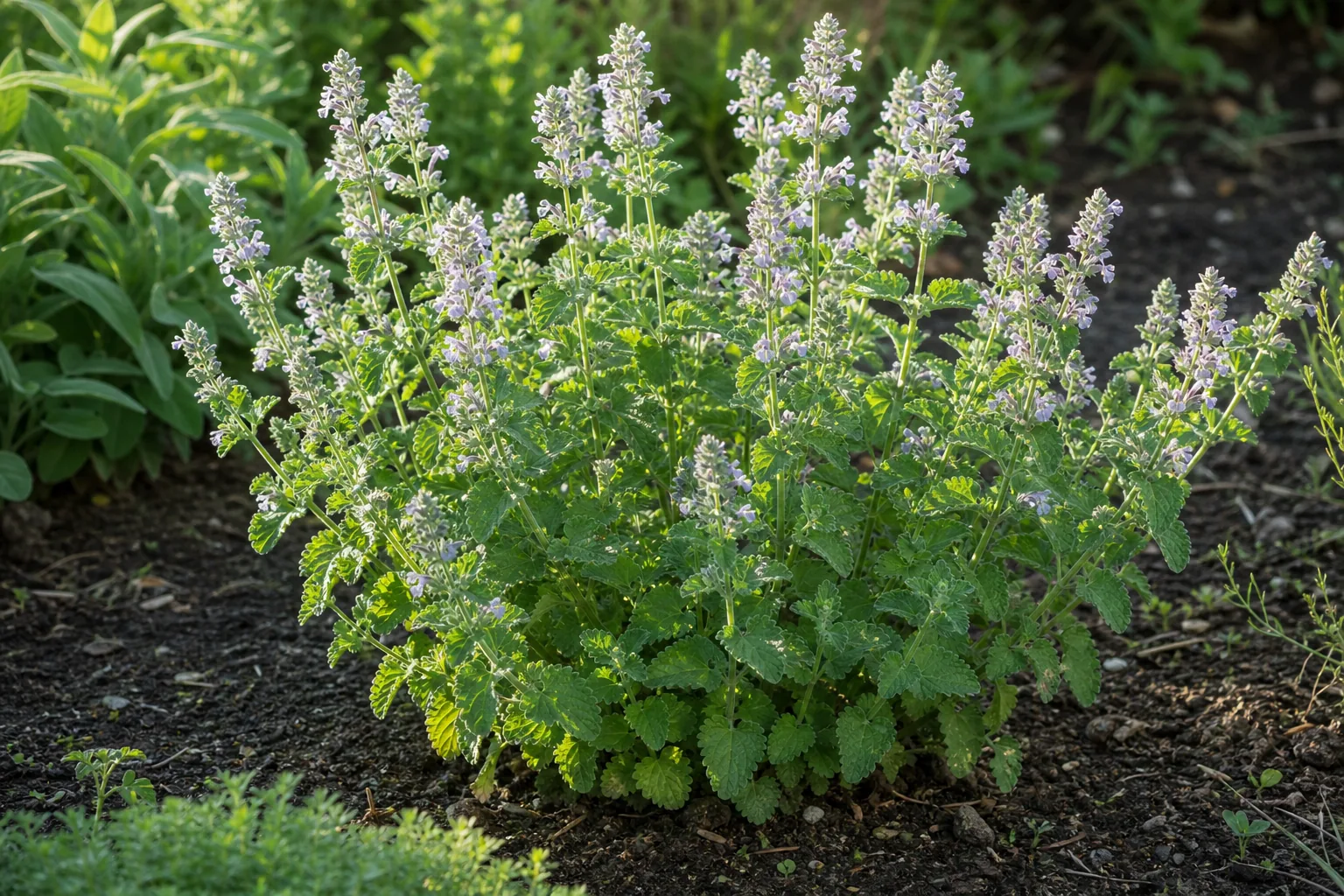
Nepeta cataria
Catnip (Nepeta cataria) is a vigorous, fuzzy-leaved perennial in the mint family grown both for its minty, slightly musky leaves (used in teas) and for the euphoric effect its scent has on many cats. Native to Europe and Asia, it forms spreading clumps, blooms with soft white-lavender spikes, and is a bee and butterfly magnet.
Pinch flowering tips on leafy herbs and harvest in the morning for the best flavor.