Key takeaways
- Give lavender at least 6-8 hours of full sun and gritty, well-drained soil; wet feet cause root rot.
- Water only to establish; established plants are drought tolerant and prefer dry conditions.
- Prune spent flower spikes after blooming and cut back by about a third in spring, never into old wood.
How to care for English lavender
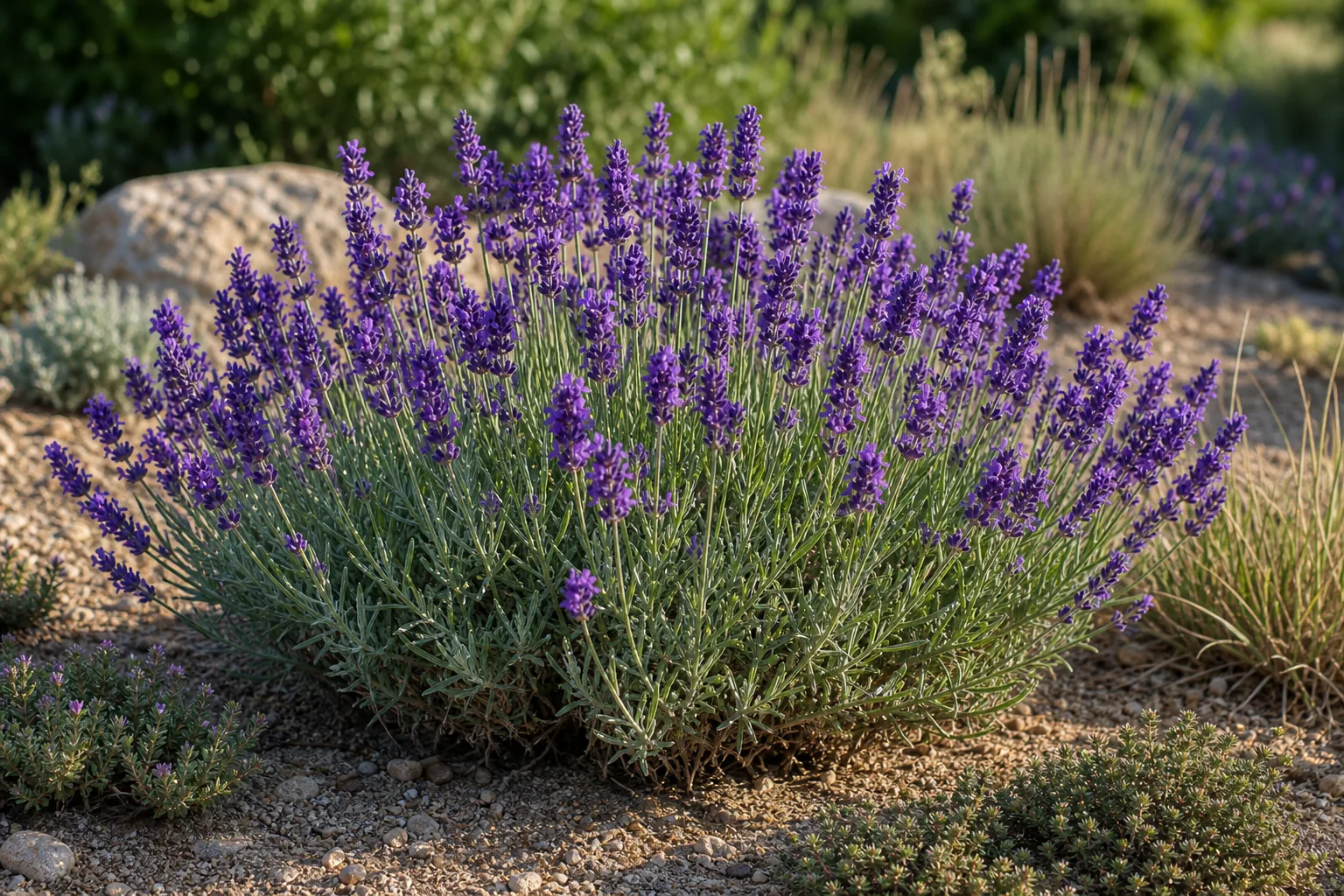
English lavender (Lavandula angustifolia) is a woody, evergreen subshrub that thrives on neglect once established. Plant it in the hottest, sunniest spot you have, in soil that drains freely - gravel, sand, or gritty loam over clay. Set plants at the same depth they grew in the pot, spacing 12-36 inches so air circulates. After the first season, water only during extended drought; overwatering is the most common cause of failure. A light gravel mulch keeps crowns dry better than organic mulch.
Light
Lavender needs full sun - at least 6 to 8 hours of direct light daily - to stay compact and flower heavily. In zones 8-9 some afternoon shade prevents heat stress, but too much shade makes plants leggy and sparse. North-facing or shaded sites produce weak, open growth and few blooms.
Water
Water new plants regularly through the first growing season to build roots, then back off. Established lavender is drought tolerant and prefers the soil to dry between waterings; in most climates rainfall is enough. Aim the water at the base and avoid wetting foliage, which encourages leaf spot in humid summers.
Soil and planting
Lavender wants average to lean, well-drained soil with a neutral to alkaline pH (around 6.5-7.5). Enrich heavy ground with sand, grit, or gravel rather than rich compost, and plant on a low mound if drainage is poor. In containers use a gritty, cactus-style mix and a pot with large drainage holes; repot only when rootbound, refreshing the mix and keeping the crown at the soil line.
Temperature, humidity, and fertilizer
Hardy in USDA zones 5-8 (some cultivars to 9), lavender prefers low humidity and good airflow. High summer humidity raises the risk of fungal leaf spot and root rot, so site for breeze and space for air. Fertilizer is rarely needed; overly rich soil reduces flowering and softens growth. A light top-dressing of compost in spring is enough, or skip feeding entirely.
Pruning and propagation
Shear spent flower spikes after the first bloom to tidy plants and encourage a possible second flush. In early spring, once new growth appears, prune back about a third to shape and remove dead wood - never cut into bare old wood, which may not regrow. Every 3-4 years cut plants to 6-8 inches to renew vigour. Propagate from non-flowering stem cuttings in spring or early summer, or by division of young clumps.
Common problems
Start with the pattern, current soil moisture, and recent changes. One symptom can have several causes, so change the most likely factor first and observe before making another major adjustment.
| Symptom | Check first | First action |
|---|---|---|
| Woody, open center with few flowers | Check plant age and whether you cut into old wood. | Renew by cutting back to 6-8 inches in early spring every 3-4 years; replace plants older than 8-10 years. |
| Yellowing lower leaves and wilting despite moist soil | Check drainage and recent watering; lift a plant to look for black, soft roots. | Improve drainage or move to a mound; water less and avoid wetting foliage. Root rot from overwatering is the main killer. |
| Sparse, leggy growth with few blooms | Check light hours and soil fertility. | Move to full sun and stop fertilizing; lavender flowers best in lean, dry soil. |
| Grey, spotted, or dying foliage in humid weather | Check for leaf spot and stagnant air. | Improve spacing and airflow, avoid overhead watering, and remove affected foliage. |
| Plant collapses or dies over a wet winter | Check crown and root for rot after poor drainage or snow cover. | Site in sharp drainage, use gravel mulch, and provide a sheltered spot with winter protection in cold zones. |
Pet and household safety
English lavender is toxic to dogs, cats, and horses according to the ASPCA. The toxic principles are linalool and linalyl acetate (concentrated in the essential oil); clinical signs include nausea, vomiting, and loss of appetite. Fresh leaves are less hazardous than oils or concentrated extracts, but prevent chewing and contact a veterinarian after substantial ingestion.
Frequently asked questions
How much sun does English lavender need?
At least 6-8 hours of direct sun daily. Full sun keeps plants compact and bloom-heavy; shade makes them leggy and sparse.
How often should I water lavender?
Only to establish the first season. Established plants are drought tolerant and prefer the soil to dry between waterings - most climates need no supplemental irrigation.
What soil suits lavender?
Lean, sharply drained soil with a neutral to alkaline pH. Improve clay with sand or grit and avoid rich, moist sites where roots rot.
When and how do I prune lavender?
Shear spent spikes after flowering and prune back about a third in early spring once new growth shows. Never cut into old bare wood.
Why is my lavender turning yellow and wilting?
Usually overwatering or poor drainage causing root rot. Lift the plant, improve drainage, and water far less.
Is lavender safe for pets?
No - the ASPCA lists lavender as toxic to dogs, cats, and horses (linalool/linalyl acetate). Prevent ingestion, especially of oils or extracts.
Sources and editorial review
This editorial draft is based on the sources below and awaits named horticulture-expert approval before publication.
- Lavandula angustifoliaRoyal Botanic Gardens, Kew (Plants of the World Online) · Checked
- LavenderASPCA · Checked
- Lavandula angustifoliaMissouri Botanical Garden · Checked
- Lavandula angustifoliaNorth Carolina State University Extension · Checked
What works well
- Highly fragrant foliage and flowers that attract bees and other pollinators.
- Drought tolerant and deer resistant once established.
- Useful in borders, low hedges, rock gardens, and as a cut or dried flower.
What to consider
- Demands excellent drainage; rots in clay or wet winter soils.
- Limited winter hardiness in humid or very cold regions without protection.
- Toxic to cats, dogs, and horses if ingested (linalool/linalyl acetate).