Key takeaways
- Sow seed in place in full sun to light shade in average, well-drained soil.
- Keep evenly moist and harvest flowers as they open for tea.
- Toxic to cats and dogs (ASPCA) - keep it out of reach of pets.
How to care for German chamomile
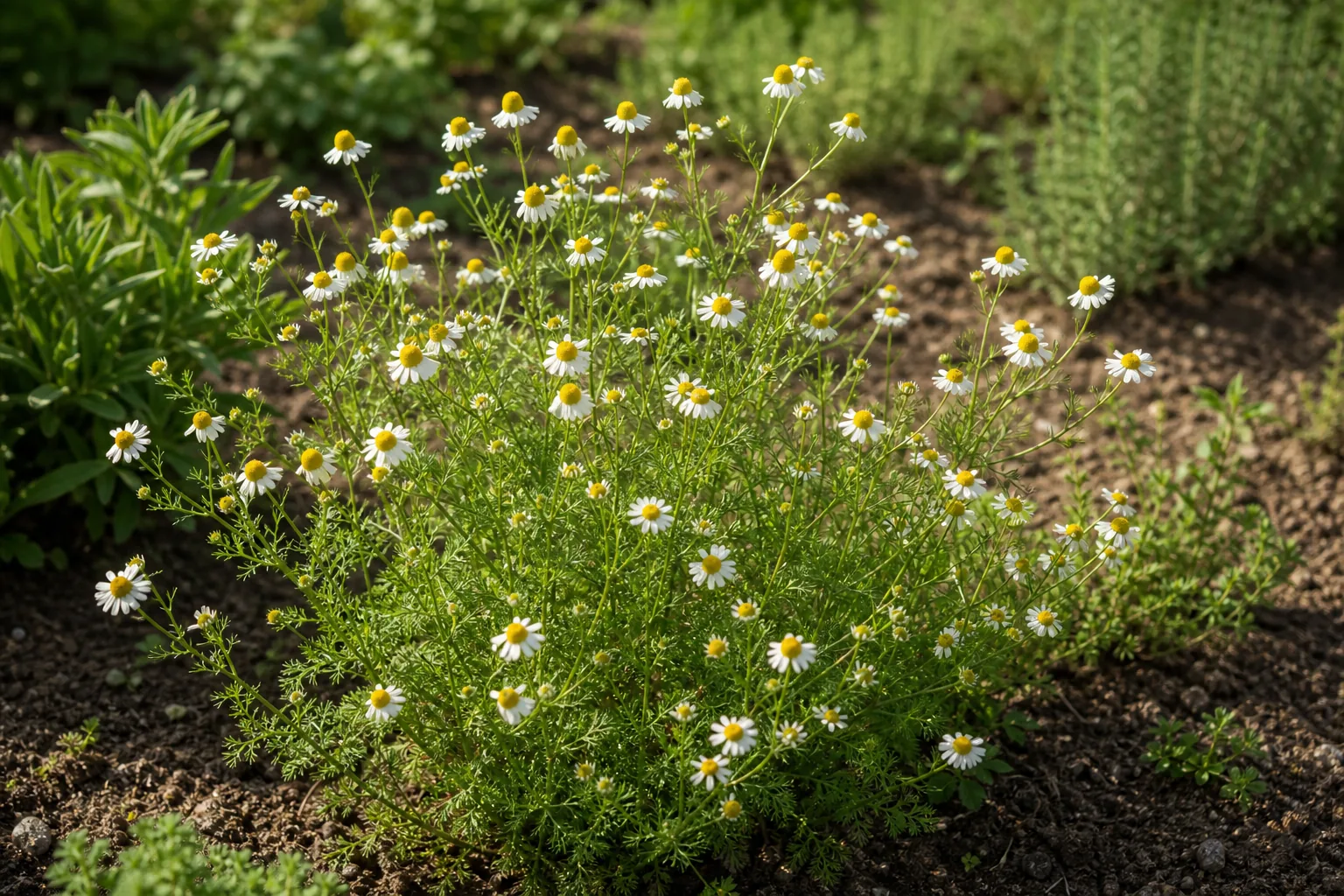
German chamomile (Matricaria chamomilla) is a slender annual that is simplest to grow from seed sown where it will grow. Scatter seed on the surface of prepared, average, well-drained soil in full sun to light shade in spring (it needs light to germinate, so don't bury it), and thin to 6-8 inches apart. Keep the soil evenly moist and the plants will bloom within weeks; snip the flower heads as they open for tea, and let a few go to seed if you want it to return next year. It is unfussy but blooms best with steady moisture and sun.
Light
Chamomile grows in full sun to light shade. In hot climates a little afternoon shade keeps plants from flagging and extends blooming; too much shade makes them leggy and reduces flowers.
Water
Water to keep the soil evenly moist but not soggy; chamomile is not deeply drought tolerant and wilts in dry spells. Water at the base and avoid wetting foliage to limit disease, reducing frequency once plants are established in cool weather.
Soil and planting
Plant in average, light, well-drained soil or a standard potting mix; chamomile is not fussy about fertility and actually flowers better in leaner ground. In containers use a pot at least 6-8 inches deep with drainage; sow directly since seedlings dislike transplanting, and keep the crown at the soil line.
Temperature, humidity, and fertilizer
German chamomile is a cool-season annual that grows and blooms best in spring and fall and languishes in hot, humid summer weather. It tolerates light frost. Feed little to none - too much nitrogen produces soft foliage at the expense of flowers; a scrap of compost at planting is plenty.
Pruning and propagation
No real pruning - just harvest flower heads often to keep production up, and pinch off spent blooms if you want to limit self-sowing. Propagate by surface-sown seed in spring or fall; plants self-sow readily once established.
Common problems
Start with the pattern, current soil moisture, and recent changes. One symptom can have several causes, so change the most likely factor first and observe before making another major adjustment.
| Symptom | Check first | First action |
|---|---|---|
| Plants flop and stop flowering in summer heat | Check heat and soil moisture; chamomile is cool-season. | Sow in cooler weather and keep soil moist; replant for fall bloom. |
| Leggy, sparse plants with few flowers | Check light and soil richness; too much shade or nitrogen. | Move to more sun, ease off fertilizer, and thin for airflow. |
| Seedlings fail to appear after sowing | Check that seed was not buried; it needs light to germinate. | Surface-sow and press in lightly; keep moist until sprouted. |
| Powdery coating on leaves | Check for powdery mildew in humid, crowded growth. | Improve airflow, avoid overhead watering, and remove affected foliage. |
| Self-sows all over the garden | Check that flowers are setting seed. | Harvest heads for tea and remove spent blooms to limit spread. |
Pet and household safety
Chamomile (Anthemis nobilis / Matricaria) is listed as toxic to cats and dogs by the ASPCA, so keep it out of reach of pets. The plant contains sesquiterpene lactones and other compounds that can cause dermatitis, vomiting, diarrhea, and, rarely, anorexia; contact a veterinarian after a concerning exposure.
Frequently asked questions
How much sun does German chamomile need?
Full sun to light shade; more sun means more flowers, with a little afternoon shade helpful in heat.
How do I harvest chamomile for tea?
Snip the flower heads as the white petals lie flat; dry them out of direct sun and store in an airtight jar.
Why won't my chamomile seeds germinate?
They need light to germinate, so surface-sow and press in lightly rather than covering deeply.
Can I grow chamomile in a pot?
Yes - a 6-8 inch deep pot with a lean, well-drained mix works well; sow directly in the container.
Is chamomile a perennial?
German chamomile (Matricaria chamomilla) is an annual that reliably self-sows; Roman chamomile is the perennial type.
Is chamomile safe for pets?
No - the ASPCA lists chamomile as toxic to cats and dogs. Keep it away from pets and call a vet after ingestion.
Sources and editorial review
This editorial draft is based on the sources below and awaits named horticulture-expert approval before publication.
- Matricaria chamomillaRoyal Botanic Gardens, Kew (Plants of the World Online) · Checked
- ChamomileASPCA · Checked
- Matricaria chamomillaNorth Carolina State University Extension · Checked
- Matricaria recutitaMissouri Botanical Garden · Checked
What works well
- Fragrant flowers for a classic, calming herbal tea.
- Easy from seed, self-sows, and draws bees and beneficial insects.
- Compact enough for beds, edges, and containers.
What to consider
- Can self-sow and naturalize more than some gardeners like.
- Needs even moisture; flags in drought and hot, humid spells.
- Toxic to dogs and cats (ASPCA) if eaten.