Key takeaways
- Plant in full sun to part shade in average, moist, well-drained soil.
- Divide clumps every few years in spring or fall to stay productive.
- Toxic to dogs, cats, and horses (ASPCA, Allium) - keep away from pets.
How to care for chives
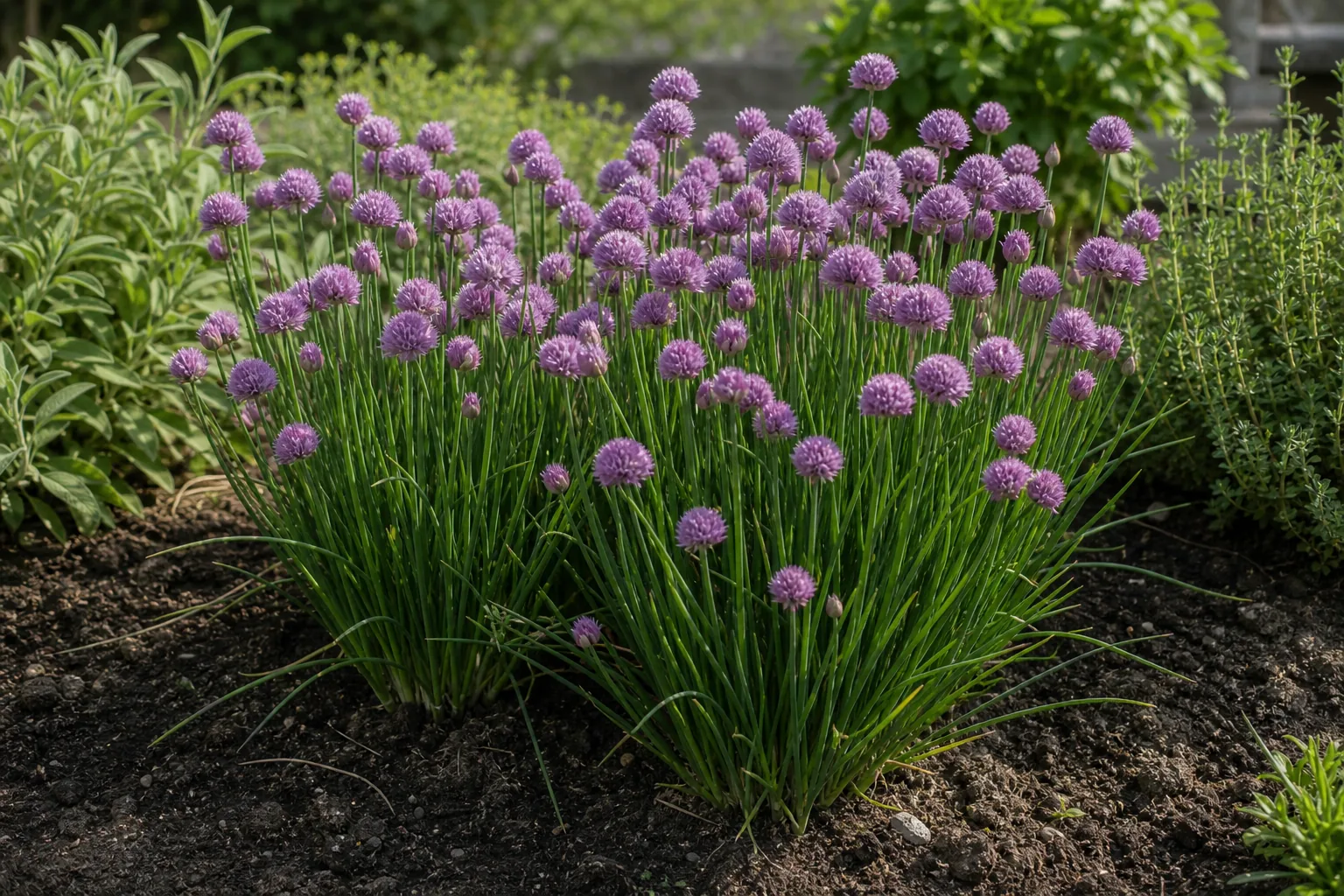
Chives (Allium schoenoprasum) are about as easy as herbs get. Plant bulbs or starts in full sun to part shade in average, moist, well-drained soil, spacing 6-8 inches apart in clumps, and keep the crown at the soil line. Water to keep the soil lightly moist and mulch to conserve moisture; chives are drought tolerant but lusher with steady water. Harvest by clipping leaves at the base, and deadhead spent flower heads if you don't want self-sown seedlings. Divide crowded clumps in spring or fall every few years to keep them vigorous.
Light
Chives grow in full sun to part shade; they produce the most leaves in sun but tolerate light shade, which can help in hot climates. Too much shade reduces yield and makes clumps open.
Water
Water to keep the soil evenly moist but well drained; chives are drought tolerant yet tastier with regular moisture. Avoid soggy ground, which leads to root rot, and water at the base rather than overhead.
Soil and planting
Plant in average, fertile, well-drained garden soil or a standard potting mix; chives are not fussy but need drainage. In containers use a freely draining mix and a pot with drainage holes; divide and repot when the clump fills the container, keeping the crown at the soil line. They also grow well in a kitchen windowsill pot.
Temperature, humidity, and fertilizer
Chives are hardy roughly zones 4-8 and tolerate cold, heat, and dry conditions once established. They are not demanding of fertilizer; a light compost dressing in spring is enough. Good drainage matters more than feeding, and wet, still air invites rot.
Pruning and propagation
Clip leaves at the base to harvest and shear plants back after flowering to renew foliage; deadhead to prevent unwanted self-sowing. Propagate by division in spring or fall or by seed sown in place; divisions establish quickly and keep plants young and productive.
Common problems
Start with the pattern, current soil moisture, and recent changes. One symptom can have several causes, so change the most likely factor first and observe before making another major adjustment.
| Symptom | Check first | First action |
|---|---|---|
| Yellowing, wilting despite moisture | Check for root rot in poorly drained soil. | Improve drainage, reduce watering, and lift and divide affected clumps. |
| Pet weakness or pale gums after eating | Check ingestion - chives are Allium and toxic to pets. | Keep plants away from pets and contact a veterinarian after a concerning exposure. |
| Foliage browns or dies back | Check heat or drought stress. | Water more steadily and provide light shade in hot weather. |
| Too many volunteer seedlings | Check self-sown seed from un-deadheaded flowers. | Deadhead spent blooms to control spread. |
| Crowded, declining clump | Check plant age; chives thin out when crowded. | Divide clumps in spring or fall every few years. |
Pet and household safety
Chives are toxic to cats and dogs if ingested; the ASPCA lists them as toxic because, as an Allium, they can damage red blood cells and cause weakness, vomiting, and anemia. Keep them out of reach of pets and contact a veterinarian after a concerning exposure. The leaves and flowers are edible for people.
Frequently asked questions
How much sun do chives need?
Full sun to part shade. They yield most in sun but tolerate light shade, helpful in hot climates.
How often should I water chives?
Keep the soil evenly moist but well drained. Chives are drought tolerant but lusher with steady moisture.
How do I harvest chives?
Clip leaves at the base as needed; shear plants after flowering to renew foliage. Use the edible lavender flowers as a garnish.
How do I propagate chives?
Divide crowded clumps in spring or fall, or sow seed in place. Divisions establish quickly and keep plants vigorous.
Why are my chives dying back?
Usually heat, drought, or crowding. Water steadily, give light shade in heat, and divide every few years.
Are chives safe for pets?
No - the ASPCA lists chives as toxic to dogs, cats, and horses because, as an Allium, they can cause anemia and vomiting. Keep them away from pets.
Sources and editorial review
This editorial draft is based on the sources below and awaits named horticulture-expert approval before publication.
- Allium schoenoprasumRoyal Botanic Gardens, Kew (Plants of the World Online) · Checked
- ChivesASPCA · Checked
- Allium schoenoprasumNorth Carolina State University Extension · Checked
- Allium schoenoprasumMissouri Botanical Garden · Checked
What works well
- Easy, reliable perennial with edible leaves and pretty edible flowers.
- Deer and drought tolerant and a good edging or container herb.
- Attracts bees and pollinators with its spring blooms.
What to consider
- Toxic to pets (Allium) - causes anemia if eaten in quantity.
- Root rot in poorly drained soil.
- Foliage dies back in heat or drought without adequate moisture.