Key takeaways
- Plant basil after all danger of frost in full sun and warm, moist, well-drained soil.
- Pinch the growing tips and flower buds often to keep plants leafy and bushy.
- Harvest from the top regularly; bring plants indoors or reseed as cold weather ends the season.
How to care for sweet basil
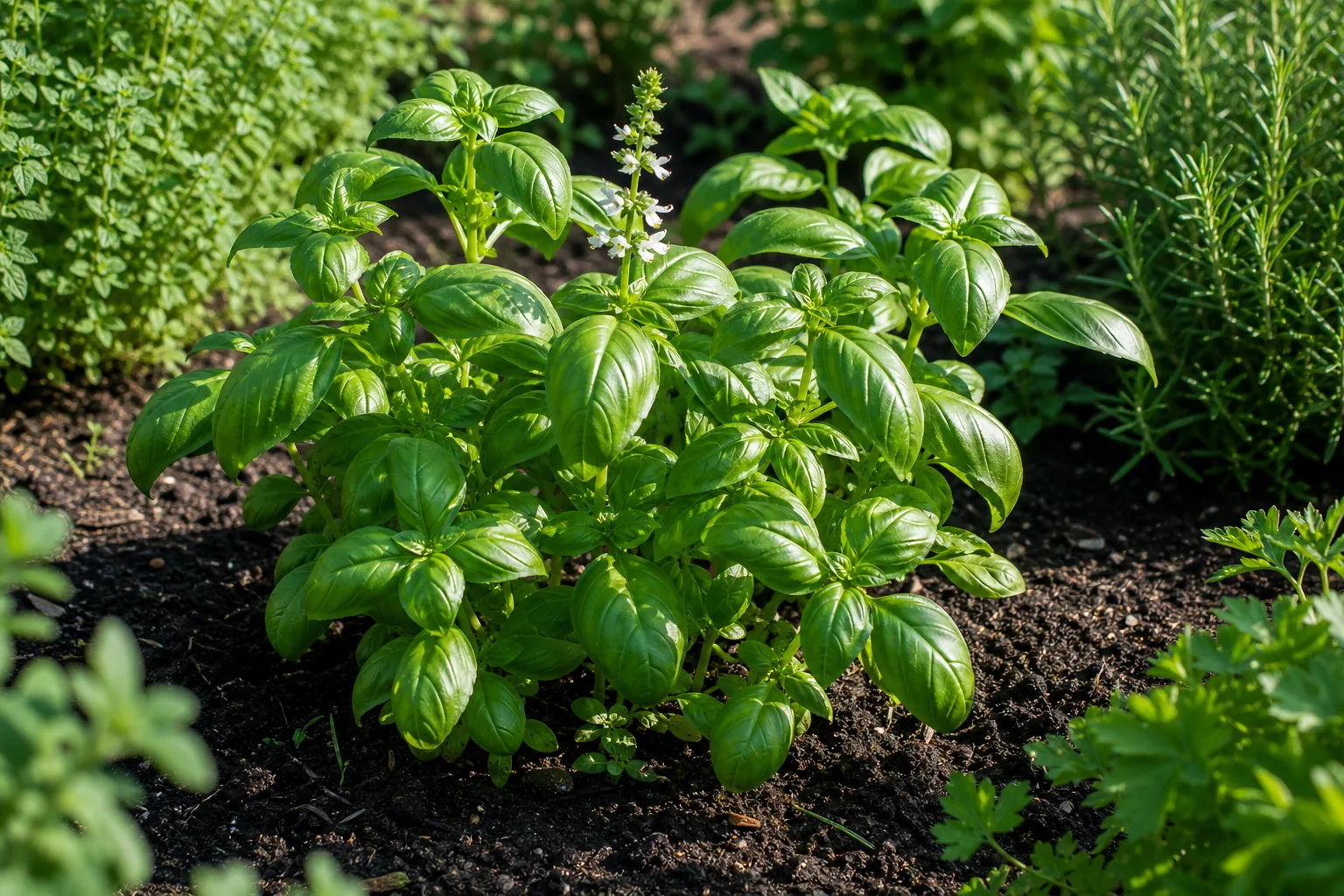
Sweet basil (Ocimum basilicum) is a tender annual that rewards warmth and attention. Start seeds indoors a few weeks before the last frost or set out purchased plants once nights stay mild. Grow it in full sun in moderately rich, evenly moist, well-draining soil, and mulch to hold moisture. The single most important habit is pinching: remove the top pair of leaves and any flower buds as they appear to keep plants compact, leafy, and flavourful rather than going to seed. Harvest often from the top to stimulate branching.
Light
Basil needs full sun - about 6 or more hours of direct light daily - to grow bushy and aromatic. It tolerates a little afternoon shade in the hottest regions but performs poorly in deep shade, becoming leggy and thin. A south or west window or grow light is needed for indoor winter plants.
Water
Keep the soil consistently moist but not waterlogged; basil hates both drought stress and soggy roots. Water at the base in the morning and let the top inch dry slightly between waterings. Containers dry fast in summer and may need daily watering. Avoid overhead watering, which spreads downy mildew.
Soil and planting
Plant basil in fertile, moist, well-drained garden soil or a peat-based potting mix. It is not fussy about pH but dislikes cold, wet ground. In containers use a 1-2 gallon pot with drainage holes; repot or move up a size when roots fill the container, and keep the crown at the soil line. Enrich beds with compost rather than heavy nitrogen fertilizer, which can dull flavour.
Temperature, humidity, and fertilizer
Basil is a tropical herb that wants warm days (70°F+) and nights above about 50°F; it is killed by frost. High humidity raises the risk of downy mildew, so space plants for airflow. Feed lightly - too much nitrogen makes soft, less flavourful growth. A diluted balanced feed every few weeks during active growth is plenty; container plants benefit from slightly more frequent, lighter feeding.
Pruning and propagation
Pinch the central and side tips regularly to force branching and prevent flowering; once a plant flowers it turns bitter and declines. Cut stems just above a leaf pair and harvest whole shoots as needed. Propagate from seed sown every few weeks for a continuous supply, or from 4-6 inch non-flowering stem cuttings rooted in water or moist mix. Replace tired, woody, or diseased plants rather than nursing them.
Common problems
Start with the pattern, current soil moisture, and recent changes. One symptom can have several causes, so change the most likely factor first and observe before making another major adjustment.
| Symptom | Check first | First action |
|---|---|---|
| Leaves turn yellow with wilting in wet soil | Check for root rot or overwatering. | Improve drainage, water less, and avoid soggy containers; let the top soil dry between waterings. |
| White or grey fuzzy growth on leaves (downy mildew) | Check the underside of leaves in humid weather and confirm with a local diagnosis. | Grow resistant varieties, increase airflow, avoid overhead watering, and remove infected plants. Fungicides are not recommended for home gardeners. |
| Plants suddenly wilt and die (Fusarium wilt) | Check for yellowing, brown stem streaks, and collapse from the base. | Remove and destroy affected plants; rotate beds and use disease-free seed or resistant cultivars. |
| Holes or skeletonized leaves | Check for Japanese beetles and aphids. | Hand-pick beetles and spray aphids off with water; avoid broad pesticides that harm pollinators. |
| Leggy, sparse growth with few leaves | Check light and whether flower buds formed. | Move to full sun and pinch tips and buds to renew bushy growth. |
Pet and household safety
Sweet basil is listed as non-toxic to dogs and cats by the ASPCA, so fresh leaves are generally safe around pets. Concentrated basil essential oil is a different matter and can irritate pets, so keep oils away from them. As with any plant, large amounts of leaf material may cause mild stomach upset, and pesticide residues on store-bought bunches should be washed off.
Frequently asked questions
How much sun does sweet basil need?
Full sun - 6 or more hours of direct light daily. It tolerates a little afternoon shade in hot climates but grows poorly in shade.
How often should I water basil?
Keep soil evenly moist; water at the base when the top inch dries. Containers may need daily watering in summer, but never let roots sit soggy.
How do I keep basil from flowering?
Pinch the growing tips and any flower buds as soon as they appear. Regular harvesting from the top also delays blooming and keeps leaves tender.
Why are my basil leaves yellow?
Most often overwatering or poor drainage, but downy mildew and Fusarium wilt also yellow leaves. Check soil moisture first and improve airflow.
When and how do I harvest basil?
Start once plants have several pairs of leaves; snip stems just above a leaf pair and take from the top. Harvest often to encourage branching; bring indoors before frost.
Is basil safe for pets?
Yes - the ASPCA lists sweet basil as non-toxic to dogs and cats. Fresh leaves are fine; keep concentrated essential oils away from pets.
Sources and editorial review
This editorial draft is based on the sources below and awaits named horticulture-expert approval before publication.
- Ocimum basilicumRoyal Botanic Gardens, Kew (Plants of the World Online) · Checked
- BasilASPCA · Checked
- Ocimum basilicumMissouri Botanical Garden · Checked
- Ocimum basilicumNorth Carolina State University Extension · Checked
What works well
- Fragrant, flavourful leaves for fresh cooking, pesto, and teas.
- Non-toxic to dogs and cats (ASPCA).
- Easy from seed or cuttings and a great pollinator-friendly patio plant.
What to consider
- Very frost sensitive; dies at the first cold snap.
- Susceptible to basil downy mildew and Fusarium wilt in humid weather.
- Aphids and Japanese beetles can skeletonize leaves.