Key takeaways
- Plant in full sun in rich, dry-to-medium, well-drained, neutral soil.
- Buy 'Sativa' (French) tarragon; seed-grown types are bland Russian tarragon.
- Toxic to pets (ASPCA) in quantity; divide clumps every 3-4 years.
How to care for French tarragon
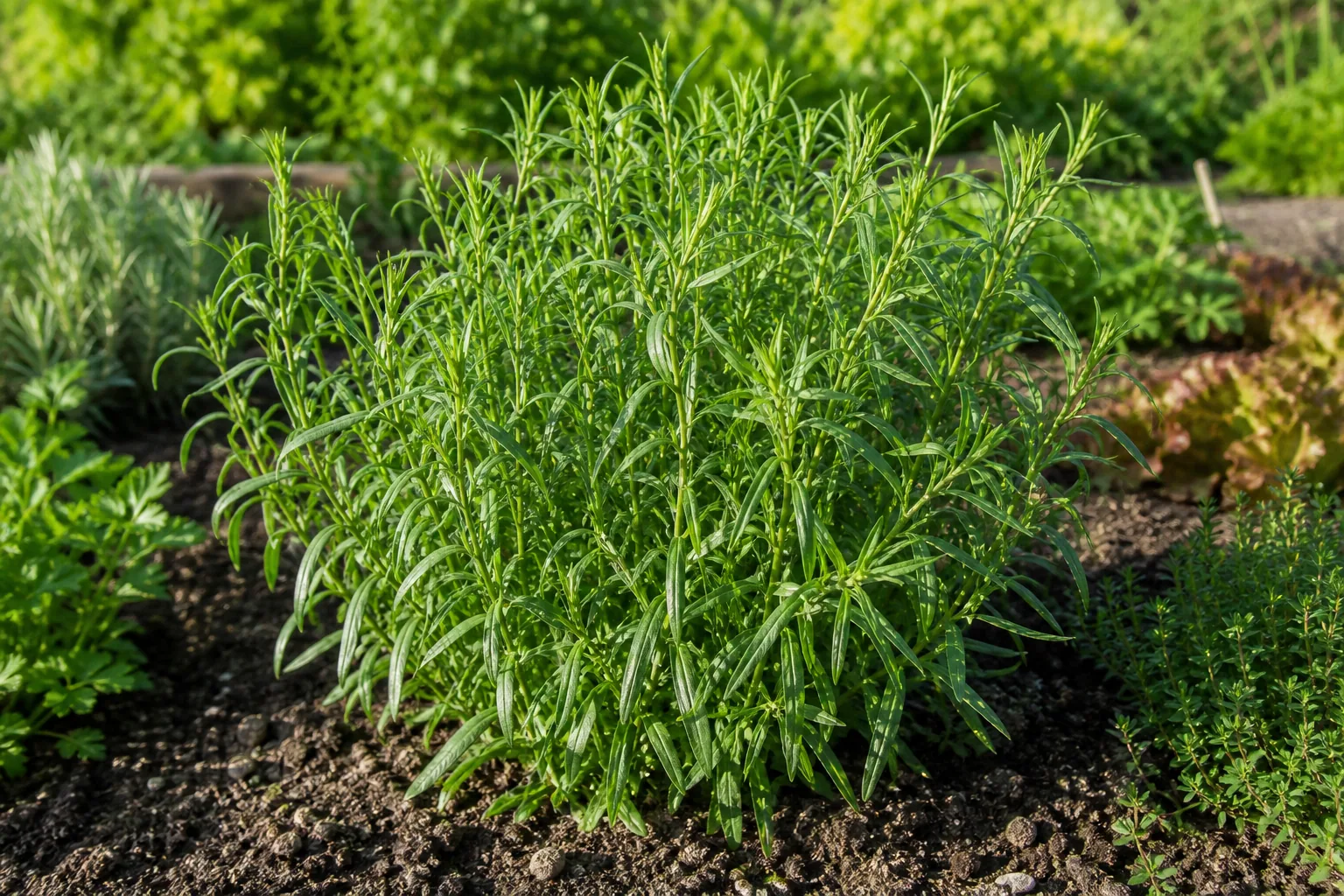
French tarragon (Artemisia dracunculus 'Sativa') is a clump-forming perennial that wants sun, drainage, and restraint. Plant it in full sun in organically rich, dry-to-medium, well-drained, neutral soil, spacing 12-18 inches apart, and keep the crown at the soil line. Water to establish, then let the soil dry between soakings; tarragon hates wet ground and humidity and is prone to root and crown rot. Cut plants to the ground in early spring, remove flower buds to keep foliage coming, and divide clumps every 3-4 years to stay robust. Buy named 'Sativa' plants - seed-grown tarragon is the bland Russian type.
Light
French tarragon needs full sun (6+ hours) for the best flavor and compact growth. It tolerates a little heat but struggles in deep shade, which weakens the plant and reduces its essential oils.
Water
Water moderately at establishment, then keep the soil on the dry side; tarragon is drought tolerant and damaged by wet or humid conditions. Check the root zone and water only when the top inch is dry, and never let pots sit in saucers.
Soil and planting
Plant in organically rich, gritty, well-drained soil with a neutral pH; tarragon is unhappy in heavy, wet ground. In containers use a freely draining mix and a pot with drainage holes; repot or divide when the clump fills out and keep the crown at grade. A year-round mulch helps in cold zones, but keep the crown dry.
Temperature, humidity, and fertilizer
French tarragon is hardy roughly zones 3-7 and likes dry heat but dislikes humid summers and cold, wet winters, which are common causes of decline. It is prone to root rot in moist, poorly drained soil, so prioritize drainage and airflow over feeding. Fertilize lightly; rich soil and nitrogen just soften flavor and invite rot.
Pruning and propagation
Cut plants to the ground in early spring and pinch or deadhead flower buds through summer to renew leafy growth. Propagate by division, root cuttings, or stem cuttings - never seed, since French tarragon is sterile and seed-grown plants are bland Russian tarragon. Divide every 3-4 years to keep clumps vigorous.
Common problems
Start with the pattern, current soil moisture, and recent changes. One symptom can have several causes, so change the most likely factor first and observe before making another major adjustment.
| Symptom | Check first | First action |
|---|---|---|
| Plant declines or dies in summer/winter | Check for root or crown rot in wet, humid, or cold-wet soil. | Improve drainage, reduce watering, and mulch to keep the crown dry. |
| Bland, little flavor | Check the plant is true French ('Sativa'), not seed-grown Russian tarragon. | Buy or propagate from a known 'Sativa' clone; seed types are inferior. |
| Leggy, open growth | Check light and flowering; tarragon flags without sun or when bolting. | Grow in full sun, pinch flower buds, and divide to renew vigor. |
| Wilting in wet soil | Check drainage and root rot. | Move to gritty, well-drained soil and water less. |
| Pet vomiting after chewing | Check ingestion; ASPCA lists tarragon as toxic in quantity. | Keep plants out of pet reach and contact a veterinarian after a concerning exposure. |
Pet and household safety
French tarragon is toxic to cats and dogs if ingested in quantity; the ASPCA lists tarragon (Artemisia dracunculus) as toxic because its essential oils can cause mild vomiting and diarrhea. Keep it out of reach of pets and contact a veterinarian after a concerning exposure. Small culinary amounts are generally considered safe for people.
Frequently asked questions
How much sun does French tarragon need?
Full sun (6+ hours) for the best anise-like flavor and compact growth.
How often should I water tarragon?
Sparingly once established; let the soil dry between soakings. Tarragon is drought tolerant and rots in wet or humid soil.
Can I grow tarragon from seed?
No - true French tarragon ('Sativa') is sterile; only seed-grown Russian tarragon grows from seed, and it is bland. Buy or divide a named clone.
Why did my tarragon die over winter?
Usually cold, wet soil and crown rot. Improve drainage, mulch to keep the crown dry, and divide every few years.
How do I propagate French tarragon?
By division, root cuttings, or stem cuttings in spring; never seed. Divide clumps every 3-4 years to stay vigorous.
Is tarragon safe for pets?
No - the ASPCA lists tarragon as toxic to dogs, cats, and horses in quantity because the essential oils can cause mild vomiting and diarrhea. Keep it away from pets.
Sources and editorial review
This editorial draft is based on the sources below and awaits named horticulture-expert approval before publication.
- Artemisia dracunculusRoyal Botanic Gardens, Kew (Plants of the World Online) · Checked
- TarragonASPCA · Checked
- Artemisia dracunculusNorth Carolina State University Extension · Checked
- Artemisia dracunculusMissouri Botanical Garden · Checked
What works well
- Distinctive anise-like culinary flavor unmatched by other herbs.
- Drought tolerant and deer and rabbit resistant once established.
- Attractive fine-textured foliage for herb gardens and containers.
What to consider
- Sterile; must be propagated by division or cuttings, never seed.
- Declines in wet, humid summers or cold, wet winters (root rot).
- Toxic to dogs, cats, and horses (ASPCA) in quantity.