Key takeaways
- Plant in full sun in average, dry-to-medium, well-drained soil.
- Shear before flowering for the best leaf flavor and to keep plants tidy.
- Drought and heat tolerant; the ASPCA lists oregano as toxic to pets in quantity.
How to care for Greek oregano
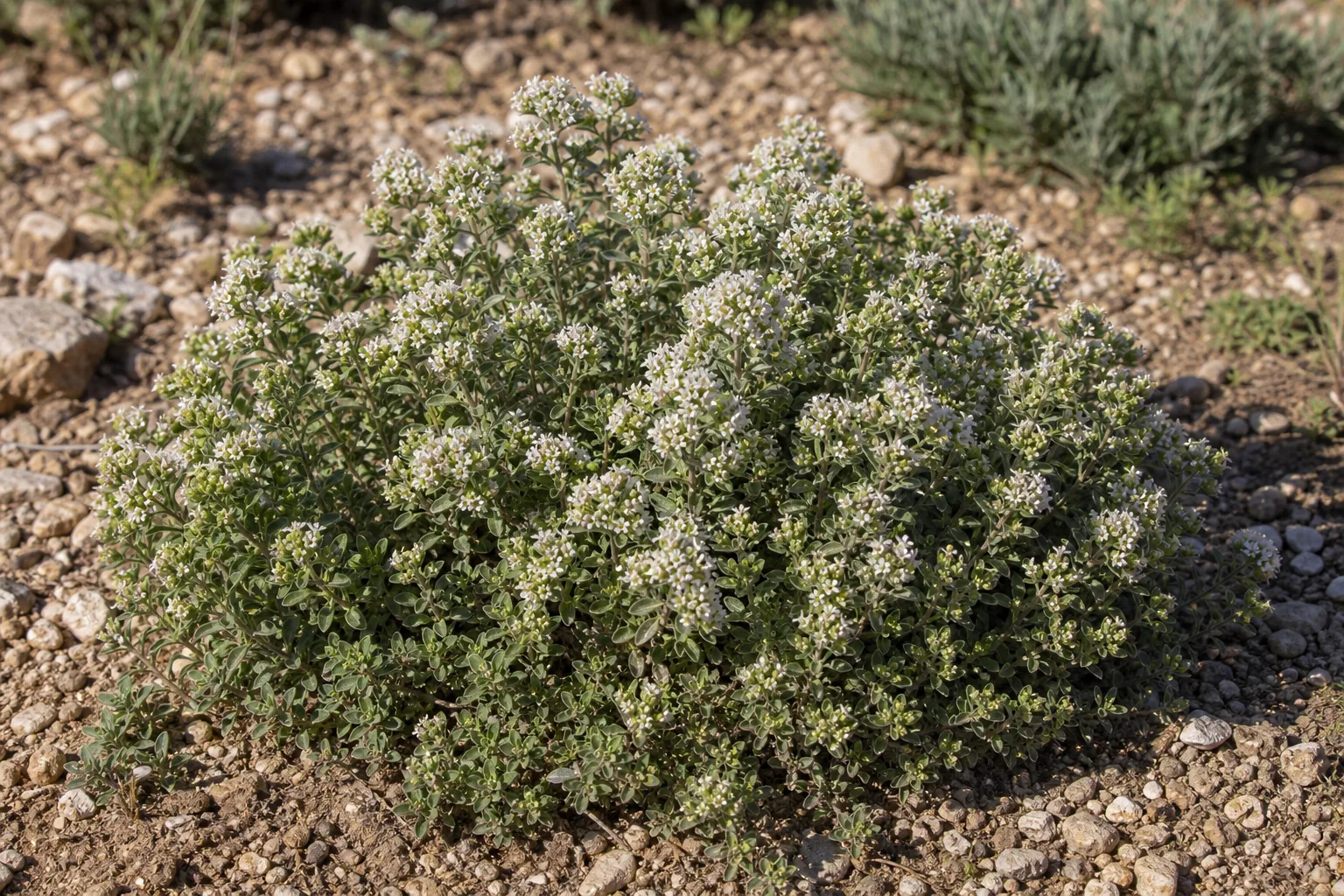
Greek oregano (Origanum vulgare, the hirtum form) is a low-fuss perennial that thrives on a little neglect. Plant it in full sun in average, dry-to-medium, well-drained soil, spacing 12-18 inches so air moves between the clumps, and keep the crown at the soil line. Water to establish, then let the top of the soil dry between soakings; oregano tolerates heat and drought and dislikes rich, wet ground. Shear plants back regularly before flowering to keep them tidy and push tender new leaves, and harvest leaves any time, with flavor peaking just before bloom.
Light
Oregano wants full sun (6+ hours) for the strongest flavor and compact habit. Golden or variegated leaf forms appreciate a little shade at the hottest part of the day, but too much shade makes plants leggy and weak.
Water
Water moderately at establishment, then keep the soil on the dry side; oregano is drought tolerant and rots in wet soil. Check the root zone rather than a calendar, and avoid overhead watering that wets the foliage in humid weather.
Soil and planting
Plant in average, sandy or gritty, well-drained soil with a neutral to slightly alkaline pH; oregano does best in lean ground and hates heavy, wet soil. In containers use a gritty, freely draining mix and a pot with drainage holes; repot or divide when the clump outgrows its pot and keep the crown at grade.
Temperature, humidity, and fertilizer
Greek oregano is hardy roughly zones 4-8 and handles heat and drought well once established. It is not fussy about humidity but is prone to fungal disease in still, wet air, so space for airflow. Feed lightly - compost at planting is enough, as rich nitrogen reduces the essential oils that give flavor. Good drainage beats fertilizer.
Pruning and propagation
Shear before flowering to renew leaves and keep plants from getting woody and open, and clip harvest leaves as needed. Propagate by division, stem cuttings, or layering from a known-flavor clone; seed-grown plants are often bland, so most cooks propagate from cuttings of a plant with proven aroma.
Common problems
Start with the pattern, current soil moisture, and recent changes. One symptom can have several causes, so change the most likely factor first and observe before making another major adjustment.
| Symptom | Check first | First action |
|---|---|---|
| Plants rot or collapse in wet soil | Check drainage; root rot in heavy, wet ground. | Improve drainage, reduce watering, and move to a drier, grittier site. |
| Bland or little flavor | Check that it is a true culinary clone, not seed-grown. | Propagate from cuttings of a flavored plant; seed strains are often weak. |
| White, cottony patches on leaves | Check for powdery mildew in humid weather. | Improve airflow and avoid wetting foliage; remove affected growth. |
| Stippled, webbed, or curled leaves | Check for spider mites, aphids, or leaf miners. | Rinse foliage and use cultural controls first; avoid broad pesticides. |
| Pet vomiting after chewing | Check ingestion; ASPCA lists oregano as toxic in quantity. | Keep plants out of pet reach and contact a veterinarian after a concerning exposure. |
Pet and household safety
Greek oregano is toxic to cats and dogs if ingested in quantity; the ASPCA lists oregano (Origanum vulgare hirtum) as toxic because gastrointestinal irritants can cause mild vomiting and diarrhea. Keep it out of reach of pets and contact a veterinarian after a concerning exposure.
Frequently asked questions
How much sun does Greek oregano need?
Full sun (6+ hours) for the strongest flavor. Variegated forms tolerate a little afternoon shade.
How often should I water oregano?
Sparingly once established; let the top soil dry between soakings. Oregano is drought tolerant and rots in wet soil.
Why does my oregano have no flavor?
Seed-grown plants are often bland. Propagate from cuttings of a known-flavor clone for true Greek oregano taste.
How do I harvest oregano?
Clip leaves as needed; flavor peaks just before flowering. Shear plants back before bloom to keep them productive and tidy.
What soil does oregano like?
Average, gritty, well-drained soil with a neutral to slightly alkaline pH. Lean ground gives the best flavor; avoid rich, wet soil.
Is oregano safe for pets?
No - the ASPCA lists oregano as toxic to dogs, cats, and horses in quantity, causing mild vomiting and diarrhea. Keep it away from pets.
Sources and editorial review
This editorial draft is based on the sources below and awaits named horticulture-expert approval before publication.
- Origanum vulgareRoyal Botanic Gardens, Kew (Plants of the World Online) · Checked
- OreganoASPCA · Checked
- Origanum vulgareNorth Carolina State University Extension · Checked
- Origanum vulgareMissouri Botanical Garden · Checked
What works well
- Strong, true culinary flavor prized in tomato sauces and Mediterranean dishes.
- Very drought and heat tolerant once established; low maintenance.
- Flowers attract a tremendous number of bees and butterflies.
What to consider
- Root rot in wet, poorly drained soil.
- Seed-grown plants can be bland; use cuttings from flavored clones.
- Toxic to dogs, cats, and horses (ASPCA) in quantity.