Key takeaways
- Plant in full sun in rich, moist, well-drained soil; it loves warmth and water.
- Overwinter clumps indoors (or as a pot) where temperatures drop below freezing.
- Toxic to cats and dogs (ASPCA) - keep it out of reach of pets.
How to care for lemongrass
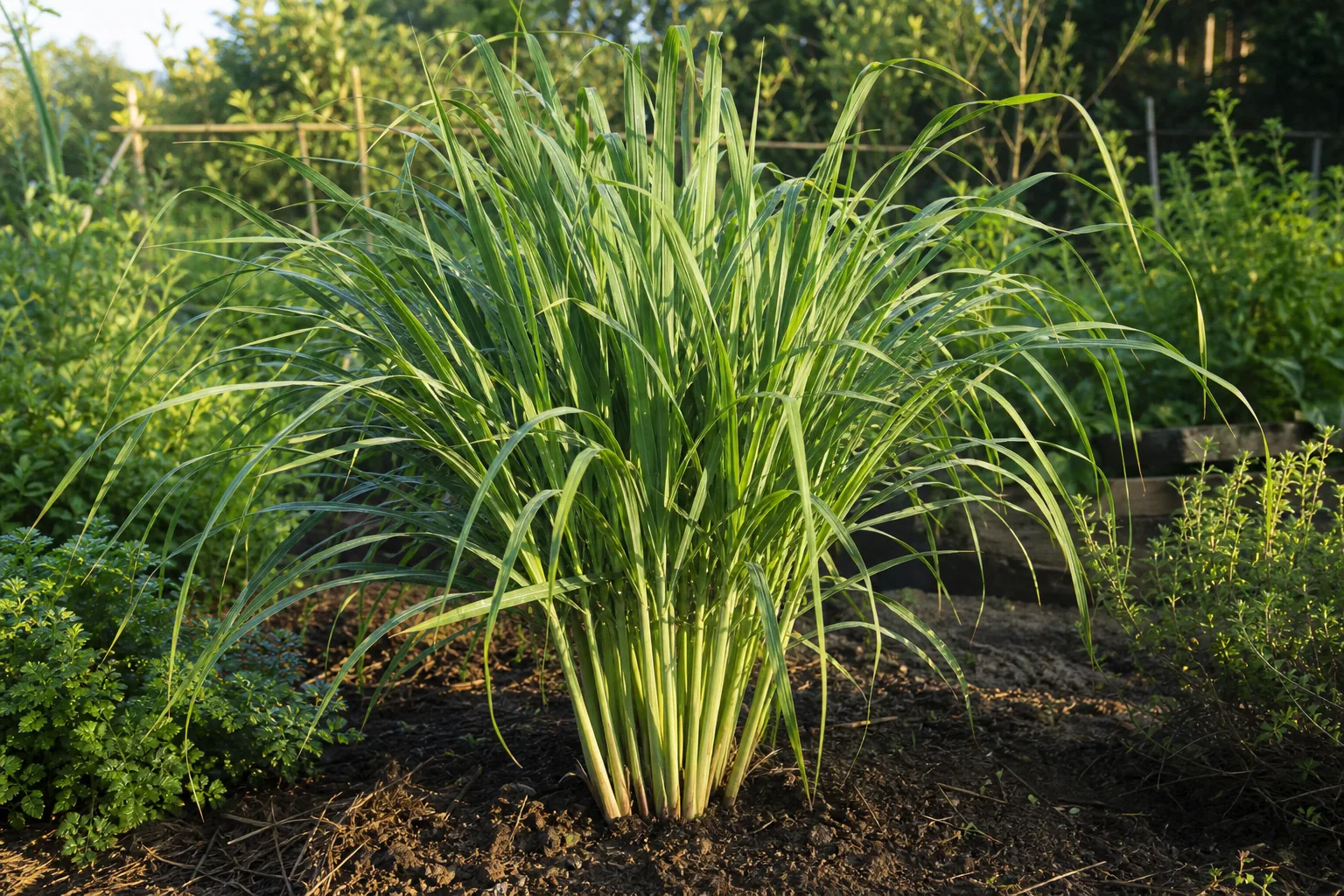
Lemongrass (Cymbopogon citratus) is a heat-loving tropical grass that grows fastest when warm, sunny, and well watered. Set out vigorous nursery clumps or rooted divisions after the last frost in full sun, spacing 18-24 inches apart in rich, moist, well-drained soil. Water generously and feed through the summer, and mound a little soil around the base as clumps broaden. Where it freezes, lift a clump in fall, pot it, and keep it in a bright, cool-but-frost-free spot to regrow next year, or grow it year-round in a large container.
Light
Lemongrass needs full sun (6+ hours, and more is better) to build thick, flavorful stalks. It gets thin and weak in shade, so give it the sunniest spot.
Water
Water generously and keep the soil consistently moist but well drained; lemongrass is thirsty and sulks in dry soil, which thins the stalks. In containers it may need daily watering in summer; reduce watering in winter when growth slows.
Soil and planting
Plant in rich, fertile, well-drained soil or a loam-based potting mix with a neutral pH; lemongrass is a heavy feeder and appreciate compost. In containers use a roomy pot (at least 5 gallons) with drainage holes; divide and repot clumps every spring, keeping the crown at the soil line.
Temperature, humidity, and fertilizer
Lemongrass is a tropical perennial hardy only in zones 10-11 and is damaged by frost; it grows best in hot, humid weather above 70°F. Feed monthly in summer with a balanced liquid feed or compost, as steady nutrition produces fat stalks. Good drainage and warmth matter more than anything.
Pruning and propagation
Trim brown leaf tips and cut whole outer stalks at the base for harvest as needed. Propagate by dividing established clumps in spring - simply tease apart rooted sections and replant; seed is rarely used because most plants are sterile clones.
Common problems
Start with the pattern, current soil moisture, and recent changes. One symptom can have several causes, so change the most likely factor first and observe before making another major adjustment.
| Symptom | Check first | First action |
|---|---|---|
| Thin, weak stalks and pale leaves | Check sun, feeding, and water; lemongrass wants heat and food. | Move to full sun, feed monthly, and water generously through summer. |
| Plants blacken and die after a cold snap | Check for frost damage; lemongrass is tender. | Grow as an annual or overwinter clumps indoors; protect in-ground plants. |
| Brown leaf tips despite watering | Check humidity and salt buildup in containers. | Raise humidity, flush the pot with water, and ease off liquid feed. |
| Clump outgrows its pot or bed | Check age; lemongrass spreads into a big clump. | Divide in spring and replant the healthiest sections. |
| Rusty or streaked leaves | Check for rust or fungal leaf spots in humidity. | Improve airflow, avoid wetting foliage, and remove affected leaves. |
Pet and household safety
Lemongrass (Cymbopogon citratus) is listed as toxic to cats and dogs by the ASPCA, so keep it out of reach of pets. The plant contains essential oils (including citral) that can cause stomach upset and skin irritation; contact a veterinarian after a concerning exposure.
Frequently asked questions
How much sun does lemongrass need?
Full sun (6+ hours, more is better). It gets thin and weak in shade.
Is lemongrass frost hardy?
No - it is tender and only perennial in zones 10-11; elsewhere grow it as an annual or overwinter clumps indoors.
How often should I water lemongrass?
Generously - keep the soil consistently moist; it is thirsty and needs daily water in containers in summer.
Can I grow lemongrass in a pot?
Yes - a 5-gallon or larger pot with drainage is ideal and makes overwintering indoors easy.
How do I harvest lemongrass?
Cut whole outer stalks at the base once they are at least a pencil thick; use the lower, pale portion.
Is lemongrass safe for pets?
No - the ASPCA lists lemongrass as toxic to cats and dogs. Keep it away from pets and call a vet after ingestion.
Sources and editorial review
This editorial draft is based on the sources below and awaits named horticulture-expert approval before publication.
- Cymbopogon citratusRoyal Botanic Gardens, Kew (Plants of the World Online) · Checked
- Lemon GrassASPCA · Checked
- Cymbopogon citratusNorth Carolina State University Extension · Checked
- Cymbopogon citratusMissouri Botanical Garden · Checked
What works well
- Intensely fragrant stalks for cooking, tea, and aromatherapy.
- Fast-growing, architectural grass that fills a pot or bed.
- Repels some insects and is easy to divide and multiply.
What to consider
- Tender - dies in frost and only perennial in warm zones (10-11).
- Needs lots of heat, sun, and water to crop well.
- Toxic to dogs and cats (ASPCA) if eaten.