Key takeaways
- Plant in full sun in dry-to-medium, well-drained soil; sage hates wet feet.
- Prune in spring and through the season to stay compact and flavorful.
- Non-toxic to dogs, cats, and horses (ASPCA) and very drought tolerant.
How to care for common sage
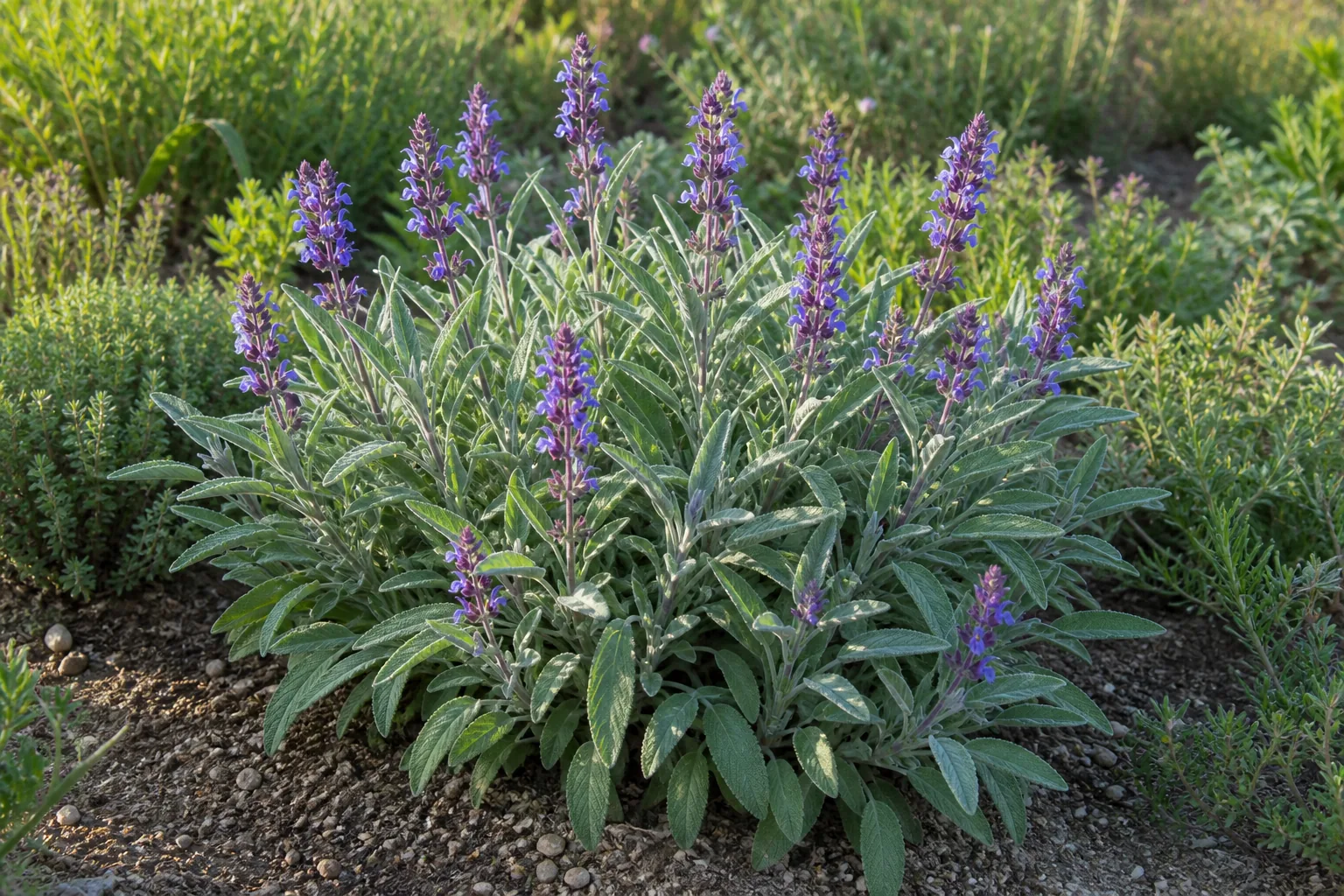
Common sage (Salvia officinalis) is a hardy, semi-woody perennial that wants sun and sharp drainage above all. Plant it in full sun in average, dry-to-medium, well-drained soil, spacing 18-24 inches apart, and keep the crown at the soil line. Water to establish, then let the soil dry between soakings; sage is drought tolerant and rots in wet ground. Prune in spring and through the season to keep plants from becoming leggy and to curb flowering when grown for leaves, but do not cut into old woody stems, which seldom regrow. Harvest leaves in spring and summer and go lightly the first year.
Light
Sage needs full sun (6+ hours) for the best flavor and compact habit; it tolerates very light shade but sprawls and loses vigor without enough light. The sunniest, driest spot suits it best.
Water
Water moderately at establishment, then keep the soil on the dry side; sage is drought tolerant and damaged by wet soil. Check the root zone and water only when the top inch is dry, never letting pots sit in saucers.
Soil and planting
Plant in average, sandy or rocky, well-drained soil with a neutral pH; sage is at home in lean, gritty ground and intolerant of wet, heavy soil. In containers use a freely draining mix and a pot with drainage holes; repot or divide when the clump fills out and keep the crown at grade. Avoid rich, moisture-retentive mixes.
Temperature, humidity, and fertilizer
Common sage is hardy roughly zones 4-8 and thrives in heat and dry air once established. It is prone to root rot, powdery mildew, and verticillium wilt in humid, wet, or poorly drained conditions, so space for airflow. Feed lightly - compost at planting is enough, as rich nitrogen reduces flavor and encourages soft, disease-prone growth.
Pruning and propagation
Prune in spring and through the season to remove leggy, woody growth and keep plants bushy and productive; harvest sprigs as needed but avoid cutting into old wood. Propagate by stem cuttings or layering; seed works but named culinary forms are best kept true from cuttings.
Common problems
Start with the pattern, current soil moisture, and recent changes. One symptom can have several causes, so change the most likely factor first and observe before making another major adjustment.
| Symptom | Check first | First action |
|---|---|---|
| Plants wilt and rot at the base | Check for root rot from wet or poorly drained soil. | Improve drainage, water less, and move to a gritty, drier site. |
| White powdery coating on leaves | Check for powdery mildew in humid weather. | Improve airflow, avoid overhead watering, and remove affected growth. |
| Plants decline, wilt, and die (verticillium) | Check for verticillium wilt and confirm with local diagnosis. | Remove and destroy affected plants; rotate and avoid replanting sage in the same spot. |
| Sap-sucking insects on leaves | Check for spider mites, leafhoppers, or spittlebugs. | Rinse foliage and use cultural controls first; avoid broad pesticides. |
| Woody, sparse, low-flavor growth | Check age and pruning; sage gets leggy with time. | Prune regularly, do not cut old wood, and replace tired clumps. |
Pet and household safety
Common sage is listed as non-toxic to dogs, cats, and horses by the ASPCA, so the leaves are generally safe around pets. As with any plant, large amounts of foliage may cause mild stomach upset, and pesticide residues on store-bought bunches should be washed off before use.
Frequently asked questions
How much sun does sage need?
Full sun (6+ hours). It tolerates very light shade but sprawls and loses flavor without enough light.
How often should I water sage?
Sparingly once established; let the soil dry between soakings. Sage is drought tolerant and rots in wet soil.
How do I prune sage?
Prune in spring and through the season to keep it compact and leafy, but avoid cutting into old woody stems, which seldom regrow.
What soil does sage like?
Average, sandy or rocky, well-drained soil with a neutral pH. Lean, gritty ground gives the best flavor; avoid wet, heavy soil.
How do I propagate sage?
Use stem cuttings or layering; seed works but culinary forms are best kept true from cuttings.
Is sage safe for pets?
Yes - the ASPCA lists common sage as non-toxic to dogs, cats, and horses. Large amounts of leaf may still upset a pet's stomach.
Sources and editorial review
This editorial draft is based on the sources below and awaits named horticulture-expert approval before publication.
- Salvia officinalisRoyal Botanic Gardens, Kew (Plants of the World Online) · Checked
- SageASPCA · Checked
- Salvia officinalisNorth Carolina State University Extension · Checked
- Salvia officinalisMissouri Botanical Garden · Checked
What works well
- Velvety, intensely aromatic leaves with many culinary uses.
- Drought, deer, and rabbit tolerant; attractive to bees and butterflies.
- Non-toxic to pets (ASPCA) and works in borders, rock gardens, and pots.
What to consider
- Root rot, powdery mildew, and verticillium wilt in wet or poor-airflow sites.
- Woody and less productive with age; benefits from regular pruning.
- Ornamental cultivars may have little culinary flavor.