Key takeaways
- Plant in full sun in average, well-drained soil; it is drought tolerant once set.
- Cut back after flowering to keep it tidy and encourage fresh growth.
- ASPCA lists it as toxic to cats (not dogs) - watch cats that overindulge.
How to care for catnip
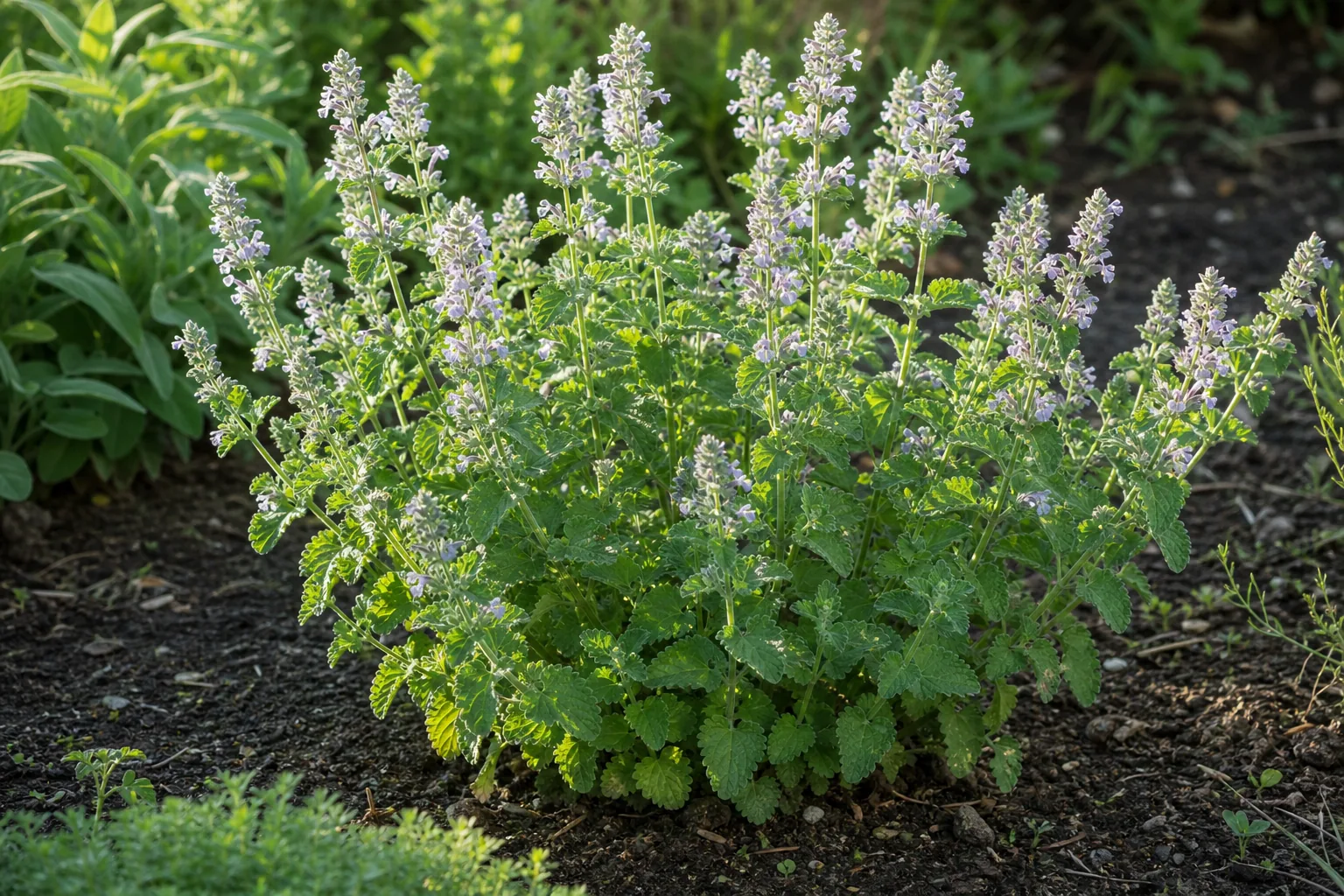
Catnip (Nepeta cataria) is a robust mint-family perennial that thrives on a bit of sun and decent drainage. Set plants out in spring in full sun, spacing 18-24 inches apart because the clumps spread, in average, well-drained soil. Water to establish, then only in real drought - it is drought tolerant and resents wet feet. Shear plants back by a third after the first flush of flowers to keep them compact and prompt a second bloom, and divide clumps every 2-3 years in spring. If cats are a problem, grow it in a protected pot or cage until it is established.
Light
Catnip grows best in full sun (6+ hours) and stays most compact and fragrant there. It tolerates light part shade, especially in hot climates, but too much shade makes it leggy.
Water
Water to establish a deep root system, then sparingly; catnip is drought tolerant and wilts or rots in constantly wet soil. Water at the base and let the soil dry between waterings; reduce further once established.
Soil and planting
Plant in average, well-drained garden soil or a standard potting mix with a neutral pH; catnip is not picky but hates heavy, soggy clay. In containers use a pot at least 1 gallon with drainage holes; divide and repot every couple of years in spring, keeping the crown at the soil line.
Temperature, humidity, and fertilizer
Catnip is a hardy perennial in roughly zones 3-9 that grows best in mild weather and tolerates heat and light frost. It dislikes high humidity and wet cold. Feed little - a light compost top-dressing is enough, as rich nitrogen just softens flavor and encourages floppy growth.
Pruning and propagation
Shear plants back after flowering to keep them tidy and encourage fresh foliage, and remove spent spikes if you want to limit self-sowing. Propagate by division in spring or fall, from softwood cuttings, or by seed (surface-sown, light to germinate); plants self-sow freely if allowed to bloom.
Common problems
Start with the pattern, current soil moisture, and recent changes. One symptom can have several causes, so change the most likely factor first and observe before making another major adjustment.
| Symptom | Check first | First action |
|---|---|---|
| Plants smashed or chewed flat by cats | Check cat activity; cats love to roll on catnip. | Protect young plants with a cage or grow in a hanging/potted spot until established. |
| Spreads aggressively and self-sows everywhere | Check that flower heads are setting seed. | Grow in a container or remove blooms before seed forms to limit spread. |
| Leggy, weak growth with few leaves | Check light and feeding; too much shade or nitrogen. | Move to full sun and ease off fertilizer; shear to encourage bushiness. |
| Yellow leaves in wet soil | Check for overwatering and poor drainage. | Water less and improve drainage; catnip hates wet feet. |
| Powdery mildew on foliage in humidity | Check for powdery mildew in humid, crowded growth. | Improve airflow, avoid overhead watering, and remove affected leaves. |
Pet and household safety
Catnip (Nepeta cataria) is listed as toxic to cats by the ASPCA (it is not listed as toxic to dogs). While the well-known response is behavioral rather than poisonous, eating large amounts of the plant can cause vomiting, diarrhea, and lethargy in cats; keep an eye on cats that overindulge and contact a veterinarian after a concerning exposure. Dogs are generally not affected, but as with any plant, large amounts may cause mild upset.
Frequently asked questions
How much sun does catnip need?
Full sun (6+ hours) for the most compact, fragrant growth; it tolerates light part shade.
Why does my cat love catnip?
The scent contains nepetalactone, which triggers a harmless euphoric response in many cats; not all cats react.
How often should I water catnip?
Sparingly once established - it is drought tolerant and rots in wet soil. Water to establish, then only in drought.
Can I grow catnip in a pot?
Yes - a 1-gallon or larger pot with drainage is ideal and helps contain its spread and protect it from cats.
How do I stop catnip from spreading?
Grow it in a container or remove flower heads before seed sets; divide clumps to refresh them.
Is catnip safe for pets?
The ASPCA lists catnip as toxic to cats (not dogs) - eating large amounts can cause vomiting and diarrhea in cats. Watch cats that overindulge and call a vet after a concerning exposure; dogs are generally not affected.
Sources and editorial review
This editorial draft is based on the sources below and awaits named horticulture-expert approval before publication.
- Nepeta catariaRoyal Botanic Gardens, Kew (Plants of the World Online) · Checked
- CatnipASPCA · Checked
- Nepeta catariaNorth Carolina State University Extension · Checked
- Nepeta catariaMissouri Botanical Garden · Checked
What works well
- Easy, hardy perennial that bees and pollinators love.
- Classic cat-enrichment plant and a soothing herbal tea for people.
- Drought tolerant and unfussy about soil once established.
What to consider
- Spreads by runners and self-seeds; can naturalize aggressively.
- Cats may flatten or damage plants when they roll on them.
- Toxic to cats (ASPCA) if eaten in quantity; dogs are not listed as affected.