Key takeaways
- Sow direct in full sun in rich, moist, well-drained soil; it hates transplanting.
- Keep soil evenly moist so bulbs stay tender and plants don't bolt.
- Non-toxic to cats and dogs (ASPCA) and a host for swallowtail butterflies.
How to care for Florence fennel
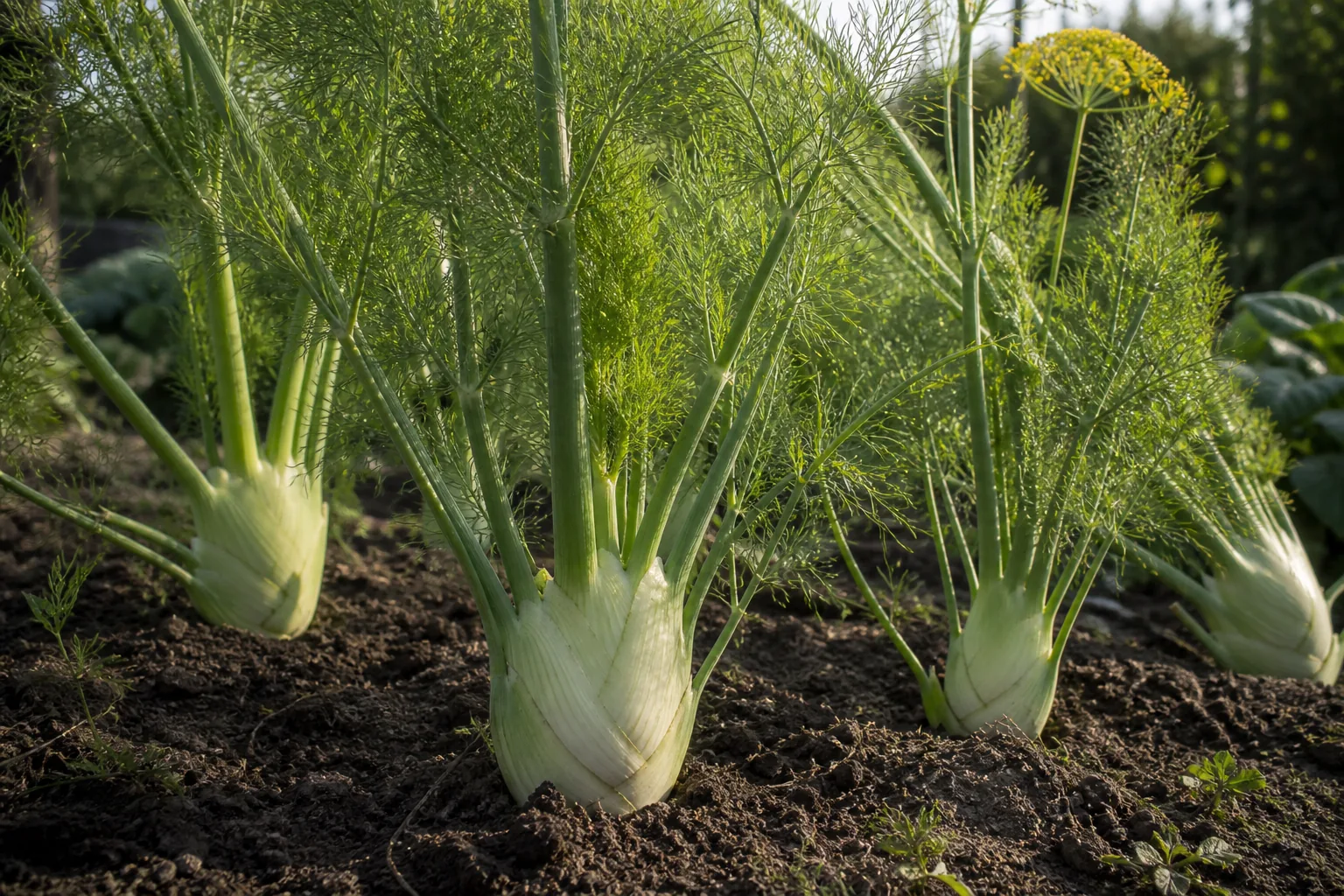
Florence fennel (Foeniculum vulgare, Azoricum Group) is a cool-season crop that rewards steady moisture and sun. Sow seeds directly in the garden in spring (or late summer for fall) a half inch deep, thinning to 8-12 inches apart, and do not transplant - the taproot objects. Site it in full sun in rich, moist, well-drained soil and keep the ground evenly wet; when bulbs begin to swell, hill a little soil around their bases to blanch them. Harvest the bulbs while still young and solid before the plant bolts and the texture turns woody.
Light
Florence fennel wants full sun (6+ hours) for the best bulb development. Some light afternoon shade can help in hot climates, but too much shade slows bulbing and encourages bolting.
Water
Water consistently to keep the soil evenly moist; uneven moisture is the main cause of bolting and split, woody bulbs. Aim for steady, deep watering at the base and mulch to hold moisture, especially in warm weather.
Soil and planting
Plant in rich, fertile, moisture-retentive but well-drained soil with plenty of compost; a pH near neutral is fine. Florence fennel needs depth for its bulb and taproot, so in containers use a deep pot (at least 12 inches) with a loamy mix and sow directly, since it resents transplanting. Keep the crown at soil level.
Temperature, humidity, and fertilizer
Florence fennel is a cool-season plant that grows best in spring and fall and bolts once days turn hot and long; it tolerates light frost. Feed with compost or a balanced feed at planting, as steady nutrition supports tender bulbs; avoid excessive nitrogen late, which can delay bulbing. Good drainage matters more than heavy feeding.
Pruning and propagation
No pruning is needed beyond removing any flowering stalks promptly to keep the bulb tender. Propagate by direct seed sown in place; plants self-sow if allowed to bloom, and you can save seed from isolated plants (kept away from other fennel types) for replanting.
Common problems
Start with the pattern, current soil moisture, and recent changes. One symptom can have several causes, so change the most likely factor first and observe before making another major adjustment.
| Symptom | Check first | First action |
|---|---|---|
| Plant bolts and the bulb stays small and woody | Check heat, day length, and uneven moisture. | Sow in cool weather, keep soil evenly moist, and remove flower stalks early. |
| Bulb splits or cracks open | Check for irregular watering after the bulb swells. | Maintain steady moisture and harvest promptly once bulbs are sized. |
| Yellowing, wilting plants in warm soil | Check for Fusarium wilt or root-knot nematode. | Rotate beds, improve drainage, and use resistant varieties; remove affected plants. |
| Sticky, curled new growth | Check for aphids or other sucking insects. | Spray foliage with water and avoid broad pesticides that harm swallowtails. |
| Poor bulb formation, mostly foliage | Check crowding, heat, and transplant shock. | Thin to proper spacing, sow in cool weather, and avoid moving seedlings. |
Pet and household safety
Florence fennel (Foeniculum vulgare) is listed as non-toxic to dogs, cats, and horses by the ASPCA, so the bulb, fronds, and seeds are generally safe around pets. As with any plant, eating large amounts may cause mild stomach upset, and wash store-bought bulbs to remove any pesticide residue.
Frequently asked questions
How much sun does Florence fennel need?
Full sun (6+ hours). Some afternoon shade helps in heat, but too much shade slows bulbing.
Why did my fennel bolt instead of forming a bulb?
Heat, long days, or uneven moisture trigger bolting. Sow in cool weather and keep soil evenly moist.
Can I transplant Florence fennel?
No - it has a taproot and resents transplanting. Always sow seed directly in place.
How do I keep the bulb tender?
Keep soil consistently moist and hill soil around the swelling bulb to blanch it; harvest young.
When do I harvest Florence fennel?
When the bulb is 2-3 inches across and still solid, before the plant flowers.
Is fennel safe for pets?
Yes - the ASPCA lists fennel as non-toxic to dogs, cats, and horses, though large amounts may upset a pet's stomach.
Sources and editorial review
This editorial draft is based on the sources below and awaits named horticulture-expert approval before publication.
- Foeniculum vulgareRoyal Botanic Gardens, Kew (Plants of the World Online) · Checked
- FennelASPCA · Checked
- Foeniculum vulgareNorth Carolina State University Extension · Checked
- Foeniculum vulgare 'Azoricum'Missouri Botanical Garden · Checked
What works well
- Crisp, sweet, anise-flavored bulb plus edible fronds and seeds.
- Attractive in the garden and a larval host for black swallowtail butterflies.
- Listed as non-toxic to dogs, cats, and horses by the ASPCA.
What to consider
- Resents transplanting and bolts in heat or drought, ruining the bulb.
- Can cross-pollinate with herb fennel and other Apiaceae; keep separate for seed.
- Susceptible to aphid diseases, Fusarium wilt, and root-knot nematode.