Key takeaways
- Sow in place in full sun in light, well-drained soil after the last frost.
- Pinch and cut often for tender leaves; it grows quickly from seed.
- Non-toxic to cats and dogs (per NC State Extension) - a pet-friendly herb.
How to care for summer savory
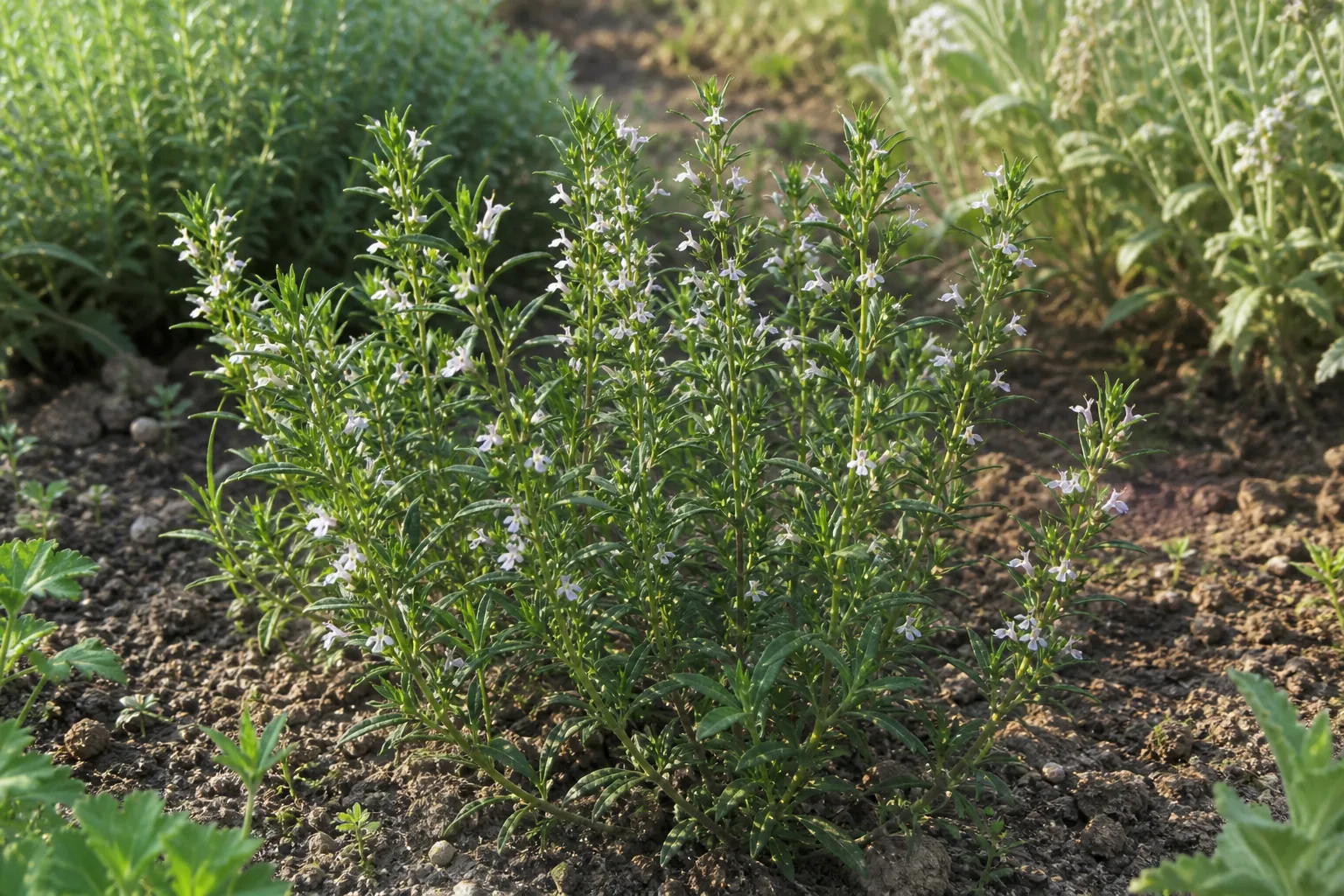
Summer savory (Satureja hortensis) is a tidy, quick-growing annual that is simplest from a direct spring sowing. Scatter seed on the surface of light, well-drained soil in full sun after the last frost (it needs light to germinate, so press in rather than bury), and thin to 6-10 inches apart. Keep the soil evenly moist while young and pinch the tips to keep plants bushy and delay flowering; harvest by cutting stems as needed. Once it flowers the leaves get sharper, so succession-sow every few weeks for a steady, tender supply, and let a few plants set seed if you want it to return.
Light
Summer savory wants full sun (6+ hours of direct light). Strong sun keeps the plants compact and the leaves most flavorful; in shade they get leggy and weak.
Water
Water moderately and keep the soil evenly moist while plants establish; once growing it tolerates some drought but tastes best with steady moisture. Avoid overhead watering on the foliage and empty saucers under pots to prevent rot.
Soil and planting
Plant in light, well-drained, moderately fertile soil or a standard potting mix with a neutral pH; summer savory is not fussy but dislikes heavy, wet ground. In containers use a pot at least 6-8 inches deep with drainage and sow directly, since it resents transplanting; keep the crown at the soil line.
Temperature, humidity, and fertilizer
Summer savory is a warm-season annual that grows best in summer heat and is killed by frost. It tolerates average humidity. Feed little - too much nitrogen softens flavor; a light compost top-dressing at planting is plenty.
Pruning and propagation
Pinch young plants to branch out and cut stems often for use; removing early flower buds keeps leaves tender. Propagate by direct seed sown after frost (or started indoors a few weeks early), and plants self-sow if allowed to bloom.
Common problems
Start with the pattern, current soil moisture, and recent changes. One symptom can have several causes, so change the most likely factor first and observe before making another major adjustment.
| Symptom | Check first | First action |
|---|---|---|
| Leggy, weak plants with little leaf | Check light and pinching; too much shade or no trimming. | Move to full sun and pinch tips regularly to encourage bushiness. |
| Seedlings fail to appear after sowing | Check that seed was not buried; it needs light to germinate. | Surface-sow and press in lightly; keep moist until sprouted. |
| Leaves turn harsh and plants flower early | Check heat and that plants were not cut back. | Pinch flower buds and succession-sow for tender leaves. |
| Wilting in dry, hot soil | Check moisture; summer savory needs steady water when young. | Water at the base and mulch; it tolerates some drought once established. |
| Plants collapse in wet, heavy soil | Check for rot from poor drainage. | Improve drainage, water less, and grow in a leaner mix. |
Pet and household safety
Summer savory (Satureja hortensis) is documented as non-toxic to cats and dogs by NC State Extension, so it is a pet-friendly herb to grow around the house. As with any plant, eating large amounts of foliage may cause mild stomach upset, and wash store-bought bunches to remove any pesticide residue.
Frequently asked questions
How much sun does summer savory need?
Full sun (6+ hours). It grows weak and leggy in shade, so give it the sunniest spot.
How do I keep summer savory tender?
Pinch the tips to keep it bushy and remove flower buds; the leaves get harsher once it blooms.
Why won't my savory seeds germinate?
They need light to germinate, so surface-sow and press in lightly rather than covering deeply.
Can I grow summer savory in a pot?
Yes - a 6-8 inch deep pot with a light, well-drained mix works well; sow directly in the container.
How is summer savory different from winter savory?
Summer savory (Satureja hortensis) is a milder annual; winter savory (Satureja montana) is a sharper, evergreen perennial.
Is summer savory safe for pets?
Yes - NC State Extension documents summer savory as non-toxic to cats and dogs, though large amounts may upset a pet's stomach.
Sources and editorial review
This editorial draft is based on the sources below and awaits named horticulture-expert approval before publication.
- Satureja hortensisRoyal Botanic Gardens, Kew (Plants of the World Online) · Checked
- Satureja hortensisNorth Carolina State University Extension · Checked
- Summer savoryRoyal Horticultural Society · Checked
- Savory, SummerUniversity of Illinois Extension · Checked
What works well
- Peppery, thyme-like flavor that is a classic with beans and meats.
- Quick, easy annual from seed that flowers for bees.
- Documented as non-toxic to pets by NC State Extension.
What to consider
- Short-lived annual; needs reseeding or resowing each year.
- Tastes harsher after flowering; benefits from frequent cutting.
- Drought-sensitive in poor soil and can get leggy if not pinched.