Key takeaways
- Plant in full sun in light, well-drained soil; it hates wet, heavy ground.
- Water moderately and bring pots indoors or treat as an annual in cold zones.
- Toxic to cats and dogs (ASPCA) - keep it away from pets.
How to care for sweet marjoram
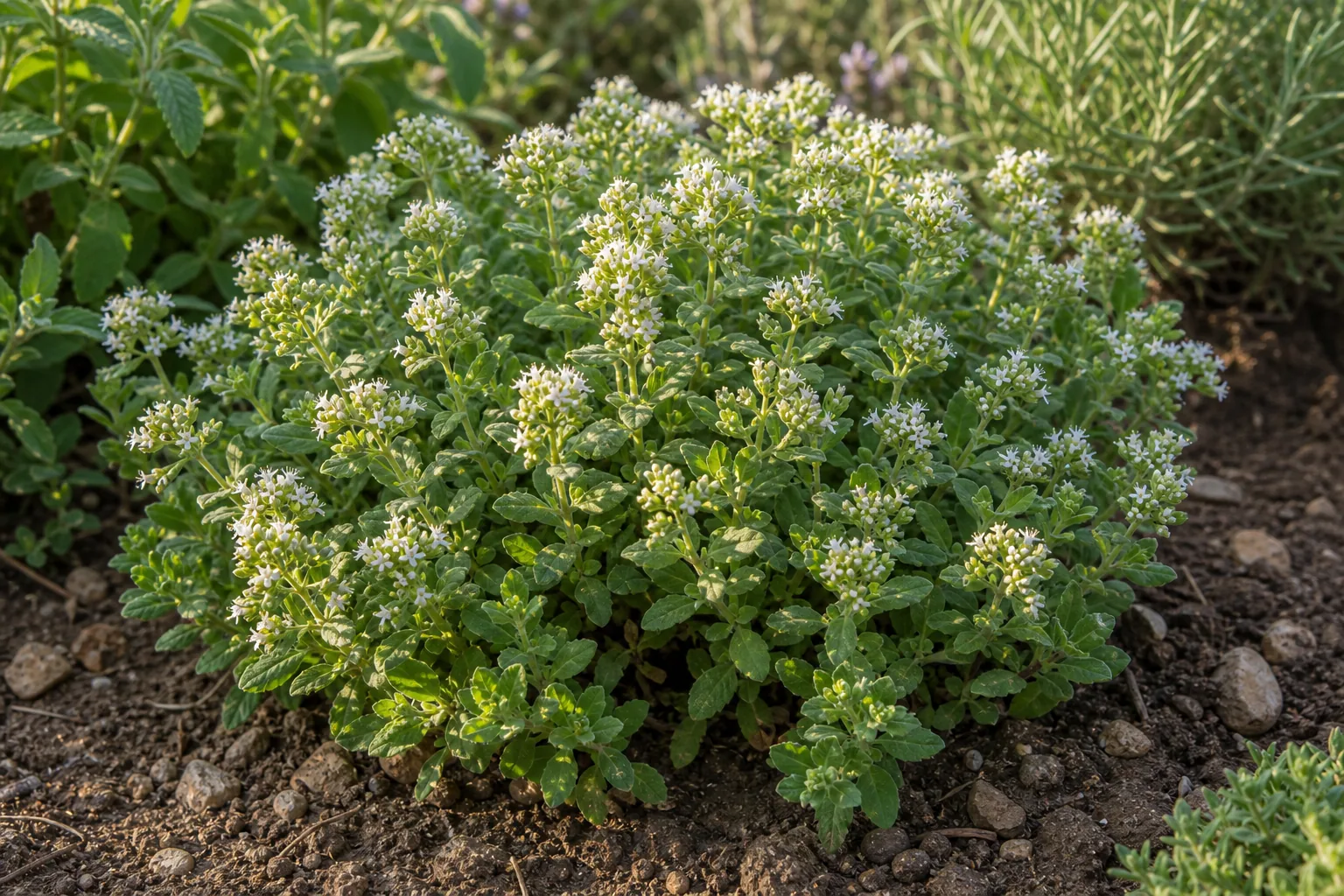
Sweet marjoram (Origanum majorana) is a neat, Mediterranean native that behaves like a tender perennial - treat it as an annual except in frost-free zones. Set out stocky transplants after the last frost in full sun, spacing 8-12 inches apart, in light, well-drained soil. Water when the top inch dries and avoid keeping the crown wet; a gravelly mix or raised bed helps it through wet spells. Pinch the tips to keep plants bushy, and in fall either take cuttings or move pots indoors to a sunny window to overwinter.
Light
Marjoram needs full sun (6+ hours of direct light). Strong sun keeps the stems compact and the leaves most fragrant; in shade it gets leggy and weak.
Water
Water moderately and let the soil surface dry between waterings; marjoram is drought tolerant once established but wilts in prolonged drought. Avoid overhead watering on the foliage, which invites rot, and never leave it sitting in a saucer of water.
Soil and planting
Plant in light, gritty, well-drained soil or a cactus-style potting mix with a slightly alkaline to neutral pH. Marjoram hates heavy clay and wet feet, so in containers use a terracotta pot with drainage holes and a lean mix; repot or divide only in spring, and keep the crown at the soil line.
Temperature, humidity, and fertilizer
Marjoram is a warm-season herb that grows best above 60°F and is damaged by frost; it is reliably perennial only in zones 9-11. It dislikes high humidity and wet cold. Feed sparingly - a light compost top-dressing is enough, as rich nitrogen fertilizer reduces the essential oils and flavor.
Pruning and propagation
Pinch young plants to branch out and snip stems often for use; cut back after flowering to keep foliage coming. Propagate from seed sown indoors 6-8 weeks before last frost (slow to germinate), from softwood cuttings in summer, or by layering; plants are short-lived, so renew every year or two.
Common problems
Start with the pattern, current soil moisture, and recent changes. One symptom can have several causes, so change the most likely factor first and observe before making another major adjustment.
| Symptom | Check first | First action |
|---|---|---|
| Plants collapse or stems turn black at the base | Check for root rot from wet, poorly drained soil. | Improve drainage, water less, and replace affected plants in a drier spot. |
| Leggy, weak, sparsely leaved growth | Check light and feeding; too much shade or nitrogen. | Move to full sun and ease off fertilizer; pinch tips to encourage bushiness. |
| Brown, crispy leaves in cold weather | Check for frost or cold, wet roots. | Treat as an annual in cold zones; move pots indoors or protect with mulch. |
| Wilting despite moist soil | Check for overwatering and crown rot versus true drought. | Let soil dry between waterings and confirm drainage; reduce watering. |
| Few leaves, poor flavor | Check sun exposure and soil richness; marjoram wants lean, sunny ground. | Grow in full sun in poorer, well-drained soil and avoid heavy feeding. |
Pet and household safety
Sweet marjoram (Origanum majorana) is listed as toxic to cats and dogs by the ASPCA, so keep it out of reach of pets. While culinary amounts are small, ingestion of the plant material can cause digestive upset; contact a veterinarian after a concerning exposure.
Frequently asked questions
How much sun does sweet marjoram need?
Full sun (6+ hours). Strong light keeps the plant compact and the leaves most flavorful.
Is marjoram frost hardy?
No - it is frost-tender and only perennial in zones 9-11; elsewhere grow it as an annual or overwinter pots indoors.
How often should I water marjoram?
Moderately - let the top inch of soil dry between waterings; it tolerates drought but hates wet feet.
Can I grow marjoram in a pot?
Yes - a terracotta pot with a lean, well-drained mix is ideal and makes overwintering indoors easy.
How is marjoram different from oregano?
Sweet marjoram (Origanum majorana) is milder and sweeter than the harsher, more pungent wild oregano (Origanum vulgare).
Is marjoram safe for pets?
No - the ASPCA lists marjoram as toxic to cats and dogs. Keep it away from pets and call a vet after ingestion.
Sources and editorial review
This editorial draft is based on the sources below and awaits named horticulture-expert approval before publication.
- Origanum majoranaRoyal Botanic Gardens, Kew (Plants of the World Online) · Checked
- MarjoramASPCA · Checked
- Origanum majoranaNorth Carolina State University Extension · Checked
- Origanum majoranaMissouri Botanical Garden · Checked
What works well
- Sweet, mild flavor that cooks prefer over harsher wild oregano.
- Compact and pretty in pots, edgings, and herb knots; drought tolerant once set.
- Attracts bees and beneficial pollinators when allowed to flower.
What to consider
- Frost-tender; dies in winter except in warm climates (zones 9-11).
- Prone to root rot and dieback in wet or poorly drained soil.
- Toxic to dogs and cats (ASPCA) if eaten.