Key takeaways
- Sow seed directly in full sun every 2-3 weeks; dill hates transplanting.
- Grow in rich, light, well-drained soil with consistent moisture and shelter from wind.
- Non-toxic to pets (ASPCA) and a top host plant for swallowtail butterflies.
How to care for dill
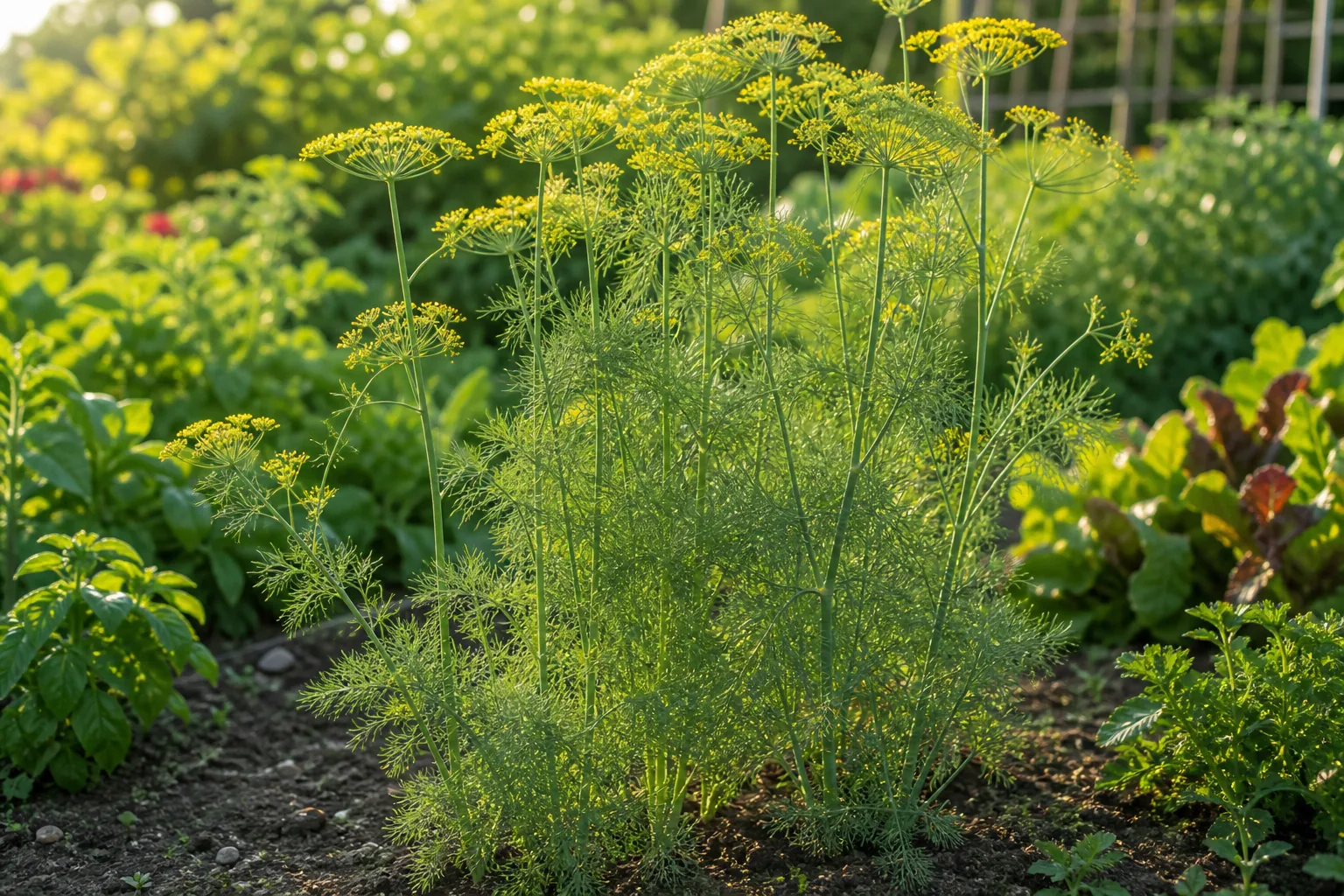
Dill (Anethum graveolens) is a care-light annual that mostly wants sun, food, and steady water. Sow seeds directly in the garden just before the last spring frost, about a quarter inch deep and thinned to 8-12 inches apart, and repeat every 2-3 weeks into early summer for a rolling harvest. Site it in full sun in rich, light, well-drained soil, shelter tall plants from strong wind with close spacing, stakes, or cages, and keep the soil evenly moist. Harvest leaves as needed and let some umbels flower for beneficial insects and seed.
Light
Dill needs full sun (6+ hours of direct light) and grows lanky and liable to flop in part shade. More sun means sturdier stems and the best leaf and seed flavor.
Water
Water to keep the soil consistently moist but well drained; dill bolts when it dries out, so check the root zone in hot weather. Avoid soggy ground, which encourages rot, and water at the base rather than overhead.
Soil and planting
Plant in rich, light, fertile, well-drained garden soil or a deep container mix; dill's long taproot wants depth, so use pots at least 12 inches deep. It resents transplanting, so always sow in place. Keep the crown at the soil line and add compost for steady growth.
Temperature, humidity, and fertilizer
Dill is a cool-season annual that grows best in temperatures around 70°F and bolts in sustained heat. It tolerates light frost and is hardy roughly zones 2-11 as an annual. Feed lightly with compost; too much nitrogen softens flavor and weakens stems. Good drainage matters more than heavy feeding.
Pruning and propagation
No pruning needed beyond harvesting leaves and removing spent umbels if you want to limit self-sowing. Propagate by direct seed sown every few weeks; plants self-sow readily, and you can harvest seed by drying the heads in paper bags about 2-3 weeks after flowering.
Common problems
Start with the pattern, current soil moisture, and recent changes. One symptom can have several causes, so change the most likely factor first and observe before making another major adjustment.
| Symptom | Check first | First action |
|---|---|---|
| Tall plants flop or fall over | Check part shade, wind exposure, and support. | Grow in full sun, shelter from wind, and use close spacing, stakes, or cages. |
| Leaves yellow with collapse (blight/aster yellows) | Check for fungal blight or aster yellows and confirm with local diagnosis. | Remove and destroy affected plants; rotate beds and avoid overcrowding. |
| Sticky, curled growth with small insects | Check for aphids or tomato hornworms. | Spray foliage with water and hand-pick hornworms; avoid broad pesticides. |
| Plant bolts early | Check soil moisture and heat; dry soil triggers bolting. | Keep soil evenly moist and sow succession crops in cooler weather. |
| Poor germination or weak seedlings | Check sowing depth and transplant shock. | Sow direct in place, keep lightly moist, and avoid moving seedlings. |
Pet and household safety
Dill is listed as non-toxic to dogs, cats, and horses by the ASPCA, so the leaves and seeds are generally safe around pets. The essential oils can cause dermatitis with prolonged skin contact, and as with any plant, eating large amounts of foliage may cause mild stomach upset.
Frequently asked questions
How much sun does dill need?
Full sun (6+ hours). It grows weak and floppy in shade, so give it the sunniest, most sheltered spot.
Why does my dill keep falling over?
Usually part shade, wind, or lack of support. Grow it in full sun, shelter from wind, and stake or cage tall plants.
How often should I water dill?
Keep the soil consistently moist; dill bolts if it dries out. Water at the base and avoid soggy soil.
Can I grow dill in a container?
Yes, but use a deep pot (12+ inches) because of its long taproot, and sow seed directly since it hates transplanting.
When do I harvest dill seed?
Let umbels flower and dry; harvest the seed heads into paper bags about 2-3 weeks after flowering for pickling and cooking.
Is dill safe for pets?
Yes - the ASPCA lists dill as non-toxic to dogs, cats, and horses. Large amounts of leaf may still upset a pet's stomach.
Sources and editorial review
This editorial draft is based on the sources below and awaits named horticulture-expert approval before publication.
- Anethum graveolensRoyal Botanic Gardens, Kew (Plants of the World Online) · Checked
- DillASPCA · Checked
- Anethum graveolensNorth Carolina State University Extension · Checked
- Anethum graveolensMissouri Botanical Garden · Checked
What works well
- Fragrant foliage and seeds with many culinary uses, especially pickling.
- Excellent for pollinators; larval host for black swallowtail butterflies.
- Non-toxic to dogs, cats, and horses (ASPCA).
What to consider
- Long taproot makes it a poor transplant; sow in place.
- Bolts and declines if soil dries out or in hot weather.
- Susceptible to blight, aster yellows, aphids, and tomato hornworms.