Key takeaways
- Plant in full sun to part shade in well-drained soil; it dislikes wet feet.
- Water moderately and overwinter containers indoors where winters are cold.
- Toxic to cats and dogs (per NC State Extension) - keep it out of reach of pets.
How to care for bay laurel
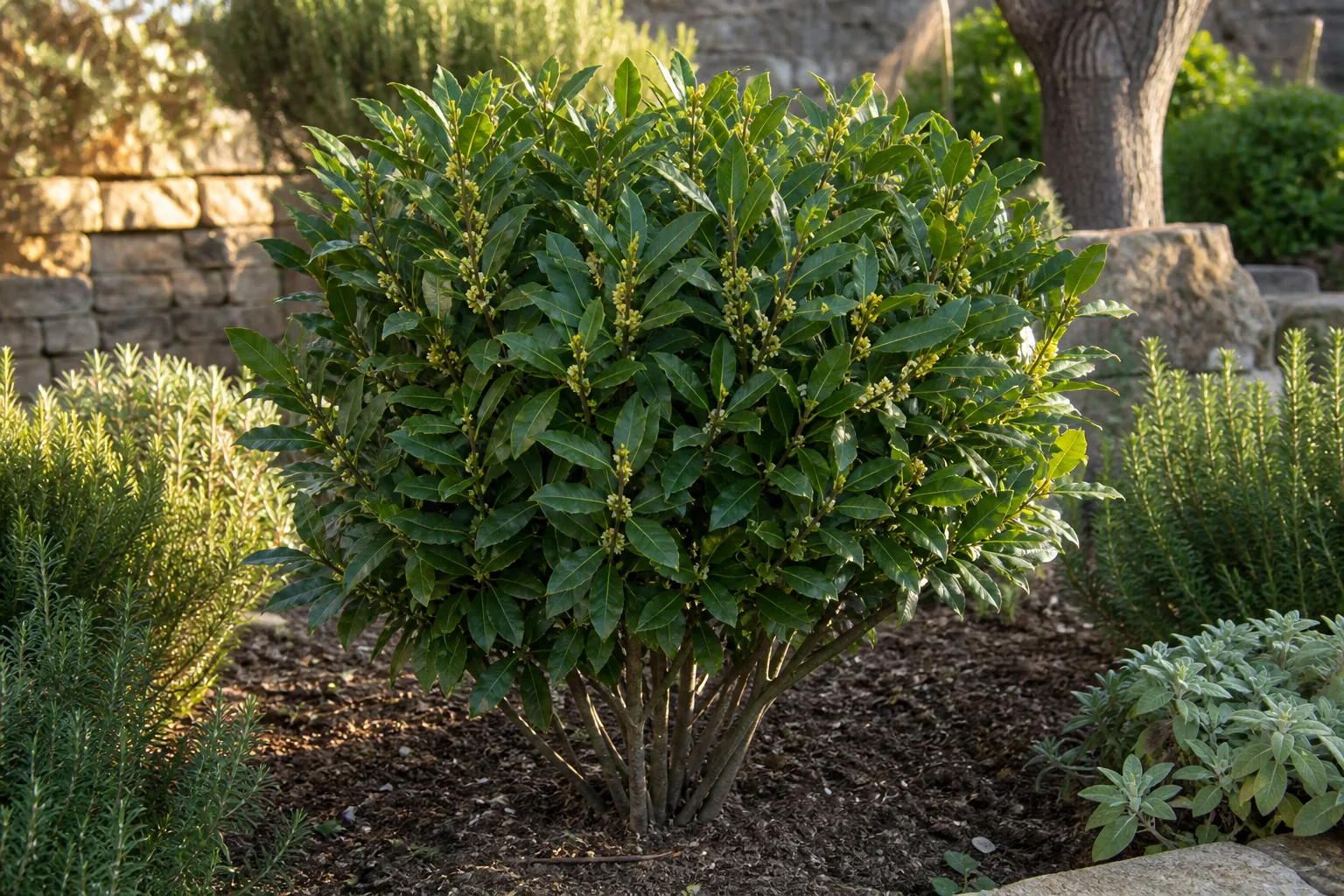
Bay laurel (Laurus nobilis) is a Mediterranean evergreen that prefers a steady, undramatic life. Plant it in full sun to part shade in well-drained soil, spacing trees well if growing in the ground, and set container plants in a loamy mix. Water when the top few inches dry and never let it sit wet; feed lightly in spring. In cold-winter areas grow it in a tub and move it to a bright, frost-free spot for winter, since hard freezes damage or kill the foliage. Harvest individual leaves as needed - they are most aromatic after a year on the plant.
Light
Bay laurel grows in full sun to part shade. It handles sun best in mild climates; in hot regions some afternoon shade prevents leaf scorch. Indoors over winter, give it the brightest spot you can.
Water
Water moderately and let the top layer of soil dry between waterings; bay hates waterlogged roots and is fairly drought tolerant once established. In containers, water thoroughly but empty the saucer, and reduce watering in winter when growth slows.
Soil and planting
Plant in fertile, well-drained soil or a loam-based potting mix with a neutral pH. Bay laurel is sensitive to compaction and wet feet, so ensure sharp drainage; in containers use a pot with drainage holes and repot every 2-3 years in spring, keeping the root ball intact and the crown at the soil line.
Temperature, humidity, and fertilizer
Bay laurel is a warm-climate evergreen hardy only in roughly zones 8-11; it suffers below about 20°F and resents cold, wet winters. It likes moderate humidity and good air movement. Feed lightly in spring with a balanced fertilizer or compost; overfeeding produces soft growth that is more cold-sensitive.
Pruning and propagation
Prune in spring to shape, thin crowded interior branches, and maintain a standard or hedge form; bay takes shearing well. Propagate from semi-ripe cuttings in summer or from seed (slow); layered branches also root. Because it is slow, many gardeners buy a trained plant rather than start from seed.
Common problems
Start with the pattern, current soil moisture, and recent changes. One symptom can have several causes, so change the most likely factor first and observe before making another major adjustment.
| Symptom | Check first | First action |
|---|---|---|
| Leaves brown and die back after a hard freeze | Check cold damage; bay is tender in frost. | Move containers to frost-free shelter; protect in-ground plants and prune dead wood in spring. |
| Yellow leaves and soggy, smelly roots | Check for overwatering and poor drainage. | Improve drainage, water less, and repot into a freer-draining mix. |
| Leaf scorch and browning edges in hot sun | Check sun exposure and watering; drought stress. | Provide afternoon shade and water more steadily; mulch to hold moisture. |
| Sticky leaves with small insects | Check for scale or aphids on the foliage. | Wipe leaves and use horticultural oil; avoid broad pesticides. |
| Very slow growth and sparse new shoots | Check light, feeding, and root confinement in pots. | Move to more light, feed lightly in spring, and repot if root-bound. |
Pet and household safety
Bay laurel (Laurus nobilis) is documented as toxic to cats and dogs by NC State Extension (which lists it with problem tags for pets), so keep it out of reach of pets. Ingesting the leaves can cause digestive upset; the intact dried leaves used in cooking should be removed before serving food. Contact a veterinarian after a concerning exposure.
Frequently asked questions
How much sun does bay laurel need?
Full sun to part shade; some afternoon shade helps in hot climates and prevents leaf scorch.
Is bay laurel frost hardy?
Only in warm zones (roughly 8-11); elsewhere grow it in a pot and overwinter it indoors away from frost.
How often should I water bay laurel?
Moderately - let the top layer dry between waterings; it tolerates drought but hates wet feet.
Can I grow bay laurel in a container?
Yes - a loam-based mix in a pot with drainage is ideal and makes overwintering indoors easy; train it as a standard.
When do I harvest bay leaves?
Pick individual leaves any time; they are most aromatic after a year on the plant. Dry before use.
Is bay laurel safe for pets?
No - NC State Extension documents bay laurel as toxic to cats and dogs. Keep it away from pets and call a vet after ingestion.
Sources and editorial review
This editorial draft is based on the sources below and awaits named horticulture-expert approval before publication.
- Laurus nobilisRoyal Botanic Gardens, Kew (Plants of the World Online) · Checked
- Laurus nobilisNorth Carolina State University Extension · Checked
- Laurus nobilisMissouri Botanical Garden · Checked
- Laurus nobilisRoyal Horticultural Society · Checked
What works well
- Fragrant, long-lasting leaves for soups, stews, and braises.
- Handsome evergreen structure; excellent trained as a standard in a pot.
- Drought tolerant once established and long-lived.
What to consider
- Slow growing and only hardy in warm zones (roughly 8-11).
- Sensitive to wet, poorly drained soil and to hard freezing.
- Toxic to dogs and cats (per NC State Extension) if the leaves are eaten.