Key takeaways
- Prioritize full sun and rapid drainage.
- Let the root zone partly dry before watering again.
- Trim green growth regularly instead of cutting deeply into bare old wood.
How to care for Rosemary
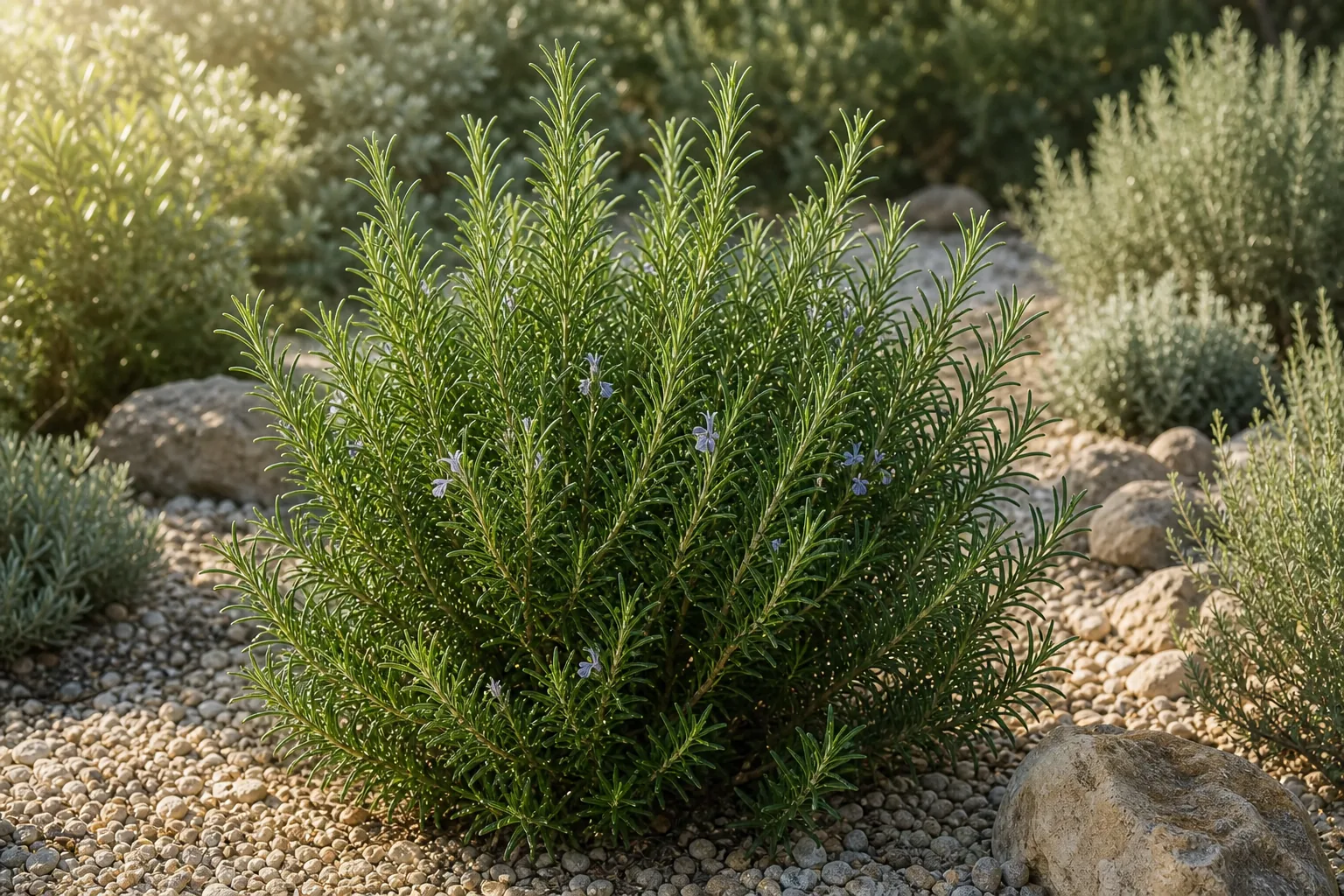
Salvia rosmarinus is a woody Mediterranean shrub, not a soft annual herb. Give it a permanent sunny, drained position, harvest without stripping whole branches, and replace an old plant if its interior has become too bare to respond to light trimming.
Light
Full sun keeps rosemary compact and aromatic. Plants overwintered indoors need the brightest available position and gradual reacclimation outdoors; low light encourages weak, sparse growth.
Water
Water thoroughly, then wait until the upper root zone has dried before watering again. Established in-ground plants tolerate drought, but a container still needs checking because its limited root ball can dry completely in heat and wind.
Soil and repotting
Use a free-draining mineral-textured soil or container mix and a pot with an open drainage hole. Repot when roots crowd the pot or drainage changes, keeping the crown at its existing level.
Temperature, humidity, and fertilizer
Rosemary prefers warmth and airflow; winter survival varies with cultivar, root wetness, wind, and container exposure. Feed lightly, if at all, because lush soft growth is less useful than compact aromatic shoots.
Pruning and propagation
Clip green shoots after flowering or during harvest to maintain branching, but avoid cutting all growth back into leafless old wood. Root healthy non-flowering cuttings or use layering; seedlings are slower and variable.
Common problems
Start with the pattern, current soil moisture, and recent changes. One symptom can have several causes, so change the most likely factor first and observe before making another major adjustment.
| Symptom | Check first | First action |
|---|---|---|
| Whole plant browns in wet soil | Check drainage, odor, and whether roots are dark and soft. | Stop watering and move a container to a freely draining mix after inspecting roots. |
| Bare woody center | Check whether light reaches the interior and pruning stayed in green growth. | Take healthy cuttings and begin a replacement rather than severe old-wood pruning. |
| Pale stretched shoots | Check daily sun and indoor winter light. | Increase light gradually and stop unnecessary feeding. |
| Leaf tips dry after winter | Check cold exposure, wind, and whether the pot dried solid. | Wait for new growth, then trim only confirmed dead tips. |
| Fine stippling or webbing | Inspect leaf undersides for mites, especially indoors. | Isolate the plant and rinse foliage before choosing further control. |
Pet and household safety
ASPCA lists rosemary, under the accepted synonym Rosmarinus officinalis, as non-toxic to cats and dogs. Non-toxic garden foliage is not a veterinary dose recommendation, and concentrated rosemary essential oil is a different exposure. Discourage chewing and contact a veterinarian if symptoms occur.
Frequently asked questions
How often should I water Rosemary?
Water fully, then wait until the upper root zone dries; never keep the mix continuously wet.
Does Rosemary need full sun?
Yes. Strong direct light supports compact, aromatic growth.
Why is my Rosemary turning brown?
Inspect drainage and root condition first, then review cold, drought, and mite damage.
Can Rosemary grow in a pot?
Yes, and pots are useful in cold climates if they drain freely and receive full sun.
How do I propagate Rosemary?
Root non-flowering stem cuttings or layer a flexible shoot; both preserve the parent cultivar.
Is Rosemary safe for pets?
ASPCA lists it as non-toxic to cats and dogs, but pets should not be allowed to consume large amounts.
Sources and editorial review
This editorial draft is based on the sources below and awaits named horticulture-expert approval before publication.
- Salvia rosmarinusNC State Extension · Checked
- Salvia rosmarinus Spenn.Royal Botanic Gardens, Kew — Plants of the World Online · Checked
- How to grow RosemaryRoyal Horticultural Society · Checked
- RosemaryASPCA · Checked
What works well
- Year-round culinary leaves
- Drought tolerant when established
- Excellent container herb
What to consider
- Fails in wet soil
- Can become woody
- Cold hardiness varies