Key takeaways
- Plant in full sun to light shade in rich, moist, well-drained soil; never let it dry out.
- Start from transplants or sow seed (slow, uneven germination); space 8-12 inches apart.
- Harvest outer stems often; flavor is best before the plant flowers in its second year.
How to care for flat-leaf parsley
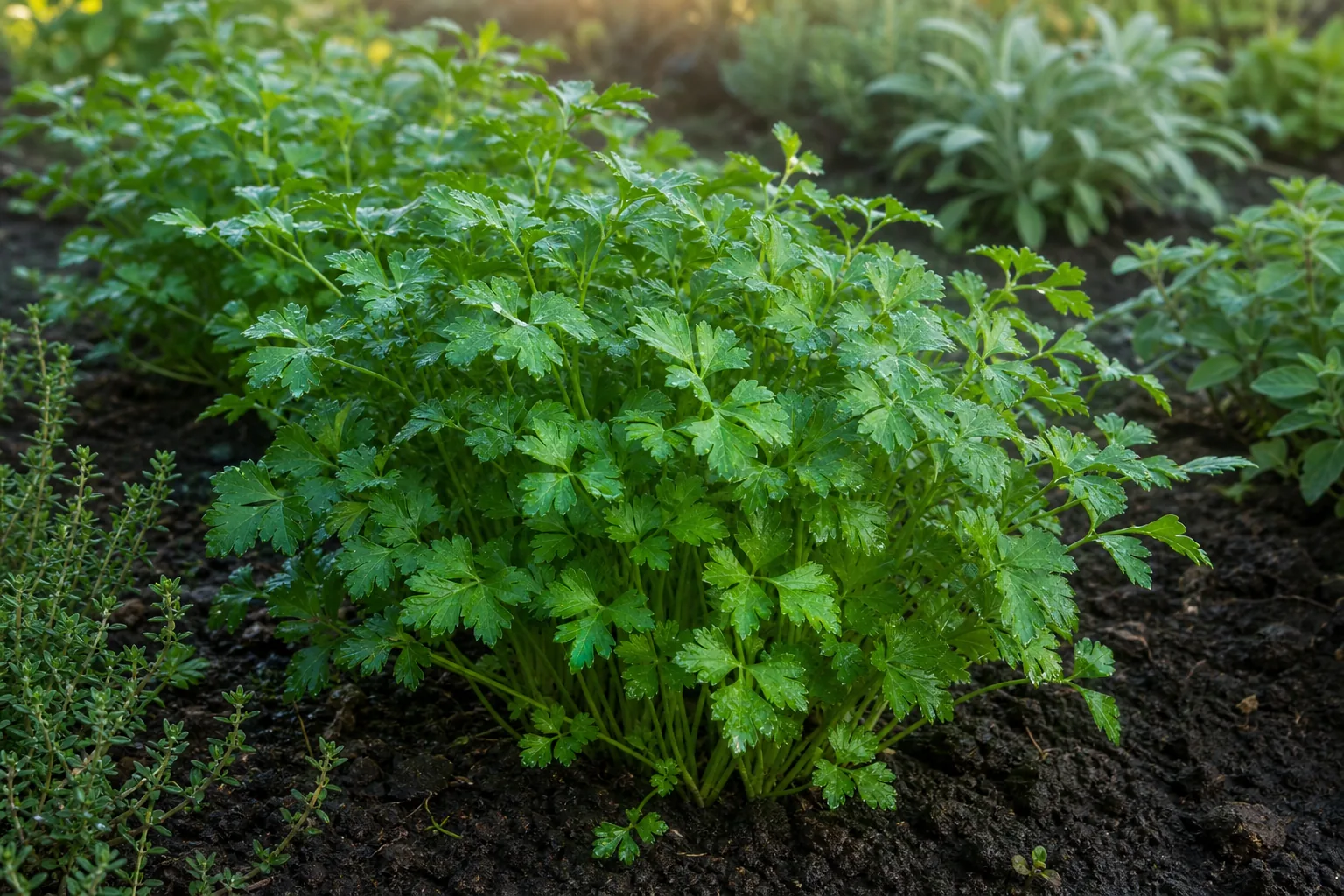
Flat-leaf parsley (Petroselinum crispum) is a tidy, mound-forming culinary herb that earns its place with reliable, flavorful foliage. Set plants out after the last spring frost in full sun to light shade, spacing 8-12 inches so air moves between them, and keep the crown at the soil line. Water to keep the soil consistently moist but well drained, and enrich the bed with compost for steady leaf production. Harvest outer stems regularly and, if you want seed or flowers, let a few plants run to a second-year bloom; most gardeners simply replant each season for tender leaves.
Light
Parsley grows best in full sun (6+ hours of direct light) but tolerates light shade, which can actually help in hot climates. Too much shade makes plants leggy and slows growth, while full sun with even moisture gives the most productive, flavorful leaves.
Water
Keep the soil consistently moist but not waterlogged; parsley hates drying out and wilts quickly in dry spells. Water at the base in the morning and mulch to hold moisture; reduce frequency only once plants are well established in cool weather.
Soil and planting
Plant in rich, fertile, well-drained garden soil or a peat-based potting mix with a near-neutral pH. Parsley is not fussy but dislikes compacted, soggy ground; in containers use at least a 1-gallon pot with drainage holes and keep the crown at the soil line. It has a taproot, so disturb roots as little as possible when transplanting.
Temperature, humidity, and fertilizer
Parsley is a cool-season herb that thrives in spring and fall and tends to languish in hot, humid summers. It survives light frost and overwinters in mild climates; a hard freeze into the low 20s F ends the top growth. Feed lightly with compost or a balanced liquid feed; too much nitrogen just softens flavor. It is hardy across roughly zones 2-11 as an annual.
Pruning and propagation
No real pruning is needed beyond harvesting outer stems and removing any yellow or flowering shoots to keep leaves coming. Propagate from seed sown in place or started indoors 6-8 weeks before last frost (germination is slow and uneven), or buy transplants; plants self-sow if allowed to bloom and set seed.
Common problems
Start with the pattern, current soil moisture, and recent changes. One symptom can have several causes, so change the most likely factor first and observe before making another major adjustment.
| Symptom | Check first | First action |
|---|---|---|
| Yellowing lower leaves with brown spots | Check for Septoria leaf spot and overall moisture; confirm it is not just old age. | Improve airflow, avoid wetting foliage, and remove affected leaves; rotate beds next year. |
| Wilting despite moist soil | Check for stem rot or root damage from heavy, wet ground. | Improve drainage and reduce watering; remove and discard affected plants. |
| Notched or skeletonized leaves | Check for carrot weevil, flea beetles, or leafhoppers. | Hand-pick beetles and spray foliage with water; avoid broad pesticides that harm pollinators. |
| Plant bolts and flags in midsummer heat | Check heat and soil moisture; bolting is natural in hot weather. | Sow succession crops in cooler weather and keep soil evenly moist; replace heat-stressed plants. |
| Leaf scorch or sunburn after handling | Check for furanocoumarin photosensitization if pets or people handled then sun-exposed. | Limit pet access and wash skin after handling; keep plants out of pet reach. |
Pet and household safety
Flat-leaf parsley is toxic to cats and dogs if ingested in quantity; the ASPCA lists it as toxic because furanocoumarins can cause photosensitization (sunburn-like dermatitis), though large amounts are needed. Keep it out of reach of pets and contact a veterinarian after a concerning exposure. Small culinary amounts are generally not a concern for people, but avoid letting pets chew the foliage.
Frequently asked questions
How much sun does flat-leaf parsley need?
Full sun to light shade; at least 6 hours of sun gives the best growth, with a little afternoon shade helpful in hot regions.
How often should I water parsley?
Keep the soil consistently moist. Parsley wilts fast when dry, so water at the base regularly and mulch to retain moisture.
Why is my parsley slow to germinate?
Parsley seed germinates slowly and unevenly, often taking 2-3 weeks. Soak seeds first or start transplants, and be patient.
When and how do I harvest parsley?
Snip outer stems at the base once plants are established; harvest often to encourage new growth. Flavor is strongest just before flowering.
Why are my parsley leaves yellow?
Usually Septoria leaf spot or inconsistent moisture. Improve airflow, avoid wetting foliage, and keep soil evenly moist.
Is parsley safe for pets?
No - the ASPCA lists parsley as toxic to dogs, cats, and horses because furanocoumarins can cause photosensitization. Keep it away from pets.
Sources and editorial review
This editorial draft is based on the sources below and awaits named horticulture-expert approval before publication.
- Petroselinum crispumRoyal Botanic Gardens, Kew (Plants of the World Online) · Checked
- ParsleyASPCA · Checked
- Petroselinum crispumNorth Carolina State University Extension · Checked
- Petroselinum crispumMissouri Botanical Garden · Checked
What works well
- Strong, clean flavor preferred by cooks over curly parsley.
- Long harvest window from spring through frost and easy in containers.
- Attracts beneficial insects and is a host plant for swallowtail butterflies.
What to consider
- Susceptible to Septoria leaf spot, stem rot, carrot weevil, flea beetles, and tarnished plant bugs.
- Slow, uneven seed germination; performs poorly in hot, humid summers.
- Toxic to dogs, cats, and horses in quantity (furanocoumarins cause photosensitization).