Key takeaways
- Sow seed directly every 2-3 weeks in cool weather for a continuous leaf crop.
- Grow in full sun to light shade in average, moist, well-drained soil; it dislikes heat and humidity.
- Pinch flower stems to extend leaf harvest, or let some plants seed for coriander.
How to care for cilantro
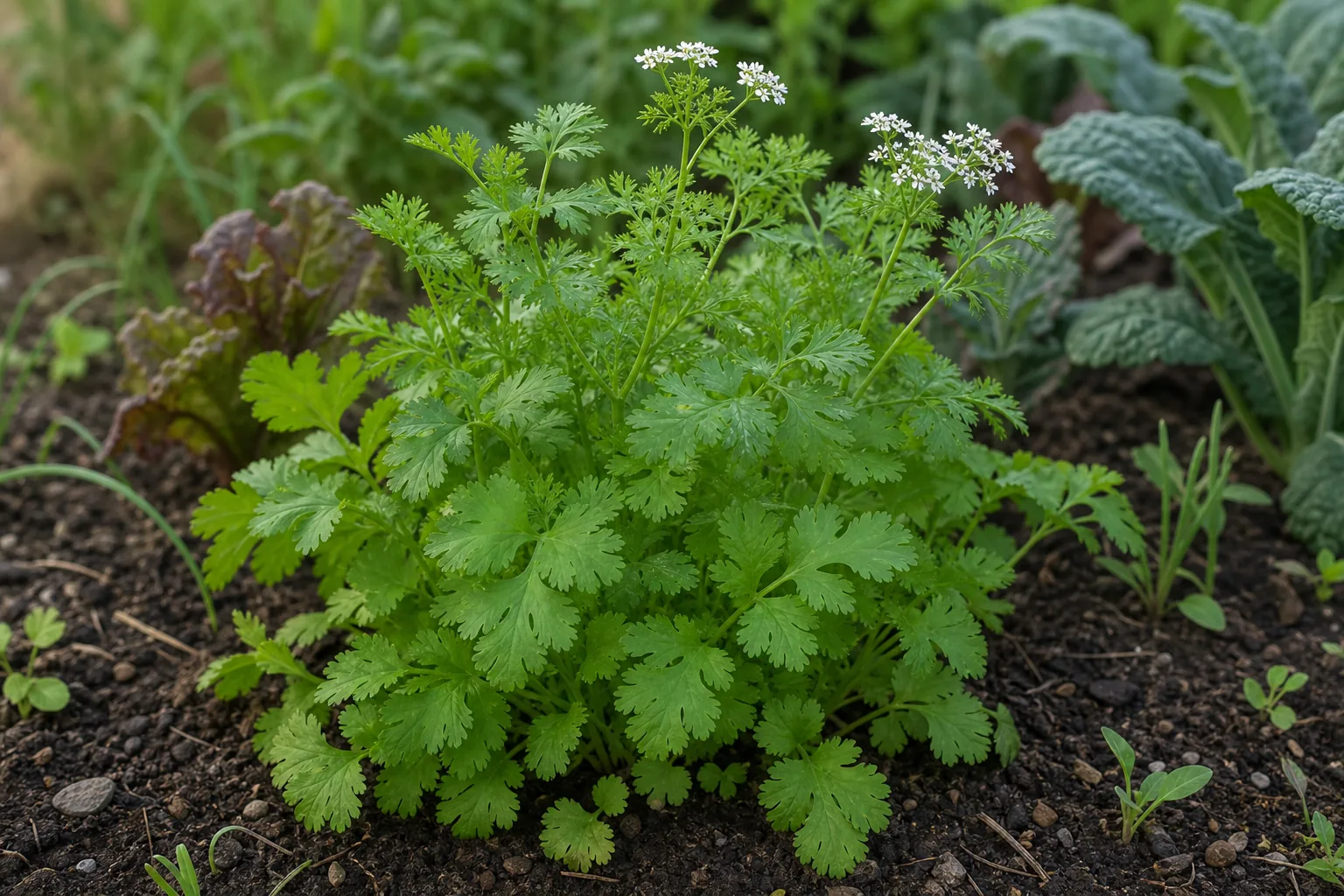
Cilantro (Coriandrum sativum) is a cool-season annual that rewards timing more than fuss. Sow seeds directly in the garden after the last frost, about a half inch deep and 1-2 inches apart in rows, and repeat every 2-3 weeks through spring and again in late summer for fall leaves. Site it in full sun to light shade in average, medium-moisture, well-drained soil, and pinch flower stems as they appear to keep plants producing leaves. In hot climates a little afternoon shade and consistent moisture buy you more harvest before bolting.
Light
Cilantro wants full sun (6+ hours) in cool weather but appreciates light afternoon shade where summers are hot, which helps prevent sun scald and slows bolting. Too much shade weakens the plants and reduces leaf flavor.
Water
Water moderately to keep the soil evenly moist but well drained; cilantro dislikes both drought and soggy ground. In humid, rainy regions it struggles, so aim for steady moisture and good drainage rather than heavy watering.
Soil and planting
Plant in average, medium-moisture, well-drained garden soil or a standard potting mix; cilantro is not picky about fertility but needs drainage. In containers use a freely draining mix and a pot at least 6-8 inches deep; sow directly in the container since plants have a taproot and resent transplanting. Keep the crown at the soil line.
Temperature, humidity, and fertilizer
Cilantro is a cool-season herb that grows best in spring and fall and bolts once days turn hot and long. It tolerates light frost but not prolonged heat or high humidity; in warm zones aim for the shoulder seasons. Feed lightly - a side dressing of compost is plenty, as rich nitrogen just drives bolting. Hardy roughly zones 2-11 as a spring/fall annual.
Pruning and propagation
Pinch developing flower stems to prolong leaf harvest, and shear plants back if they get leggy. Propagate by direct seed sown every few weeks; plants self-sow if allowed to flower and drop seed, and you can let a few run to maturity to harvest coriander seed about 90 days after sowing.
Common problems
Start with the pattern, current soil moisture, and recent changes. One symptom can have several causes, so change the most likely factor first and observe before making another major adjustment.
| Symptom | Check first | First action |
|---|---|---|
| Plant suddenly bolts (flowers and dies) | Check heat and day length; bolting is natural as weather warms. | Sow successive crops in cooler weather and keep soil moist; pinch buds to delay. |
| Seedlings rot or collapse at the base | Check for damping-off in cool, wet soil. | Sow in well-drained soil, avoid overwatering, and thin seedlings for airflow. |
| Yellowing, wilting leaves in wet weather | Check for root rot, wilt, or bacterial blight. | Improve drainage, avoid overhead watering, and remove affected plants. |
| Holes or chewed leaves | Check for cabbage loopers, grasshoppers, or leafhoppers. | Pick pests by hand and rinse foliage; avoid broad pesticides that harm pollinators. |
| Poor flavor or slow growth | Check light, soil fertility, and heat stress. | Move to fuller sun, keep evenly moist, and replant in cooler weather. |
Pet and household safety
Cilantro (coriander) is listed as non-toxic to dogs, cats, and horses by the ASPCA, so the leaves and seeds are generally safe around pets. As with any plant, eating large amounts of foliage may cause mild stomach upset, and pesticide residues on store-bought bunches should be washed off before use.
Frequently asked questions
How much sun does cilantro need?
Full sun in cool weather, with light afternoon shade in hot climates to slow bolting and prevent leaf scorch.
Why does my cilantro bolt so fast?
Heat and long days trigger bolting. Sow successive crops in spring and fall, keep soil moist, and pinch flower stems.
How often should I water cilantro?
Keep the soil evenly moist but well drained; cilantro dislikes drying out and also hates soggy, humid conditions.
Can I grow cilantro in a pot?
Yes - use a freely draining mix in a pot at least 6-8 inches deep and sow directly, since it resents transplanting.
How do I harvest coriander seed?
Let some plants flower and dry; harvest the round seed pods about 90 days after sowing, then crush for the spicy coriander seed.
Is cilantro safe for pets?
Yes - the ASPCA lists cilantro as non-toxic to dogs, cats, and horses. Large amounts of leaf may still upset a pet's stomach.
Sources and editorial review
This editorial draft is based on the sources below and awaits named horticulture-expert approval before publication.
- Coriandrum sativumRoyal Botanic Gardens, Kew (Plants of the World Online) · Checked
- CilantroASPCA · Checked
- Coriandrum sativumNorth Carolina State University Extension · Checked
- Coriandrum sativumMissouri Botanical Garden · Checked
What works well
- Quick, productive cool-season herb with edible leaves and seeds.
- Attracts beneficial insects and is a larval host for swallowtail butterflies.
- Non-toxic to dogs, cats, and horses (ASPCA).
What to consider
- Bolts and dies readily in hot summer weather, ending leaf production.
- Prone to damping-off, rot, wilt, and bacterial blight in wet conditions.
- Seeds can be slow to germinate and plants resent transplanting.