Key takeaways
- Reassess light before changing water or fertilizer.
- Expect slower drying in low light.
- Protect plants from cold glass and heating vents.
- Inspect pests regularly because indoor predators are limited.
Why this care task matters
Winter changes several variables together: days shorten, sun angle shifts, windows become colder, heating dries indoor air, and many plants slow growth. Continuing a summer routine can leave roots wet and salts concentrated even while leaf edges dry in heated air.
Not every houseplant is dormant. Plants under strong grow lights, winter bloomers, and species with different seasonal cycles may remain active. Observe new growth, root-zone drying, and species behavior rather than applying one winter rule to the collection.
In practice, winter complaints split into two camps — plants that stay too wet and plants that dry too fast. Both happen in the same house because heating vents dry small pots nearby while shaded corners stay wet for weeks. The fix is per-plant testing, not a season-wide schedule.
Pests are the quiet winter problem. Indoor populations that were harmless all summer can explode under warm, dry heat with no natural predators. A weekly two-minute check of leaf undersides and stems catches mealybugs and mites while they are still easy to isolate and treat.
Tools and materials
- Timer and supplemental light if needed
- Min-max thermometer
- Hygrometer
- Hand lens for pest checks
Step by step
- Clean and reassess light
Clean appropriate leaves and windows, track direct sun, and move plants closer gradually or add a timed light when growth stretches.
- Relearn watering intervals
Check soil before every watering. Low light often extends the interval even though heated air can dry small pots quickly.
- Control temperature zones
Keep leaves from cold glass and pots from vents or radiators. Monitor overnight lows at the actual plant position.
- Manage humidity safely
Measure humidity, use a clean humidifier when needed, preserve airflow, and stop before condensation develops.
- Inspect and isolate pests
Check leaf undersides, stems, and soil weekly. Isolate affected plants and identify the pest before choosing treatment.
Common mistakes
When watering is due, wet the root ball thoroughly and drain; change the interval, not the completeness.
Check light, moisture, pests, roots, and natural aging before feeding a slow-growing plant.
Balance light gain with measured nighttime temperature and keep foliage from touching cold panes.
Season and environment
- South-facing windows may receive direct winter sun that shade-acclimated leaves still need to approach gradually.
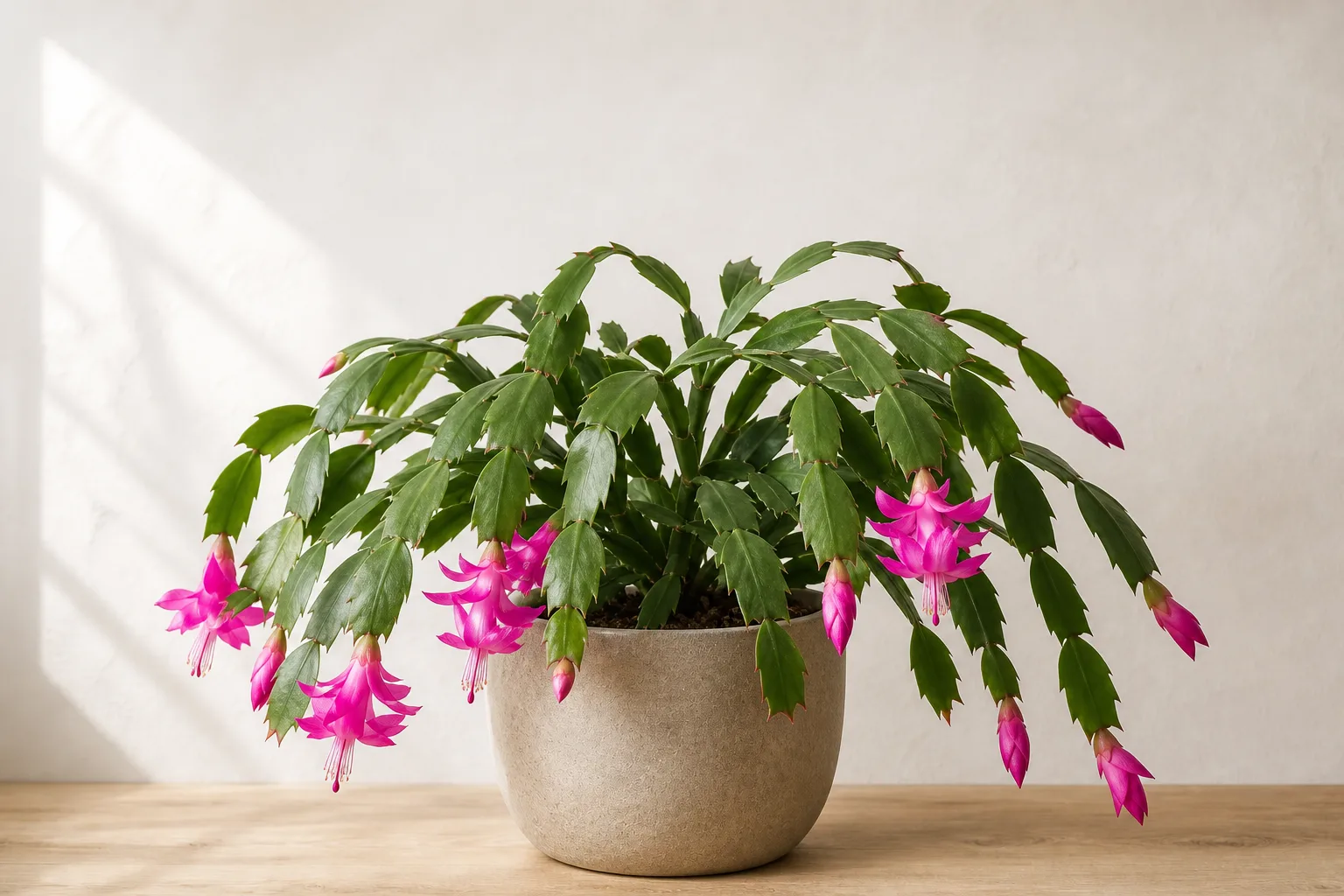
- Holiday cacti, cyclamen, bulbs, and poinsettias have species-specific bloom or rest cycles that differ from foliage plants.
- Homes in warm climates may have active winter growth and air-conditioning stress rather than cold heating-season conditions.
When to stop or seek help
- Inspect roots if the mix remains wet for weeks and leaves yellow or collapse; seasonal slowdown may have progressed to root damage.
- Use a qualified pest or extension resource when an infestation spreads despite isolation or when indoor pesticide use would be unsafe.
Frequently asked questions
Should I stop fertilizing all winter?
Pause for plants that are not actively growing. Continue only when adequate light supports growth and species and product guidance call for feeding.
Why are leaves dropping in winter?
Lower light, wet roots, cold drafts, dry heat, pests, and normal aging can all contribute. Diagnose the pattern and recent changes.
Can I repot in winter?
Delay optional repotting for slow plants, but address dangerous drainage, severe root rot, or a broken container promptly.
How long should winter grow lights run?
Many foliage plants use a total day around 12 to 14 hours. Include natural light and preserve a regular dark period.
Sources and further reading
- Winter houseplant tipsUniversity of Minnesota Extension. Winter humidity, supplemental light, pest checks, and seasonal indoor conditions.
- Lighting for indoor plants and starting seedsUniversity of Minnesota Extension. Light levels, signs of unsuitable light, grow-light types, distance, and photoperiod.
- Managing insects on indoor plantsUniversity of Minnesota Extension. Plant inspection, isolation, sanitation, watering, and safe indoor pest management.
Houseplant care varies with light, pot size, climate, and season. Use this guide as a starting point and adjust to what your plant and home show you; when a problem is severe or hard to identify, consult a qualified horticulturist or your local extension service.