Key takeaways
- Measure relative humidity before changing it.
- A humidifier affects a room more reliably than misting.
- Air movement and root moisture remain essential.
- Stop when condensation or mold appears.
Why this care task matters
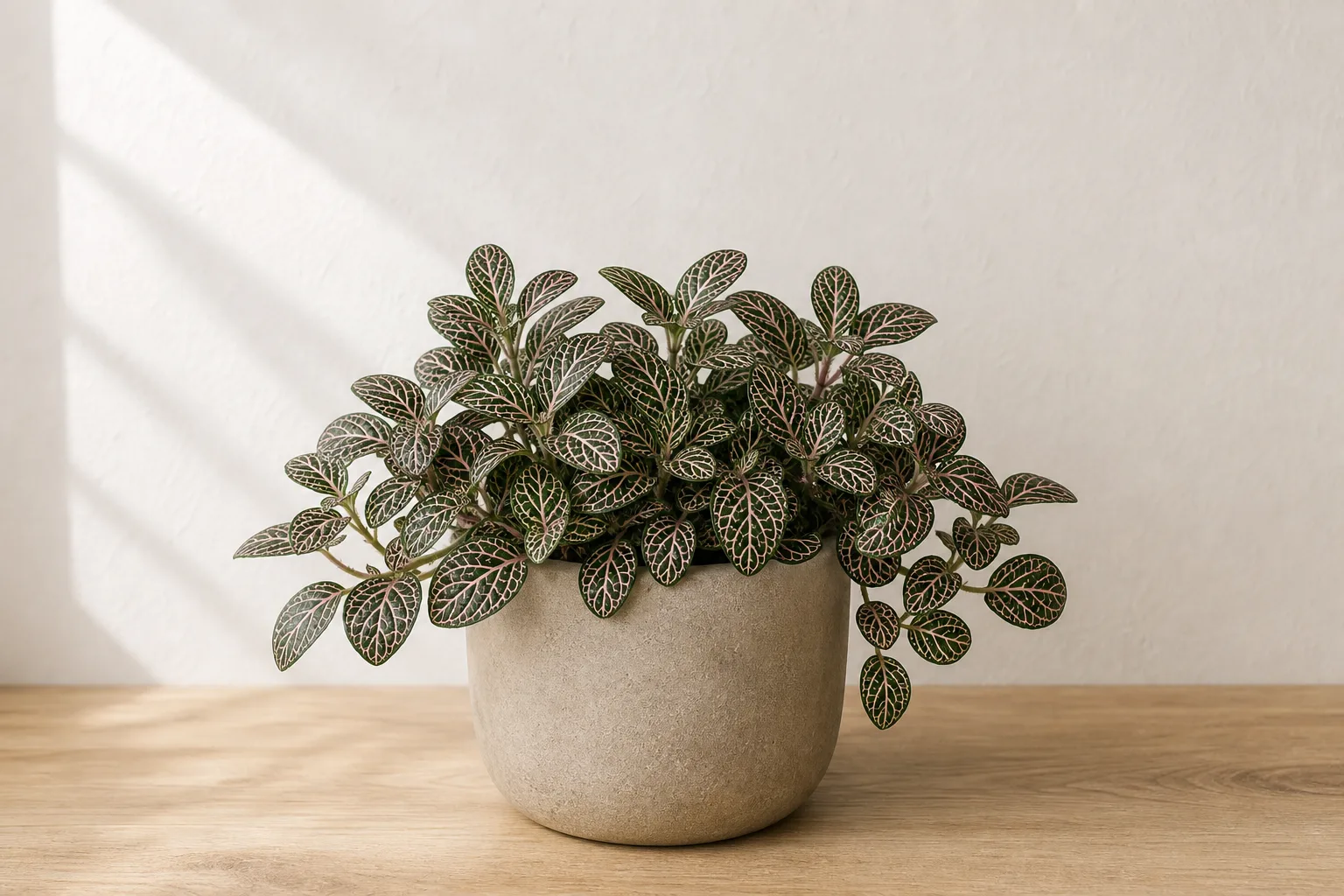
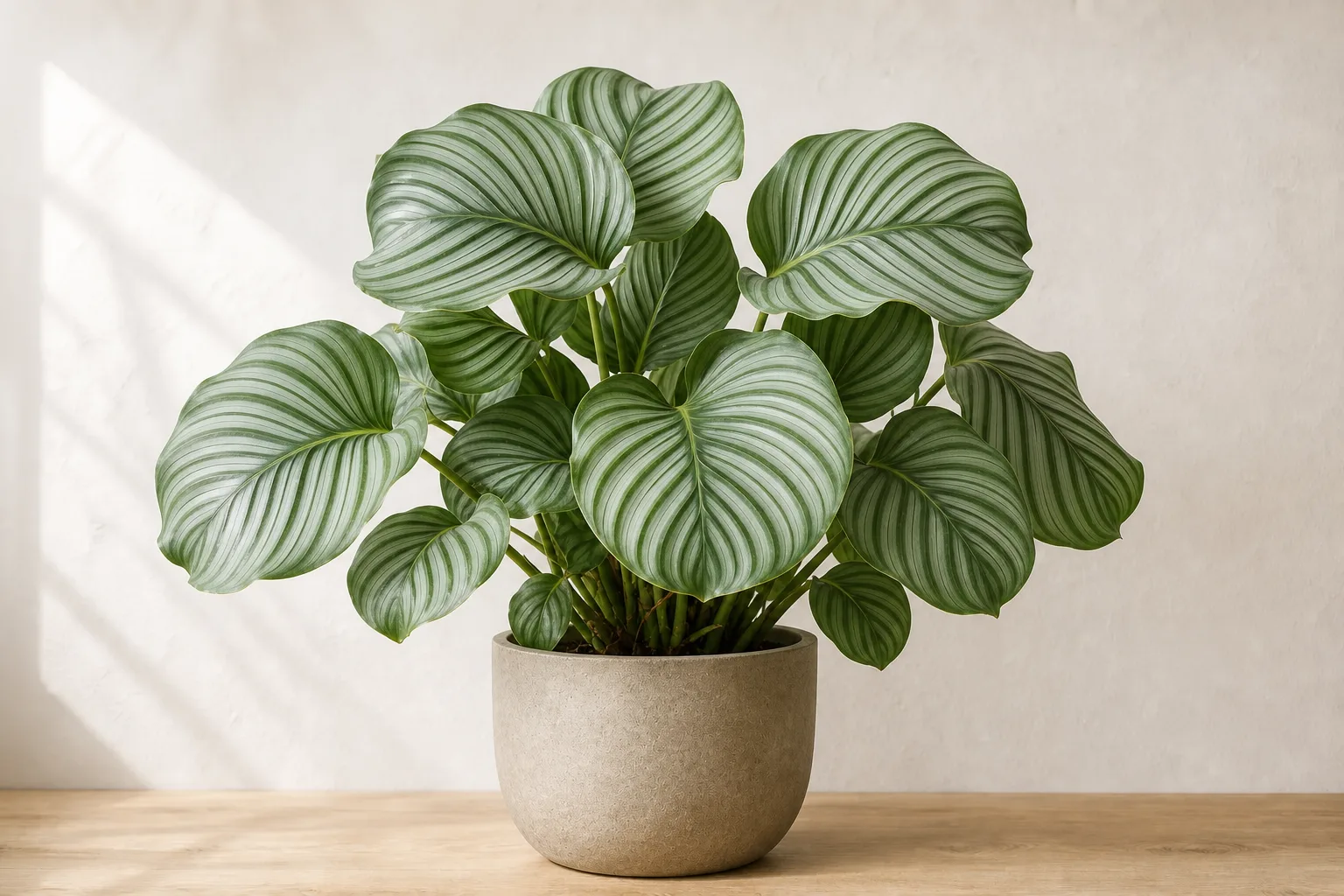
Relative humidity describes how much moisture air holds compared with the maximum possible at that temperature. Warm air can hold more water than cool air, so a stable reading depends on both temperature and sensor placement. Ferns, calatheas, and some epiphytes appreciate higher humidity, while many common foliage plants tolerate ordinary homes.
High humidity is not a substitute for watering roots and can create condensation, mold, and building damage when pushed beyond what a home can safely support. University of Minnesota Extension notes that household moisture problems often occur above 50 percent and that winter targets may need to be lower in cold climates.
In practice, a humidifier is the only method that changes a whole room reliably; everything else — pebble trays, grouping, misting — produces small, local, and temporary effects. If a calathea is crispy and the room reads 30 percent, buy the humidifier before rearranging the shelf.
Set a target you can keep, then stop. Running a unit flat out until windows drip trades a leaf edge for a wall problem. Most homes can safely hold 40 to 50 percent; humidity lovers accept that far better than a bone-dry 25 percent, and the building stays dry.
Tools and materials
- Digital hygrometer
- Cool-mist humidifier
- Distilled or manufacturer-approved water
- Small fan for gentle air movement
Step by step
- Measure the current range
Place a hygrometer near the plant but away from direct mist, heat, and glass. Record daytime and nighttime readings for several days.
- Group compatible plants
Place plants with similar moisture, light, and pest status near one another without crowding leaves. Transpiration can raise the local level modestly.
- Use a controlled humidifier
Set the unit on a waterproof surface, follow cleaning directions, and begin with a moderate target rather than running continuously.
- Maintain airflow and sanitation
Allow gentle air movement, empty standing water, and clean the reservoir on schedule so humid air does not become stagnant.
- Inspect the room as well as the plant
Check windows, walls, curtains, potting mix, and furniture for condensation or fungal growth. Lower output immediately if moisture accumulates.
Common mistakes
Misting raises humidity briefly and can leave leaves wet. Use a measured room or enclosure strategy for lasting change.
Group with space between leaves and inspect often; crowding restricts airflow and helps pests spread.
Follow the manufacturer's cleaning and water directions to reduce mineral dust and microbial buildup.
Season and environment
- A bathroom helps only when it also has enough light, suitable temperature, and ventilation after showers.
- Enclosed cabinets and terrariums can provide high humidity but need airflow, temperature monitoring, and plants suited to enclosed culture.
- In cold winter climates, window condensation may require a lower safe indoor humidity than a tropical plant ideally prefers; choose tolerant plants instead of damaging the home.
When to stop or seek help
- Stop humidification and address ventilation if windows drip, paint peels, musty odors develop, or mold appears.
- Seek medical or building advice when indoor moisture aggravates respiratory symptoms or structural dampness persists.
Frequently asked questions
Do pebble trays increase humidity?
They may raise humidity slightly very close to the tray, but the effect is limited. Keep the pot above the water so roots do not soak.
What humidity do houseplants need?
Needs vary. Many common plants tolerate roughly 30 to 60 percent, while humidity specialists may prefer more. Verify the species and home-safe limit.
Can plants humidify a room?
Plants release water through transpiration, but a small collection rarely controls whole-room humidity reliably. Measure rather than assume.
Is warm mist better than cool mist?
Either can add moisture, but cool-mist units avoid a hot-water burn risk. Follow manufacturer guidance, cleaning, and safe placement.
Sources and further reading
- Winter houseplant tipsUniversity of Minnesota Extension. Winter humidity, supplemental light, pest checks, and seasonal indoor conditions.
- Controlling moisture problems in your homeUniversity of Minnesota Extension. Healthy household humidity, condensation, ventilation, and moisture-risk thresholds.
- HouseplantsRoyal Horticultural Society. General indoor guidance covering watering, feeding, humidity, repotting, and soil mixes.
Houseplant care varies with light, pot size, climate, and season. Use this guide as a starting point and adjust to what your plant and home show you; when a problem is severe or hard to identify, consult a qualified horticulturist or your local extension service.