Key takeaways
- Test every system through a full dry-down before travel.
- Wicks depend on material, height, media, and root contact.
- Reservoirs suit moisture-loving plants better than drought-adapted plants.
- Leak protection is part of plant care.
Why this care task matters
Self-watering systems move water from a reservoir into potting mix through a wick, capillary mat, porous cone, or purpose-built container. Delivery is not automatically self-regulating. Reservoir height, wick thickness, media structure, pot size, evaporation, and root contact can make the same device deliver too much or too little.
A system should reproduce the plant's established moisture pattern, not keep every root ball continuously wet. Succulents, snake plants, and other dry-down plants are usually poor candidates for an always-connected reservoir during a short trip.
In practice, the difference between a successful and a failed vacation watering system is the trial. A wick that looks harmless can siphon an entire reservoir in a day into one small pot, or deliver almost nothing to a chunky mix. Run the exact setup for the exact trip length while you are home, and measure the water level before and after.
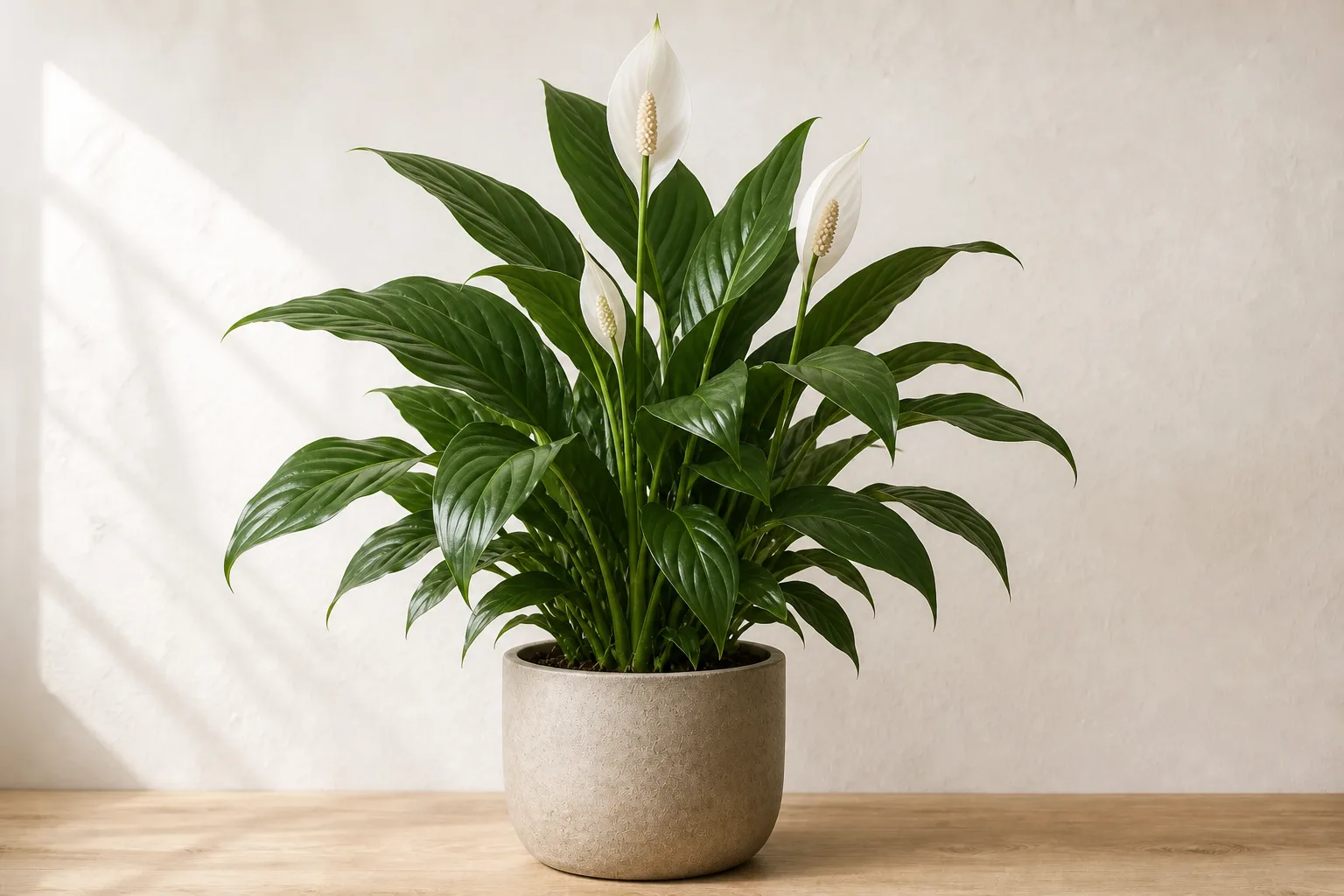
Match the method to the plant. Moisture-loving ferns and peace lilies tolerate an always-connected reservoir; snake plants, jade, and succulents prefer to start dry and stay dry. For a short trip, the lowest-risk plan is often a healthy plant watered when due, moved out of strong light, with no device at all.
Tools and materials
- Clean covered reservoir
- Purpose-made wick or capillary mat
- Waterproof catch tray
- Measuring jug and calendar
Step by step
- Select appropriate plants
Prioritize plants that normally use even moisture. Exclude species requiring a deep dry interval and any pot with unhealthy roots.
- Install safely
Follow device directions, ensure the wick contacts active media, cover open water, and place the complete system in a waterproof tray.
- Measure a trial
Fill to a marked level and run the setup for at least the expected trip duration while you are home. Record water loss and soil moisture.
- Adjust one variable
Change wick thickness, reservoir position, or connection only one at a time, then repeat the trial so the effect is clear.
- Inspect before departure
Check for algae, odor, leaks, saturated media, blocked tubing, and stable supports. Leave a backup contact for failures.
Common mistakes
Test through the entire intended period so excessive flow, dry zones, and leaks appear while you can respond.
Use stable covered reservoirs and waterproof containment to reduce spills, pests, pets, and child hazards.
For a short trip, begin with a normally watered dry-down plant instead of holding its roots continuously moist.
Season and environment
- Capillary mats work only with compatible flat-bottom pots and media contact; elevated feet and coarse mixes can interrupt uptake.
- Evaporation and plant use increase in hot bright rooms, so a winter test does not validate a summer absence.
- A self-watering planter used year-round may accumulate fertilizer salts and still requires periodic top flushing and reservoir cleaning.
When to stop or seek help
- Disconnect the system if media smells sour, remains saturated, or water appears outside the containment tray.
- Use a trusted sitter or professionally installed rated system for long trips, valuable collections, or any setup where failure could damage the building.
Frequently asked questions
Do watering globes work?
They can deliver water, but flow varies with media and seal. Test each globe in the actual pot and use leak protection.
Can cotton string be used as a wick?
Some natural fibers wick initially but decompose or change flow. Purpose-made material offers more predictable repeated use.
Should the reservoir be above or below the pot?
Follow the system design. Height changes flow and a raised reservoir can siphon too quickly, so never improvise without testing.
Can several pots share one reservoir?
They can, but plants rarely use water equally. Individual wicks need testing, and one failure can affect the whole group.
Sources and further reading
- Caring for HouseplantsUniversity of Georgia Extension. Practical light, watering, humidity, fertilizer-salt leaching, and everyday care guidance.
- Houseplant Diseases & DisordersClemson Cooperative Extension. Cultural disorders linked to watering, salts, drainage, temperature, and root health.
- HouseplantsRoyal Horticultural Society. General indoor guidance covering watering, feeding, humidity, repotting, and soil mixes.
Houseplant care varies with light, pot size, climate, and season. Use this guide as a starting point and adjust to what your plant and home show you; when a problem is severe or hard to identify, consult a qualified horticulturist or your local extension service.