Key takeaways
- Both methods work when the entire root ball gets wet and then drains.
- Top watering helps flush soluble salts.
- Bottom watering can rewet compact or water-repellent media.
- Neither method repairs a pot without drainage.
Why this care task matters
Top watering applies water to the surface of the mix; bottom watering lets water move upward through drainage holes by capillary action. The better method is the one that evenly moistens the active roots, avoids prolonged saturation, and suits the plant's foliage and potting mix.
Method arguments often ignore the larger causes of failure. A dense medium, blocked drainage hole, oversized pot, or repeated watering before dry-down can create root stress whether water enters from above or below.
In practice, bottom watering solves one real problem: rewetting a peat-based mix that has dried out so completely that water runs straight down the inside of the pot and out the drainage hole. If your plant does not have that problem, top watering with a slow pour is simpler and keeps salts moving.
Salt buildup is the quieter difference. Fertilizer and mineral residues accumulate in the mix, and water moving downward flushes them out through the drainage hole. Bottom watering draws water upward, so it moves salts toward the surface instead of removing them. That is why we recommend alternating — mostly top watering, with an occasional bottom soak for stubborn dry mix.
Whichever method you choose, the finish line is the same: an evenly moist root ball that then drains. If you cannot feel an even weight after watering, the method failed, regardless of how wet the surface or the saucer looks.
Capillary action moves water upward through the drainage holes only while the mix is dry enough to draw it, and only in media with fine pores. Fine peat-based mixes wick well; very coarse orchid bark or chunky aroid mix may need a deeper, longer soak or repeated top passes before the inner mix becomes wet. Match the method to how your mix actually absorbs.
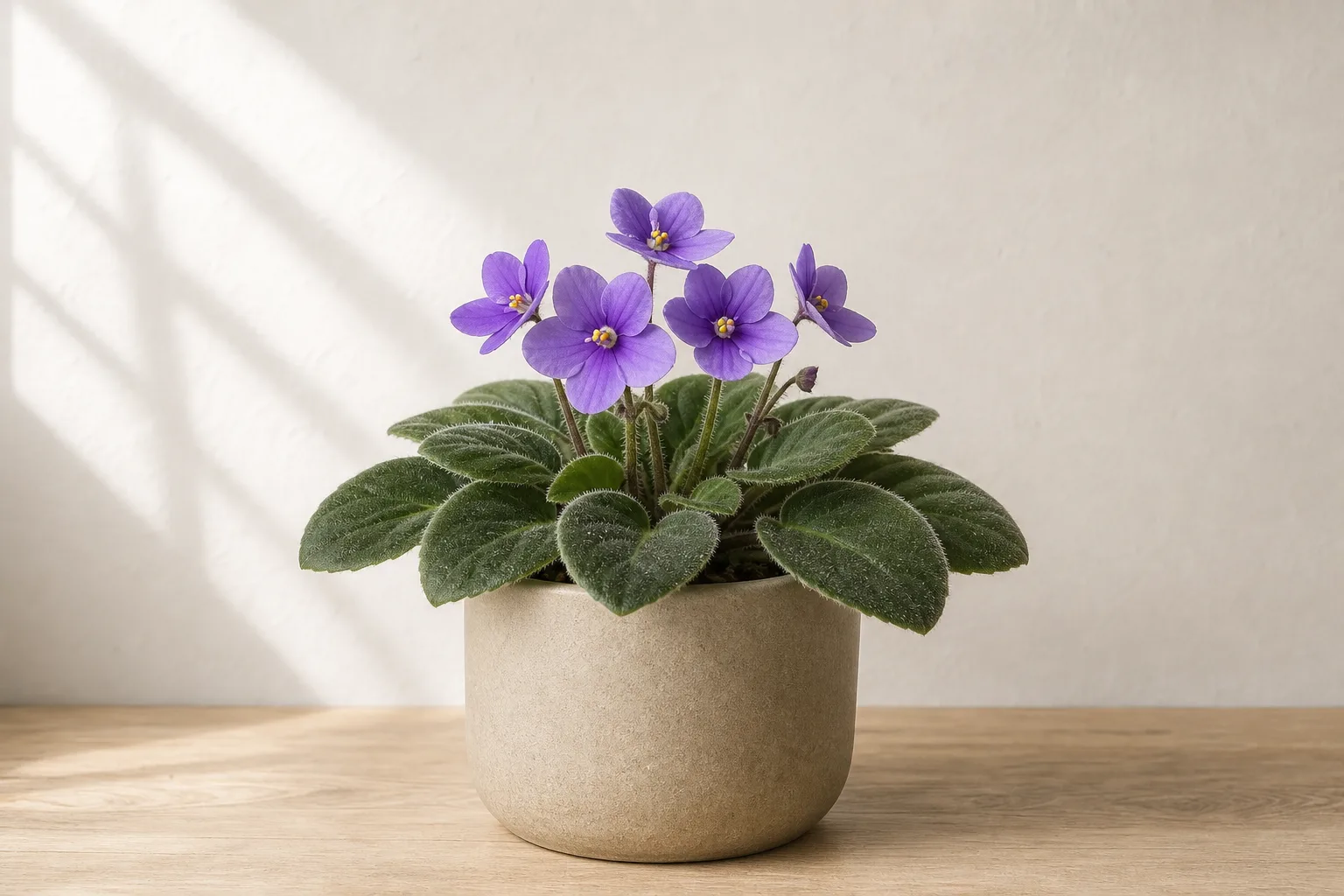
Bottom watering is especially useful for plants whose foliage is easily damaged, such as African violets, and for pots that have dried so hard that top water runs straight through. It is less useful for large, heavy pots that are awkward to move, for media that wick poorly, and for plants that need the surface flushed to remove salts.
Watch the water source itself. If several plants share one basin, an infested or diseased plant can contaminate the rest, and minerals from the tap accumulate at the mix surface when water only ever moves upward. Clean the basin between uses, empty any leftover water, and alternate with top watering so salts keep moving out through the drainage hole.
What the pot sits on changes the technique. A rimmed cachepot that holds a shallow puddle invites accidental soaking; a saucer that is emptied every time keeps the bottom mix dry. If you bottom water, remove the pot as soon as the surface is moist, then place it somewhere it can finish draining rather than resting in water.
When a plant has been potted too deep or the mix has collapsed, no watering method will save it. A root ball that stays sodden no matter how you pour, or that sheds every drop without absorbing, is a repotting problem. Fix the pot and medium first, then worry about which side the water enters from.
Both methods belong in the same toolkit. Use top watering as your default for flushing and simplicity, add a bottom soak when a dry mix resists wetting or a plant's foliage dislikes water, and switch back once the root ball is moist again. Mastery is knowing when to switch, not defending one ritual.
Tools and materials
- Watering can with gentle spout
- Clean basin or deep saucer
- Timer
- Dry towel for the pot base
Step by step
- Check whether watering is due
Test root-zone moisture first. Do not choose bottom watering as a way to give an already wet pot more water.
- Use top watering for routine flushing
Pour slowly across the surface, avoiding sensitive crowns, until water drains. A second pass can eliminate dry pockets.
- Use bottom watering for stubborn dry mix
Set the pot in shallow clean water so drainage holes are submerged. Remove it when the upper mix becomes slightly moist, usually well before an hour.
- Drain and inspect
Let either method drain completely. Lift the pot, check whether it feels evenly heavier, and empty all collected water.
- Alternate when useful
If bottom watering is preferred, periodically top-water generously to help move accumulated fertilizer and mineral salts out through the drainage hole.
Common mistakes
Set a timer and remove the pot once moisture has moved through the root zone. Extended soaking reduces root oxygen.
Pour in several slow passes or bottom-water briefly, then confirm the pot gained weight throughout.
Isolate pest-affected plants and clean the basin between uses to avoid moving insects or contaminated debris.
Submerge only the drainage holes. Water rising over the rim re-wets the surface and defeats the purpose of a bottom soak, and it can dampen sensitive crowns.
Season and environment
- African violet foliage can spot when cold water sits on leaves, so controlled surface watering or a brief bottom soak may be convenient.
- Very chunky orchid media does not wick water like a fine peat mix; soaking or repeated top passes may be needed for the species.
- High-mineral water and frequent fertilizer increase the importance of periodic top flushing and fresh potting mix when salts accumulate.
- Coarse orchid bark and chunky aroid mixes do not wick water like a fine peat mix; they often need a brief soak or repeated top passes so the inner mix becomes wet rather than running straight through.
When to stop or seek help
- Stop soaking if the potting mix stays saturated for many days or develops a sour odor; investigate drainage and root health.
- Replace compacted or decomposed media when water consistently bypasses the root ball despite careful rewetting.
Frequently asked questions
Does bottom watering prevent fungus gnats?
It may keep the surface drier, but larvae live in moist organic media. Correct watering intervals, sanitation, and targeted pest management matter more.
How long should a pot sit in water?
Only until moisture has moved through the root zone. Pot size and mix vary, so check the surface and pot weight rather than relying on one duration.
Can all plants be bottom watered?
No. Mounted plants, containers without suitable holes, and many coarse media need different approaches. Species and pot structure determine suitability.
Should I add fertilizer to bottom water?
Only if the fertilizer label permits that application and the plant is actively growing. Measure accurately and periodically flush with plain water.
Is bottom watering better for sensitive leaves?
For plants such as African violets whose foliage spots when wet, bottom watering keeps the crown and leaves dry. Remove the pot as soon as moisture reaches the surface and let it drain.
How often should I bottom water?
Only when watering is due, exactly as with top watering. Bottom watering is a technique, not a schedule — many growers alternate a top watering with an occasional bottom soak when the mix has dried hard.
Sources and further reading
- Caring for HouseplantsUniversity of Georgia Extension. Practical light, watering, humidity, fertilizer-salt leaching, and everyday care guidance.
- Houseplant Diseases & DisordersClemson Cooperative Extension. Cultural disorders linked to watering, salts, drainage, temperature, and root health.
- Managing insects on indoor plantsUniversity of Minnesota Extension. Plant inspection, isolation, sanitation, watering, and safe indoor pest management.
Houseplant care varies with light, pot size, climate, and season. Use this guide as a starting point and adjust to what your plant and home show you; when a problem is severe or hard to identify, consult a qualified horticulturist or your local extension service.