Key takeaways
- Moisten and support the root ball before removal.
- Correct circling roots without stripping healthy tissue.
- Keep crowns and stems at their original depth.
- Aftercare should be stable, not intensive.
Why this care task matters
A root-bound plant has roots densely occupying the container, often circling the wall or forming a mat at the base. Mild congestion is not an emergency. Intervention becomes useful when little potting mix remains, water cannot distribute evenly, the plant repeatedly wilts, or roots deform the container.
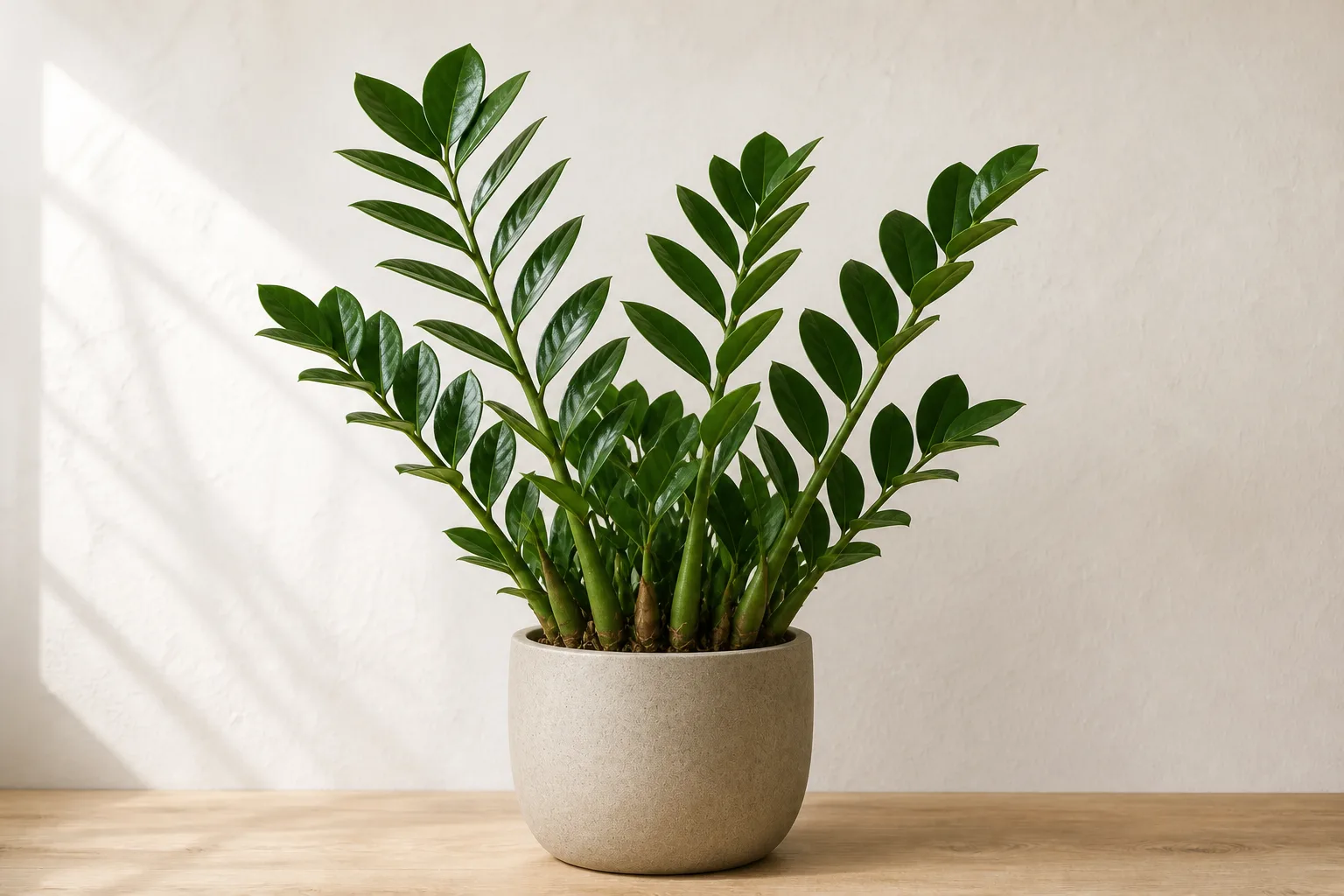
Different plants form different structures. ZZ plants and snake plants have rhizomes; palms dislike severe root disturbance; orchids use specialized media; some vigorous foliage plants tolerate teasing or limited cuts. Identify the plant before treating every root ball the same way.
In practice, the biggest damage during repotting comes from over-handling. Rinsing roots with a hose, pulling off every bit of old mix, and untangling every circle strips the fine feeder roots the plant needs to recover. Loosen the outer layer, correct the worst circling, and leave the interior intact.
After repotting, the plant does not want attention — it wants stability. Keep it in the same light, delay fertilizer for a few weeks, and water only when the root zone dries. Leaves may droop for a few days while fine roots re-establish; that is normal and usually resolves without extra watering.
Prepare everything before you lift the plant. The new pot should be clean with a covered drainage hole, the mix should already be moistened, and your work surface should be somewhere a wet root ball will not matter. A plant waiting out of its pot while you hunt for tools loses fine roots to the air with every minute.
Use the least force that works. Squeeze a flexible nursery pot, run a dull knife around the inside edge, or cut the pot off entirely before you pull on the stem. Stems are not handles — a snapped top is far harder to repair than a pot that needed cutting.
Different plants need different hands. A ZZ plant or snake plant with thick rhizomes can take firmer handling, while a palm with a single crown should keep its root ball mostly intact. When in doubt about a plant's tolerance for teasing or root cuts, do less and let it recover longer.
Watch the drainage and the crown when you finish. Water should leave the pot freely within a minute or two, and the crown should sit at its original depth — buried crowns rot, and a plant that wobbles because it is planted too shallow needs support, not a deeper hole. These two checks prevent the most common after-repotting failures.
Expect a quiet phase, not a growth spurt. Most plants pause for a week or two while fine roots re-establish, then resume at their normal pace. If you see steady new leaves within a month, the repotting was a success; if the plant keeps declining, check moisture, depth, light, and whether any root damage was more severe than it looked.
Keep the workspace and tools honest. A pot that held a sick plant, or pruners that cut rotten roots, can pass problems to the next plant. Clean containers with hot soapy water, disinfect tools, and dispose of removed roots and media where they cannot contaminate other pots.
Know when to stop and call in help. A plant that is too heavy to lift safely, a stem under tension that could snap back, or a root system so rotted that the whole base is soft are moments to pause. The strongest repotting skill is recognizing your own limit before someone gets hurt or the plant is damaged.
Tools and materials
- Stable draining pot
- Fresh pre-moistened mix
- Sanitized knife or pruners
- Gloves and work surface
Step by step
- Prepare before removal
Choose the new pot and mix, protect the work surface, and lightly moisten a very dry root ball so brittle roots are less likely to snap.
- Release the container
Squeeze flexible sides or run a blunt tool around the edge. Cut a disposable nursery pot if necessary rather than pulling hard on the plant.
- Loosen the outer roots
Massage or tease the bottom and sides. Make a few shallow vertical cuts only when a dense woody mat cannot be redirected and the species tolerates it.
- Set the correct height
Add mix so the original root crown sits below the rim but is not buried deeper. Fill gaps gently and preserve air space.
- Water and stabilize
Water until runoff, drain, and place in stable suitable light. Delay fertilizer and major pruning unless damaged tissue requires removal.
Common mistakes
Preserve the functioning root system unless disease or incompatible media makes full removal necessary.
Keep the crown at its former depth and use temporary support if the root ball is unstable.
Limit simultaneous stress. Stage optional changes after the plant resumes growth.
Fresh airy mix holds and releases water differently. Check the root zone by weight and moisture before each watering during the first few weeks.
Season and environment
- Succulent rhizomes and fleshy roots bruise easily and need sharply draining aftercare rather than constant moisture.
- A plant repotted during low-light winter conditions may dry slowly; monitor carefully and avoid a summer watering interval.
- Extremely large specimens can remain in the same container with professional root pruning and topdressing when upsizing is impractical.
When to stop or seek help
- Stop if the pot contains biting insects, severe rot, or a root structure you cannot identify; isolate and diagnose before spreading debris.
- Ask for help when the plant and wet root ball are too heavy to lift safely or when a valuable palm or specimen requires major root pruning.
Frequently asked questions
Should circling roots be cut?
Gently redirect them first. Limited clean cuts can help a dense mat on tolerant plants, but severe cutting is not appropriate for every species.
Can I divide a root-bound plant?
Only if it naturally forms separable crowns, offsets, or rhizomes and is healthy enough for division. Do not split a single-crown plant.
How long does transplant shock last?
Minor wilting may resolve within days, while root recovery can take weeks. Worsening collapse suggests moisture, depth, temperature, or root damage.
Can the same pot be reused?
Yes, if the goal is size control and the species tolerates root pruning. Clean the pot and replace exhausted media.
Why is my plant still droopy a week after repotting?
Some wilting is normal while fine roots re-establish, but a week of worsening droop usually means the roots cannot take up water — check the mix is not saturated, the plant is not planted too deep, and the pot is draining freely.
Sources and further reading
- Repotting HouseplantsPenn State Extension. Pot-bound symptoms, container choice, soilless media, sanitation, and repotting steps.
- Indoor Plants – Transplanting & RepottingClemson Cooperative Extension. Repotting timing, pot sizing, root handling, drainage, and topdressing large containers.
- Houseplant Diseases & DisordersClemson Cooperative Extension. Cultural disorders linked to watering, salts, drainage, temperature, and root health.
Houseplant care varies with light, pot size, climate, and season. Use this guide as a starting point and adjust to what your plant and home show you; when a problem is severe or hard to identify, consult a qualified horticulturist or your local extension service.