Key takeaways
- Confirm buildup instead of assuming every brown tip is salt injury.
- Flush only through a freely draining pot.
- Use enough plain water to carry dissolved salts out.
- Repot when media structure or roots are already failing.
Why this care task matters
Fertilizer ions and minerals from water can accumulate as moisture evaporates. White crust on the mix or pot, burned root tips, slow growth, wilting despite moisture, and brown leaf margins can occur, but these symptoms also have other causes. Review fertilizer history, water source, drainage, and root condition together.
Leaching dissolves soluble salts and moves them out through drainage holes. It is useful only when water can exit and roots are healthy enough to tolerate a thorough watering. Flushing a sealed pot or already waterlogged root ball makes oxygen stress worse.
Before flushing, check the history: have you fed more than the label suggests, used hard water, or let a cachepot hold runoff? If none of those apply, brown tips are more likely a humidity, watering, or pest issue — flushing will not help.
When flushing is the right call, run two to three pot volumes of plain water through the mix over twenty to thirty minutes, then let the pot drain completely. Repeat in a few days only if the plant shows continuing salt symptoms; over-flushing also removes the nutrients the plant needs.
Timing the flush matters as much as technique. Leaching works best when watering is already due, so the root zone can accept a thorough watering without staying soggy for days. In winter, flush once and then let the plant rest in good light; repeated winter leaching in a cool room does more harm than the salts it removes.
The goal of a flush is not a spotless pot — it is a root zone the plant can actually use. If water channels down the inside wall and out the hole while the center stays dry, the mix has compacted or become water-repellent, and flushing will not fix that. Replace the medium instead of pouring more water through it.
Prevention beats rescue. Feed at the labeled rate, skip the extra 'boost' products, and water occasionally with plain water so soluble minerals never build up in the first place. A plant that rarely needs flushing is a sign the fertilizer and watering system are working together.
Water source shapes the salt problem. Hard water carries dissolved minerals that accumulate alongside fertilizer, while softened water may add sodium plants dislike. If you see crust with a low-fertilizer routine, the tap water itself may be the source — test it or switch to a low-mineral supply for sensitive species.
Do not flush more than the plant can tolerate at once. A healthy plant in a draining pot handles a thorough leach well, but a weak, freshly repotted, or already waterlogged plant can be pushed over the edge by several pot volumes in one sitting. When in doubt, leach lightly, let the pot drain fully, and reassess in a week.
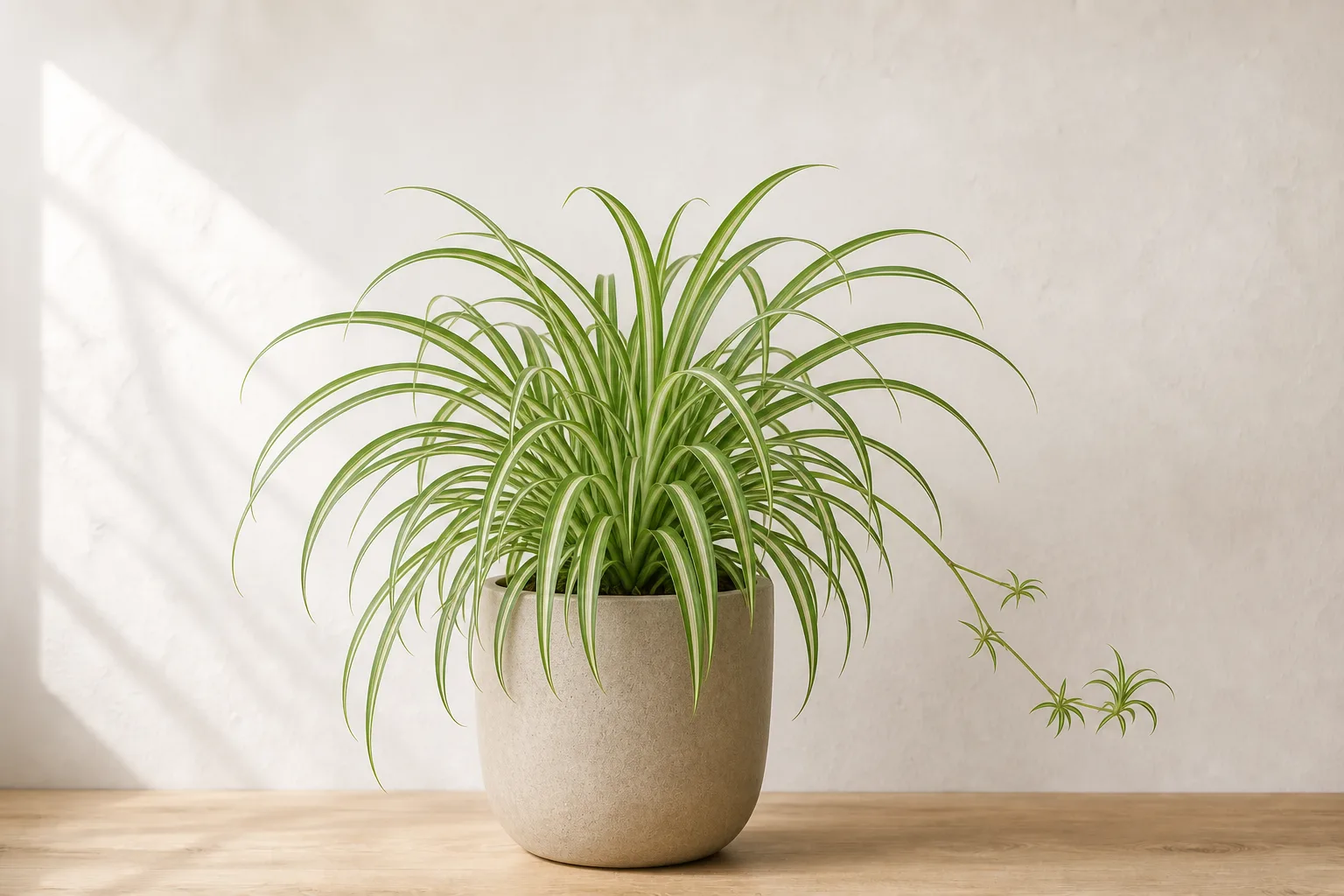
Calatheas, spider plants, and other sensitive species are the early-warning plants of a collection. If their leaf tips brown while tougher neighbors look fine, the water or fertilizer routine is the usual suspect — and the fix is usually the routine, not a one-time rescue flush.
After the flush, watch the plant before you feed it again. Salts are gone, but so is some of the available nutrition; new growth that appears within a few weeks tells you the root zone is functioning again and ready for a modest feed at the labeled rate.
Tools and materials
- Sink or outdoor draining area
- Room-temperature plain water
- Collection tray
- Fresh mix if repotting is needed
Step by step
- Confirm the pot drains
Clear blocked holes and remove the nursery pot from its cachepot. Delay flushing if the mix is saturated or roots smell rotten.
- Remove surface crust
Scoop off heavy deposits without damaging shallow roots. Replace that small layer with fresh compatible mix after leaching.
- Apply water in stages
Pour slowly across the surface, let runoff begin, pause, and repeat so several pot volumes move through without overflowing the mix.
- Drain completely
Allow runoff to stop and empty the saucer. Return the plant to suitable light and airflow without feeding again immediately.
- Correct the cause
Recalculate fertilizer, avoid combining products, consider water quality for sensitive species, and schedule occasional plain-water irrigation.
Common mistakes
Combine leaching with a watering that is actually due so roots are not kept wet unnecessarily.
Many household softeners add sodium. Use an appropriate unsoftened source and check species sensitivity and local water quality.
Wait for healthy growth and an appropriate interval; immediate fertilizer replaces the salts you just removed.
Remove the nursery pot or flush where water can exit freely. Water that sits in a sealed decorative pot makes salt damage worse, not better.
Season and environment
- Terracotta can show mineral deposits on the exterior even when internal levels are not severe; inspect roots and growth before diagnosing.
- Plants watered mostly from below may receive less routine salt flushing and benefit from periodic top watering with complete drainage.
- Sensitive plants such as spider plants, calatheas, and some carnivorous species may show water-quality stress earlier than tolerant foliage plants.
When to stop or seek help
- Repot rather than repeatedly flush when the medium is decomposed, roots are rotten, or water cannot pass evenly through the root ball.
- Seek local water-quality or horticultural advice when damage continues despite corrected fertilizer and sound root care.
Frequently asked questions
How much water is needed to flush a pot?
Use several times the pot's volume in stages, provided drainage is free. The exact amount matters less than complete flow through and safe drainage.
Can rainwater be used?
Clean collected rainwater can be low in dissolved minerals, but collection safety and contamination vary. Follow local guidance.
Will flushing fix burnt leaves?
No. Damaged tissue will not turn green, but correcting the root-zone condition can protect future growth.
Is white mold the same as fertilizer crust?
No. Mineral crust is usually hard or crystalline; fungal growth is softer or fuzzy. Moisture, ventilation, and media condition help distinguish them.
How often should I flush houseplants?
Only when there is evidence of buildup — crust, burned tips with a feeding history, or slow growth after regular feeding. Many plants are fine with an occasional plain-water watering; routine monthly flushing is rarely necessary.
Sources and further reading
- Caring for HouseplantsUniversity of Georgia Extension. Practical light, watering, humidity, fertilizer-salt leaching, and everyday care guidance.
- Houseplant Diseases & DisordersClemson Cooperative Extension. Cultural disorders linked to watering, salts, drainage, temperature, and root health.
- Repotting HouseplantsPenn State Extension. Pot-bound symptoms, container choice, soilless media, sanitation, and repotting steps.
Houseplant care varies with light, pot size, climate, and season. Use this guide as a starting point and adjust to what your plant and home show you; when a problem is severe or hard to identify, consult a qualified horticulturist or your local extension service.