Key takeaways
- Use a site with long direct sun and free drainage.
- Water the soil rather than repeatedly wetting the foliage.
- Choose disease-resistant cultivars where summers are humid.
How to care for Zinnia
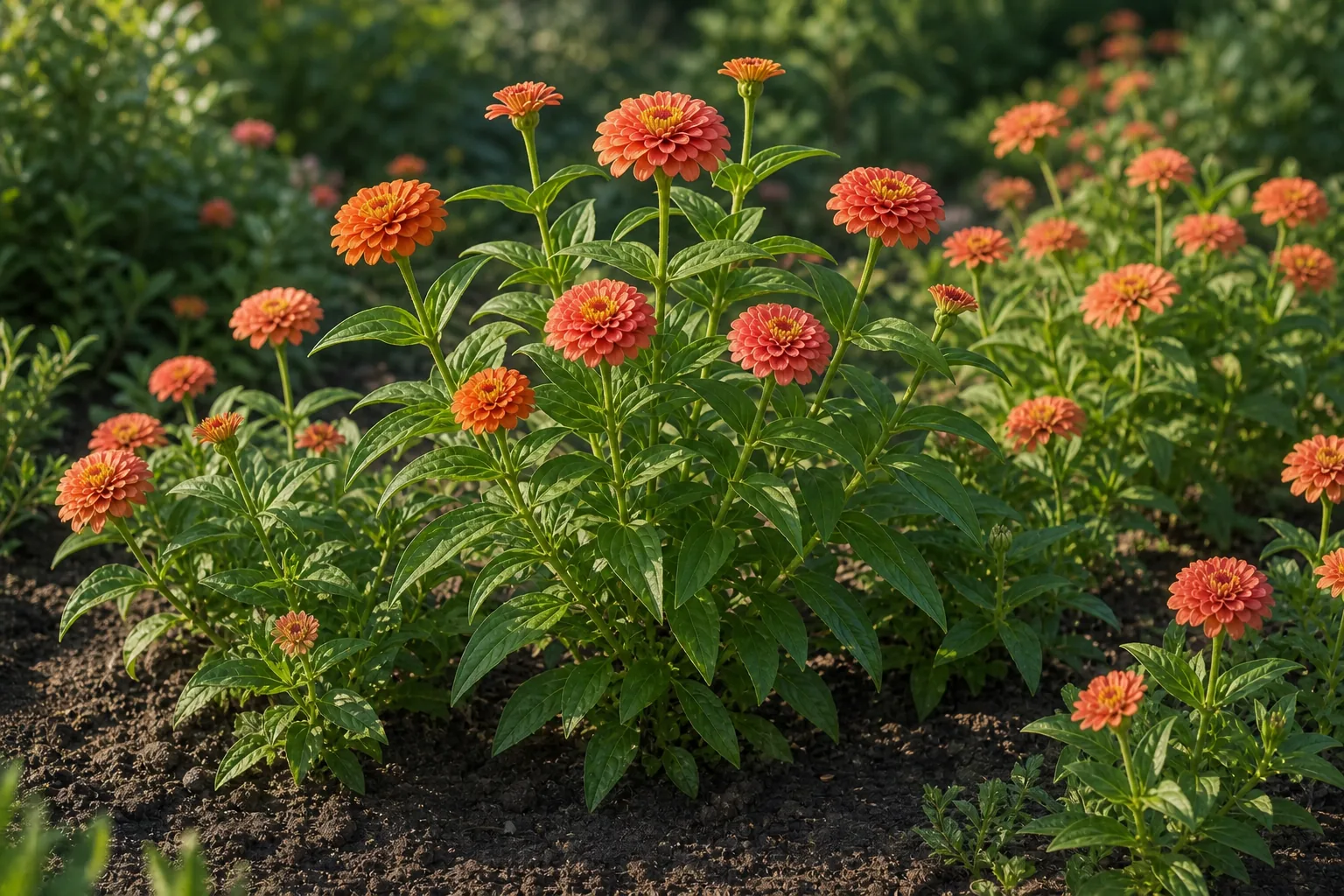
Zinnia elegans is a fast annual rather than a plant to overwinter outdoors in cold climates. Set plants after frost risk has passed, give each cultivar its labeled spacing, and judge success by sturdy new growth and clean foliage rather than by forcing early flowers in cool soil.
Light
Full sun supports compact stems and continuous flowering. In shade, stems stretch, flower production drops, and foliage stays damp longer; move containers gradually into stronger exposure rather than scorching greenhouse-grown plants on the first day.
Water
Water deeply when the upper root zone begins to dry, then let excess drain. Direct water to the soil in the morning when practical, because repeatedly wet foliage and crowding can increase leaf-disease pressure.
Soil and repotting
Use well-drained garden soil or a free-draining container mix. Zinnias are seasonal plants, so pot on only when young roots fill a starter cell; do not keep a flowering plant circling in a small nursery pot.
Temperature, humidity, and fertilizer
Warm soil and frost-free weather favor establishment. Maintain airflow in humid summers and avoid lush, crowded growth from excessive nitrogen; a soil test or a restrained balanced feed is more useful than routine heavy feeding.
Pruning and propagation
Deadheading can redirect growth into additional flowers, although response varies by cultivar. Sow seed after soils warm or start it under bright light; stem cuttings can root, but seed is the simplest way to renew this annual.
Common problems
Start with the pattern, current soil moisture, and recent changes. One symptom can have several causes, so change the most likely factor first and observe before making another major adjustment.
| Symptom | Check first | First action |
|---|---|---|
| White powder on leaves | Check whether coating is spreading on crowded lower and inner leaves. | Increase spacing and remove only badly affected tissue while keeping foliage dry. |
| Brown leaf spots | Check splash patterns, recent wet weather, and airflow before naming a disease. | Water at soil level and remove fallen infected debris. |
| Tall, weak stems | Check daily direct sun and whether seedlings were crowded. | Move containers gradually to stronger light or thin crowded plants. |
| Few new flowers | Check light, spent heads, and excessive nitrogen growth. | Remove spent flowers and pause high-nitrogen feeding. |
| Sudden collapse after a cold night | Check the recorded low temperature and dark, water-soaked tissue. | Replace frost-killed annuals after local frost risk has passed. |
Pet and household safety
ASPCA lists Zinnia species as non-toxic to cats and dogs. Non-toxic does not mean edible or incapable of causing stomach upset, so discourage chewing and contact a veterinarian if an animal develops concerning signs after eating plant material.
Frequently asked questions
How often should I water Zinnia?
Check the upper root zone and water deeply when it begins to dry; heat, pot size, wind, and rainfall change the interval.
Does Zinnia need full sun?
Yes. Long direct sun produces sturdier plants and more flowers than shade.
Should I deadhead Zinnia?
Removing spent heads can keep many cultivars flowering and also prevents unwanted seed ripening.
Can I grow Zinnia in a container?
Yes, if the cultivar has enough root room, full sun, drainage, and closer moisture monitoring than an in-ground plant.
How do I propagate Zinnia?
Seed is the usual method; sow into warm conditions and provide strong light immediately after emergence.
Is Zinnia safe for pets?
ASPCA lists Zinnia species as non-toxic to cats and dogs, but chewing should still be discouraged.
Sources and editorial review
This editorial draft is based on the sources below and awaits named horticulture-expert approval before publication.
- Zinnia elegansNC State Extension · Checked
- Zinnia elegans Jacq.Royal Botanic Gardens, Kew — Plants of the World Online · Checked
- ZinniaUniversity of Minnesota Extension · Checked
- ZinniaASPCA · Checked
What works well
- Long flowering season
- Quick from seed
- Useful to pollinators
What to consider
- Killed by frost
- Can develop foliar disease
- Tall forms may need support