Key takeaways
- Confirm it is native to your actual region before using the native label.
- Use sun and drainage rather than rich feeding for sturdy stems.
- Leave selected dry seed heads to support birds and reseeding.
How to care for Purple Coneflower
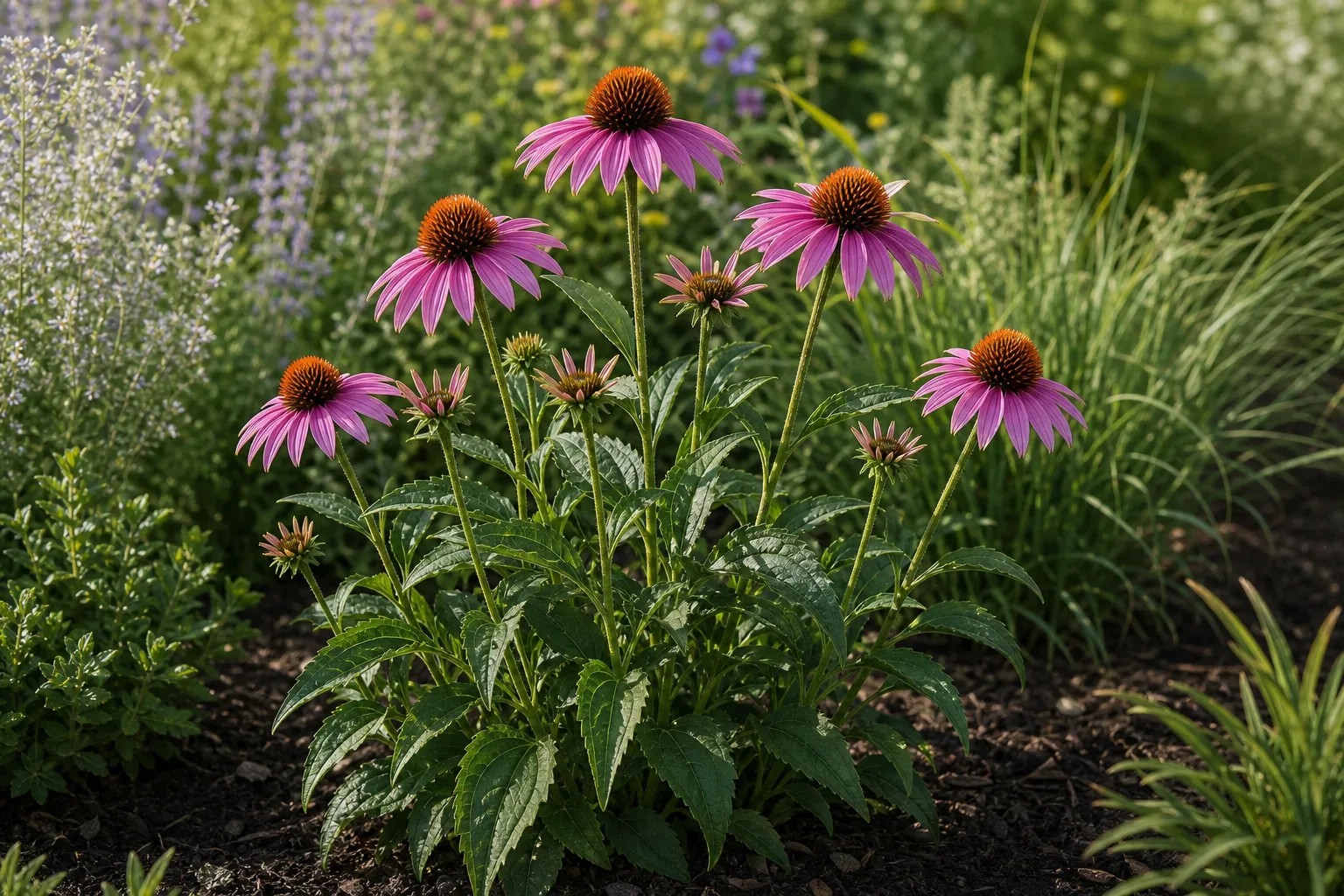
Echinacea purpurea is native to a documented central and southeastern U.S. range, not to every place where it can grow. Verify local provenance and avoid collecting wild plants; nursery-propagated regional material is the responsible choice for a habitat-focused garden.
Light
Full sun produces the most upright growth and flowering, though light partial shade is tolerated. Space plants so leaves dry and stems do not lean toward a distant light source.
Water
Keep new crowns evenly moist during establishment, then water when the root zone becomes dry during extended drought. Established plants tolerate some dryness, but newly planted divisions do not yet have the same resilience.
Soil and repotting
Use average, drained soil and keep the crown at grade. Purple coneflower tolerates clay and rocky conditions better than standing water; container plants need enough depth for their crown and fibrous roots.
Temperature, humidity, and fertilizer
This is a cold-hardy temperate perennial that dies back seasonally. Avoid rich nitrogen feeding that makes stems soft; airflow and sanitation matter more in humid periods.
Pruning and propagation
Deadhead some flowers for neatness but leave selected cones through winter for seed-eating birds. Divide established crowns while dormant or propagate by seed; cultivar seedlings may not match the parent.
Common problems
Start with the pattern, current soil moisture, and recent changes. One symptom can have several causes, so change the most likely factor first and observe before making another major adjustment.
| Symptom | Check first | First action |
|---|---|---|
| Green distorted flower heads | Check for clustered leafy growth and yellowed or twisted flowers. | Remove the entire suspect plant and seek local confirmation of aster yellows. |
| Dark leaf spots | Check lower leaves, spacing, and recent prolonged wetness. | Remove affected debris and improve airflow without overhead watering. |
| Stems flop outward | Check shade, rich feeding, and cultivar height. | Increase light for future growth and use discreet support now. |
| Crown fails to return in spring | Check winter drainage and whether the crown was buried. | Inspect for firm living crown tissue before replacing the plant. |
| Chewed petals or leaves | Inspect at different times for beetles, caterpillars, and larger herbivores. | Identify the feeder before choosing a targeted response. |
Pet and household safety
The opened botanical and horticultural sources did not classify Echinacea purpurea as non-toxic to cats and dogs. Do not infer pet safety from its history of human herbal use, and do not give concentrated preparations to animals without veterinary direction. Prevent chewing and contact a veterinarian after concerning ingestion or symptoms.
Frequently asked questions
How often should I water Purple Coneflower?
Keep new plants evenly moist, then water established crowns during extended dry periods after checking the root zone.
Does Purple Coneflower need full sun?
Full sun gives the strongest flowering, though light partial shade is tolerated.
Should I deadhead Purple Coneflower?
Deadhead some for appearance, but leave selected seed heads for birds and winter structure.
Is Purple Coneflower native everywhere in North America?
No. Its documented native range is regional, so verify status with a local authority.
How do I propagate Purple Coneflower?
Use seed or divide an established crown; seedlings of named cultivars may vary.
Is Purple Coneflower safe for pets?
The reviewed sources did not provide a veterinary classification, so do not label it pet-safe.
Sources and editorial review
This editorial draft is based on the sources below and awaits named horticulture-expert approval before publication.
- Purple Coneflower — Echinacea purpureaNC State Extension · Checked
- Echinacea purpureaMissouri Botanical Garden Plant Finder · Checked
- Purple ConeflowerMissouri Department of Conservation · Checked
- Eastern Purple Coneflower Plant GuideUSDA Natural Resources Conservation Service · Checked
What works well
- Regional native value
- Long summer bloom
- Seeds feed birds
What to consider
- Can develop aster yellows
- Cultivars vary in ecological value
- May self-seed