Key takeaways
- Allow room for the chosen cultivar's mature framework.
- Maintain moisture without waterlogging shallow roots.
- Prune, if needed, before active spring growth because it flowers on new wood.
How to care for Panicle Hydrangea
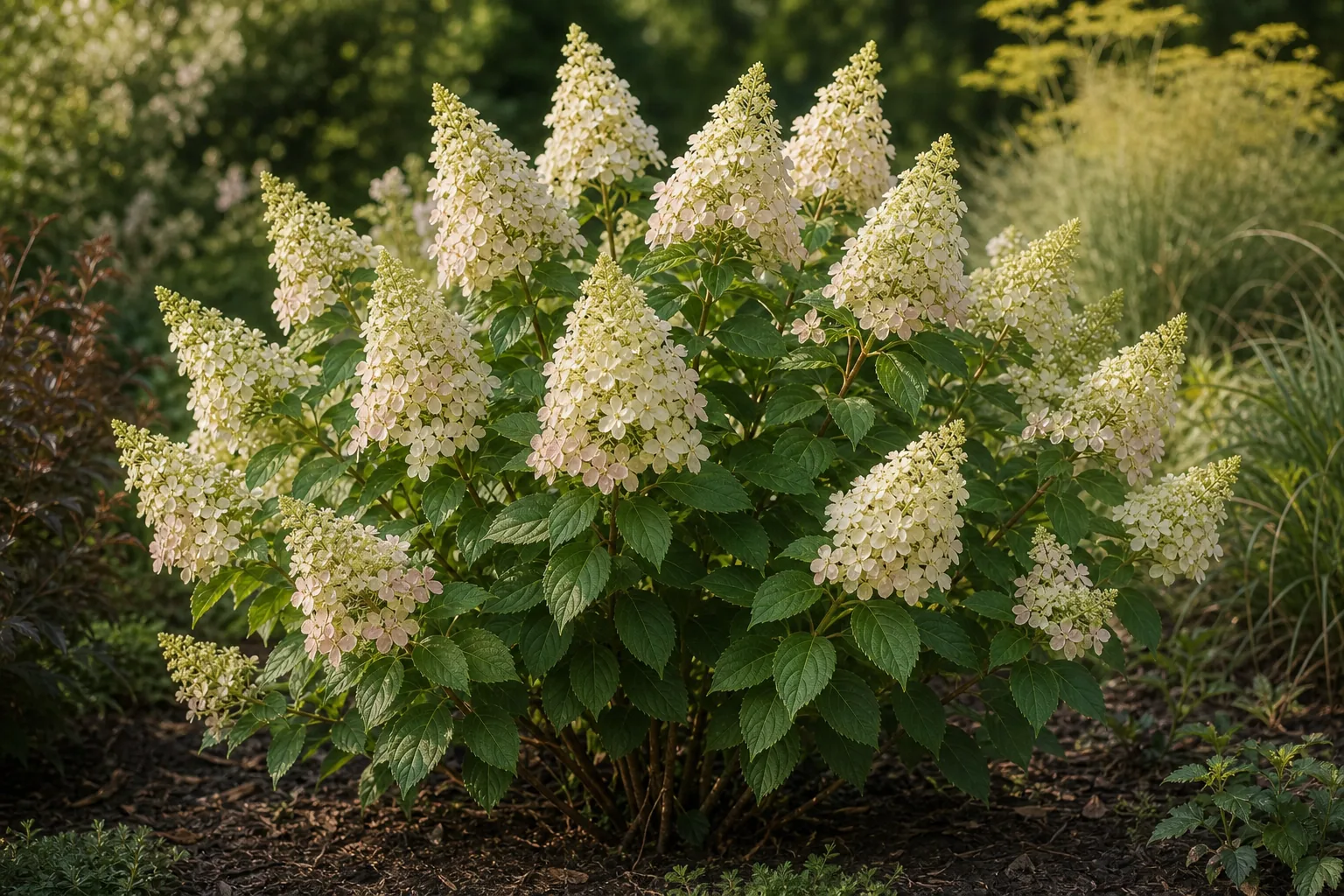
Hydrangea paniculata forms a permanent woody framework and flowers on shoots made in the current season. Choose a cultivar by mature size, plant with the root flare visible, and do not assume every plant needs the severe annual pruning sometimes shown in display gardens.
Light
Panicle hydrangea tolerates more direct sun than many hydrangeas, but the best exposure depends on summer heat and available moisture. Morning sun with afternoon shade is a useful choice in hot regions; too much shade reduces flowering.
Water
Keep the shallow root zone consistently moist during establishment and dry spells, then let drainage carry excess away. Wilting in hot sun is a cue to check soil, not automatic proof that roots need another watering.
Soil and repotting
Use moisture-retentive but drained soil and mulch the surface without piling material against stems. Compact cultivars can grow in large containers, where summer water demand and winter root exposure are greater than in the ground.
Temperature, humidity, and fertilizer
Established plants are notably cold hardy, but local hardiness and cultivar still matter. Base fertilizer on soil need and growth; excess nitrogen can produce soft stems and foliage at the expense of a balanced framework.
Pruning and propagation
If size or structure needs correction, prune in late winter or early spring before strong growth because flower buds form on new shoots. Take softwood, semi-ripe, or hardwood cuttings using clean material; seed will not preserve named cultivars.
Common problems
Start with the pattern, current soil moisture, and recent changes. One symptom can have several causes, so change the most likely factor first and observe before making another major adjustment.
| Symptom | Check first | First action |
|---|---|---|
| Plant wilts in afternoon | Check soil below mulch and whether the plant recovers by evening. | Water slowly only if the active root zone is dry. |
| Few flower panicles | Check daily light, recent pruning timing, and excess nitrogen. | Increase light gradually or stop unnecessary high-nitrogen feed. |
| Brown flower edges | Check heat, dry soil, wind, and natural flower aging. | Restore even root moisture and leave naturally aging panicles if desired. |
| Stems flop after rain | Check whether the cultivar, heavy blooms, or severe pruning made weak long shoots. | Support affected stems and prune less aggressively next season. |
| Yellowing lower leaves | Check soil moisture, drainage, and whether yellowing is isolated or spreading. | Correct standing water or irrigation before adding fertilizer. |
Pet and household safety
Hydrangeas are treated as toxic to cats and dogs because cyanogenic glycosides can cause illness; the ASPCA page reviewed is for H. arborescens, while the species-specific NC State profile also flags poisonous characteristics for H. paniculata. Prevent access and contact a veterinarian promptly after ingestion or symptoms such as vomiting or diarrhea.
Frequently asked questions
How often should I water Panicle Hydrangea?
Check the shallow root zone and water deeply when it begins to dry; new plants and containers need closer monitoring.
Can Panicle Hydrangea grow in full sun?
Yes in many climates, but hot afternoon exposure requires reliable moisture and may be better moderated with shade.
When should I prune Panicle Hydrangea?
Prune before active spring growth if structure or size requires it; the plant flowers on current-season shoots.
Why are my hydrangea flowers turning pink or brown?
Panicles naturally change color as they age, though heat and dry roots can brown edges early.
How do I propagate Panicle Hydrangea?
Stem cuttings are the usual way to preserve a cultivar; seed-grown plants vary.
Is Panicle Hydrangea safe for pets?
No. Keep cats and dogs from chewing any part and seek veterinary advice after ingestion.
Sources and editorial review
This editorial draft is based on the sources below and awaits named horticulture-expert approval before publication.
- Hydrangea paniculataNC State Extension · Checked
- Hydrangea paniculata SieboldRoyal Botanic Gardens, Kew — Plants of the World Online · Checked
- How to grow shrubby hydrangeasRoyal Horticultural Society · Checked
- HydrangeaASPCA · Checked
What works well
- Reliable summer flowers
- Cold-hardy choices
- Blooms on new growth
What to consider
- Not pet-safe
- Large forms need room
- Wilts when roots dry